










Mental Health App Development


Plan Your Budget Confidently.
Choose Your Starting Point



Mental Wellbeing Companies We Support

Mental Health Software Challenges Taken Off Your Plate


Put Mental Health Support in Users’ Pockets
- Raise patient satisfaction by up to 40%
- Reduce relapse rates by up to 50%
- Increase adherence to care plans by up to 45%

Mental Health Solutions Built Around People








Transformative Mental Health App Features


Future-Ready Mental Health App Integrations


Mental Health App Projects and Beyond
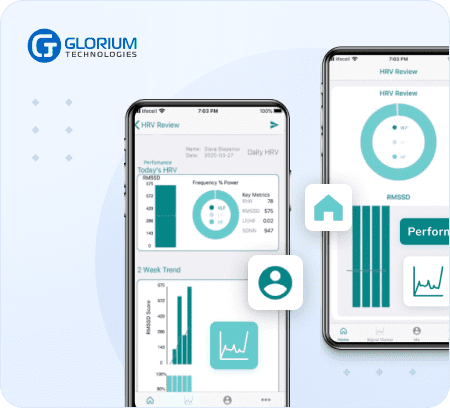
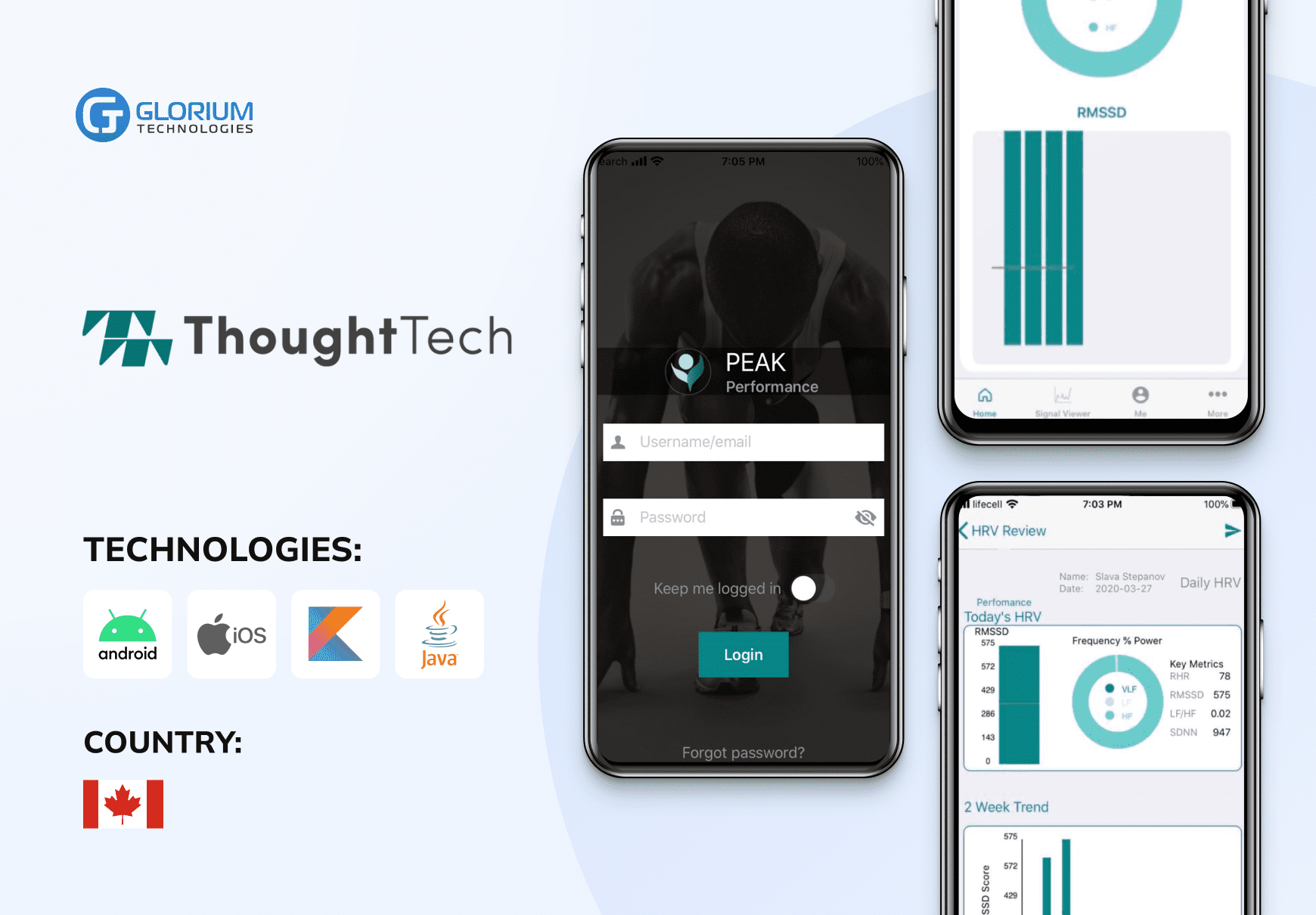
- Outdated performance app
- Complex sensor tech integration
- Non-intuitive diagnostic reporting
- Expanded training system capabilities
- User-friendly self-regulation support
- Visible feedback for well-being
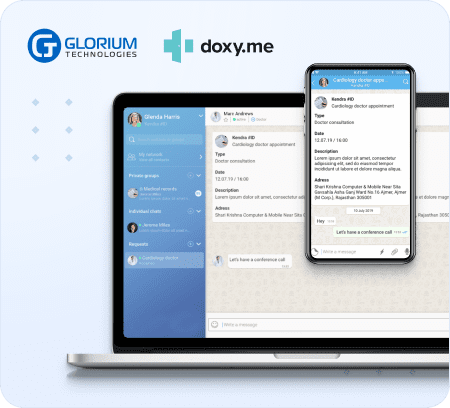
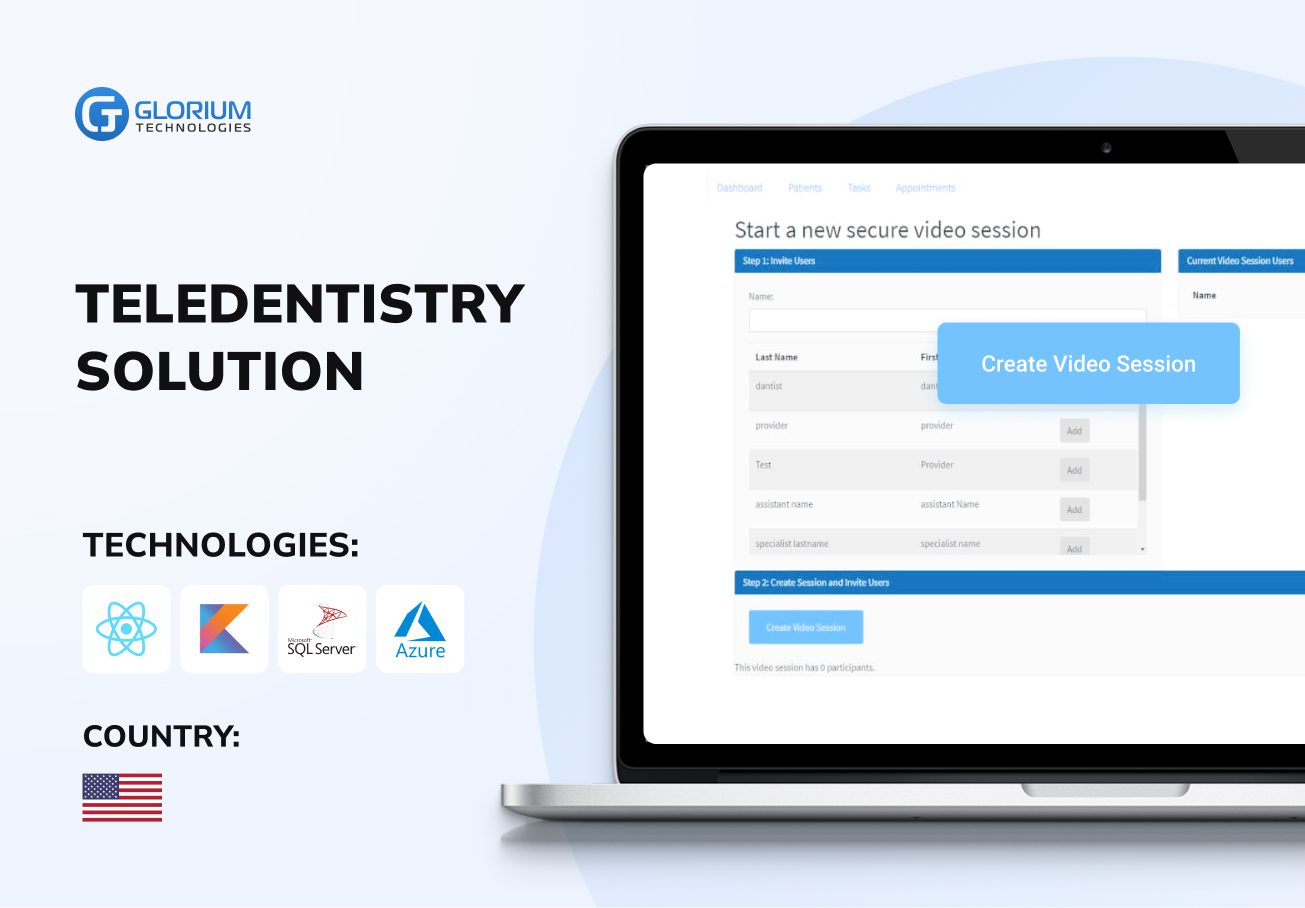
- Secure HIPAA/HITECH compliance
- High-quality, reliable streaming
- Complex feature implementation
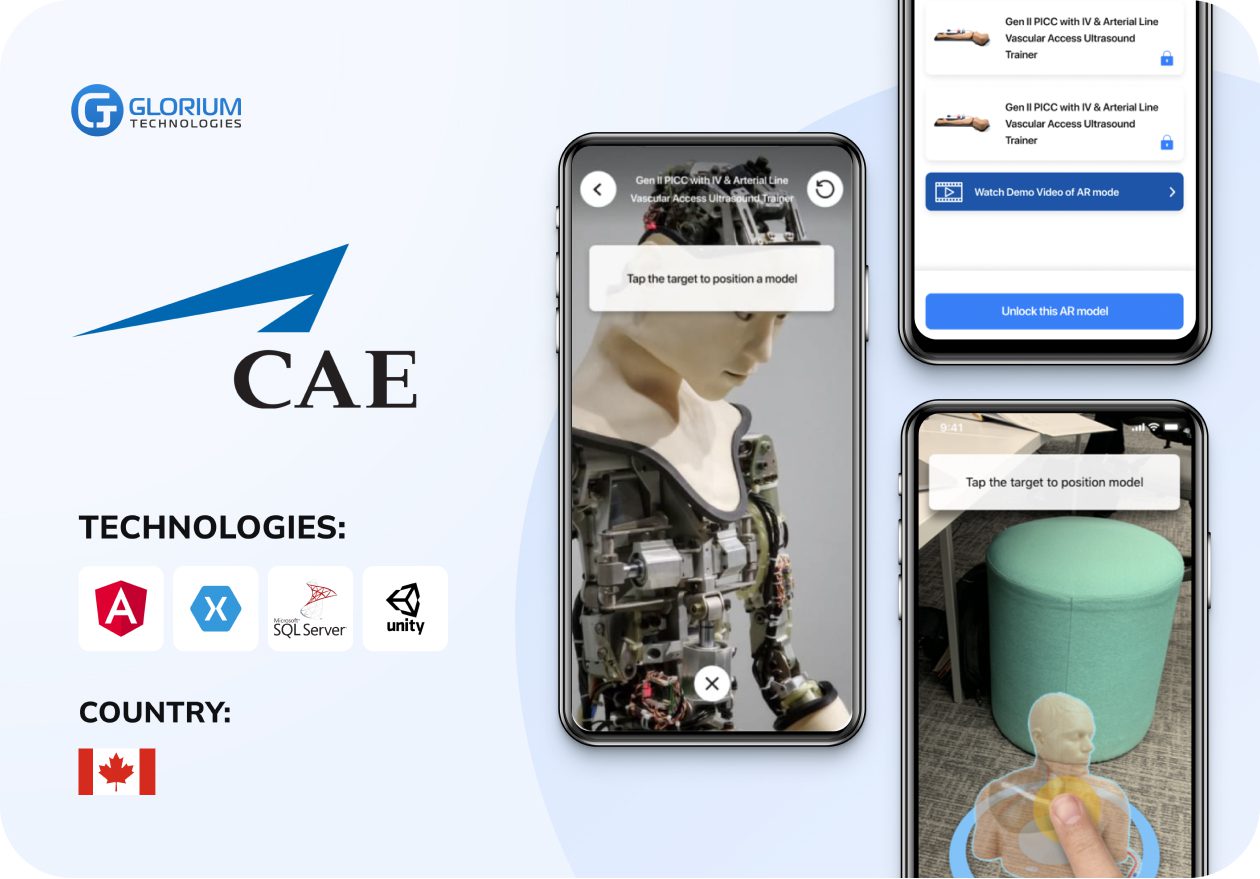
- Secure, compliant video streaming
- Affordable remote care access
- Easy cross-platform usability
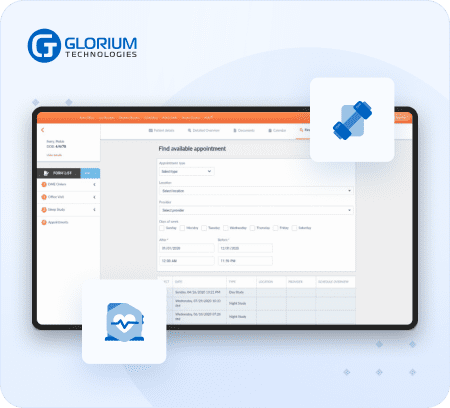
- Replace the outdated desktop app
- Integrate with the new server
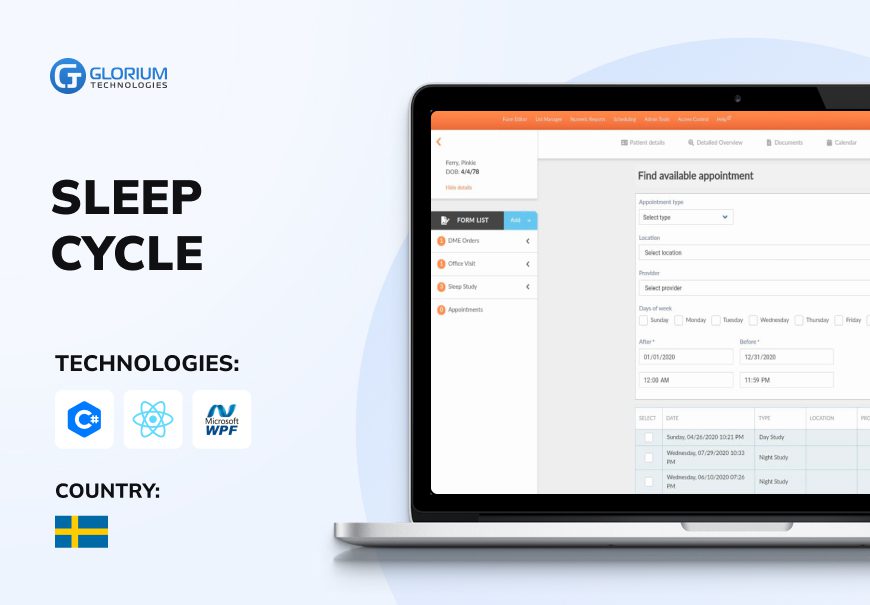
- Connect sleep devices
- High-performance web version
- Easier EMR integrations
- Added customization options
Tech Stack Behind Your Custom Solutions


















Can’t Find What You’re Looking For?


What our clients say about us







Our clients journeys










Who we are
About usGlorium Technologies is a full-cycle app & software development company which covers specific client business needs and manage them with the help of the best possible technology solutions.
Since 2010, we have been inventing digital breakthroughs, helping startups and businesses come out on top in their markets.

Why choose us




Certifications








Let's Connect!



Mental Health App Development - Glorium Technologies
Five minutes and a few clicks are enough to connect users to their therapists and mental health practitioners. Thanks to the rapid development and digitization of the mental health industry, 320 million people used health apps in 2024. And experts expect this number to grow significantly in the coming years.
The introduction of mHealth applications has shifted the way professionals conduct therapy sessions, clients receive support, and companies connect with their target audience. To provide continuous support outside traditional therapy hours, business owners started developing digital mental health solutions with interactive tools and the ability to track user progress.
After 15+ years of helping companies develop health apps and software, we can share our insights and tips on creating a mental health application.
General Mental Health Apps on the mHealth Market
Mental health means many things to different people, and such views allow us to devise creative solutions and develop various types of mental health applications.
Here are the seven most popular types of applications in the mental health sector:
- Chatbots: Automated chats that provide immediate, 24/7 emotional support, using natural language processing to simulate conversation and offer coping strategies.
- Teletherapy: Interacting with mental health experts such as psychiatrists or psychologists via text, video, or audio.
- Self-improvement apps: Tips, recommendations, and exercises for self-improvement.
- Condition trackers: Tracking mood swings, feelings, well-being, and other conditions.
- Self-learning: A set of guides, practices, and techniques for analyzing mental health conditions.
- Meditation: Guided meditation exercises, tours, and convenient tools to pursue self-care.
- Apps for HR: Allow corporations to measure employees’ condition and self-satisfaction.
As you can see, not all apps are created to serve customers, but some help companies and mental health professionals assess clients and employees.
Top 5 Mental Health Apps on the Market
With the number of applications companies launch yearly, it’s challenging to categorize and assess them. ORCHA is a platform where you can find reliable and transparent information about mHealth applications and software.
Here are 5 top mental health apps according to ORCHA:
- Headspace is a mental health solution for mastering meditation practices and techniques. Rated 4.97/5, it shows that meditation improves your mood and productivity.
- Muse is a mental health mobile app and a wearable device that tracks brain activity. It can improve a person’s well-being through analysis and meditation.
- Smiling Mind is a cross-platform solution that allows you to complete a questionnaire and personalize your meditation experience.
- NOCD is a unique mental health solution for users with obsessive-compulsive disorder. It helps control exacerbations and provides mental health treatment recommendations.
- Productive-Habit Tracker is a self-improvement app with a task organizer and exercises aimed at developing healthy habits and routines.
Do these apps give you inspiration and ideas? If you need help deciding on your product, read our blog post about healthcare app ideas for startups.
How to Find Your Product and Market Fit for a Health App?
The global wellness apps market is forecasted to hit $12.87 billion in 2025 and surge to $45.65 billion by 2034, growing at a CAGR of 15.11%. This rapid expansion highlights the rising demand for mental health software development. COVID-19 contributed to the rise and increase in popularity of digital health solutions, but later, the realization of accessibility and affordability of remote therapy affected this growing market significantly. By the end of 2025, health and fitness apps are projected to generate over $4 billion in in-app purchases, underscoring steady growth in mobile wellness spending.
Even though industry experts and big players noticed the opportunities and invested early in app development, you still have time to start drafting your ideas. However, finding your product and market fit takes a lot of work.
We created this little guide to help you find your place on the market and start building your mental health apps.
Define your target users
We usually categorize users by age, like so:
- 7-16
- 17-25
- 26-40
- 41-60
- 60-80
Each age group is looking to solve a unique challenge. They need specific, customized approaches, techniques, and stimuli. When developing your mental wellness app, it’s always wise to consider the pain points of your entire audience.
Analyze competitors’ mental health apps
The first step in the mental health app development process is research. Inspect the popular mental health apps, explore the market, and pay attention to customer feedback. You’ll find that most mental health apps have tracking features and top-notch UI/UX, contributing to their popularity.
Choose the main features for your health app
Mobile apps that answer audiences’ needs and requirements are highly successful. You must ensure your mental wellness app covers your users’ needs and challenges. This means including a social component, chats, a video player, a built-in web engine, and all the necessary features you can include during your mental health app development.
If you create an all-in-one app, your audience won’t have to jump from app to app to fulfill their needs. They’ll be engaged with your application, bringing your product popularity and higher client retention.
Create a quick prototype and design
We already mentioned how UX and modern design affect app popularity. Make sure your mobile app development partner includes effective UI/UX with concepts like:
- Neutral interface color scheme
- Simple control styles
- Unobtrusive sound design
Remember, your product has to deliver valuable service, but eyes choose first!
Decide on the tech stack
When choosing a tech stack for mental health app development, focus on factors such as:
- Target platform
- Available budget
- Required functionality
- Support for external modules
- Plans for scalability
It’s easy to get confused. That’s why we offer various frameworks to release mHealth MVPs.
Choose reliable mental health app developers
Sounds like it should be easy to hire a mental health app developer, right? But due to the specifics of the industry, only a few healthcare app development specialists can efficiently develop the product.
The digital health industry demands acquiring certifications and following standards and protocols. Mental health apps require hiring a professional team to ensure privacy protection, as they directly interact with customers’ sensitive data.
We recommend hiring mental health app development specialists with years of experience and social proof in the industry. For example, at Glorium Technologies, our developers are trained to follow HIPAA (Health Insurance Portability and Accountability Act) and other necessary healthcare regulations.
Learn how we develop a HIPPA-compliant mobile app in our blog post.
Outsourcing vs. In-house Mental Health App Developers
Today’s mHealth app development industry is so flexible that it allows you to hire experts under any desired cooperation model. Let’s focus on two key types of project work: outsourcing and in-house. Outsourcing offers entrepreneurs flexibility, adequate deadlines, and competitive prices. This model is great for both one-time projects and ongoing collaboration.
Employing mental health app developers full-time is also a good working relationship model if the company or startup has enough money to recruit and maintain staff.
Where to hire mental health app developers?
When looking for an experienced team to create a mental health app, it can be found in two ways:
- You can look for companies with relevant experience on recruiting platforms.
- Or you can search specifically for experts in the mHealth industry, one by one.
Both options have disadvantages; for example, when picking mental health app developers individually, you have to take each one through numerous interviews to ensure they are professional. As for the review boards, company cases may not have the information you need, while reviews can be rigged.
So, where to look for the truth? The answer is to contact the candidates’ former clients directly to ask all the questions and get an idea of how a particular contractor works and delivers.
Testing of mental health apps
When you order a mental health app development service, ensure the product is tested correctly. More so than other types of digital products, mHealth apps directly depend on UX quality. To make sure user experience is at its peak, developers employ testers to be constantly on the lookout for bugs or mishaps in the app functionality.
This approach gives a better understanding of the product’s state and helps predict the process, as well as calculate the product’s potential popularity and profitability.
Key Points of Mental Health App Development
Like telemedicine software development, mHealth solutions have high-security requirements, a need for secure user/patient data processing, advanced communication, and application interoperability. These critical features create a challenging path for companies wanting to develop a mental health app. A closer look at them will help you understand these points better and help you find a reliable development partner.
Privacy
User data is susceptible. That’s why building solutions in the healthcare industry requires data protection measures:
- Two-factor authentication
- End-to-end encryption
- 128/256-bit encryption of database keys
- Blockchain technology
- Castle-and-Moat or Zero Trust security models
Employing these tools will keep your customer data protected.
Certification
Aside from organizer and meditation apps, all healthcare-related applications should follow data management standards.
Typical standards, protocols, and certifications in digital medicine:
- Smart on FHIR – protocol for interoperability
- HL7 – information exchange standard for health apps
- PHI – protected health information
- HIPAA – privacy standard
- ADA – Americans with Disabilities Act
- GDPR – the European equivalent of HIPAA
- DPA – the Data Protection Act in the United Kingdom
- PIPEDA – GDPR’s counterpart for privacy protection
These are the basic standards for creating a mental health app. However, there are numerous other protocols and regulations that healthcare organizations follow.
Provider base
Your app is as good as your healthcare providers are. Customers will want a choice, which can only happen if you create an extensive database of providers and professionals.
Look for professional psychologists, psychiatrists, analysts, eating disorders specialists, coaches, teachers, and more. Make sure your app is full of professionals sorted by various categories.
Development costs
Be prepared for a significant development budget. The cost of a good mental health app depends on several factors:
- The cost of hiring mental health app developers
- The number and complexity of mental health tracking features
- The region of development
- The scale of the app
- The tech stack
According to the available price lists and case studies from different companies, the average cost of mental health app development is $60,000. Note that this is accurate for MVP mental health app development, which includes only basic functionality.
Must-Have Features of the Mental Health App MVP
Companies often develop MVPs to test their mHealth idea and launch them to beta app users. Airbnb, Uber, Spotify, and other popular projects have used MVPs to determine the success of their products.
So here are some of the essential features found in most telemedicine apps:
Registration and authorization
User and mental health professionals’ profiles are the backbones of mHealth industry apps. They determine the trust between the participants in the communication and the productivity of the work in general.
All successful mental health apps have user and service provider profiles. A personal space creates a sense of privacy and trust. Account registration is essential because app users want a place to input and track their progress, and companies want to collect crucial data to provide a more personalized experience.
Ensure you provide your customer’s anonymity and flexibility through Google, Apple, and other registering options. Clients with a sense of choice will take steps toward your mental health app rather than those who feel limited.
Separate panels for mental health specialists and users
For apps integrated with EHRs/EMRs and personal data systems, it is crucial to define who can access what.
Users should see their progress and appointments while practitioners access relevant patient data and history. Both should communicate and update data bidirectionally, ensuring no disclosure to third parties due to the sensitive nature of the data. The management should prioritize establishing connections and processing data.
Gamification and rewards
Gamification is not new; we’ve been learning things and acquiring new habits through games since childhood. Gamification is a simple strategy used in cognitive skill development and is relatively common in mHealth app development.
This feature includes rewards, statuses, emojis, avatar frames, design themes, bonus points, and community badges.
Chatbots
Clients simply go to professionals to discuss their problems, so develop a mental health app with a chatbot to keep your users engaged and supported.
Hiring hundreds of operators is unnecessary and pricy. AI chatbots can provide immediate support and simulate human speech. This feature can help you and your providers support clients until a professional can address their mental health disorders.
Sharing panels
Humans are social animals, hungry for connection and communication. That’s why mHealth solutions think of communication as a necessary component.
Often, mental wellness apps allow users to enter a community of like-minded people, discuss their mental health issues, and exchange insights and experiences. Plan your mental health app development accordingly.
Communities
Happify is an excellent example of this functionality. Here, users can communicate and discuss daily events, which helps to keep the engagement rates high and users involved.
Communities are also crucial as a productivity tool. Who else but the fellow user can give the best advice to the rookie? Where healthcare providers fail, ordinary people can succeed.
How to Develop an MVP for Your Mental Health Application?
Attracting first customers and expanding your business is essential, and it starts with creating a minimum viable product MVP – a simplified first look at your app.
Here’s a short, step-by-step guide about how to develop an MVP:
- Define your audience: Define your audience by demographics, needs, and pain points. These are people who will benefit from your mental health app.
- Conduct market research: Explore existing mental health apps to understand their features, strengths, and weaknesses. Also, examine typical mental disorders and illnesses closely. Analyze user reviews and gather insights into what users appreciate and what they find lacking.
- Outline core features: Identify the essential features that address your audience’s primary pain points. Focus on features that will provide immediate value and differentiate your app.
- Prioritize essential features: Prioritize a minimal set of features that can deliver value quickly and consider their impact on users and the technical complexity of the development.
- Create wireframes or prototypes: Develop basic wireframes or interactive prototypes to visualize your mental health apps’ user interface and flow. Use Sketch, Figma, or InVision to create these visual representations.
- Validate your concept: Gather feedback on your wireframes or prototypes from beta users. Conduct user interviews, surveys, and usability tests to improve your app according to user feedback.
- Develop the MVP: Focus on creating a functional version of your app with the core features identified earlier. Keep the design simple and user-friendly. Consider using a cross-platform development framework like React Native or Flutter to save development time and effort.
- Test and iterate: Continuously test MVP with real users with mental health illnesses to gather feedback and identify areas for improvement. Conduct usability tests, monitor user interactions, and collect feedback through analytics and user feedback mechanisms.
- Polish and optimize: Once the core functionality is in place, refine the design, performance, and stability of your mental health app. Optimize the app for speed and responsiveness to provide a seamless user experience.
Mental health app development from the planning phase implies that the MVP will gradually transform into a cross-platform adaptive digital solution if it succeeds. Ideally, it should be suitable for international markets.
How to Monetize a Mental Health App?
Mental health apps are not just vital tools for providing support and resources to those in need; they also present unique monetization opportunities. Wellness apps are highly popular, and the industry is considered one of the most fruitful segments for passive income. Experts expect the market revenue to surpass 2.6 billion US dollars in 2028.
So, let’s explore various strategies for generating revenue from mental health apps while maintaining ethical standards and prioritizing user welfare.
Premium subscription
Paid access to content like cognitive skills training or CBT is a classic monetization model and probably the most common plan for creating a mental health app.
Benefits of this model:
- Structured access to content
- Variability in prices and packages
- Access to exclusive features
With a paid subscription, users of self-improvement apps can feel exclusive by accessing the premium content. The most solvent can buy unlimited access to have the most return on their investment from the mental health app.
Paid advanced features
Some mental health applications include free access to certain content, a sneak peek of the services, and paid “exclusive” content.
Such apps allow users to decide whether they want to purchase extra content or stick with the limited freemium version of the app.
Marketing offers
Some companies decide to make mental health apps free for everyone and monetize them with ads, banners, videos, and other promotions.
Additionally, you can consider a paid version, which would eliminate ads and allow users to enjoy content without distraction.
Trial period
A trial period is a wonderful strategy for showcasing your apps’ features and giving users a chance to experience exclusive services for free before deciding whether to purchase. This approach can help increase customer interest and trust levels.
Smart App Development for Mental Health Practices
Developing mental health apps is a challenging task that needs professional attention and care. How you start the development will determine the popularity and success of the app.
It’s still possible to enter the market since it’s not oversaturated with mental health services, and experts predict significant market revenue growth in the coming years. But make sure to partner with a professional development team to save time and resources while building and releasing an effective digital solution.
Glorium Technologies is a reliable partner in healthcare app development. We have 15+ years of experience helping companies in the healthcare industry develop and launch their products. We can help you, too! Contact our team and get a scope of your project.

FAQs
How is sensitive mental health data kept secure in mobile apps?
Sensitive mental health data is kept safe with strong encryption, secure cloud storage, and multi-factor authentication, ensuring data security at every step. Interoperability mental health data standards like HL7 and FHIR make it possible to share information between apps and providers without risking privacy, so both users and clinicians can feel protected.
How can mental health software development support therapists?
Software developers go all out to meet key mental health software requirements like security, compliance, and ease of use, to name a few. With thoughtful mental health app work, therapists can track patient progress, manage appointments, and review data quickly. This reduces paperwork, improves care decisions, and frees more time to focus on patients.
How do mental health apps maintain strong user engagement over time?
Many mental health apps offer interactive tools and personalized support. They may contain loads of educational resources like articles, guided practices, expert advice, and progress tracking, so that users stay motivated and informed. Add here timely updates, gentle reminders, and quick access to professional help, and you can see how a regular app turns into an everyday mental wellness tool.
What is the cost of creating a mental health app?
The cost of developing a mental health app can vary depending on several factors, including the complexity of the app, desired features and functionalities, development platform (iOS, Android, or both), design requirements, and the location and expertise of the development team.
Custom app development can range from several thousand dollars for simpler apps to tens or even hundreds of thousands for more complex and feature-rich applications.
What are some examples of different types of mental health apps?
Mental health apps generally fall into five main categories. General wellness and mindfulness apps such as Calm and Headspace support relaxation and stress relief. Symptom management tools such as Daylio, MoodTools, and eMoods help track moods and behaviors.
Therapeutic skill-building apps, such as MindShift CBT and Sanvello, teach coping techniques. Human-supported platforms such as BetterHelp and Talkspace connect users with professionals, while Digital Therapeutics offer FDA-approved treatments for specific conditions. Yet, many apps overlap in function. For instance, Calm adds mood tracking, while Sanvello combines meditation, journaling, and therapy support.
What features should I include when building a mental health app?
When working on a mental health app, you should start with foundational features like seamless onboarding and personalization through goal selection, custom dashboards, and content. Add progress tracking with visual charts, streak counters, and gamified milestones. It’s also worth including smart notifications to encourage daily habits and strong privacy controls, such as encryption and biometric locks. Depending on your app’s focus, you need to integrate meditation tools, mood tracking, CBT/DBT skill-building modules, teletherapy functions, or peer support networks. Highlighting your data security measures builds trust and helps your app stand out in a wellness market.
Why is Glorium Technologies a top company for mental health app development?
When you start working with Glorium Technologies, you can access our 15 years of healthcare expertise in building telehealth and mHealth solutions for clinics and startups. We ensure HIPAA, GDPR, ISO 13485, and ISO 27001 compliance for top-tier security. Our portfolio comprises 150+ successfully delivered products with a 99% client satisfaction rate. That’s why Glorium Technologies appeared on the list of ‘Top 100 Medical Software Development Companies’ for 2025 by Techreviewer.co. You can also find us among the ‘Top 1,000 Global Service Providers’ by Clutch. Whether you are interested in telemedicine platforms, RPM systems, patient portals, or mobile health apps, we have the right solution to offer.