











Telehealth Platform Development
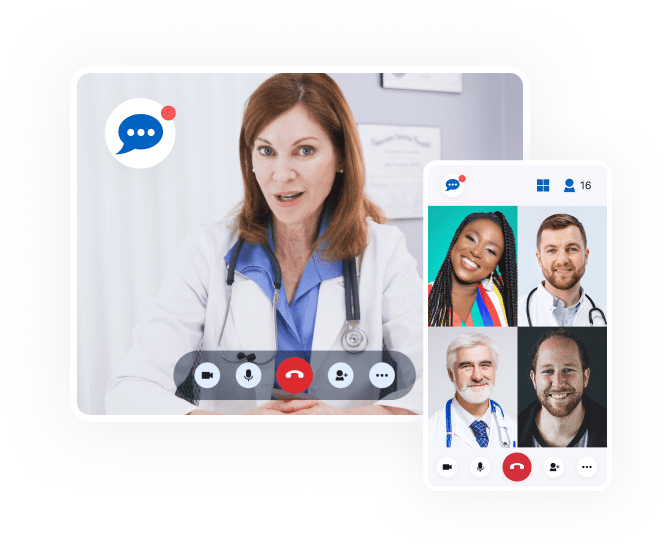

One Telehealth Platform, Six Ways to Deliver Care


Your Telehealth Platform Capabilities


- Patient e-registration
- Appointment dashboard
- Patient feedback
- Payment gateways
- Health records
- Digital prescriptions
- SOAP notes
- Appointment data

- Video/audio calls
- In-session messaging
- Booking reminders
- Follow-up notifications

- Access management
- Smart analytics
- Stock oversight
- Patient database
- Appointment scheduling
- Patient referrals
- Patient records
- Note templates
- Automated invoicing
- Service packages
- Coverage verification
- Claims processing

Cut Patient Wait Times by Up to 50%
- Raise patient satisfaction by up to 17%
- Keep physician burnout at bay
- Improve patient access by up to 80%

Unify Virtual Care and Clinical Workflows


What a Telehealth Platform Changes for Your Practice

- Reduced no-shows and cancellations
- Expanded patient reach and volume
- Optimized workflows and processes
- Lower overhead and admin costs
- Real-time data and insights
- Better resources and staff use

- Faster access to medical care
- No travel or wait times
- Greater scheduling flexibility
- Easier follow-ups and check-ins
- More privacy and convenience
- Access to specialists remotely
Telehealth Success Stories from Our Healthcare Clients
- Inefficient patient appointment flow
- High volume of support center calls
- Missed visits from appointment no-shows
- 55% fewer patient support calls
- 73% drop in no-show appointments
- 24/7 AI-based patient scheduling

- Slow access to patient decisions
- Manual, repetitive documentation
- No instant alerts for clinicians
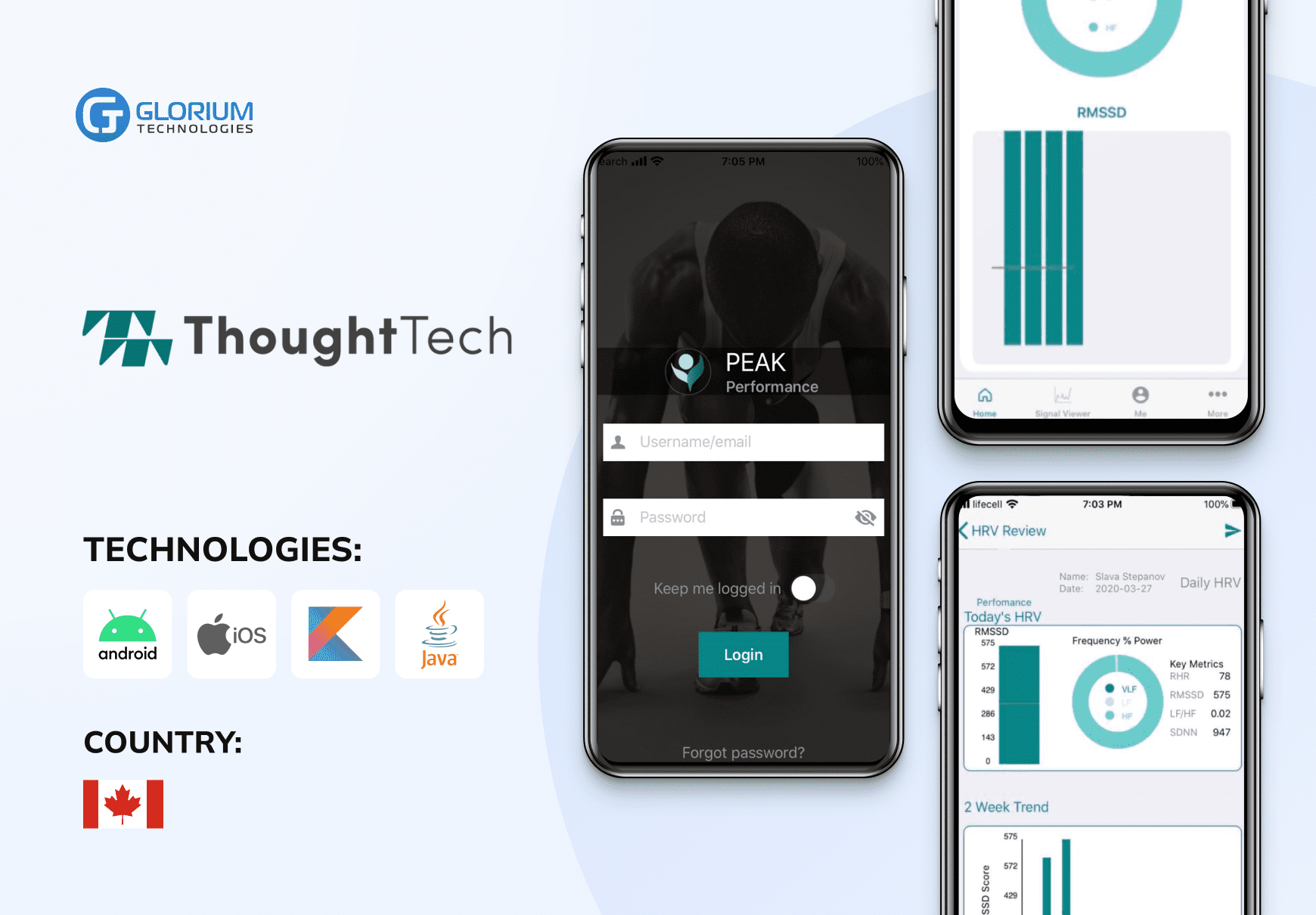
- Instant QR access to patient data
- Critical updates via email/SMS
- Click-based consent and sharing

- Ensuring HIPAA-compliant streaming
- Delivering seamless HD video calls
- Building portals and check-in flows
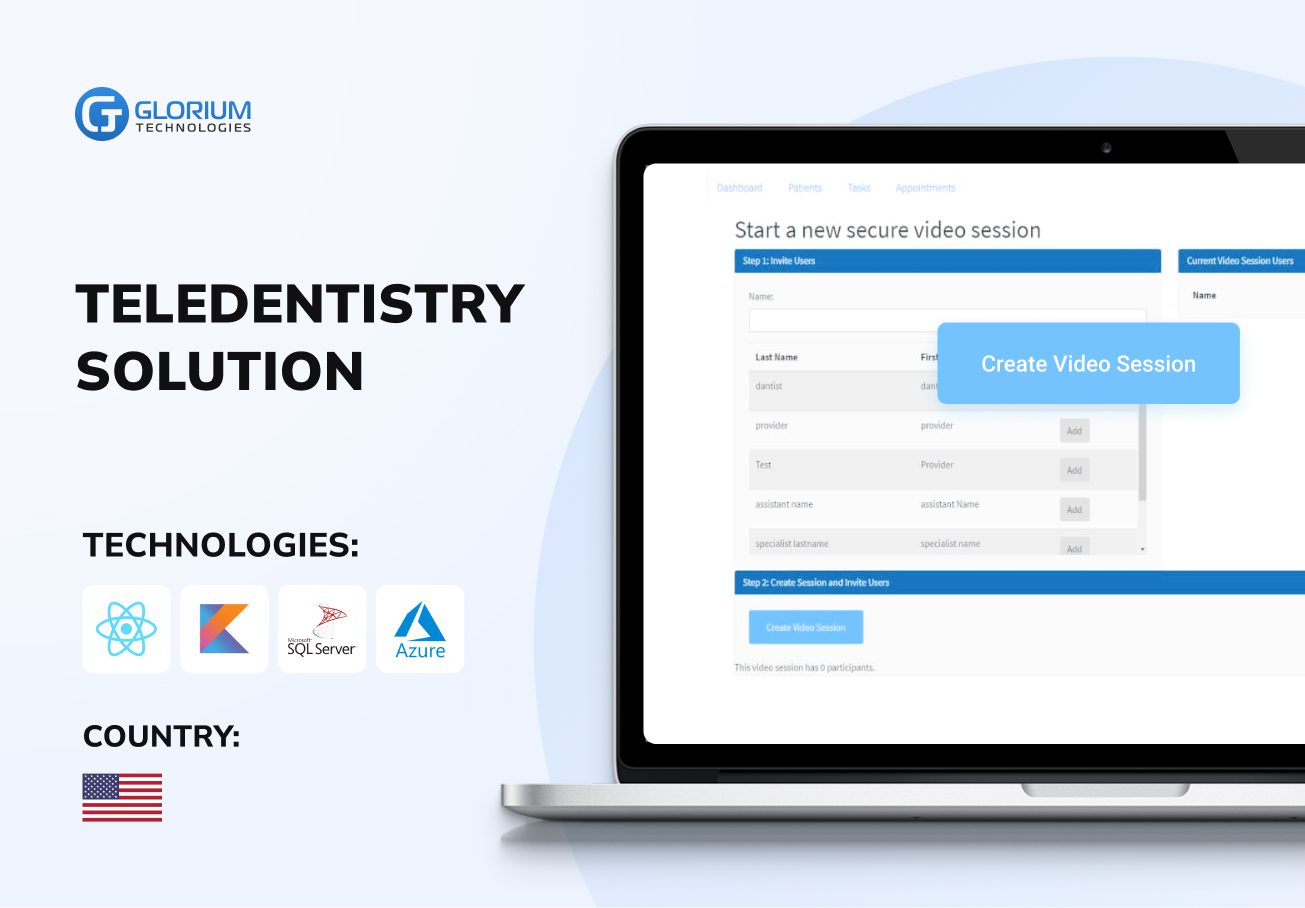
- Cross-platform, secure video sessions
- Anonymous, encrypted patient data
- Accessible care in remote locations
What Powers Telemedicine Solutions


















7-Step Telehealth Platform Development Process

What our clients say about us







Success Stories










Who we are
About usGlorium Technologies is a full-cycle app & software development company which covers specific client business needs and manage them with the help of the best possible technology solutions.
Since 2010, we have been inventing digital breakthroughs, helping startups and businesses come out on top in their markets.

Why choose us






Certifications




Let's Connect!



Why Telehealth Platforms Became Standard Care and How to Build One
From the early days of house calls to the present-day urgent care centers, immediate medical care has always been crucial. Of course, we can’t plan for sick days or predict when illness or accidents will occur, so constant access to care can save lives. That’s where a well-designed telemedicine application can improve patient outcomes by reducing treatment delays, supporting ongoing monitoring of chronic conditions, and enabling easier follow-ups. Doctors can now deliver services and earn income remotely, while patients receive treatment without ever leaving their homes.
Telemedicine software isn’t a recent innovation, even if advanced video calling and chat apps make it feel that way. The concept dates back to the late 1950s, when clinicians at the University of Nebraska first transmitted neurological exams via closed-circuit television. Since then, the technology has been further developed to connect with a state hospital for video consultations.
According to the American Hospital Association, 86.9% of U.S. hospitals offered telehealth services in 2022, up from 72.6% in 2018. This shift gives hope for people living in regions that lack qualified medical professionals. For example, the Veterans Health Administration has used telemedicine to serve more than 2 million veterans, improving appointment availability and reducing hospital readmissions.
Demand also reaches well beyond hospitals. Private practices, solo practitioners, small group practices, and mental health professionals now use a telehealth platform to run virtual visits, share files securely, and keep treatment plans on track between sessions. In the last quarter of 2023, more than 12.6% of Medicare beneficiaries received telehealth service.
Telehealth software bridges critical gaps in care delivery. Smart integration and user-friendly design empower providers to reach patients faster and deliver outcomes that are often just as effective as in-person visits
Telehealth Platform vs. Telemedicine Software: Not the Same Thing
The two terms are often used interchangeably, but they are not the same. Telemedicine refers to clinical care delivered remotely, such as a diagnosis or a prescription during a video visit. Telehealth is broader: it also covers remote patient monitoring, patient education, care coordination, and the administrative work behind virtual care.
A telehealth platform is the integrated platform that brings all of this together. Instead of a standalone video tool, healthcare organizations get encrypted video sessions, a secure client portal, scheduling for multiple providers, insurance billing, and electronic health records integration in one compliant platform.
There are three main ways to get one, and each fits a different stage of growth:
| Option | Time to launch | Control over HIPAA compliance | Customization | Best fit |
| Off-the-shelf telehealth vendor | Days | Limited to the vendor’s setup and paid plans | Low | Solo practitioners and small practices testing virtual care |
| White label telehealth solutions | Weeks | Shared with the vendor under a BAA | Medium: your branding, the vendor’s core features | Practices that want their own brand quickly |
| Custom development | Months (an MVP first) | Full: you own the compliance infrastructure | High: built around your clinical operations | Health systems, digital health startups, and multi-site groups |
Telehealth Platform Features Patients and Providers Expect
Patients judge a virtual visit by how fast they get in and whether the call holds. Clinicians judge it by how little they need to retype afterward. The features below cover both sides, from the visit itself to the back-office work that pays for it.
- Encrypted video sessions: HIPAA-compliant video conferencing on desktop and mobile, with bandwidth adaptation for patients on weak cellular connections
- HIPAA-compliant messaging: Encrypted chat and file sharing that lets patients send photos, documents, and questions between visits
- EHR integration: Visit notes, vitals, and orders written straight to the patient’s chart without double entry
- Online scheduling: Self-service booking, rescheduling, and automated reminders that keep calls off the front desk
- E-prescribing: Electronic prescriptions and refill requests routed to the patient’s preferred pharmacy
- Patient portal: One place to book visits, complete intake forms, view records, and pay bills
- Remote patient monitoring: Readings from wearables and connected devices that reach care teams between appointments
- Practice management: Multi-provider calendars, insurance billing, and reporting inside the same system
As part of comprehensive telemedicine app development services, companies often include advanced capabilities such as multi-language support, integrated billing, group plans (therapy rooms) for behavioral health, or AI-driven triage tools. They all help expand access, personalize care, and attract a broader user base. These added elements enhance user experience and position the platform for long-term scalability and market relevance.
Building a HIPAA-Compliant Telehealth Platform Patients Trust
No matter how polished the interface or how fast the video loads on your telemedicine software, a single data breach can trigger millions in fines, destroy patient trust, and shut down operations. Regulatory compliance isn’t a feature you bolt on at the end. It needs to be woven into every layer of your telehealth software from day one, which is why choosing the right telemedicine software development company matters so much.
The three HIPAA rules that shape your platform
If you operate in the United States, your telehealth application must comply with the Health Insurance Portability and Accountability Act (HIPAA). This means implementing administrative, physical, and technical safeguards that protect electronic Protected Health Information (ePHI) at rest and in transit.
Three HIPAA rules shape how a telehealth platform works. The Privacy Rule governs how protected health information is used and shared. The Security Rule sets the safeguards for ePHI. The Breach Notification Rule requires you to notify affected patients and HHS after a breach of unsecured patient data.
In practical terms, your development team needs to ensure:
- End-to-end encryption (AES-256) for all video, audio, and messaging channels so that patient conversations cannot be intercepted
- Role-based access controls (RBAC) that restrict data visibility based on each user’s role, whether physician, nurse, billing staff, or administrator
- Multi-factor authentication (MFA) for every user who accesses ePHI, including clinicians who log in from personal mobile devices
- Automatic session timeouts that log users out after periods of inactivity, preventing unauthorized access on shared or unattended devices
- Comprehensive audit trails that record who accessed what data, when, and from where, giving you a defensible log if regulators come knocking
- Business Associate Agreements (BAAs) with every third-party vendor whose services touch patient data, including cloud hosting providers, payment processors, and analytics tools
One point that catches many organizations off guard: consumer-grade video tools like Zoom or FaceTime are not HIPAA-compliant out of the box. During the pandemic, the HHS Office for Civil Rights temporarily relaxed enforcement, but that discretion has ended. Your platform must use a purpose-built, HIPAA-compliant communication layer. Some video tools offer a HIPAA-compliant version only on specific paid plans and only after the vendor signs a BAA, so check the exact plan before you rely on it.
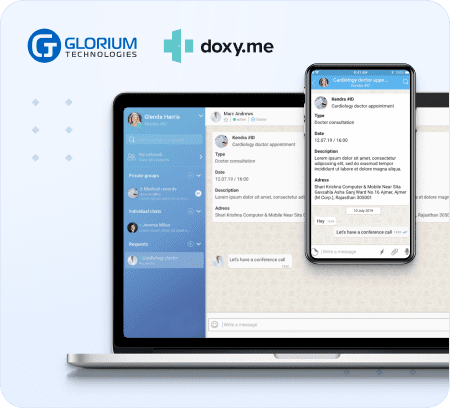
We applied these safeguards for a healthcare startup that needed HIPAA-compliant streaming, HD video calls, and patient check-in flows. The result was cross-platform, encrypted video sessions with anonymized patient data, which made care accessible in remote locations.
Why every vendor needs a signed BAA
Any telehealth vendor that creates, receives, stores, or transmits patient data on your behalf is a business associate under HIPAA. That includes your video provider, cloud host, messaging service, and billing partner. A signed business associate agreement defines how the vendor protects the data, reports security incidents, and follows breach notification rules. Without a BAA in place, even a well-encrypted platform leaves you open to HIPAA violations.
What the new Security Rule could change
In January 2025, the HHS Office for Civil Rights proposed the largest changes to the Security Rule since 2003. The proposal would make encryption of ePHI and MFA mandatory, require yearly risk analyses and regular vulnerability scans, and tighten business associate obligations. As of mid-2026, the final rule had not been published, so the current Security Rule still applies. Building to the proposed standard now spares you a costly retrofit later.
Serving EU patients under GDPR
For organizations serving patients in the European Union, the General Data Protection Regulation (GDPR) adds another layer of requirements. GDPR mandates explicit, informed consent before collecting any personal health data. Patients must be able to access, correct, and request deletion of their records at any time. Your telemedicine platform needs a consent management module that logs each patient’s permissions with timestamps and version tracking.
If your servers are hosted in the U.S. but serve EU residents, you also need to address cross-border data transfer rules. Standard Contractual Clauses (SCCs) or binding corporate rules must govern the transfer of data across jurisdictions.
Licensing rules that change at state lines
Compliance goes beyond data security. In the U.S., telehealth regulations vary by state. Some states require providers to hold a license in the state where the patient is physically located during the consultation. Others participate in interstate compacts, such as the Interstate Medical Licensure Compact (IMLC), which streamlines multi-state practice. Your platform should include location verification logic and provider credential checks that flag jurisdictional mismatches before a session begins. Reputable telemedicine software providers build these compliance checks directly into their platforms.
Federal rules matter too. The Consolidated Appropriations Act, 2026, extended key Medicare telehealth flexibilities, including visits from the patient’s home and audio-only coverage, through December 31, 2027. Your platform should support an audio-only fallback and apply the correct telehealth billing codes, so providers can keep billing for telehealth services as the rules change.
Making compliance part of every sprint
The most cost-effective approach is to integrate compliance checkpoints into every sprint. Conduct threat modeling during discovery. Run penetration testing after each major release. Perform regular vulnerability scans on APIs and third-party integrations. And document everything, because regulators don’t just want to see that you’re compliant today. They want evidence that compliance is part of your ongoing process. Treat this compliance infrastructure, from encryption keys and audit logs to access policies and BAAs, as part of the product, with a clear owner and a review cycle. This is where custom telehealth software development proves its value over off-the-shelf tools that lack the flexibility for rigorous, built-in compliance workflows.
When your telemedicine platform is built on a solid compliance foundation, you protect your patients, your reputation, and your bottom line. That level of trust is also what keeps patients coming back, which ties directly to the retention goals that make telehealth worth the investment in the first place.
How Telehealth Is Reshaping Behavioral Health
Behavioral health is one of the strongest use cases for virtual care. In J.D. Power’s Telehealth Satisfaction Study, 57% of recent telehealth users said they prefer telehealth for regular mental health visits. Medicare has also made home-based behavioral and mental telehealth services permanent.
Mental health professionals need more than a video link, though. A behavioral health telehealth platform typically adds:
- Secure intake and consent: Digital forms and e-signatures completed before the first telehealth session
- Client portal: A space for session notes, homework, and patient questions between appointments
- Group therapy rooms: Encrypted video sessions with host controls for each participant
- Outcome tracking: Standard measures such as PHQ-9 and GAD-7 linked to treatment plans
- Substance use safeguards: Extra protection for records covered by 42 CFR Part 2
These features raise client engagement between sessions and help private practices grow without adding administrative staff.
When Your EHR and Telehealth Platform Work as One
The shift toward virtual care has pushed EHR systems beyond basic recordkeeping, requiring them to support more dynamic and patient-centered experiences. Standard, off-the-shelf solutions often can’t support specific workflows and real-time data exchange. That’s why many healthcare providers are interested in custom telemedicine software solutions that can align directly with operational needs.
These systems integrate smoothly with existing tools, making care delivery more efficient and improving satisfaction on both sides—patients and care teams. Many companies in the healthcare industry are now actively adopting telehealth and custom digital platforms to reduce hospital admissions and improve patient engagement.
Built around how your clinicians actually work
One-size-fits-all systems rarely align with the fast-paced, varied needs of virtual care. Custom telemedicine software development allows providers to build around their actual processes, whether that means customizing data fields or adapting interfaces for different roles.
This level of flexibility ensures smoother workflows for clinicians, fewer clicks for support staff, and a more cohesive patient experience. Features like secure video conferencing, smart prescription management, and integrated lab result tracking can increase both care quality and provider satisfaction.
This is reflected in our work with a DME provider that struggled with an inefficient appointment flow and a high volume of support calls. After we added 24/7 AI-based scheduling, patient support calls dropped by 55% and no-show appointments fell by 73%.
Effective care depends on instant access to up-to-date information. Custom telemedicine solution development services can help you integrate EHR systems with:
- Wearable medical devices
- Patient portals
- Diagnostic tools
- Billing platforms
- Practice management systems
- Labs, pharmacies, and other third-party systems
You can build a centralized, real-time ecosystem that improves care coordination while minimizing delays and errors, leading to stronger continuity of care across every touchpoint. With HL7 and FHIR APIs, health systems with multiple providers and locations keep electronic health records, telehealth sessions, and billing data in sync.
How to Spot the Right Telehealth Development Partner
Running a healthcare business means staying aligned with current trends, and telemedicine is no longer optional. In J.D. Power’s Telehealth Satisfaction Study, 94% of patients who used telehealth in the past year said they would use it again, and 80% preferred it for prescription refills. Like it or not, investing in telemedicine software development services has become essential to staying competitive and meeting patient expectations.
Five signs you’ve found the right partner
You need to team up with someone who understands your goals and the evolving landscape of digital care.
- Industry expertise & regulatory knowledge: Look for companies that are familiar with healthcare compliance, such as HIPAA, GDPR, and HL7. You need those like Glorium Technologies that have worked with telehealth platforms, yielding measurable results
- Proven track record in custom solutions: Vendors who have built bespoke systems, including video visits and EMR integration, demonstrate versatility
- Robust interoperability & integration skills: Ensure they support live EMR/EHR interoperability, patient portal sync, and device connectivity, reducing silos and enhancing care coordination
- A signed BAA: A telehealth vendor that won’t sign a business associate agreement can’t legally handle your patient data
- Clear ownership terms: With custom development, you own the code and the data, while white label telehealth solutions often tie you to per-provider paid plans
You can also vet the candidates using practical criteria. For example, you can ask for data-driven case studies. You need to confirm that their team includes specialists—backend developers, UX designers, and QA engineers—capable of handling real-time video, security, and scalability in production.
A true partner offers regular updates, collaborative planning sessions, and clear escalation paths for issues, far beyond mere status reports. Ask how they’ve handled shifting requirements mid-development. Agile responsiveness is pivotal as telehealth needs often change along with regulations.
By choosing a development partner experienced in telemedicine software development services, you invest in solutions that enhance care delivery, support users, and scale with your organization.
Telehealth Platforms Built Around Your Vision
We’re dedicated to building user-focused solutions that reflect each client’s unique goals. A clean, intuitive interface and advanced features address real user challenges and drive engagement, and we never lose sight of that. Whether you run a small clinic or a large healthcare network, we adapt every element of the system to boost usability, minimize administrative burden, and elevate the quality of care delivery. Our development process starts with a deep dive into your market, ensuring our telemedicine software aligns with both your vision and your users’ expectations.
Our technology stack lays the foundation for robust, scalable, and secure telemedicine platforms. We work with modern frameworks that support fast development cycles and long-term maintenance. In addition, advanced technologies like artificial intelligence and blockchain allow us to integrate future-ready capabilities, such as smart triage, predictive analytics, and secure patient record management.
Here’s what we value the most:
Customization and flexibility: Every medical organization has unique needs, and off-the-shelf tools rarely deliver the depth and adaptability required. We design custom systems based on your exact workflows, peculiarities of patient data management, and care delivery models. From bespoke dashboards to role-specific access, we make sure the platform fits your operations.
Security and compliance: In healthcare, trust is everything, so data security and compliance are built into every layer of our telemedicine solutions. We strictly adhere to industry regulations such as HIPAA in the United States, GDPR in Europe, and other regional frameworks, ensuring patient data is handled responsibly. From encrypted communications to audit trails and access controls, we implement robust security measures to help you stay protected and compliant without compromising user experience.
Interoperability: We connect your telehealth platform to EHRs, labs, pharmacies, payers, and remote patient monitoring devices through HL7, FHIR, and secure APIs, so your team works in one integrated platform instead of switching between tools.
What’s Next for Telehealth: AI, Wearables, and Beyond
There’s no doubt that telemedicine solutions will keep evolving, changing, adapting, and improving. Technologies like IoT and wearable health devices are becoming integral to telemedicine, enhancing real-time monitoring and personalized care. AI-powered triage, ambient clinical documentation, and predictive analytics are also cutting administrative load. With the U.S. facing a projected shortage of up to 86,000 physicians by 2036, virtual care is becoming a practical way to extend each clinician’s reach. We continuously adapt to deliver forward-thinking solutions that keep our clients aligned with the latest advancements.
Choosing Glorium Technologies as your telemedicine software development partner means working with a team that understands every audience you serve: healthcare professionals, patients, and third-party providers. And you don’t have to take our word for it, our clients’ results and feedback speak for themselves.
Schedule an intro call to speak directly with our telemedicine software providers, ask any questions you have, and get an initial estimate of your project’s scope.

FAQ
What makes a telehealth platform HIPAA compliant?
A HIPAA-compliant telehealth platform protects patient data with end-to-end encryption, role-based access controls, multi-factor authentication, automatic session timeouts, and audit logs. It also needs a signed business associate agreement with every vendor that handles protected health information, regular risk assessments, and a documented breach notification process. Software alone isn’t enough: your policies and staff training complete the picture.
Do I need a business associate agreement (BAA) with my telehealth vendor?
Yes. Under HIPAA, any telehealth vendor that stores, processes, or transmits patient data for you is a business associate and must sign a BAA. This covers video conferencing, cloud hosting, messaging, and billing providers. If a vendor refuses to sign one, you can’t use its service for patient care without risking HIPAA violations.
White label telehealth solution or custom development?
White label telehealth solutions are faster to launch and work well for small practices and solo practitioners who need standard virtual visits under their own brand. Custom development makes sense when you need unique workflows, deep EHR or practice management integration, multiple providers and locations, or full ownership of the code and data. Many organizations start with a custom MVP and scale from there.
Can a telehealth platform support mental health practices?
Yes. Platforms built for mental health professionals add secure intake forms, a client portal, group therapy rooms, outcome tracking, and extra safeguards for substance use disorder records. These features improve client engagement and let private practices offer flexible care without extra administrative staff.
How much does it cost to build a telehealth platform?
The cost depends on scope: the number of user roles, features such as remote patient monitoring or insurance billing, the EHR and third-party systems you connect, and your compliance requirements. A focused MVP costs far less than a full multi-provider system. Use the cost calculator on this page for a quick estimate, or book a discovery call for a detailed quote.
What value can Glorium Technologies add as a telemedicine software development company?
We bring strategic value by combining deep healthcare expertise with scalable, user-focused solutions. Our software developers don’t just build solutions; they create secure, compliant platforms that enhance patient engagement and adapt to your growth. From MVP to full-scale systems, our healthcare experts ensure every feature aligns with clinical needs and business goals.
How can a telemedicine app development company help me increase patient retention?
A telemedicine software development company can build custom features that directly impact patient retention by improving convenience, accessibility, and communication. When patients can easily schedule appointments, access records, and consult with providers remotely, they’re more likely to stay engaged with their care. A seamless, user-friendly platform helps you build trust, reduce missed visits, protect patient data, and encourage ongoing relationships, which are key factors in keeping patients loyal to your healthcare delivery service.