











Custom Patient Portal Software Development Services
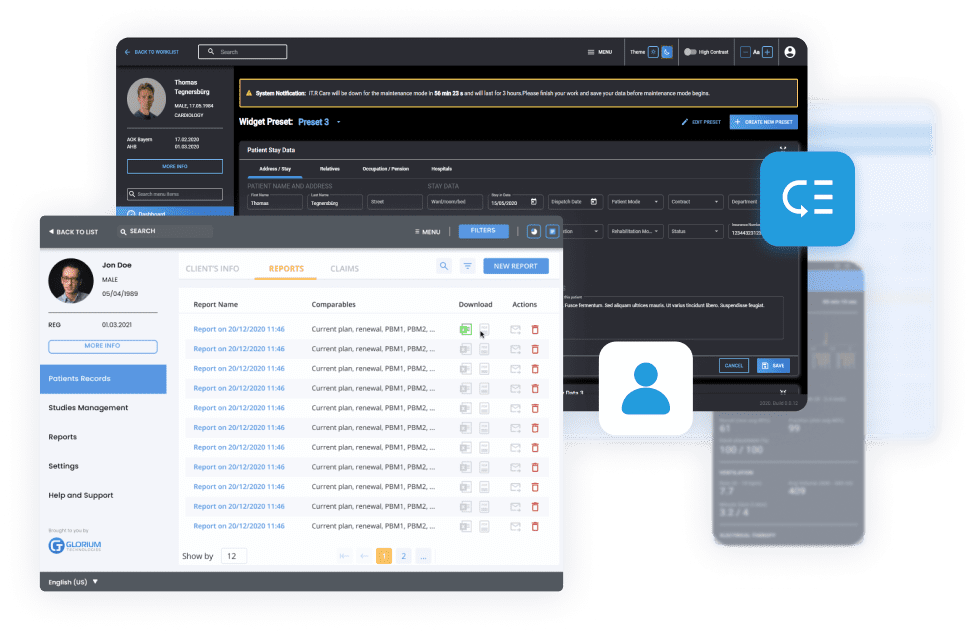
Plan Your Budget Confidently.
Choose Your Starting Point



Patient portal software is part of a complex and strictly regulated healthcare industry. Maintaining app security and protecting patient data is crucial. We specialize in industry-specific knowledge and can guarantee full compliance with HIPAA and other regulations.
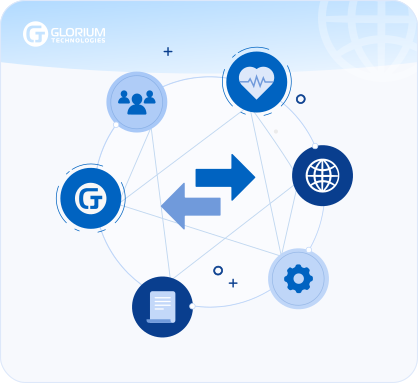
To maximize the efficiency of your patient portals, they must be integrated with electronic health record systems. This will help your healthcare providers exchange information between patients, aid in data management and storage, and improve patient satisfaction.
If you are looking to develop a patient portal, we recommend working with professional providers to achieve full compliance, security, and trustworthiness. We create healthcare solutions driven by our 14+ years of collective experience in the industry.
What Drives the Cost of Patient Portal Development


Why Healthcare Organizations Choose Glorium Technologies
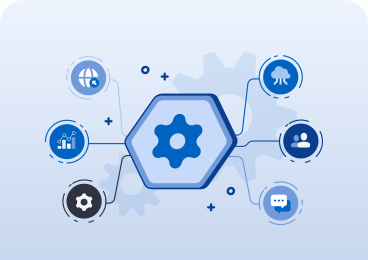
Our goal is to create patient portal solutions that are intuitive and easy to use. With your audience in mind, we build in necessary and advanced features, allow customization, and create a user-friendly interface.
Each project is unique, and we work closely with our clients to understand exactly what they’re looking for. We understand your needs and requirements to develop a patient portal just for you.

Our healthcare services also include compliance assurance to help you protect your solutions and patient data. Rest easy, knowing that your software adheres to HIPAA and other high standards of the industry.
Must-Have Patient Portal Features for Modern Practices
 Personal Health Records (PHR)
 Prescription Services
 Telehealth
  Patient Self-service
 Educational Database
 Feedback Aggregation
 Insurance and Payment Flow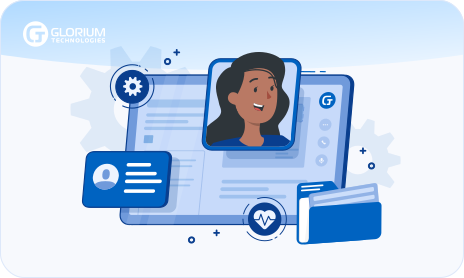
This feature benefits both healthcare providers and patients. Patient portal solutions often have access to health records, medical history, test results, medications, and treatment plans.
Such health data encourages patients to participate in their care, and for yourself to deliver better healthcare services.
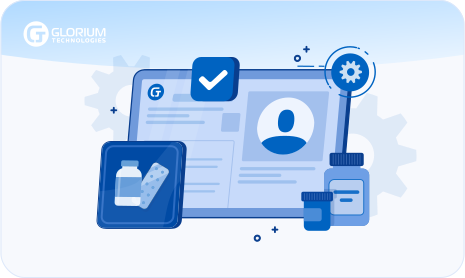
With this feature in your patient portal software, patients can request prescription refills, review medication instructions, and access their medication history.
You can also add push notifications and reminders to help users and improve patient satisfaction.
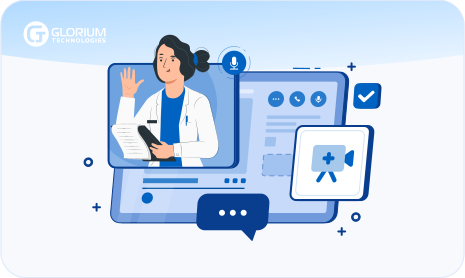
If you add video and chat consultations in your patient portal software, you’ll make it easier to provide healthcare services remotely and improve user satisfaction.
This feature requires extra care to ensure that medical data privacy and regulations are met.
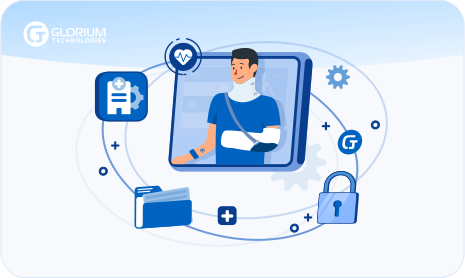
Including patient registration and self-service features in your software will improve patient engagement and help them book appointments, refill medication, and more.
This will also reduce administrative routine work for your staff and improve the overall workflow.

Some integrated patient portals offer users educational material, including articles, communities, gamified content, etc. These features aid in improving patient engagement.
Additionally, this feature will help your users understand their conditions and treatments better.

This feature is necessary for you and your team to assess your patient portal software performance and make necessary changes if the feedback suggests so.
Include surveys, forms, questionnaires, and similar feedback aggregation methods to achieve the best results.
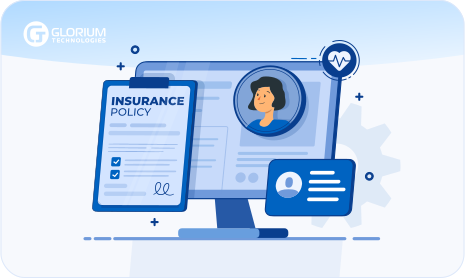
Appointment scheduling, patient registration, and similar features are great, but adding insurance and payment flow will help your patients save time and decrease headaches.
They will be able to easily handle insurance claims and payments through your patient portal software.
Patient Portal Integration with Existing Systems


Our approach to your unique project includes our commitment to accelerating the performance of your solutions. This can be done through various API integrations.
Such an approach allows us to develop patient portals with high health data privacy, security, and efficiency, including real-time access to medical records, appointment scheduling, and communication forms.
CRM integration is a necessary form of API integration for all healthcare solutions. We build patient portals that have easy access to medical data and provide efficient management solutions.
This integration will help you and your healthcare providers offer your patients better, more personalized care instead of generalized and inattentive care.
A significant challenge arises when healthcare organizations and providers have to exchange data that is in different formats, highly sensitive, incorrectly stored, or prone to cyber-attacks.
Electronic health records integration along with our approach guarantee timely access to medical history, allowing your professionals to provide reliable and faster services.
How Patient Portals Help Labs and Pharmacies Grow






Patient Portal Development Services from Glorium Technologies
- Assess your patient interaction with the solution
- Outline the benefits and ROI of the portal implementation
- Find best features and tech stack for your patient portal
- Design portal architecture with necessary integrations
- Create a user-friendly interface for your patient portal
- Provide a detailed project pricing and estimated timeline
- Ensure compliance with HIPAA, HITECH, FDA, etc.
- Initial consultation and project planning
- Patient portal software development and testing
- Ensuring compliance with relevant regulations.
- Gathering user feedback for improvements
- EHR, CRM, Practice Management System Integration
- User training for smooth adoption of the patient portal
- Ongoing support and maintenance of the system
Key Benefits of Patient Portals for Providers and Patients

Hospitals, private medical facilities, and other healthcare institutions are looking for extra opportunities to communicate with patients as much as possible. Patient portals serve as a great tool for that.

Patient portals give the ability to chat with doctors, access medical records and read up on matters that interest patients from helpful resources anytime.

Interaction between patients and doctors becomes more convenient for both parties. Patients have all their health information at their disposal in the app.
The medical facility staff can skip a fair share of their daily routines since the most tiresome, repetitive tasks are now automated. This is one of the critical benefits a patient portal features.

Every patient’s information is now stored in the patient portal, and doctors rely on the software to make a more accurate diagnosis. This eliminates unnecessary confusion.

Patients become more responsible, bringing better clinical outcomes. Along with this, doctors may control the fulfillment of prescriptions with the help of patient portals.
Why Partner with Glorium Technologies for Patient Portal Development
 Expertise in Healthcare Solutions
 Data Security and Compliance
 Interoperability
 Scalability for Growth
 Collaborative Approach
 Proven Track Record
Our team has 14+ years of collective experience in healthcare software development. We bring deep industry knowledge and expertise to every individual project.
Working with our team can guarantee the uniqueness and efficiency of your patient portal.
We regularly train our development team and other professionals in healthcare regulations to maintain a patient portal development process that adheres to standards.
Our patient portal solutions ensure safety, security, and confidentiality for your patient data.
We design patient portals with interoperability in mind. These solutions seamlessly integrate with existing healthcare systems, EMRs, and other tools.
We can develop a patient portal that improves workflows and data exchanges.
As your healthcare organization evolves, your patient portal needs may change. Scalability and flexibility are required to adjust your app to changes.
We build patient portals that don’t require complicated changes and grow alongside your company.
Our team works closely with your healthcare professionals throughout the development process to ensure the patient portal aligns with your organization’s goals and workflows.
We believe in collaborative communication with each one of our clients.
Our portfolio includes a range of projects from patient portals to EMR systems, showcasing our ability to create reliable and effective healthcare software.
Our team has a history of successfully delivering healthcare IT solutions.
Recent healthcare clients



What our clients say about us







Success Stories











Who we are
About usGlorium Technologies is a full-cycle app & software development company which covers specific client business needs and manage them with the help of the best possible technology solutions.
Since 2010, we have been inventing digital breakthroughs, helping startups and businesses come out on top in their markets.

Why choose us






Certifications




Let's Connect!



Patient Portal Development: A Complete Guide for Healthcare Organizations
Patient portals have moved from a convenience to a core part of care delivery. According to the 2024 Health Information National Trends Survey (HINTS) analyzed by ASTP/ONC, 77% of individuals in the US were offered online access to their medical records in 2024, and 65% accessed them at least once in the past year, up from 57% in 2022. Patients also use portals for more than viewing records: more than three-quarters of users message their providers (79%) or schedule appointments (77%) online.
The market reflects this demand. Research and Markets valued the global patient portal market at $3.92 billion in 2024 and projects it to reach $8.38 billion by 2030, growing at a CAGR of about 13.5%. For healthcare organizations, the question is no longer whether to offer a patient portal, but how to build one that patients actually use and that fits into existing systems.
From offering 24/7 access to medical records to reducing phone calls and paperwork, these portals are now significant aspects of modern healthcare delivery.
There are several types of patient portals on the market:
- Standalone patient portal: They are independent and operate without the healthcare provider’s system
- Integrated patient portal: Such a patient portal is usually embedded into existing EHR systems
- Mobile app-based portal: This is a patient portal app designed for mobile devices specifically
- Web-based portal: This includes healthcare web portal development accessible through a web browser without the need for software installations
The table below shows how these portal types differ in practice:
| Portal type | How it gets patient data | Best fit |
| Standalone | Its own database, synced with other systems through APIs or manual imports | Startups, specialty clinics, and teams validating a minimum viable product (MVP) |
| Integrated | Reads and writes directly to the EHR/EMR, practice management systems, and billing data | Hospitals and multi-location medical practices that need one source of truth |
| Mobile app-based | Same back end as the web portal, delivered through iOS and Android apps | Patient populations that rely on push notifications, reminders, and video consultations |
| Web-based | Browser access to the same back end, no installation required | Broad patient access, including older patients and caregivers using shared devices |
In this guide, you’ll find the essential features, integrations, development steps, and real project examples that guide custom patient portal development.
Must-Have Patient Portal Features
The right feature set depends on your patient population and care model, but most successful patient portal solutions are built around the features below. Each one connects patients directly to a specific part of care delivery.
Secure messaging
Secure messaging lets patients send non-urgent questions to their care team and receive replies inside the portal instead of through phone calls or unencrypted email. Messages are encrypted in transit and at rest, routed to the right inbox (a physician, nurse, or billing team), and stored in the patient record so the conversation becomes part of the medical history.
Appointment scheduling
Online appointment scheduling shows real-time availability pulled from the practice management system, so patients can schedule appointments, reschedule, or cancel without calling the front desk. Automated reminders by SMS, email, or push notification reduce no-shows, and waitlist logic can fill canceled slots automatically.
Online bill payment
Online bill payment gives patients a clear view of statements, insurance adjustments, and outstanding balances, with card or ACH payments processed through a PCI-compliant gateway. Payment plans, saved payment methods, and estimates before a visit help reduce unpaid balances and billing calls.
Lab results access
Lab results access delivers test results to patients as soon as they are released, along with reference ranges and plain-language explanations. Providers can configure release rules, for example, holding sensitive results until a clinician has reviewed them, while staying aligned with the 21st Century Cures Act requirements on timely patient access to electronic health information.
Health records access
Health records access gives patients secure access to their medical records, including medical histories, diagnoses, allergies, immunizations, visit summaries, and treatment plans. Patients can download or share their personal health information with another provider, which supports care coordination across facilities.
Prescription management
Prescription management lets patients view active medications, request refills, and receive reminders. Requests flow into the clinician’s queue in the EHR, and approved refills can be sent electronically to the patient’s pharmacy.
Pre-visit forms and patient onboarding
Digital pre-visit forms replace clipboards in the waiting room. New patients complete registration, insurance details, consent forms, and health questionnaires before arrival, and the data is written to the patient record automatically. This shortens check-in and improves data integrity because staff no longer retype handwritten forms.
Proxy access
Proxy access lets parents, adult children, and other caregivers view records and manage appointments on behalf of a patient, with permissions defined by role. Demand for this is growing fast: according to ASTP/ONC, the share of individuals who accessed a portal on behalf of someone they care for more than doubled between 2020 and 2024, from 24% to 51%.
Video consultations
Built-in video consultations let patients join a telehealth visit from the portal, with a virtual waiting room, secure sharing of files and images, and visit notes saved to the record afterward.
Educational resources
A library of educational resources, such as articles, videos, and post-visit instructions linked to a patient’s diagnosis, helps patients understand their conditions and stick to treatment plans.
Healthcare data analytics
Portal usage data shows which features patients use, where they drop off, and which patient groups are not activating their accounts. Healthcare data analytics and predictive analytics can go further, for example, flagging patients at high risk of missing an appointment so staff can follow up early.
Benefits of Patient Portals for Patients, Facilities, and Providers
Patient portals benefit three types of audiences: patients, healthcare facilities, and healthcare professionals. Yes, a patient portal is a versatile tool that creates a win-win situation for all stakeholders.
Benefits for patients
Patients value a patient portal system since it helps them access their medical information and test results and communicate with doctors without a hassle. Engagement also depends on the care team: ASTP/ONC found that 87% of individuals encouraged by their provider to use a portal went on to access it.
The most significant benefits include the following:
- 24/7 access to information: Including lab results, appointments, medication, treatment plans, and so on
- Convenient communication: Often, a patient portal system will have telehealth features and offer patients video or text chats with their doctors
- Appointment scheduling: This benefit also helps your administrative tasks. Patients prefer to schedule appointments online, and a patient portal sends them reminders as an additional benefit
- Higher chances of medication adherence: Patients are more likely to stick to their treatment plans if your patient portal has notifications and reminders
- Educational resources: Some patient portals have community and educational features, which help users learn more about their health
Benefits for healthcare facilities
Clinics, labs, pharmacies, and other healthcare facilities also benefit from patient portal software. The following are the most significant benefits for this audience type:
- Reduced administrative work volume: Integrated patient portals often allow administrative staff to schedule appointments and facilitate their work. Additionally, patient data management features and enhanced data security help them reduce their workload
- Reduced operational costs: Even though custom patient portal solution development may have high costs, facilities are seeing reduced operational and long-term costs with the use of these systems, as self-service scheduling, digital intake, and online bill payment take load off call centers and billing teams
- Better regulatory compliance and reporting: Patient portals can simplify the process of regulatory adherence. When you develop such a portal with a professional team, HIPAA, GDPR, and other healthcare regulations are built into the architecture from the start, not added after launch
- Data-driven decisions: Such portals allow healthcare facilities to gather and use customer feedback to improve their healthcare delivery
Benefits for healthcare providers
Healthcare professionals spend extra hours on mundane and routine tasks that can be easily automated by patient portals. The benefits for this audience group include:
- Faster access to patient information: Medical professionals spend hours looking for specific information. Patient portals help them access this data real-time and faster than before
- Better healthcare coordination: These systems help professionals deliver more data-backed decisions and treatment plans
- Reduced paperwork: Digital solutions like a hospital management system or a patient portal help reduce paperwork and administrative tasks
- Efficient communication: A patient portal creates efficient communication channels between doctors and patients and also various professionals across facilities
Challenges healthcare firms face when developing patient portals
While patient portals improve workflow, optimize processes, and benefit the whole medical practice, they’re difficult to develop when you want a custom-made solution that is personalized to your company’s needs.
Various firms face several challenges when developing these portals, and they either give up or launch bug-ridden software without compliance or specialty features.
Data security and privacy are some of the challenges faced by many companies. Since healthcare data is sensitive and sharing it between facilities poses a significant risk of cyberattacks, professional service providers spend weeks developing solutions that comply with industry-specific regulations.
Another challenge many healthcare organizations face is integration with existing systems. Developing a standalone patient portal or a health billing management system may sound like a regular task for a professional development team. Still, hospitals have existing systems, and you need to create a patient portal that can be easily integrated. Many of these are legacy systems with no modern API, which is why integration usually takes the largest share of the project timeline.
And finally, many companies face difficulties when creating interfaces for their apps and web apps. Users don’t like non-user-friendly interfaces, so companies spend thousands of dollars creating intuitive designs, adjusting them to user feedback, and updating them regularly.
EHR/EMR Integration: Connecting Your Patient Portal to Existing Systems
A patient portal is only as useful as the data behind it. If lab results, medication lists, or appointment slots are out of date, patients stop trusting the portal and go back to calling the clinic. That is why EHR/EMR integration is the core of every integrated patient portal Glorium Technologies builds.
Most modern electronic health records expose data through HL7 FHIR APIs, and US certified health IT is required to support standardized APIs for patient access under the 21st Century Cures Act Final Rule. Older systems often rely on HL7 v2 messages, flat-file exports, or vendor-specific interfaces. In those cases, Glorium Technologies adds an integration layer that translates between formats, so the patient portal can integrate with multiple systems without changing how clinicians work.
The main integrations a patient portal needs are:
| System | Data exchanged with the portal | Common standards and methods |
| EHR/EMR | Medical records, medical histories, medications, allergies, visit summaries, treatment plans | HL7 FHIR R4, SMART on FHIR, HL7 v2, vendor APIs |
| Practice management systems | Provider availability, appointment management, patient demographics | FHIR Scheduling resources, HL7 SIU messages, REST APIs |
| Laboratory information systems | Orders, test results, reference ranges | HL7 v2 ORU messages, FHIR DiagnosticReport |
| Billing and payment systems | Statements, claims status, billing data, online bill payment | X12 EDI, payment gateway APIs |
| Pharmacy systems | Prescription management, refill requests, medication history | NCPDP SCRIPT, e-prescribing networks |
| Medical devices and remote monitoring | Vitals, glucose, blood pressure, and other device readings | Bluetooth, device vendor APIs, FHIR Observation |
Every integration must protect data integrity and patient privacy at the same time. In practice, this means encryption in transit and at rest, role-based secure access, audit logs for every read and write of clinical data, and Business Associate Agreements with every vendor that handles protected health information.
How Glorium Technologies Builds Efficient Patient Portals: Step-by-Step Development Guide
Glorium Technologies has been helping healthcare companies create software for 16 years. The company has professional development teams, UI/UX designers, researchers, and many professionals who actively participate in the development process. This section shows how the development process works and what to look for in a development partner.
Initial consultation and analysis
The process starts with an initial interview to understand the client’s company, services, and goals. Once the specific requirements are clear, the team analyzes the portal idea and researches the audience. The team also maps every existing system the portal will connect to and agrees on the essential features for the first release.
This step clarifies what the end users are looking for and their challenges with competitive apps and websites, and makes it possible to offer something that solves these pain points.
Intuitive design and user experience creation
A strong patient experience decides whether patients activate their accounts and keep coming back. Our designers build clear navigation, simple registration and patient onboarding, accessible layouts for older users and people with disabilities, and mobile-first screens. Interactive prototypes are tested with real users before development starts, so user feedback shapes the product early, when changes are cheapest.
Integration with existing healthcare systems
Integration appears in both the challenges and the process because it’s an essential step. Hospitals already run on existing systems, and many clinics, labs, and pharmacies use various types of software to improve their workflow.
Often, these systems are outdated or use different data formats and require integration with your new patient software. We help our clients integrate these portals with existing EHRs, EMRs, practice management systems, billing platforms, and other systems using HL7 FHIR APIs, HL7 v2 interfaces, or custom middleware for legacy systems.
Development and testing
At this stage, the development team builds the portal. The tech stack and design mockups are already in place, and testers prepare real-life test scenarios. Many clients start with a minimum viable product that covers secure messaging, appointment scheduling, and lab results access, then add features based on usage data.
Once the portal has been developed, QA engineers use automated and manual testing processes to launch bug-free software. Quality assurance for healthcare software also covers security testing, penetration testing, and checks that every integration returns accurate clinical data.
Ongoing support and maintenance
Please don’t overlook this step when choosing a service provider or hiring an in-house team member. Make sure whoever develops your software provides ongoing support and maintenance.
This stage includes continuous maintenance and monitoring of the client’s software to get user feedback, suggest changes, update the app as the regulations and requirements change, and educate medical professionals and other types of audiences.
Patient Portal Success Stories from Glorium Technologies
Here are three patient-facing projects from Glorium’s portfolio that show how these features and integrations work in practice.
AI virtual assistant for patient scheduling
Challenge: A large healthcare provider was handling a high volume of support calls about appointments, and no-shows were disrupting schedules and revenue.
Solution: Glorium Technologies built a virtual assistant module that uses generative and predictive AI to let patients schedule and reschedule appointments 24/7, with personalized communication and an interface designed for patients of all ages and levels of tech experience.
Results: The solution reduced support calls by 55% and cut the negative impact of no-show appointments by 73%, freeing staff to focus on patient care.
Patient portal for at-home fertility testing (Turtle Health)
Challenge: Turtle Health, a virtual fertility clinic, had developed hardware for at-home fertility testing and needed a website and patient portal to support the full care journey.
Solution: Glorium Technologies delivered a web portal that guides patients from choosing a testing option to receiving a final fertility report. Patients complete their health intake questionnaire online, and the system generates the report once the intake, at-home ultrasound scan, blood test, and doctor’s review are all in place.
Results: Consolidating all patient data in one place doubled the client’s operational speed and gave patients a private, at-home alternative to in-clinic fertility assessment.
Joshua Haselkorn, Co-Founder of Turtle Health, described the team as “truly exceptional.”
Patient-centric platform with QR-code access (Softhread)
Challenge: Patients had to complete separate paper documents for each care decision, such as resuscitation, intubation, or organ donation. Changing a decision meant repeating the process, and doctors did not learn about updates right away.
Solution: Glorium Technologies built a patient platform where patients or their representatives record these critical decisions digitally. Invited doctors are notified of every change by email or SMS and can open all critical information by scanning a QR code.
Results: Paperwork for care decisions dropped, and clinicians gained instant access to up-to-date patient information at the point of care.
How to Develop Patient Portal Software: In-House, Freelance, or Outsourced
When it comes to developing software, you have a choice: In-house development, freelance development, or working with professional service providers.
While in-house development may seem like a good idea for long-term support and maintenance, it’s quite costly. You’ll have greater control over the development process, but you may have to find new developers to fill the skill gaps. Remember that recruiting and retaining a qualified IT specialist is not an easy task.
You can hire freelancers for a one-time project and re-hire them or others for ongoing maintenance. This is the least costly way to develop software; however, you may need to put in a lot of effort into managing freelancers and coordinating them. Freelancers rarely cover the full mix of skills a patient portal needs, from HL7 FHIR integration to HIPAA-compliant cloud infrastructure.
Working with a professional outsourcing company, on the other hand, offers flexibility and cost savings. Companies like Glorium Technologies bring expertise, scalability, and faster turnaround than other forms of development.
How to Find the Best Partner for Patient Portal Development
If you decide to work with a professional team, you must ensure they have enough experience and expertise. This short checklist can help you make the best decision:
- Evaluate the company’s experience in developing healthcare software
- Review their success cases and find the software that matches your idea the most
- Make sure their development team members are all well-trained in regulatory compliance
- Ask which EHR/EMR systems they have integrated with and which standards (HL7 v2, FHIR) they use
- Review customer testimonials and find proof that they’re a legitimate company (e.g., on Clutch)
- Request a quote or a detailed project proposal and timeframe
- Schedule a consultation with them to find out more about the team members and their vision
- Make sure they offer post-launch support
How Can Glorium Technologies Help?
Glorium Technologies specializes in developing patient portals for various healthcare facilities and has been doing so for 16 years. Its team understands the ins and outs of the industry and can help you embody your ideas.
We offer flexible collaboration methods, lower development costs (compared to the US market), complete control over the project, transparency, personalization, and confidentiality.
We’re sure you’ll have many more questions than our FAQ has to offer, so please schedule a free consultation with us and ask our experts as many questions as you’d like.
FAQ
What features should I start with in a patient portal?
Your feature set depends on your company’s requirements and your ideas. If you’re looking to develop simple portals without complex features, focus on four core features: secure messaging, appointment scheduling, lab results access, and online bill payment. Together, they cover the most common reasons patients contact a practice.
You can develop a scalable app with a professional team like Glorium Technologies. If you decide to add advanced features later on, such as proxy access, video consultations, or predictive analytics, you can easily include them without rebuilding the portal.
How long does it take to develop a custom patient portal?
The development timeline varies and is heavily influenced by your choices, mainly relating to the app’s complexity and the features you want to include.
Generally, it takes around 4 to 6 months to develop a well-functioning, simple patient portal, but for a more complex system, you’ll have to invest closer to 9 or 12 months and sometimes even more. The number and age of existing systems you need to integrate with usually has the biggest effect on the timeline.
What is the difference between an integrated and a standalone patient portal?
An integrated patient portal connects directly to your EHR/EMR and practice management systems, so patients see the same medical records, appointments, and billing data your staff sees. A standalone patient portal runs on its own database and syncs with other systems through APIs. Integrated portals suit hospitals and established medical practices, while standalone portals are often used to launch faster or to serve specialty care models.
Can a patient portal integrate with our existing EHR/EMR?
Yes. Glorium Technologies integrates patient portals with electronic health records through HL7 FHIR APIs where they are available and through HL7 v2 interfaces or custom middleware for legacy systems. Portals can also connect to practice management systems, laboratory systems, billing platforms, and medical devices, so patient data stays consistent across every system.
Are your patient portals HIPAA compliant?
The short answer is yes.Glorium Technologies treats PHI very seriously and trains all employees regularly on protecting customer data, including those not directly working on your project. Every portal includes encryption in transit and at rest, multi-factor authentication, role-based access control, and audit logs, and Glorium Technologies signs a Business Associate Agreement (BAA) with clients who need one.
Can patients give family members or caregivers access to their portal?
Yes. Glorium Technologies builds proxy access with role-based permissions, so a parent, adult child, or caregiver can view records, schedule appointments, or pay bills on a patient’s behalf. Access can be limited by data type and time period, and every proxy action is logged.
What kind of support and maintenance do you provide after launching the portal?
Our ongoing support and maintenance service includes complete care for your software and its end users. Beyond fixing bugs that may arise after launch, the team improves features, monitors market changes, adjusts your software accordingly, and provides training for your staff in case you’re looking for custom patient portal app development for your team as well.
What types of patient software can I develop with Glorium Technologies?
Our patient portal app development services include various types of solutions, including:
- Patient Portals
- EHR and EMR Systems
- Patient Data Management
- Pharmacy Management Software
- Telemedicine Apps
- Remote Health Monitoring Apps
- Hospital Management Software
- Medical Imaging Software
- AI Scheduling and Virtual Assistant Modules
- Other types of Healthcare Software development
Is Glorium Technologies available for project-based development?
Glorium Technologies offers flexible collaboration models built around your requirements. Yes, you can request project-based development, a long-term partnership, or team augmentation. We will provide you with professional developers, project managers, designers, and other professionals for your patient portal software development project.
How soon can you start working on our project?
Glorium Technologies offers flexible timelines and quick delivery. The exact start date depends on your project, but after a consultation, the team is often assembled within the first week of collaboration.