











Software Product Enhancement

Your Budget, Simplified - Discover Your Project's Cost
What is your primary goal for building an MVP?
Choose the primary funding for this project:
Choose your industry:
What MVP elements have you completed so far?
What matters most in a development partner?
How do you plan to promote your MVP?
What’s your estimated budget for this project?
What is your timeframe for launching an MVP?
How would you describe your core business idea?
What’s your biggest challenge right now?


 Back
Back 
Our Clients







Why Growth Requires a Strategic Technical Partner











Who We Work With

 You've proven your idea works. We can strengthen your product's technical core and help it handle an increased customer base without bugs and delays.
 We help you build an automated and efficient business infrastructure, so that your internal operations can follow the product's growth.
 You have a technical project that requires bandwidth your team currently lacks. We provide a dedicated team to deliver that project from start to finish.
 Your development roadmap is bigger than your team's capacity. We can provide skilled developers to augment your team and help you build features faster.
We Solve the Problems That Slow Startups Down
 Challenges You Face
 Solutions You GetBrittle, messy code that's hard to changeStable codebase that's easy to build onBuggy releases and error-prone deploymentsAutomated pipelines for fast, reliable releasesNo system monitoring or alertsComprehensive logging, error tracking, etc.The system can't handle growthArchitecture built for more users and dataStuck fixing bugs instead of building featuresExtra senior engineers to help you build fasterInconsistent processes and knowledge silosStandardized workflows and documentationSecurity risks are overlooked in the rushProactive security measures for compliance
Flexible Packages That Match Your Needs


 Timeline: 2 weeks





See Our Impact on Product Growth



Expertise That Moves Projects Forward

















Your Product Works. Now, Let’s Make It Scale
- Ship features 50% faster
- Reduce downtime by over 90%
- Prepare infrastructure for 10x user growth

How it Works
What our clients say about us







Success Stories











Who we are
About usGlorium Technologies is a full-cycle app & software development company which covers specific client business needs and manage them with the help of the best possible technology solutions.
Since 2010, we have been inventing digital breakthroughs, helping startups and businesses come out on top in their markets.

Why choose us




Certifications




Let's Connect!



How to Future-Proof Your Platform for Long-Term Success
Remember that feeling when your product first took off? When you saw real people using it, solving their problems, and giving you that initial positive user feedback? It’s a huge accomplishment. Your existing product proved its value, and you found your footing.
But such success brings new challenges. What worked seamlessly for your first 1,000 users will likely start to show its limits as you hit 10,000 and 100,000. You’ll notice slower performance, frequent bugs, frustrated customer feedback, etc. Even existing features that worked perfectly may become obsolete. This is a good sign, though. It’s a sign of growth. However, the very code that brought you customer satisfaction and high user engagement is now holding you back.
This is precisely when strategic product improvement becomes essential, and companies start pushing their MVPs or legacy systems through the product development process. Strengthening your foundation and ensuring that your platform is built for future growth is the strong footing required for continuous improvement.
In this article, we’ll explore why these challenges are actually opportunities. You’ll find inspiring product improvement cases, learn how to answer the customer needs, and transform your existing product into a scalable platform to meet your ambition, user base, and market demands.
The Good Challenges Every Growing Startup Faces
The challenges you notice after launching your product and collecting customer insights are a good sign that people are using it, and better yet, they want more from it. But you need to be able to recognize when these issues signal a need for deeper change.
You start receiving feature requests
The initial wave of user feedback is pure validation. They love your core idea and use it every day. But as they integrate the solution into their everyday lives, the nature of the messages and feedback changes. You’ll notice you start collecting user feedback that’s more specific and demanding. This is a clear sign that customer expectations are evolving, and now they expect your product to have a particular feature, advanced tools, or handle specific tasks.
Scaling feels like a challenge
Retaining existing customers is a win in itself, but finding new customers is something to celebrate. However, every new sign-up may add strain to your system and cause performance issues. If you notice that your team spends more time fixing bugs or handling customer interactions, it’s time to start upgrading your product.
However, some companies find it difficult to scale and add new features due to the original tech stack and architecture. When you realize that you need to improve and customer retention becomes your number one priority, you’ll know it’s time for product enhancement.
You need to adapt to market shifts
The market will never stand still. New competitors emerge, tech evolves, and market trends change user expectations. Market research can help you identify opportunities, but if your current platform is too rigid, user engagement may decrease, and you may lose the competitive advantage. Market changes are natural, and they’re indicators of the necessity of continuous improvement.
Inefficiencies compound into operational chaos
In the early days, when you had just started to validate ideas, conduct usability tests, track user journey, and see if newly added features delivered valuable feedback, manual processes and quick fixes were acceptable. But as you grow, your internal operations—the digital manufacturing process that powers your business—becomes a tangled web of spreadsheets and manual approvals. If manual workarounds were once a cost savings measure, it has now become a major expense. This is a clear business case for product improvement that goes far beyond the user interface.
Lessons from Well-Known Product Enhancement Stories
It’s a common misconception that successful products are born fully formed. The truth is far more inspiring for growing startups. Their success comes from commitment to continuous, strategic product improvement based on customer behavior and real-world use and data.
For example:
Airbnb
They started as a simple website called “AirBed & Breakfast,” renting out air mattresses in their San Francisco apartment to conference attendees. Their goal was to solve a temporary, hyper-local need for lodging. The value proposition was revolutionary but also risky. However, product quality and customer experience proved the need to continuously innovate.
Soon, the founders added secure payments, safety features, the review system, professional photography, in-app messages, and other deliberate improvements to meet customer expectations, needs, and growing demands. Each strategic enhancement was built upon the last, transforming a website for renting air mattresses into a trusted global platform for unique accommodations.
“Burbn” was a complex HTML5 app with features like check-ins, event plans, and photo sharing. The app was trying to do too much at the same time, and wasn’t excelling at any one thing among the target audience. The founders analyzed user behavior and user experience and noticed a clear pattern: Current customers were using photo-sharing features the most. The analysis allowed them to make informed decisions and plan potential improvements. They made a radical decision, added photo-sharing related features in the current product, and stripped the app away from existing ones.
This focused enhancement, driven by user data, led to explosive growth. They didn’t just add features; they refined their product to perfection around a single, powerful use case.
Why DIY Product Growth Slows You Down
You could consider that your team can do everything in-house. After all, the people who made your product are the ones who know it best. But as you grow, the “do-it-yourself” way of product management can often be the thing that keeps you from moving forward. Your team is busy fixing bugs and doing basic maintenance every day, which stops your strategic growth plans from moving forward. Here’s why doing things on your own can keep you from getting all the benefits your product has to offer:
- Internal bottlenecks: If your development team is already stretched thin on bug fixes, you’ll be facing a fundamental bottleneck where there’s little space to track engagement or analyze the customer journey for new opportunities. The reactive approach makes it challenging to proactively address user pain points or test new ideas with a small group
- Limits of internal perspective and tools: Internal teams often rely on basic methods like pop-up surveys and in-app announcements, which can miss the bigger picture. Unlike physical products, software issues are harder to detect. It becomes challenging to connect feedback to the entire buying process
- Missed opportunities and stagnation: The ultimate cost is missed revenue and the potential benefits of growth. If you’re too focused on maintenance, you’ll be slower to launch enhanced products that attract new clients and introduce added benefits for higher profitability. nstead of finding ways to increase engagement, you’re stuck asking now what?
Internal teams can be strong and flexible, but by handling everything in-house, you keep the product afloat but sacrifice the speed and insight needed to become a market leader.
The Tangible Benefits of Strategic Product Enhancement
Putting money into the foundation of your product will give your whole business clear, measurable results. Here’s how strategic improvement leads to real results:
| Benefit | Impact | Business Outcome |
| Accelerated Time-to-Market | Ship features 30-50% faster with clean codebase and automated pipelines | Respond faster to market demands and outperform competitors |
| Unshakeable Reliability | Reduce downtime by over 90% with robust architecture and monitoring | Build customer trust and protect revenue streams |
| Effortless Scalability | Handle 10x user growth without panic-driven re-architecting | Support rapid growth while maintaining performance |
| Team Morale & Talent Attraction | Modern codebase reduces frustration and attracts top engineers | Lower turnover rates and build a stronger team |
| Competitive Advantage | Iterate and innovate faster than competitors | Create sustainable market leadership |
Ready to Build with Confidence with Glorium Technologies as Your Strategic Partner?
Getting to product-market fit is a huge accomplishment. But turning a promising MVP into a scalable, market-leading platform takes more than just hard work; it also takes the right partnership. When you work with Glorium Technologies, we become a part of your team, giving you the knowledge and tools you need to build with confidence and speed up your growth.
We specialize in helping companies like yours:
- Evolve from MVP to full-scale enterprise-ready platforms
- Modernize legacy systems and migrate to advanced architectures
- Enhance existing features and build new capabilities
- Scale infrastructure to handle exponential user growth
We’ve helped companies like yours navigate the challenges of product improvement.
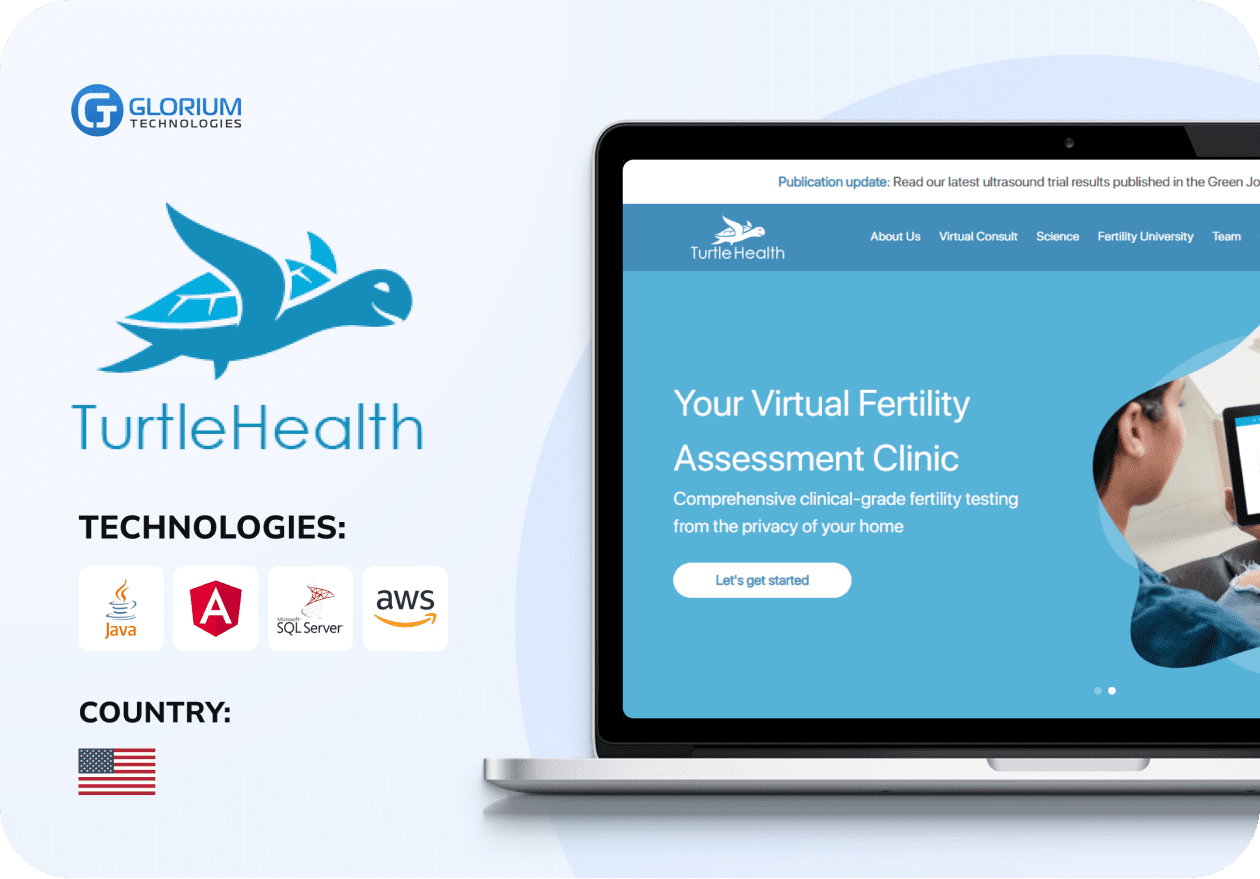
For example, for a German medtech startup, we transformed their women’s health MVP into a compliant, scalable platform with native mobile apps and medical-grade accuracy. We rebuilt the outdated system for an Icelandic travel platform to handle massive growth and created a custom, high-performance architecture that supports 10,000+ simultaneous users.
These partnerships started right where you are now: with a successful product facing scaling challenges. We provided the technical leadership and execution to turn their growth vision into reality.
Are you ready to build your product’s next chapter on a foundation that scales? Book your intro call or talk to our experts today.

Questions You May Ask
Can you help integrate product enhancements with our existing sales and marketing systems, like Salesforce?
Yes. We ensure all product enhancements connect with your pre-existing tools like Salesforce platform and other martech software. This integration helps qualify leads more effectively and provides your sales team with better insights to drive increased sales, creating a unified system that helps you outperform competitors.
What happens if our team has limited technical expertise to manage this process?
That’s exactly why our partnership model works so well. On top of the development expertise, we provide product management and technical leadership. We guide you through the process and help you keep your customers happy, improve engagement, and allow you to build your team’s capabilities along the way.
How do we balance new feature development with necessary technical improvements?
Our strategic approach combines both objectives. While our team handles core technical enhancements and frequency improvements, your marketing teams can continue driving features adding that directly impact customer acquisition. This parallel workflow ensures you continue delighting customers happy while building a stronger technical foundation.