










ERP Implementation Services


Why Companies Choose Professional ERP Adoption Services


ERP Implementation Partner for Operations-Driven Industries


Move Forward with the Right ERP Implementation Services
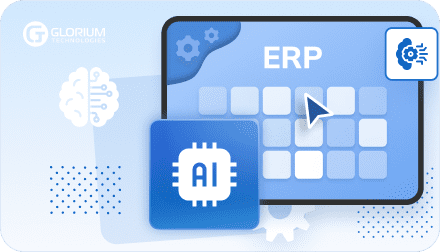
Why ERP Implementation Matters for Your Business

- Automate routine steps
- Reduce re-keying
- Keep records clean

- One source of truth
- Faster KPIs
- Quicker close

- Role-based access
- Audit-ready logs
- Fewer exceptions

- Link workflows
- Trigger key actions
- Preserve approvals

- Add users fast
- Handle volume spikes
- Stay upgrade-ready

- Fewer workarounds
- Simple workflows
- Consistent use
Proven Track Record in ERP Implementation



Can’t Find What You’re Looking For?

Calculate the Costs. Plan Confidently
Explore our proven Odoo delivery models
- Odoo installation and setup
- Basic configuration of core modules
- Data import templates
- Employee training (2 sessions)
- Odoo installation and configuration based on business requirements
- Data import support
- Business process customization
- Personalization: custom layouts, etc.
- Employee training
- Everything from the Business Pack
- Customization of Odoo modules
- E-commerce integration
- API integration with external systems
- Automation of complex business processes
- Large-scale data migration
- Analytics integration
- Dedicated project manager
- Dedicated Odoo experts (developers, consultants, project managers)
- Ongoing system optimization and feature enhancements
- Advanced customization and automation
- Continuous data imports and integrations
- AI-driven analytics & forecasting tools implementation
- Security updates and performance optimization
- Priority support and troubleshooting
Does your company currently have an ERP system?
How many employees or contractors will need access to the Odoo system?
What areas do you want to improve within your organization?
What problems are you looking to solve?


 Back
Back 
What our clients say about us







Success Stories










Who we are
About usGlorium Technologies is a full-cycle app & software development company which covers specific client business needs and manage them with the help of the best possible technology solutions.
Since 2010, we have been inventing digital breakthroughs, helping startups and businesses come out on top in their markets.

Why choose us


Certifications




Let's Connect!



FAQ
What does ERP implementation service include, from discovery to go-live?
ERP system implementation usually begins with the discovery phase and process mapping. The team documents goals, KPIs, and day-to-day workflows. Solution design follows, including module selection and a rollout plan. Configuration covers finance, sales, purchasing, inventory, and reporting needs. Data migration includes mapping, cleansing rules, and validation checks. Integration work connects ERP with your core systems and data flows. Testing covers end-to-end scenarios and key reports. User training helps to prepare your team with simple guides and live sessions. Cutover planning outlines the steps for launch and hypercare support.
How does Glorium Technologies help us choose the right ERP if we’re considering options like Odoo and Dynamics 365 Business Central?
An ERP implementation consultant conducts short workshops to understand workflows, reporting needs, and integration requirements. Requirements get translated into real scenarios for demos and fit checks. The evaluation focuses on financial controls, inventory logic, approvals, and audit needs. Odoo often fits teams that want modular rollout and flexible configuration. Business Central often fits teams aligned with Microsoft tools and structured finance processes. The outcome includes a recommendation, rollout approach, and risk list.
How long does an ERP implementation usually take?
Many projects land in the 3–9 month range. Timelines depend on module scope, data readiness, and the number of integrations. Multi-company setups and complex approvals usually add time. A phased rollout often speeds early value and reduces launch stress.
What affects the cost of ERP implementation?
Cost usually follows scope, complexity, and delivery approach. Module count, user count, entities, and locations affect effort. Data migration drives cost when data needs cleanup and reconciliation. Integrations add work for design, testing, and monitoring. Custom workflows, reports, and extensions add build and maintenance effort. Most ERP implementation companies keep estimates stable through early discovery and clear requirements, which reduces rework and surprises later.
Can you migrate us from our current system (legacy ERP, NAV/GP, QuickBooks, spreadsheets) without disrupting operations?
Yes, we offer Microsoft Dynamics and Odoo migration services. Work starts with a quick data audit and a target data model, so the migration has clear rules from day one. Mapping covers accounts, items, customers, vendors, open balances, and historical transactions you actually need. Test migrations run in waves, with finance and inventory reconciliation on each pass. Cutover planning sets the launch window, owners, checkpoints, and a rollback path. Go-live support focuses on stabilization, addressing user questions, and implementing quick fixes.
Do you build integrations for Odoo and Microsoft Dynamics 365 Business Central?
Yes. We build and support integrations for both Microsoft Dynamics 365 Business Central and Odoo, including CRM, WMS, e-commerce, BI, payments, and payroll.
Our recent project is an Odoo 18 implementation for a multi-location food and beverage business in the U.S. The key goal was clean integration across locations and functions. We unified POS, Inventory, Manufacturing (recipe management), HR, Accounting, and Purchasing in one system, so sales and payments synced in real time, inventory updates remained accurate across sites, purchasing ran on shared stock signals, and finance reporting pulled from a single, consistent dataset. Check more success stories here.
When do you recommend configuration vs customization, so upgrades don’t become painful later?
Configuration works best when standard enterprise resource planning software features cover most business requirements. Customization is a better fit for mandatory controls, regulatory compliance, or unique business processes that drive real business outcomes. During ERP system implementation, changes stay upgrade-friendly by keeping extensions small, well-scoped, and tied to clear operational objectives. Documentation, testing, and ongoing maintenance support ERP implementations as your evolving business adds new needs. ERP consulting firms also review system performance after go-live to keep the ERP system stable during updates.
Can you automate our core business processes (approvals, procurement, invoicing, inventory, reporting) inside the ERP?
Yes. Process automation is a core part of modern ERP solutions, and it can streamline operations across business operations. Approval flows can be assigned to roles, limits, and categories. Procurement can trigger replenishment, support a procurement strategy, and route exceptions to the right owners.
Inventory automation can support scanning, reorder points, and cycle counts. Reporting automation can deliver dashboards, scheduled reports, and alerts from business data, improving operational efficiency and supporting continuous improvement after ERP implementation.
How can AI automation help after go-live while keeping security and governance under control?
AI can reduce post–go-live friction when it supports specific workflows, stays within permissions, and leaves an audit trail.
Built-in options already exist in the major platforms. Odoo includes features like Ask AI, AI agents that can act through Odoo tools, and AI fields that can generate or suggest values directly in records. Microsoft Dynamics 365 Business Central includes Copilot and built-in autonomous agents, with the option to add custom AI where needed.
For deeper automation within Odoo, CogniAgent integrates with Odoo modules and APIs and can run AI-driven workflows (e.g., invoice validation, anomaly checks, payment follow-ups) directly in Odoo.
Governance stays solid when AI actions follow the same controls as users: role-based access, approval checkpoints for high-impact steps, audit logs, and a pilot rollout that validates accuracy and system performance before scaling.
Does Glorium Technologies provide ERP consulting services?
Yes, we have experienced ERP implementation consultants for both Odoo and Microsoft Dynamics, who help clarify what the new system should solve, which workflows matter most, and what “success” looks like for your team. The work usually starts with mapping key processes and pain points, then shaping a realistic rollout plan with clear scope, timeline, and risks. Guidance can also cover vendor fit, data readiness, integration approach, and where automation will bring the fastest wins. Ongoing support is available after launch to keep the system stable and improve it as needs change.
What does your ERP system implementation process look like, step by step?
ERP system implementation starts with ERP consulting to confirm business needs, business requirements, and business goals. ERP advisors lead process mapping and data analysis to document how business operations run today and what must change in the new ERP system. Next come ERP strategy and ERP selection, ensuring the right ERP software and ERP offerings support core workflows and regulatory compliance.
Implementation services then move into configuration, reporting, and process automation, with project management and a clear implementation process to mitigate project risks. Tailored ERP solutions are defined where standard ERP software cannot meet operational objectives. A consulting team also plans data migration, seamless application integration, and system performance testing. This structure supports ERP implementations and a smoother implementation.
Do you offer ongoing support, ongoing maintenance, or managed services after go-live?
Yes. Ongoing support covers day-to-day help, fixes, reporting tweaks, and process improvement requests as the business evolves and adds new workflows. Ongoing maintenance focuses on upgrades, integrations, security roles, and system performance across ERP systems. Managed services are available for teams that want a steady cadence of improvements without disrupting business operations.
This model fits companies looking for long-term implementation partners, not a short engagement. It also supports operational efficiency, continuous improvement, and stable business outcomes as processes and volumes change.
How do you ensure user training and user acceptance testing support successful ERP implementations?
User training is role-based and tied to real business processes, including approvals, procurement strategy, inventory exceptions, and reporting tasks. Training materials focus on how teams run business operations in the ERP system, not generic ERP screens. User acceptance testing validates end-to-end scenarios, including edge cases that affect regulatory compliance and financial accuracy.
Change management supports adoption across teams and locations, which protects system performance after go-live. This approach reduces rework, supports successful ERP implementations, and helps teams actually streamline operations.
Can you handle data migration and seamless integration as part of ERP implementation services?
Yes. Data migration includes data analysis, cleanup rules, mapping, test loads, and reconciliation to ensure migrated data matches expected finance and inventory results. Migration planning also defines which history to bring over and which to archive, so business data remains usable in the new system.
Seamless Odoo and Dynamics 365 BC integration connects ERP systems to CRM, WMS, e-commerce, BI, payments, payroll, and other enterprise software. The approach defines sources of truth, sync rules, monitoring, and exception handling, thereby improving operational efficiency and reducing project risk. Work can cover Microsoft Dynamics projects, SAP solutions, and other enterprise applications depending on business needs and industry context.
How do ERP consulting companies support complex industries and public sector ERP projects?
ERP consulting companies offer structured ERP implementation services for complex business operations, including regulated industries and public-sector teams. Work typically starts with deep industry knowledge, process mapping, and business requirements, then turns into tailored ERP solutions that fit real workflows and compliance rules. ERP projects in these environments often require stronger audit trails, role-based controls, and reporting standards, so regulatory compliance and risk management are built into the implementation process early.
ERP system implementation also depends on data quality and coordination across ERP systems and connected enterprise applications. Data migration planning includes data analysis, reconciliation, and validation so that migrated data supports reliable reporting. Seamless integration helps keep business data consistent across finance, procurement strategy, and operations. After go-live, ongoing support and maintenance can continue through managed services, which helps protect system performance and support continuous improvement as the evolving business adds new requirements.
Do you provide ERP implementation support after go-live?
Yes. Help after launch can cover issue resolution, user questions, workflow adjustments, and report fixes that come up in real use. Ongoing work often includes integration monitoring, system performance tuning, and small improvements as processes change. Options range from ad hoc help to a structured support model with defined response times and regular optimization cycles.