
E-Commerce Software Development
Own the Whole Buying Journey
Shape personalization, search, and page speed around the customers you serve. Handle peak-season traffic and expand across new channels and marketplaces, all while keeping full control over sales and margins.


Advantages of Custom Software Development Services
A 0.1-second delay drops conversions 7%, and slow pages send 53% of mobile shoppers elsewhere. Custom development keeps that traffic on your store and turns it into sales.


Full-Cycle E-Commerce Development Services, Handled by One Team
Every layer, from foundation to integrations to ongoing tuning, comes from a single accountable team. Walk us through where you are now, and we will map what moving forward takes.
Custom Development
Build your storefront from the ground up, so checkout, catalog, and pricing match how your business runs. Skip the template limits and get a store shaped around your operations.
Platform Migration
Move off a legacy build without losing data, rankings, or sleep. We plan every step, migrate your catalog and customers cleanly, and keep your store live through the switch.
Headless Commerce
Split front end from back end for full freedom over design and user behavior logic. Give multi-category catalogs more content flexibility and category-level presentations.
Third-Party Integration
Connect your ERP, CRM, payment gateways, POS, delivery platforms, and warehouse systems into one place. Your orders, stock, and customer records can now stay in sync.
Store Optimization & Support
We fine-tune every part of your store using the latest tools and tech. Fix conversion leaks, raise speed, and keep performance stable even under the heaviest traffic loads.
Audit & Re-Platforming
Get a second set of eyes on your store to surface untapped potential. Our team audits the code, spots what holds it back, and charts the best path to stronger UX and scalability.


Custom E-Commerce Solutions for Every Corner of Your Business
Each solution we deliver targets a specific need, from selling online to managing stock, pricing, and demand. Point us at the problem you want solved, and we will build the setup that solves it.
B2C Storefronts
Sell to shoppers at scale with a store built for speed and peak-season traffic. Your customers get fast pages and a smooth checkout, while you get a storefront that converts first-time browsers into repeat buyers and keeps them coming back.
Marketplaces
Launch a multi-vendor marketplace with seller onboarding, product management, and split payments all handled for you. Bring buyers and sellers together onto one platform, and earn a cut on every single transaction that flows through it.

B2B and Wholesale Portals
Serve business buyers with tiered pricing, bulk ordering, quote requests, and full account management built in from the start. Give your sales team a portal that handles complex, high-volume orders instead of forcing them into a retail cart.

Subscription Platform
Turn one-time buyers into recurring revenue with automated billing, plan management, and retention tools built right in. Your customers manage their own plans without support tickets, and you gain predictable income month after month.

Composable Setup
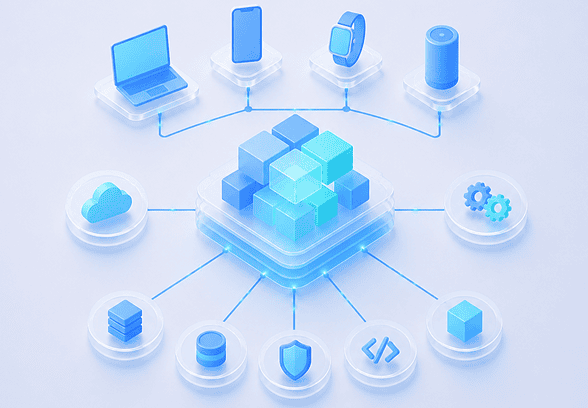
Run an API-first architecture that scales across web, mobile, and any new channel you decide to add next. You mix and match best-in-class tools for each layer instead of settling for one vendor's full stack and all its limits.

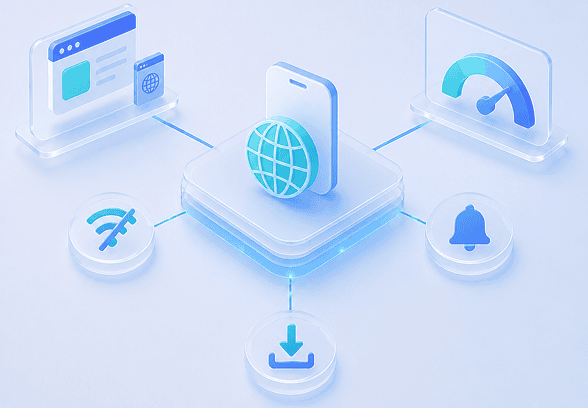
Progressive Web Apps
Give shoppers an app-like experience with no download required and no app-store cut on your sales. Your customers get instant loads, offline access, and push notifications, straight from the mobile browser they already use daily.

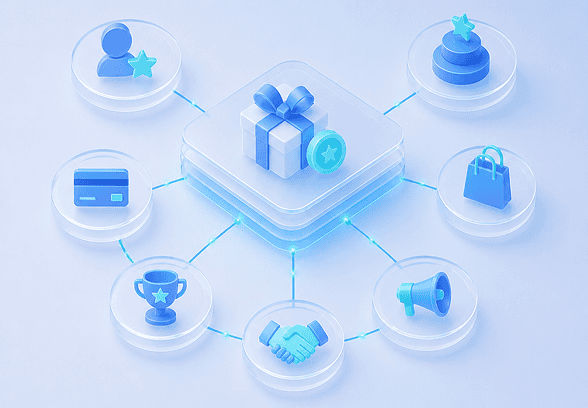
Loyalty Program Apps
Reward your repeat buyers with points, tiers, and referral perks designed to keep them coming back for more. What starts as a one-off purchase becomes a returning base, plus you gain a direct channel to re-engage them long after.

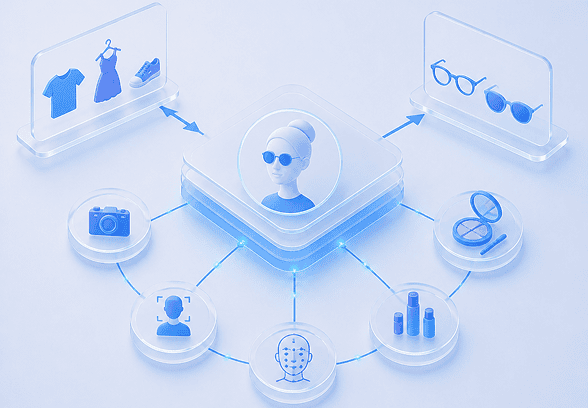
Virtual Try-On Apps
From apparel to eyewear to cosmetics, your shoppers can preview products on themselves before they ever add to cart. Return rates and hesitation drop together, and customers get a real reason to check out instead of second-guessing the fit.

POS Systems
Unify in-store and online sales under one system that logs every transaction the moment it happens. Your staff rings up orders faster, while inventory counts and reporting stay accurate across each location you run, down to the last item.

Trade Portals
You can give distributors and partners a self-service portal for orders, pricing, and account management in one place. Instead of fielding endless emails and keying in orders by hand, your team is free to focus on the relationships that grow revenue.

Demand Forecasting Software
Built on your own sales history and live market signals, our models predict what will sell and exactly when. Order the right stock at the right moment and stop bleeding revenue to overstocked shelves or products that sit out of stock.

PIM Systems
Every product detail, image, and spec lives in one central hub that feeds all your sales channels at once. Update a single record and publish everywhere, so your catalog reads consistently across your site, your marketplaces, and your apps.

Inventory Management Systems
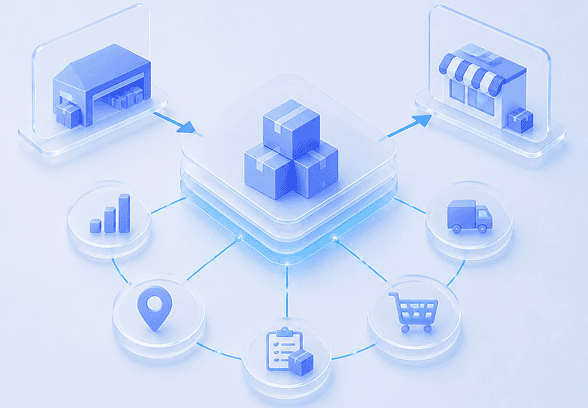
Want to track stock across warehouses, physical stores, and online channels from a real-time view? With the right system, you know exactly what you hold and where it sits, preventing costly overselling and reordering before shelves run empty.

Recommendation Apps
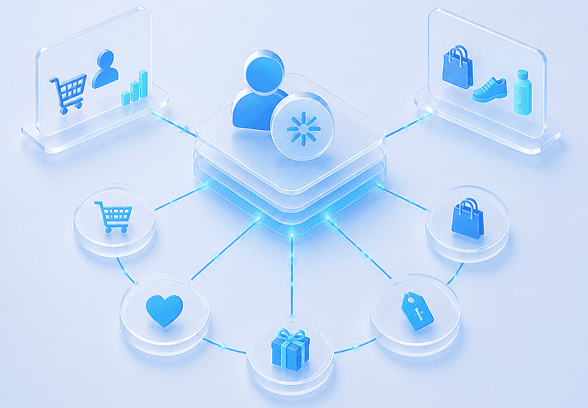
Driven by each shopper's behavior and patterns across your whole base, the engine surfaces the products they are most likely to buy. Average order value and product discovery both climb, turning your catalog into a personal path for every visitor.
Every Feature Your Business Needs, Packed into Custom Solutions
Your customers get the experience they expect, and your team gets the tools it needs to deliver it. Every feature in our custom ecommerce solutions maps back to your real business goals.
Storefront & UX
- Custom checkout flow
- Mobile-first design
- Smart search and filters
Integrations
- ERP and CRM sync
- Payment gateway setup
- POS and warehouse links
Performance & Scale
- Peak-traffic architecture
- Fast page loads
- Multi-channel scaling
Data & Security
- PCI DSS compliance
- GDPR-ready data handling
- Full platform ownership
Merchandising
- Product recommendation engine
- Personalized shopping paths
- Dynamic upsell and cross-sell
B2B Capabilities
- Tiered account pricing
- Bulk and quote ordering
- Self-service buyer portals


Whatever Platform You Prefer, We Build on All the Big Names
No matter which platform powers your store, the same deep expertise goes into every build. You get seamless integration, dependable performance, and a store shaped around your business.
- Shopify
- WooCommerce
- OpenCart
- BigCommerce
- Adobe Commerce
- PrestaShop
- Salesforce
- Odoo
- Dynamics 365 BC

Future-Ready Technologies Powering Our E-Commerce Solutions
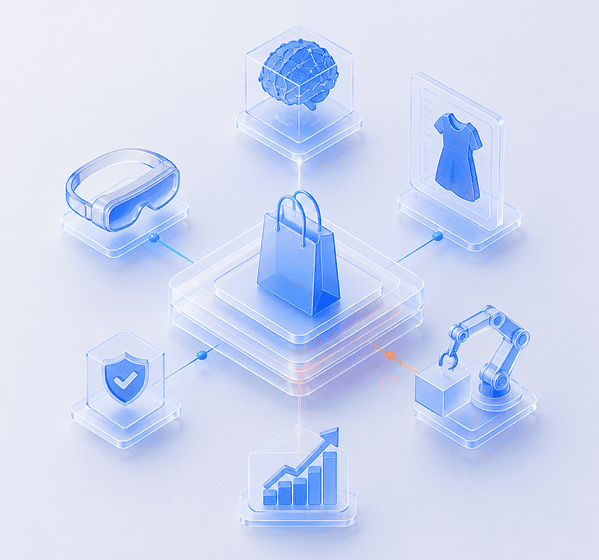
AI and augmented reality all work behind your storefront. Your online store keeps pace with the ecommerce industry and stays ready for whatever shoppers expect next.
Artificial Intelligence
From personalized recommendations to smart stock and pricing, AI built into your store automates complex work and lifts the shopper experience.
Predictive Analytics
Turn your store's data into smarter decisions: forecast demand, catch fraud early, and predict revenue and customer behavior before it happens.
Augmented & Virtual Reality
We add AR, VR, and mixed reality to your store, from 3D product views and virtual fitting rooms to showrooms that keep shoppers engaged longer.


Build It Custom or Buy It Ready-Made?
Off-the-shelf platforms get you live fast but cap how far you can grow, while a custom build costs more upfront and hands you full control. See how the two compare on speed, features, and total scale.
| Custom Build | Off-the-Shelf Alternative |
|---|---|
Longer to launch, but a platform you own outright for good | Live in weeks, but growth is capped by rigid plan tiers |
Any feature your model needs, shaped around how you operat | Locked into the vendor feature set with little room to bend |
Scales on your own terms with no plan ceiling holding it back | Growth limited by plan ceilings, fees, and transaction cuts |
You own the data, the code, and every decision start to end | The vendor controls your data, roadmap, and future updates |
See How Our Development Process Turns Ideas into Stores
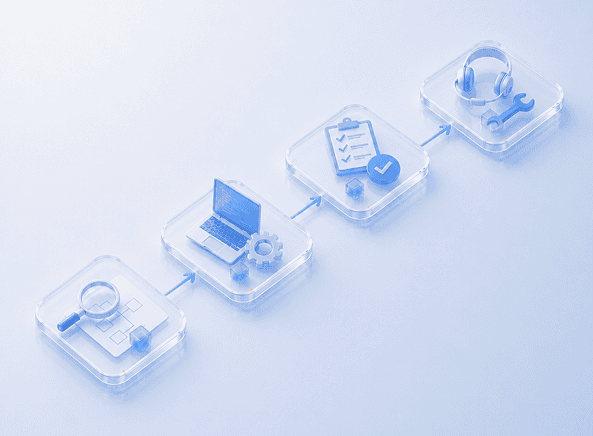
Watch a rough concept become a working store through defined stages, each one transparent and shaped around your business.
Discovery & Planning
We learn your business and project goals in depth, turn them into technical requirements, then plan the build and milestones.
Design & Development
At this stage, our designers shape the interfaces while our developers build out the functionality that makes your store run.
Testing & Launch
We test every part of your store to confirm it all works as it should, then launch it and open the doors to your customers.
Post-Launch Support & Maintenance
You get ongoing support that resolves any post-launch issues and adds new features as your business needs keep growing.


Ready to Move Past a Basic Online Store?
Schedule a call with our team and see how far a store built for your model can really take you now.

How to Decide If Custom E-Commerce Development Is Right for You
Most online businesses do not start with custom software. You launch on a hosted ecommerce platform because it is fast and cheap, and it works fine until it doesn't. And the cost of getting it wrong shows up at checkout: the average online store loses roughly 7 in 10 carts, with a global cart abandonment rate of 70.22%, according to the Baymard Institute. The same research finds that better checkout design alone could lift customer satisfaction together with conversions by about 35% at a typical large store. The software running your e-commerce store decides how much of that lost revenue you recover, so it is no longer a back-office detail. Let’s find out when a custom build earns its cost and when staying put is the smarter move.
What E-Commerce Software Development Means
Before you weigh custom software against a ready-made alternative, you should have a clear idea what the term covers. Ecommerce software development spans three broad paths, and most ecommerce businesses move along them as they grow rather than choosing once and for all. Off-the-shelf, or SaaS, platforms like Shopify and BigCommerce host everything for you on a monthly plan. Open-source e-commerce platforms like WooCommerce and Adobe Commerce give you the code and more room to modify, though you handle hosting and upkeep. Fully custom or headless ecommerce development means you build custom software for your storefront, or its front-end, from the ground up around how your business runs, rather than renting someone else's software solutions. Each path trades speed and simplicity against control and flexibility, and the right one depends on where you sit today.
Signs You've Outgrown Your Current Platform
A hosted platform rarely fails all at once. Instead, you notice friction piling up until the workarounds cost more than a proper fix would. If several of the signs below sound familiar, your platform may be the thing holding your growth back.
- Transaction fees and app subscriptions keep climbing as your sales grow, quietly eating your margin
- You want to change your checkout flow or payment processing, but the platform will not let you
- Plugins conflict with each other, and every update risks breaking something
- Your integrations with ERP, CRM, or your order management system keep failing and need manual patching
- Your e-commerce website slows down or crashes during peak-season traffic, right when every sale counts
None of these on its own justifies a rebuild. However, together, they signal that you are paying for limits you never chose, and that the platform now shapes your business processes more than your business shapes it.
Custom vs. Off-the-Shelf: The Honest Tradeoff
This is the decision that matters, and the honest answer is that neither option wins outright. Leading ecommerce platforms are cheaper and faster to launch, so for many retail businesses they remain the right call. Custom development pays off only when your needs genuinely exceed what a plan can deliver. Here is how the two compare in the factors that drive the decision:
|
Factor |
Off-the-Shelf |
Custom Build |
|
Launch speed |
Live in weeks |
Several months |
|
Year-one cost |
Low, predictable |
High upfront |
|
Feature control |
Locked to the vendor set |
Anything your model needs |
|
Scaling |
Capped by plan tiers and fees |
Scales on your own terms |
|
Ownership |
Vendor holds data and roadmap |
You own code and customer data |
If your catalog is straightforward, your pricing is fixed, and your annual sales sit at the lower end, a hosted platform usually wins on total cost. A decision to build custom ecommerce solutions pulls ahead when you run customer-specific or volume-tiered pricing. Or you need deep integration with your back-office systems or want to protect customer data on infrastructure you own. Over several years, platform fees and revenue-share can add up to more than a custom build would have cost in the first place.
How Much Custom Development Can Set You Back
Cost is where most planning conversations stall, so let’s look at real ranges. Prices vary widely because projects vary widely, but current 2026 figures give you a grounded starting point for budgeting your e-commerce project. Across published 2026 industry estimates, a template or semi-custom store typically runs from the low five figures to around $40,000. A mid-market build with a bespoke storefront and several integrations generally lands between $80,000 and $250,000. Integration-heavy B2B programs or headless commerce architectures often start near $150,000 and can pass $400,000. Three variables drive where you fall:
- Catalog complexity: 500 products behave very differently from 50,000
- Pricing logic: Fixed pricing is simple; customer-specific, tiered, and contract pricing each need their own build
- Integration depth: A standalone store costs far less than one wired into your ERP, PIM, and payment gateway integration
B2B builds usually cost two to three times a comparable direct-to-consumer store because the pricing and customer management logic is fundamentally more involved. Remember to budget for the ongoing side too: maintenance, hosting, security, and support retainers continue after launch. Treat these numbers as planning ranges, not quotes, since your real figure depends on your specific scope.
The Technologies Worth Building For
Custom development also opens the door to capabilities that hosted plans rarely support well. If any of these fit your model, they can shift the economics of the whole decision. Custom builds let you add AI-driven recommendations that lift customer engagement, headless commerce that decouples your front end for speed and design freedom, and emerging channels like voice commerce integration. Strong ecommerce mobile app development matters more every year as mobile shopping keeps climbing, and a custom approach lets you tune the experience across mobile devices rather than accept a template. These are the areas where tailored ecommerce solutions turn data-driven insights into revenue and give your digital marketing sharper targets to work with, instead of leaving that value on the table.
What Separates a Smooth Project Execution from a Troubled One
Two projects with identical budgets can end very differently. The gap usually comes down to a handful of factors you can check before you sign, meaning you should know what no-brainer project execution depends on. Clear requirements are at the top of the list. When you and your ecommerce development company agree upfront on what the store must do, you avoid the mid-build scope changes that blow up timelines and cost. Ongoing quality assurance matters just as much because bugs caught during the build cost far less than bugs your customers find during online shopping. You should watch how the team handles testing across devices, since e-commerce app development and mobile checkout are where problems most often hide. Finally, insist on a realistic plan rather than an optimistic one because e-commerce businesses that pad their schedule for testing and fixes ship better stores than those racing to hit an arbitrary launch date.
How to Choose a Development Partner
The partner you pick shapes the result as much as technology does. Once you have decided custom is right, a short vetting checklist will save you from expensive mistakes down the line. Look for an ecommerce software development company with a proven track record on your specific platform, whether that is Adobe Commerce, Salesforce Commerce Cloud, or a headless stack. Ask who owns the code and the customer data at the end of the project; the answer should be you. Check what post-launch support looks like, since a store abandoned at launch is a liability. Finally, judge how clearly the ecommerce developers communicate during your first conversations, because that pattern rarely improves after you sign. Industry expertise across business models, from B2C to B2B, is worth more than a long generic portfolio in the wider e-commerce industry. In the market since 2010, Glorium Technologies brings 16+ years of custom software experience and its own development teams. That model has delivered 150+ products to clients worldwide, backed by a 99% client satisfaction rate and recognition on the Inc. 5000 and IAOP Global Outsourcing 100 lists. For a store build, that means one accountable team from discovery through launch, code, and data that stays yours, and the long-term support your e-commerce business needs as it grows.
Making the Call That Fits Your Store
If you have outgrown your hosted platform (and the signs above suggest many online businesses eventually do), the move to custom e-commerce development turns your store from a rented tool into an asset you own and control. The stakes keep climbing as shopping goes mobile-first: mobile devices generated about 59% of global ecommerce sales in 2025, according to Statista. A store built to perform on every screen captures that demand, while one straining against a template's limits leaves it on the table. If you are weighing a custom build and want a straight read on whether it fits your business, book a call with our team. You will get an honest scoping conversation and a clear sense of what your project would take.