
Cloud EHR Development Services
Secure, Compliant Cloud EHR for Modern Practices
Build cloud-native EHR platforms that scale with patient volume, stay HIPAA-ready by design, and give clinicians secure access to records from anywhere.


Accelerate Software Development by Up to 60% with AI-Driven SDLC

Launch products up to 60% faster

Add up to 60% more features

Same budget and no extra hires

80-100% Al-Generated Code

Copyright Compliance

Cost-per-Feature Tracked Every Sprint

SAST + Security Review on Every Commit

Multi-Layer Al + Human Review

SOC 2 / HIPAA-Ready
The Results Cloud EHR Migration Delivers
Skip the server refreshes and the after-hours patching. Cloud EHR development gives you decisions made on live data, patients who wait less, and far less exposure to defend.
Transform Your Business
- 65%
Better Decision-Making
Make clinical and operational calls on live data instead of last month's export, with every record in one place.
- 58%
Improved Experience
Serve patients from one record, so nobody repeats their history at every desk or waits on a fax for results.
- 40 Hours
Saved per Server
Provision in minutes instead of weeks, freeing your IT team from racking, cabling, and configuring physical hardware.
- 35%
Lower Breach Exposure
Reduce your risk of incurring breach-related costs with cloud-native security controls and continuous monitoring built in.
Move Forward with the Right Cloud EHR Development Services
Build a cloud EHR clinicians can access anywhere, without recurring server upgrades.
Cloud EHR Development
Custom EHR platforms built cloud-native from the first commit, with clinical decision support, advanced analytics, and AI capabilities designed around how your clinicians actually work.
Cloud EHR Consulting
Strategic roadmapping before anyone writes code. We map your workflows, define data governance, size the migration, and tell you which parts of your current system are worth keeping.
EHR Integration
Connectivity with the healthcare IT ecosystem you already run, using HL7, FHIR, and custom APIs. Labs, imaging, pharmacy, billing, and devices all talking to one cloud record.
EHR Cloud Migration
Data mapping, cleansing, and transfer with zero data loss and clinical integrity preserved end-to-end. We run migrations in phases so your practice keeps seeing patients throughout.
EHR Modernization
FHIR-based microservices built on top of the system you already have. You get cloud scalability and modern interoperability without the cost and clinical risk of a full replacement.



Build on the Cloud Your Organization Already Runs
Compliance is table stakes on all three. What separates them is which one your IT team already runs, where your patient data is allowed to live, and what you plan to build next.
Amazon Web Services
The widest set of HIPAA-eligible managed services and the usual choice for a greenfield clinical platform. Glorium Technologies is an AWS partner with healthcare platforms in production on it.
Microsoft Azure
The shortest path for organizations already on Microsoft identity, Dynamics 365, or Microsoft 365. Single sign-on, compliance tooling, and governance come from systems your IT team administers.
Google Cloud Platform
Chosen where analytics and machine learning run alongside the record, from population health dashboards to imaging models, with the data science tooling close to the clinical data.


Core EMR/EHR Features Your Platform Needs
Every module is designed to keep clinical documentation standardized, patient data secure, and clinicians out of the admin work that pulls them away from care.
Patient Management
- Full medical history and PHI storage
- Immunization and vaccination tracking
- Scheduling with automated reminders
Clinical Management
- Custom charting templates and e-forms
- Dashboards for clinical information
- Task tracking and care reminders
Telehealth
- Real-time video visits inside the chart
- Virtual waiting room and async consults
- Wearable and RPM device feeds
AI & Clinical Decision Support
- Drug interaction and allergy flags
- Ambient scribing during the visit
- Automatic SOAP note generation
Patient Portal & E-Prescribing
- Results, visit summaries, and balances
- Online booking and secure messaging
- E-prescribing with refill requests
Specialty-Specific Modules
- Cardiology, oncology, pediatrics
- Mental health and behavioral care
- Home health, DME, and rehab


The Difference Glorium Technologies Makes
Cloud EHR platforms are quick to launch. Real value comes when they stay compliant through the first audit, the first integration, and the first attempt to break in.
Talk to Us- HIPAA-Certified
- ISO 13485-Certified
- HL7 & FHIR-Certified
- ISO 27001-Certified
- ISO 9001-Certified
- GDPR-Certified


Clinical Systems We've Built for Healthcare Providers
View All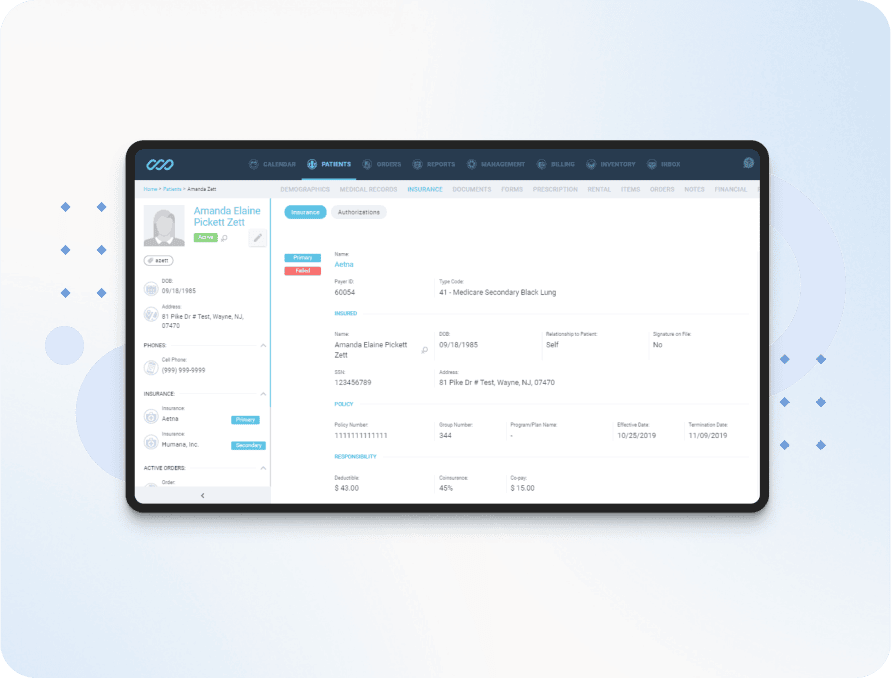
Let's Map What Your Cloud EHR Platform Needs to Do
Walk us through how your clinicians work today, and we'll tell you what it takes to build for it.

EMR Software Development Company for Custom EHR and EMR Systems
Most healthcare organizations do not replace an EHR system because they want new features. They replace one because the old system slows down clinical documentation, refuses to share patient data with the lab, or charges more every year for infrastructure nobody wants to maintain. Custom EHR software development starts from that frustration and works backward toward a platform shaped around how your clinicians already work. Off-the-shelf EHR software assumes a generic practice. A cardiology group, a home medical equipment provider, and a multi-site hospital network run different clinical workflows, and forcing them through identical templates creates workarounds that eventually become risks. Cloud hosting has removed most of the hardware barrier that once made custom EHR development expensive for smaller healthcare providers.
What EHR Software Development Covers
EHR development is rarely one project. Depending on where a healthcare facility currently stands, EHR software development services fall into several different shapes.
- Building from scratch: A custom EHR platform designed around your clinical processes, with the data model, screens, and permissions defined before production code
- Modernizing an existing system: Keeping the medical records and business logic you rely on while rebuilding the interface, integrations, and hosting model
- Migrating to the cloud: Moving electronic health records off your own servers with reconciliation at every stage, so nothing is lost or quietly altered
- Legacy data migration: Field mapping, deduplication, and Master Patient Index management, scoped as its own service rather than a task inside implementation
- EHR consulting: Mapping workflows and auditing your setup to decide which parts of your EMR systems deserve to survive before committing a budget
Each path carries a different risk. Data migration puts historical patient records on the line. A greenfield build puts your timeline on the line. Good EHR consulting names that trade-off early instead of discovering it in month four.
Integration and Data Exchange Across Healthcare Systems
Every platform Glorium Technologies builds is FHIR-native, with clinical data modeled on FHIR R4 from the first commit rather than wrapped in a translation layer once a hospital asks for an integration. An EHR system rarely operates alone. Labs, imaging platforms, pharmacy services, billing engines, and other healthcare systems all need to read from and write to the same record. HL7 v2 and FHIR handle most of that data exchange, with DICOM covering imaging, ICD-10, CPT, and SNOMED CT covering clinical coding, and custom APIs covering the rest. Epic, Cerner, athenahealth, and Allscripts are common integration targets, connected through their published APIs. Many healthcare organizations still run practice management software separately from their EMR, creating duplicate data entry and a disconnected revenue cycle. Seamless integration matters more than any single feature. Care coordination breaks down when a specialist cannot see what the primary physician ordered last week. Patient safety depends on the record being complete at the moment someone makes a decision. The same foundation supports Health Information Exchange participation and population health analytics once the core platform is live. Data migration deserves separate attention. Moving electronic medical records between systems involves mapping fields that do not align, deduplicating patients recorded three different ways under Master Patient Index rules, and validating that clinical meaning survived the transfer. Glorium Technologies runs migrations in phases with reconciliation at each stage, so your practice keeps seeing patients throughout EHR implementation.
Cloud Platforms and Hosting
Cloud hosting decisions come down to what your organization already runs and where patient data has to reside. All three platforms below offer HIPAA-eligible services and sign Business Associate Agreements.
- AWS: The most common choice for greenfield clinical platforms, with the widest set of HIPAA-eligible managed services
- Microsoft Azure: Usually the shortest path for organizations already on Microsoft identity, Dynamics, or Office
- Google Cloud Platform: Chosen where analytics and machine learning workloads run alongside the record
Encryption, key management, backup, and monitoring arrive as configurable services on all three rather than as separate projects.
Security, Data Protection, and Regulatory Compliance
HIPAA compliance is the starting point for any EHR project. Healthcare regulations govern how patient data is stored, transmitted, retained, and disclosed, and regulatory compliance failures carry consequences well beyond fines. Healthcare has recorded the highest average data breach cost of any industry for more than a decade running, which puts real money behind every architectural decision about data security. Three obligations sit alongside HIPAA itself. Business Associate Agreements have to be signed with every vendor touching PHI, the cloud provider included. ONC Health IT Certification applies where your users attest under federal programs, and its criteria shape the data model, so the decision belongs in discovery. HITECH added breach notification duties and the Meaningful Use requirements now folded into Promoting Interoperability. Practical protection in EHR software comes down to a few controls that need to exist from the first sprint.
- Authentication: Multi-factor sign-in for every clinical and administrative role, with single sign-on against your existing identity provider
- Access control: Role-based permissions so a scheduler cannot open clinical notes, extended to attribute-based rules where access depends on department, location, or care relationship
- Encryption: Protection for patient data both in transit and at rest
- Audit logging: Records detailed enough to answer who viewed which chart and when
EMR software developers who defer these controls usually end up rebuilding the permission model later, at several times the cost.
Choosing an EMR Software Development Company
Selecting a healthcare software development partner depends on domain understanding. Generic software development services can produce competent code and still miss that a nurse charts differently from a physician, or that an intuitive user interface in a clinical setting means fewer clicks during a fifteen-minute appointment.
- Healthcare track record: Shipped clinical products and EHR solutions, not adjacent consumer work
- Compliance experience: HIPAA and GDPR documentation the team has produced before
- Integration depth: Proven HL7 and FHIR work against the healthcare systems you already run
- Scope of service: Whether EHR software development services cover design, migration, QA, and ongoing support, or stop at code
Build Your Custom EHR with Glorium Technologies
Glorium Technologies has worked in the healthcare industry since 2010 as a software development company focused on medical software, covering custom EHR and EMR builds, cloud migration, FHIR-native integration with other healthcare systems, and patient portal development. Recent work is in the case library. Every engagement starts with discovery, where our EHR developers map your clinical workflows and audit what you currently run before anyone commits to a scope. Tell us how your clinicians work today, and we will come back with a plan for what it takes to build it.