
Healthcare CRM Software Development Services
Bring Every Patient in One Record
Custom healthcare CRM software that manages patient relationships, automates outreach, and connects to the EHR, billing, and ERP systems you already run. HIPAA-ready from the first sprint, not retrofitted before launch.


Accelerate Software Development by Up to 60% with AI-Driven SDLC

Launch products up to 60% faster

Add up to 60% more features

Same budget and no extra hires

80-100% Al-Generated Code

Copyright Compliance

Cost-per-Feature Tracked Every Sprint

SAST + Security Review on Every Commit

Multi-Layer Al + Human Review

SOC 2 / HIPAA-Ready
Why Healthcare CRM Matters for Your Business
Every missed enquiry, dropped referral, and empty slot is a patient who wanted to see you and couldn’t. A healthcare CRM keeps them on the calendar.
- 6x
More Enquiries Converted
Convert more enquiries by replying within five minutes instead of a day: two in three book, up from one in ten.
- 42%
More Referrals Booked
Close more referrals with automated follow-up: conversion rises from 58% to 83%.
- 69%
Fewer No-Shows
Cut no-shows by letting patients pick their own slot: 1.8% against 5.9% when staff book by phone.
- 55%
Fewer Empty Slots
Fill more of the calendar with self-scheduling: unused slots fell from 22.7% to 10.3%.


Move Forward with the Right Healthcare CRM Services
Not every project starts from scratch. Pick the tab that matches where you are: scoping, building, integrating, migrating, or keeping what you already have running.

Discovery & Scoping
Workflow mapping, system inventory, and compliance scope, ending with a build plan and a cost range you can act on.
- Workflow and system audit
- Build-vs-buy decision
- Scope, sequence, cost range
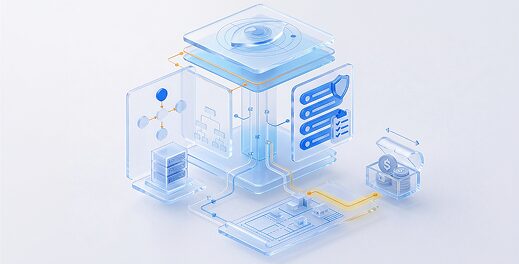

Custom Development
A CRM built around your care pathways rather than generic objects, from patient records through to reporting.
- Built on your care pathways
- Patient records to reporting
- Cloud-native and scalable
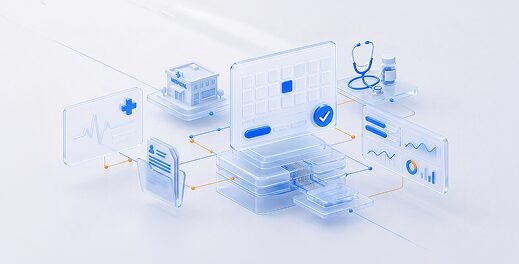

Platform Customization
Already on Salesforce Health Cloud, Dynamics, or Odoo? We extend it to fit clinical workflows and compliance.
- Salesforce, Dynamics, Odoo
- Healthcare-specific objects
- Faster than building new
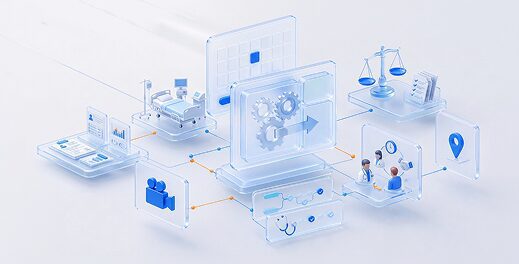

EHR Integration
Epic, athenahealth, DrChrono, and eClinicalWorks over HL7 v2 and FHIR R4, plus eligibility and claims data.
- HL7 v2 and FHIR R4
- Epic, athenahealth, DrChrono
- Eligibility and claims data
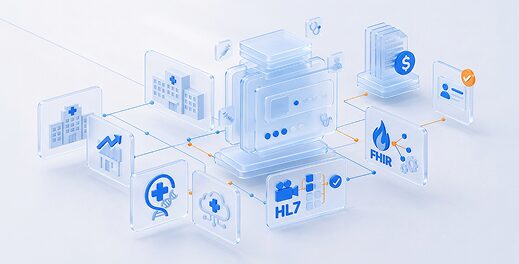

Patient Outreach
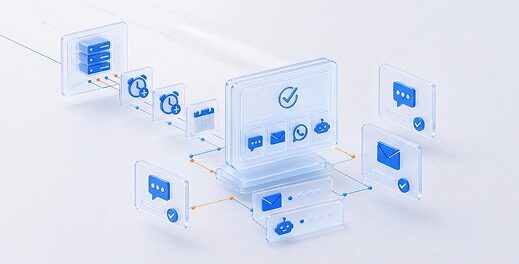
SMS, email, WhatsApp, and chatbot on one consent record, with reminders and follow-ups that fire on EHR events.
- One consent record per patient
- TCPA and HIPAA handled
- Event-driven, not batch

AI & Analytics
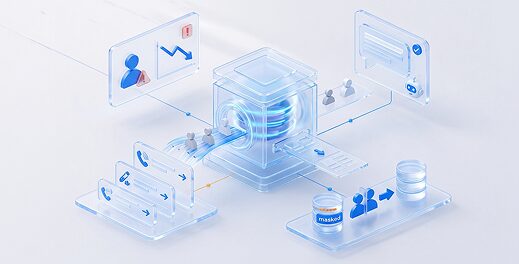
No-show risk scoring, intake chatbots, and next-best-action prompts, trained on de-identified data sets.
- No-show risk scoring
- Intake and FAQ chatbots
- De-identified training data

Data Migration
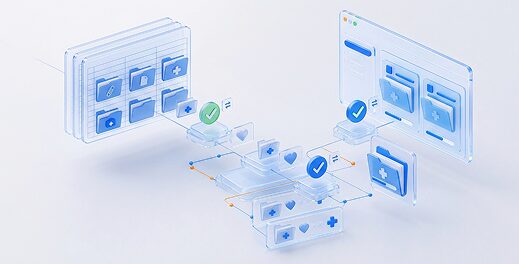
Move patient records off spreadsheets or an existing platform in staged passes, with reconciliation at every step.
- Field mapping before any move
- Staged, reconciled passes
- Audit trail preserved

HIPAA Readiness
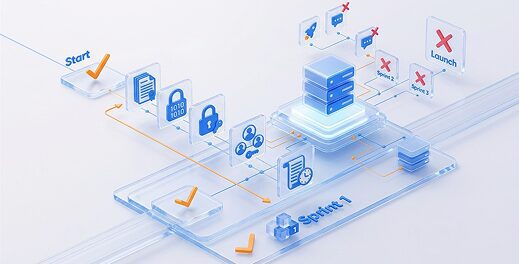
BAA coverage, encryption, role-based access, and audit logging designed in from the first sprint, not before launch.
- BAA across the delivery stack
- Role-based access control
- Audit logging on every record

Support & Monitoring
EHR vendors version their APIs, and interfaces break quietly. Monitoring and fixes sit in the contract, not a new SOW.
- Interface version monitoring
- Enhancement and upkeep
- Compliance maintained
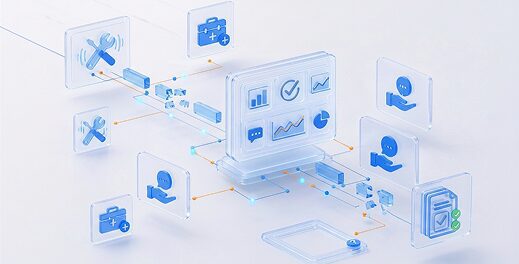

Healthcare CRM Features That Replace Six Separate Tools
One platform instead of a CRM, a marketing tool, a referral tracker, and three spreadsheets. Each area below is built to the depth your workflow needs, and no further.
Patient Relationships
One record per patient holding demographics, medical history, insurance status, contact preferences, and every past interaction. Staff stops opening three systems to answer one question.
Patient Engagement
Reminders, follow-ups, and check-ins that fire on events in the EHR rather than on a campaign calendar, so patients hear from you at the point it matters.
Marketing Automation
Service-line campaigns and preventive-care recall built on real clinical and behavioural history, with consent and channel preference held per patient rather than per send.
Referral Management
Inbound and outbound referrals tracked with a status, an owner, and a deadline, so care coordination between providers does not die in a fax queue.
Patient Retention
Lapsed patients surfaced before they are gone: missed follow-ups, overdue screenings, and appointments never rebooked, delivered as worklists instead of reports nobody opens.
Patient Communication
SMS, email, WhatsApp, and chatbot working from one consent record, with language and opt-out held per patient, inside a HIPAA-compliant boundary.


Off-the-Shelf Platform or Custom Healthcare CRM: Which One You Need
A Ready-Made Platform Fits When
- Standard scheduling and outreach match how you work
- Per-provider pricing scales sensibly at your size
- A supported connector exists for your EHR
- Speed to launch matters more than control
- The vendor dashboards cover your reporting
- You have no in-house engineering capacity
A Custom CRM Fits When
- Your care pathways do not map onto built-in objects
- Licence cost grows faster than the value it returns
- No connector exists, or it moves only part of the data
- Data residency rules exceed what the platform allows
- You need clinical and financial data joined your way
- You already run a product or engineering team


Why Do You Need a Healthcare CRM?
A connected CRM covers the patient relationship around your EHR, handling six jobs that clinical software and spreadsheets were never built to do.
One Patient Record
- Demographics, history, insurance
- Visible to front desk and clinicians
- No switching between three systems
Appointments That Self-Fill
- Patients book their own slots
- Waitlist backfills cancellations
- Reminders and rescheduling automated
Communication on One Thread
- SMS, email, WhatsApp and chatbot
- One consent record per patient
- Staff see every message sent
Less Admin, Same Headcount
- Reminders and follow-ups run alone
- Billing updates sync from the EHR
- No rekeying between systems
Referrals that Close the Loop
- Every referral has an owner
- Status tracked to the appointment
- Nothing dies in a fax queue
Security Built-in
- PHI encrypted in transit and at rest
- Role-based access and audit logs
- BAA across the whole stack


Build With a Partner Your Industry Trusts
The engineers on your project already know what your compliance officer will ask. ISO 13485, ISO 27001, HIPAA-ready by default — controls are built into the architecture from day one.
Talk to Us- ISO 13485-Certified
- GDPR-Compliant
- ISO 27001-Certified
- AWS Partner
- HIPAA-Compliant
- Microsoft Partner


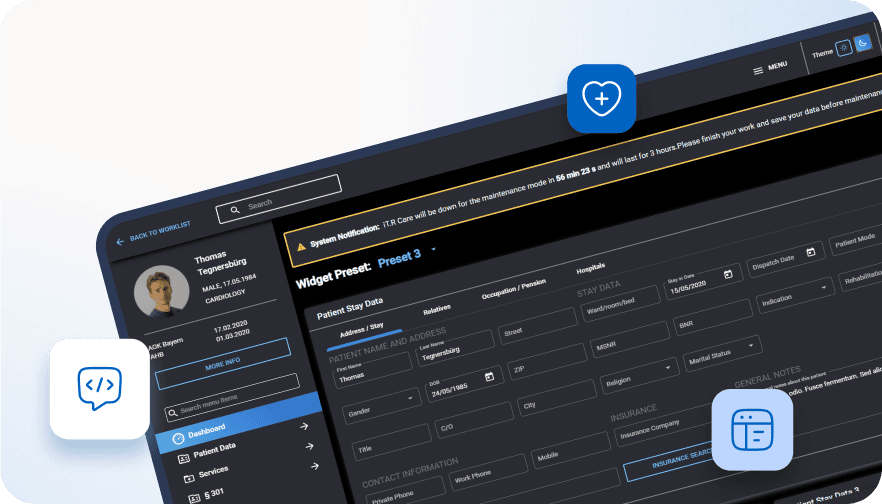
Healthcare Platforms Running in Real Clinical Settings
View All Cases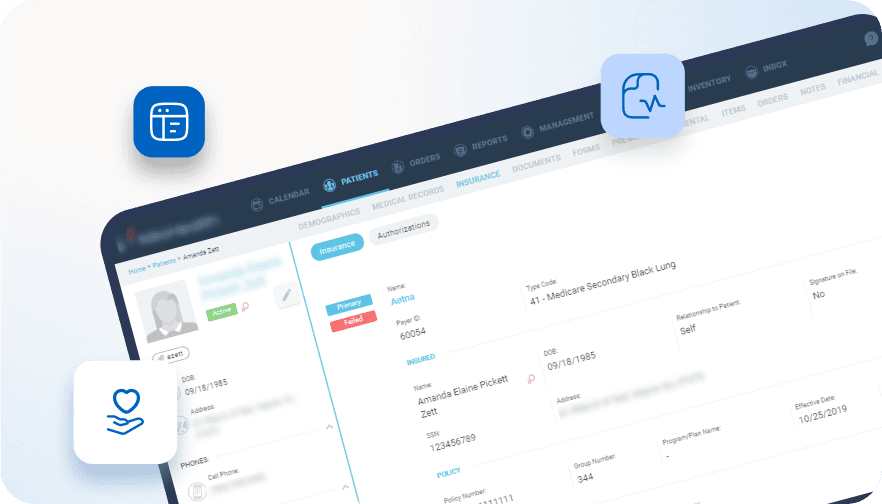
Turn Every Enquiry into a Booking
Walk us through how your front desk and care teams work today, and we will tell you what it takes to build for it.


Healthcare CRM Development: What It Takes to Build One
Healthcare organizations rarely start a healthcare CRM project because the sales team asked for one. They start because a patient called on Tuesday, nobody called back until Friday, and the patient booked elsewhere. Health systems answering within five minutes convert two in three patients, against fewer than one in ten after a day. Building that software differs from configuring a sales CRM. Healthcare CRM development, also sold as medical CRM software development, runs into clinical systems, interoperability standards, and a regulatory compliance regime that shapes the architecture from the first sprint.
What Healthcare CRM Development Actually Covers
Healthcare CRM development services cover four workstreams that run in parallel rather than in sequence.
- Product build: The features of healthcare CRM your staff touch daily: patient records, scheduling, referral tracking, personalized communication, and reporting, built around your care pathways rather than generic objects
- Integration: Connecting custom healthcare CRM systems to the electronic health record, billing, and payer systems so patient information stays consistent across healthcare systems and CRM systems alike
- Data migration: Moving patient information off spreadsheets or an existing platform without losing history, and deciding where the CRM will store patient data afterwards
- Compliance engineering: HIPAA compliance scoping, data security controls, and audit logging built in rather than bolted on
Healthcare providers expect the product build. The other three decide the schedule and whether healthcare operations improve once the system is live.
Types of Healthcare CRM Systems
Customer relationship management splits three ways in healthcare, and the types of healthcare CRM you need shape the build. Operational CRM systems run scheduling, referrals, and patient interactions day to day. Analytical CRM solutions sit on clinical data to segment populations and analyze patient data. Collaborative CRM systems connect healthcare teams across sites so treatment plans travel with the patient. Smaller medical practices usually start operational. Larger healthcare organizations need all three, which is where centralizing patient data in one healthcare CRM platform stops being optional. The global healthcare CRM market reflects that demand, with forecasts putting growth above 10% a year through 2035.
Clinical Systems a Healthcare CRM Connects To
Most healthcare CRM systems built for healthcare providers connect to Epic, athenahealth, DrChrono, or eClinicalWorks. Vendors differ less in what they expose than in how long they take to let you reach it, and approval usually consumes more calendar time than the code.
|
System |
Typical Route |
What to Plan For |
|
Epic |
FHIR APIs through the developer program, plus HL7 interfaces |
Vendor review and per-organization configuration, the longest lead time of the four |
|
athenahealth |
Marketplace REST APIs |
Sandbox access and partner onboarding before production data |
|
DrChrono |
REST API with OAuth |
Rate limits and scope design, the fastest route to a working prototype |
|
eClinicalWorks |
HL7 interfaces, often vendor-managed |
Interface engine work and coordination with the vendor's team |
Lead times drive sequencing. A project waiting on Epic review can ship outreach and scheduling first, with the clinical feed arriving later.
Interoperability Standards Behind the Build
Underneath EHR integration stands the handful of standards the healthcare industry runs on, each carrying different data. Choosing among them during discovery keeps the architecture stable once development starts.
|
Standard |
What It Carries |
Where It Fits |
|
HL7 v2.x |
ADT, SIU, ORM and ORU messages |
Legacy hospital interfaces, still the default inpatient environment |
|
FHIR R4 |
Patient, Appointment, Encounter, Observation resources |
Modern EHR APIs, near-real-time patient and schedule sync |
|
C-CDA |
Structured clinical documents |
Referrals and transitions of care between organizations |
|
SMART on FHIR |
App launch and authentication inside the EHR |
CRM context for clinicians without a second login |
|
Webhooks |
Event push in place of polling |
Instant reaction to cancellations and schedule changes |
A clinic healthcare CRM can often run on FHIR alone, with Observation resources carrying remote patient monitoring readings into the same record. Hospital-facing CRM systems need HL7 v2 for the inpatient feed alongside it.
Medication tracking and e-prescribing follow the same route. FHIR MedicationRequest and MedicationStatement resources bring active prescriptions into the CRM, so refill reminders and adherence check-ins fire on real data instead of guesswork. Prescribing itself stays in the EHR, where e-prescriptions travel over the Surescripts network and controlled substances require EPCS-certified two-factor authentication. The CRM reads prescription status and acts on it; it doesn’t issue prescriptions.
Where HIPAA Fits in Healthcare CRM Development
Healthcare CRM software holds sensitive patient information, so regulatory compliance works as a design constraint rather than a pre-launch review. Effective data management starts with who may see which patient record, what the system logs, and where PHI travels inside the healthcare CRM.
- BAA coverage: Signed across the delivery stack, including cloud providers and subprocessors
- Encryption: Patient data and medical records protected in transit and at rest, with documented key management
- Access controls: Role-based permissions and minimum-necessary enforcement designed in from the start
- Audit logging: Every read and write of a patient record recorded
- Analytics data: De-identified sets for reporting and model training
- Outreach consent: hannel preference and opt-out held per patient, covering SMS and WhatsApp
Text message outreach carries a TCPA consent regime separate from HIPAA, so a message can be HIPAA-compliant and still unlawful if the patient never opted in. Our HIPAA compliance guide covers the wider program.
Managing Patient Relationships After Launch
Patient relationship management is where a healthcare CRM earns back its cost. Once the build is live, the healthcare CRM holds every touchpoint: the enquiry, the booking, the reminder, the follow-up, the review request. Managing patient relationships at that level is what lets healthcare providers enhance patient engagement without adding staff. The effect on patient care is indirect but real. Healthcare professionals see medical history and treatment plans in the same view as past patient interactions, so patient care decisions get made faster. Outreach reflects where someone sits in an episode, which is what personalized care means in practice, and patient satisfaction moves before any clinical metric does. Care coordination improves because every referral carries an owner. Better patient outcomes follow from both, and healthcare delivery gets more consistent across sites because the same workflow automation runs everywhere. The patient experience changes first, and patient outcomes follow it.
What Changes for Your Team
Operational efficiency is the part healthcare professionals notice first. Appointment reminders, confirmations, and follow-ups run on workflow automation instead of a phone list, so automating repetitive tasks removes administrative burden rather than moving it somewhere else. Billing systems and the electronic health record stay in sync, so nobody rekeys the same patient information twice. When insurance details and eligibility are confirmed in the CRM before the visit, the front desk also removes one of the most common hospital revenue cycle management challenges: claims denied over outdated coverage data. Healthcare organizations that streamline operations this way usually redeploy front-desk time rather than cut it, and that is what makes the change stick across healthcare teams. Smaller medical practices streamline operations fastest, because a healthcare practice with fewer handovers has less to redesign.
Glorium Technologies: Your Go-to Partner for Healthcare CRM Development
Choosing a healthcare CRM development company shapes the outcome as much as the CRM software inside it. The right partner knows which vendor conversation to open first. The gap between healthcare organizations whose systems genuinely connect and those whose systems only appear to is wide, and the EHR brand rarely explains it. ASTP/ONC data on 2023 exchange puts routine interoperable exchange at 43% of US hospitals. The difference shows where it counts: 92% of those hospitals had the outside clinical information they needed at the point of care, against 33% of the rest. Glorium Technologies has built healthcare software since 2010, with 200+ in-house engineers and HIPAA, HITRUST, and GDPR compliance across the delivery stack. Our healthcare CRM development services span EHR platforms, patient portals, and custom healthcare CRM development, and we support the healthcare CRM solutions we build long after launch. Bring your requirements, and we will scope the build around your workflow.