MVP Development Strategy

Get Your MVP Plan Ready in 7 Days
MVP development strategy plan illustration

Are you struggling with overbuilt ideas and bloated development cycles? A sharp MVP development strategy solves that from the start. Trim the excess, speed up the launch, and test your product with actual users — without burning through resources.


Reach Out TodayNo strings attachedclutch

Your Budget, Simplified - Discover Your Project's Cost

Complete the questions to send a project estimation request.

JavaScript is needed to use this questionnaire. The authored questions are shown below; controls are disabled.

What is your primary goal for building an MVP?

What is your primary goal for building an MVP?

0 / 4000 characters

Choose the primary funding for this project:

Choose the primary funding for this project:

Choose your industry:

Choose your industry:

0 / 4000 characters

What MVP elements have you completed so far?

What MVP elements have you completed so far?

What matters most in a development partner?

What matters most in a development partner?

How do you plan to promote your MVP?

How do you plan to promote your MVP?

What’s your estimated budget for this project?

What’s your estimated budget for this project?

What is your timeframe for launching an MVP?

What is your timeframe for launching an MVP?

How would you describe your core business idea?

How would you describe your core business idea?

0 / 4000 characters

What’s your biggest challenge right now?

What’s your biggest challenge right now?

0 / 4000 characters

Hard to choose?

Feel free to connect with us

Bridge Planning Gaps Early

Address misalignment and roadmap confusion before you build.

Planning gaps: disconnected teams, rigid planning, unclear product vision, chaotic feature planning, rushed timelines, lack of user feedback

Why Should You Define Your MVP Strategy?

A well-crafted MVP development strategy turns ideas into tested solutions by setting priorities and limiting tech scope. Outline a clear roadmap to maximize product impact.

  • Lower Risk of Failure

    An MVP strategy helps identify product-market fit issues early. Startups that iterate based on feedback are up to 2x more likely to succeed.

  • Reduced Dev Costs

    By focusing only on essential features, teams avoid overbuilding. Businesses can save up to 40% on initial development costs when using an MVP approach.

  • Clear Product Roadmap

    Prioritization frameworks keep teams aligned on what matters most, ensuring resources are focused on high-impact features while preventing scope creep.

  • Aligned Stakeholders

    A shared strategy creates a common language across product, design, and engineering teams, improving communication and reducing misunderstandings.

  • Investment Attraction

    An MVP strategy can demonstrate real market potential and user interest, increasing your chances of securing funding for further development.

  • Growth-Ready Base

    When an MVP is validated early, it not only guides product growth and strengthens market credibility but also signals that your concept is worth scaling.

Who Gains the Most from a Smart MVP Strategy?

If you aim to avoid wasted development and validate what matters, you can’t do without an MVP strategy.

  • First-time entrepreneurs
  • Non-technical founders
  • Early-stage visionaries
  • Bootstrapped founders
  • Industry experts
  • Side-project creators

Don’t Just Plan, Develop What Works

Too many products fail from the start because of unclear goals. Leverage an MVP development strategy to avoid misaligned efforts.

Anna VoznaAccount Executive

Strategic MVP Framework for Real Results

  • Vision statement
  • Timeline
  • Milestones
  • Features
  • Prioritization
  • Resource allocation
  • Categories
  • Feedback loops
  • KPI

Experts Behind the MVP Plan

A successful MVP strategy starts with the right people. Experts across product, design, and engineering make sure nothing is missed, and everything moves as planned.

Planning

When vision meets structure, progress happens. These experts sharpen the scope & lay a clear path to launch.

  • Product Strategists
  • Technical Architects
  • UX/UI Designers
  • Business Analysts

Execution

With skilled builders and strategists, this team ensures your MVP is functional, usable, and ready to scale.

  • Backend Developers
  • Frontend Developers
  • Growth Strategists
  • Project Managers

Your Idea Deserves More Than a Guess-Driven Build

Good ideas fail fast when there’s no plan. Save yourself the hassle of rushed builds and scattered team priorities. Avoid scope creep and launch what sticks with an MVP development strategy.

  • Up to 2x faster time-to-market
  • Up to 40% savings on development costs
  • Up to 3x higher early user engagement
Have you established a company?

By submitting this form, you agree to our Privacy Policy and allow Glorium Technologies to process your data to fulfill your request.

Complete the form to send your request.

Roadmap or Roadblock? You Choose

Skipping strategy might feel faster, but you’ll likely pay for it later

Without an MVP PlanWith an MVP Plan
Missed market fit
Fast market validation
Assumption-driven build
User-centric approach
Weak case for funding
Investor interest
Post-launch surprises
Detected technical gaps
Focus on the wrong features
Lean development
Higher budget risks
Reduced financial risks

Think Like You’ve Already Built It

Get deep product insight equal to 3 months of dev efforts

  • Up to 4 Strategy-Driven Workshops

    Virtual or in-person, each 1-hour session is built to uncover risks and sharpen your direction.

  • Map Roles & Prioritize Stories

    Identify your potential customers and prioritize the features that serve them best

  • Visualize the Core Experience

    Get up to 4 wireframes to guide UX, development, and stakeholder alignment

  • Get the MVP’s Technical Blueprint

    From architecture to frameworks, outline the tech pieces that support rapid development

  • Ballpark Cost Estimates

    Know what to expect – our development estimates stay within a 30% margin

  • Move from Strategy to Sprint Plan

    See exactly how your MVP will come to life, with timelines and priorities all laid out

Want to Build an MVP That Works?

Start with the right strategy to get results. Schedule a free 30-minute call with our experts.

What our clients say about us


Success Stories
TurtleHealth
greetly 1
softhread 1
Exponential Health
bodyo
biomodex
doxy
agfa
vitalware
medlab 1
dextro
speechagain 1
itrsoft
pacs
project ipsilon 2
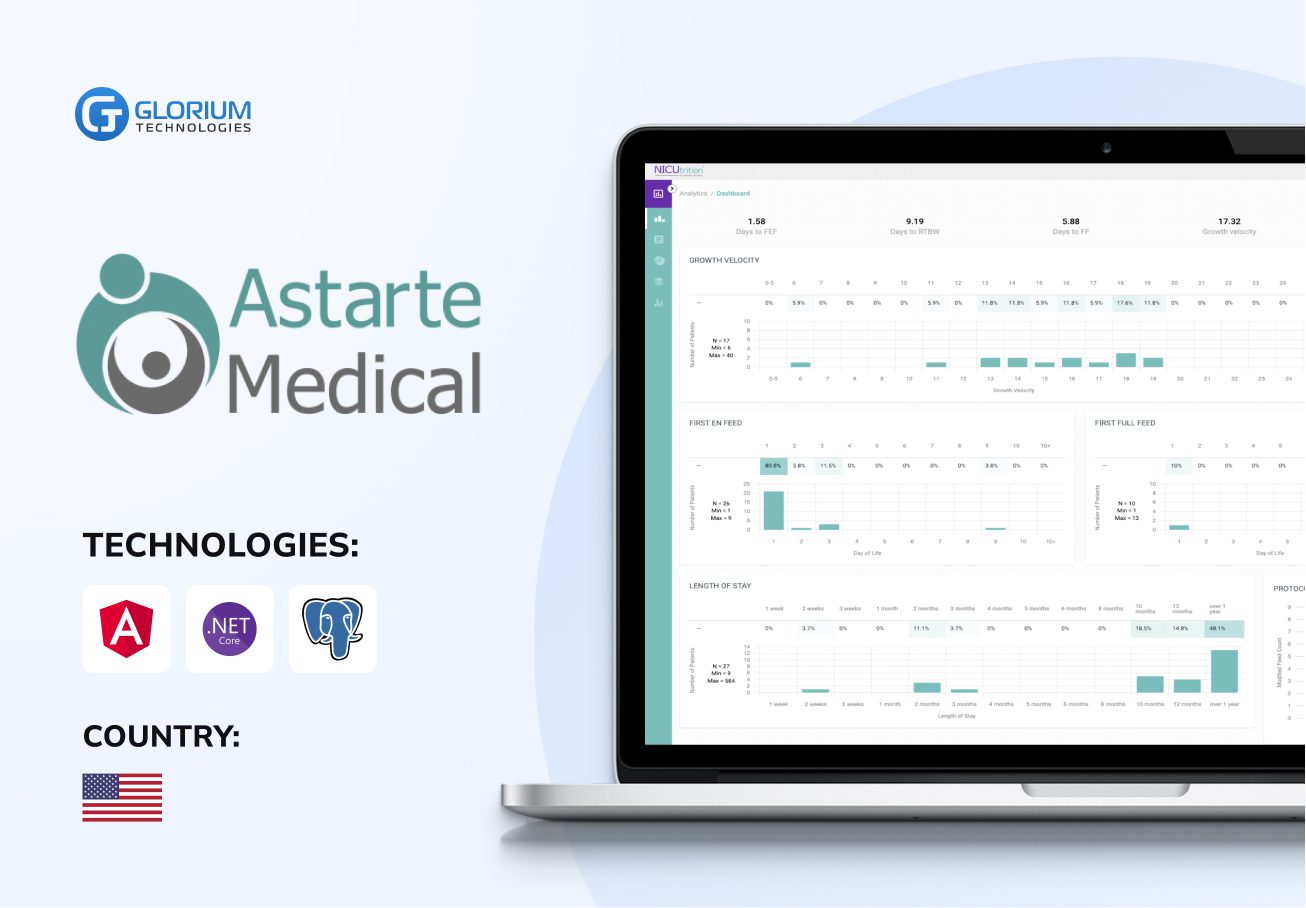
astartemedical
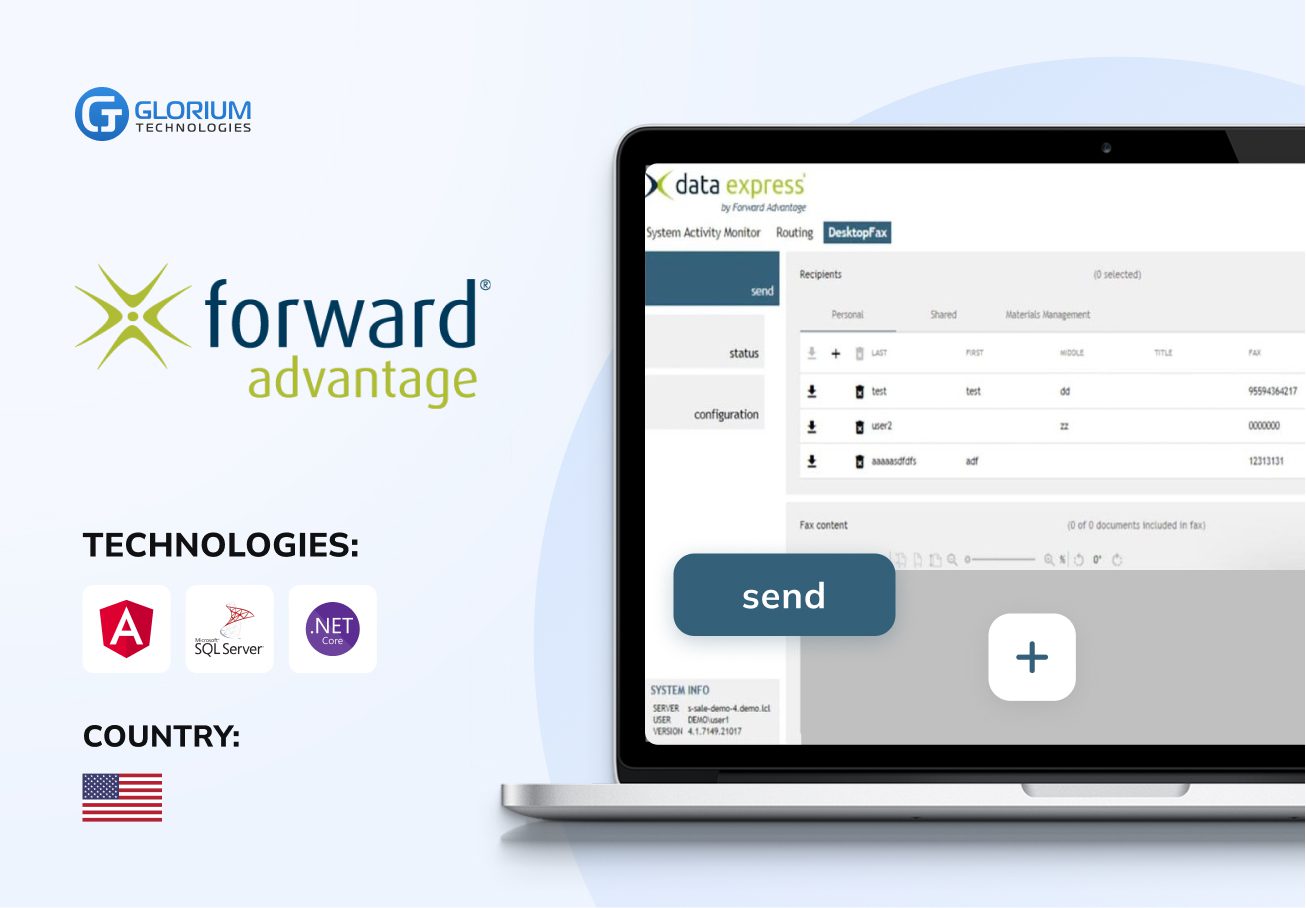
forwardadvantage
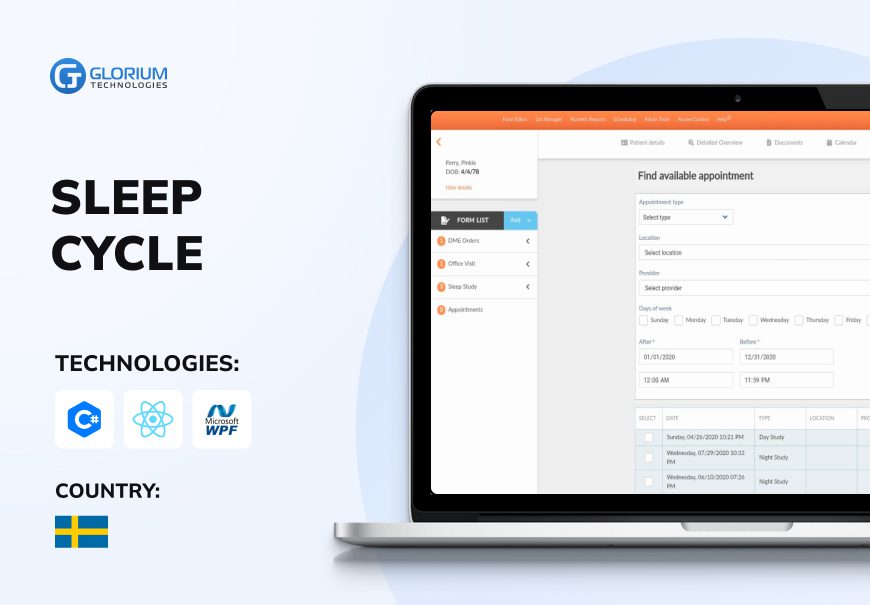
sleepcycle
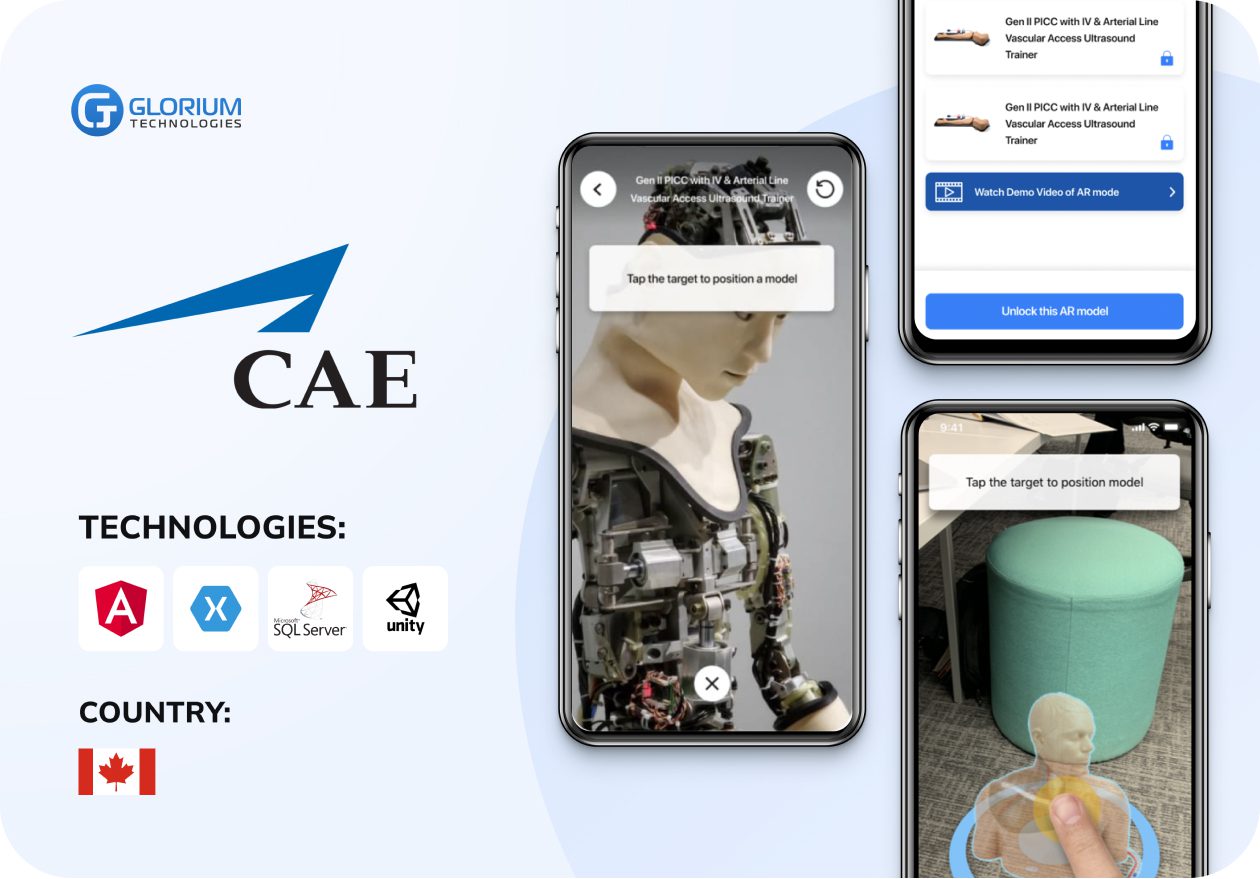
CAE
Thought Technology
ophardt
Teledentistry Solution
cae orion
dme hme

Why choose us

Glorium Technologies is a full-cycle app & software development company which covers specific client business needs and manage them with the help of the best possible technology solutions.

Since 2010, we have been inventing digital breakthroughs, helping startups and businesses come out on top in their markets.

Skilled Professionals

Why choose us

Products delivered:
150+
Years on the market:
14
Client satisfaction rate:
99%
Awards & certifications:
60+

Awards & recognitions

More achievements

Inc. 5000

  • 2020
  • 2021
  • 2022
  • 2023

Named among the Inc.5000 (2020, 2021, 2022, 2023) & Regionals (2021, 2022, 2024) fastest-growing private companies in America

Certifications

  • ISO 9001
  • ISO 13485
  • ISO 27001
  • aws
  • microsoft

Let's Connect!

Send us a message, and we'll promptly discuss your project with you.

Your message (optional)

Drag & Drop Files Here Only pdf, txt and docx are allowed with maximum file size limit as 20 mb

Personal information

By submitting this form, you agree to our Privacy Policy and allow Glorium Technologies to process your data to fulfill your request.

Complete the form to send your request.

Your journey with Glorium Technologies

  1. Research

    You’ve done your research and realized we could be the right fit.

  2. Form submission

    Fill out the form with details about your request. Please share as much information as possible.

  3. Initial consultation

    We discuss your needs and explain our process.

  4. Discovery call

    This is a deep technical consultation to discuss all requirements, commitment-free.

  5. Kick-off

    We sign the contract and help your business grow strategically and achieve long-term success.

How MVP Development Strategy Helps You Build What People Want

Launching a feature-packed product without validation is like filling a toolbox without knowing which problem you’re supposed to fix. Around 80% of software features end up unused, and that’s not a marketing issue but a strategy one. You cannot add new features only because they seem cool, as you risk wasting development hours and weak adoption.

A well-defined MVP development strategy helps teams cut through assumptions and sharpen priorities before the first sprint even starts. You can be sure your product vision speaks directly to your target market.

Think of Buffer, a social media scheduling tool that didn’t begin with a product. Instead, the founder launched a simple landing page describing the idea and pricing tiers. When users clicked “Buy,” they received a message saying the product wasn’t live yet, but were asked to leave their email. Enough signups confirmed demand, enabling the team to build a lean, usable version that solved one specific pain point: queuing posts in advance.

How to Turn a Promising Product Idea into an Effective MVP?

No matter how brilliant your business idea may seem, that’s a minimum viable product that helps you test whether it holds real-world value. Your goal isn’t to create a prototype just for the sake of it, but to design a focused proof of concept that informs future decisions.

A good MVP development plan identifies:

  • Clear problem statement: What user pain point are you solving?
  • Core features: Which elements are necessary to prove the product’s worth?
  • Realistic technical scope: What can be done within the available development stage and tech stack?
  • Target user personas: Who will use your product, and what are their goals?
  • Market and competitor insight: What has a track record of working (or failing)?
  • Success and feedback criteria: How will we measure success?

Limit the scope to what’s necessary to showcase your core offering. You should zero in on your potential customers and measure progress through actionable KPIs—signups, usage, and activation rates.

Your MVP should intersect with what your users want and what your business needs to learn. Don’t just aim for functionality; focus on validation. That’s how you can reduce development costs and set the product roadmap.

MVP Development Process Breakdown: What to Know?

Structure, clarity, and continuous learning are three cornerstones of a successful MVP. You shouldn’t hurry up with the product release. Build intentionally and adjust the soon-to-be product based on real user input. The most effective MVPs are shaped by a development process that stays true to the product vision while allowing room to adapt as new insights emerge.

While every product team might customize its workflow slightly, most MVP product development efforts follow a familiar path, from discovery to testing and iteration. Each phase serves a specific purpose in reducing uncertainty and clarifying scope. Skipping or rushing through a step increases financial risks, adds rework, and weakens the product-market fit.

The key is to stay lean without losing direction. A good development process ensures your team keeps the target audience focused and adjusts based on customer feedback.

The principal stages in the MVP development process are:

  • Research and user interviews: Understand the real problems, expectations, and habits of your target users through focus groups, feedback sessions, and qualitative market research
  • Feature prioritization: Focus on the basic feature set with the least complexity
  • Prototyping: Use wireframes or clickable user interface mockups to test flows and interface logic early on
  • Development: Build a functional MVP using the right tech stack, emphasizing speed and scalability
  • Internal QA and testing: Ensure stability, usability, and readiness before external release
  • User feedback and versioning: Launch to early adopters, gather actionable feedback, and use it to refine your next iteration

Mapping Your MVP Development Plan Timeline

Your project depends not only on what you build but also on when and how you build it. Without a clear timeline, even strong product ideas risk delays or rushed launches with little validation. Planning your MVP timeline up front helps keep progress centered and measurable.

Start by assigning realistic timeframes to each development phase. You shouldn’t sacrifice quality for speed. Teams that prioritize short but dedicated development cycles often reach stronger outcomes faster than those who try to do too much at once.

Your timeline should serve as a learning framework. Ensure each phase ends with clear outputs, insights, or validations that support the next decision.

Typical development timeline for MVP projects

The timeline for an MVP project isn’t one-size-fits-all. It can vary based on the new product’s complexity, available resources, and clarity of scope, among other factors. Still, most successful teams follow a structured outline that balances development speed with quality and continuous feedback:

Week 1–2: Research, planning, scope definition

Gather market insights, run stakeholder interviews, define target users, and set clear goals. Nail down what needs to be built and what doesn’t.

Week 3–4: Design and prototype

Create wireframes or clickable mockups to test flows and gather early design feedback. Finalize the user interface and map out the product backlog, keeping the user experience purpose-driven and straightforward.

Week 5–8: Development and testing

Build the MVP app with your chosen tech stack, focusing only on fundamental features. Run internal QA to ensure functionality and readiness.

Week 9+: Soft launch and feedback loop

Release to early adopters in a limited setting, monitor behavior, gather feedback, and use it to refine the next version. This phase sets the tone for future product development decisions.

The Role of MVP Strategy in Product-Market Fit

Reaching product-market fit is one of the most misunderstood goals in early product development. It’s not about launching a polished app and hoping users will love it. It’s all about systematically learning what your target market truly values and adapting your solution until that alignment is precise. This is exactly where a thoughtful MVP strategy makes the difference.

An MVP is a learning tool that allows your team to test assumptions with real data. Rather than relying on internal opinions or hypothetical needs, you’re observing actual behavior and identifying whether your value proposition resonates. If the data shows interest but not conversion, the pricing or positioning might be off. If engagement is low, perhaps the core problem hasn’t been solved.

Take Airbnb as a case in point: before it was a global platform, the founders tested their business model by renting out their apartments and creating a simple landing page. Just like Nick Swinmurn tested Zappos by posting pictures of shoes from local stores to gauge interest, Airbnb validated that people were willing to pay strangers for short-term stays.
This is the power of the MVP approach. It lets you pivot early, adjust the development timeline, and prioritize what really matters to your customer base.

Common Challenges Without a Clear MVP Strategy

Teams often confuse “minimum viable” with “minimal effort” or, worse, treat their MVP like a finished product rather than a learning tool. Lack of direction usually leads to one of four common mistakes, each of which can drain resources and undermine the success of your MVP. Avoiding these challenges starts with understanding what an MVP is really for: learning fast with purpose.

Building too much too soon

Adding too many new features early on can inflate development costs and delay validation. It often leads to wasted effort on things that don’t contribute to the product’s core value. A successful MVP should focus on solving one clear problem for a well-defined audience.

Over-customizing for early feedback

Over-adapting to individual user feedback in the early stages can compromise product clarity. Customizing too soon based on a narrow sample often weakens the core proposition and shifts attention away from long-term, scalable goals. Early input is valuable, but not every suggestion should dictate the direction of your project roadmap.

Ignoring real user behavior

Data is more reliable than opinions. Relying solely on surveys or assumptions without observing how users actually engage with your product leads to misguided decisions and missed opportunities.

Treating MVP as if it is a final product

Polishing every detail or scaling infrastructure before initial release wastes time and resources. Your MVP isn’t meant to impress but to test your out-of-this-world idea, meaning perfection can wait. Keep focusing on where it matters: on learning and adapting.

Key Benefits of a Strong MVP Development Strategy

Without a strategic approach, teams often pour time and resources into features users don’t need, interfaces they won’t use, and tech they’ll have to rewrite later. A well-defined MVP development strategy can hardly slow down your launch, but it’ll surely increase the chances you’ll build something people lack.

Rather than rushing into development, companies that start with an MVP development strategy gain a clearer path from concept to launch. You reduce waste and gather useful feedback early on without overcommitting resources. This doesn’t just help your team internally. A clear MVP plan also signals to potential investors and stakeholders that you know what you’re doing, why it matters, and how to measure success.

Early market validation

The biggest risk in launching a new product is building something useless. A solid MVP development strategy helps you avoid that. By defining your core value proposition and identifying the right user segment early, you can validate whether the market cares about your offering.

This strategy encourages you to test assumptions and collect evidence. It might involve prototypes, landing pages, or limited feature rollouts. Whatever the method, the goal is the same: to confirm demand before committing to scale. Teams that validate early tend to pivot smarter and avoid wasting months of work on a flawed premise.

Leaner development cycles

More features, complexity, and time, but more isn’t better; it’s just more expensive. MVP development strategy helps you stay lean by focusing on the minimum feature set that delivers the most value to early users.
This approach shortens your initial development cycle, reduces your reliance on large engineering teams, and minimizes the need for rework. It also makes cost estimation more accurate since you’ve clearly defined what “done” means for version one.

Stronger investor appeal

Investors want proof, and a product strategy that shows how your MVP will be validated, tested, and refined gives them more confidence in your execution. It tells them you’re not just chasing an idea but building something around actual demand.

An MVP development strategy includes a clear roadmap, success metrics, market research, and timelines—all things that strengthen your case for funding. It also demonstrates that you’re managing risk wisely and are prepared to adapt based on real-world signals.

Faster feedback loops

Launching a lightweight MVP with a strong feedback system in place lets you learn while you build. Rather than waiting for a major release to gauge interest, you can iterate in response to actual user behavior, usage data, and qualitative input.

A strategy helps you plan when and how to collect feedback through interviews, usage analytics, or structured tests. This keeps development agile and responsive while helping you course-correct before small issues become expensive problems.

Improved user-centric decision-making

Products often fail because decisions are made based on the team’s assumptions rather than reality. An MVP development strategy refocuses decision-making on user needs and real-world behavior.
It defines clear user personas, maps goals, and helps prioritize features that deliver core value. Teams aligned around user outcomes make better choices—from UI to roadmap—and avoid building based on internal bias.

A well-thought-out MVP development strategy is your way to:

  • Clear problem definition and market insight
  • Less risk of building unnecessary features
  • Faster release of a usable, testable version
  • Real data to guide pivots or improvements
  • More predictable development costs
  • Better communication across product, design, and tech teams
  • A stronger foundation for future scaling

How to Tell Your MVP Is Working

An MVP isn’t just a technical milestone but a tool helping you bring your ideas to life. But how do you know if it’s doing its job? It’s not enough to launch and wait. To understand whether your MVP is moving you closer to product-market fit, you need to pay attention to how potential users interact with it, what they say, and what they do next.

An MVP aims to gather clear feedback from the right users that confirms your value proposition is relevant and compelling. When your development timeline and testing strategy work in sync, you can identify key signals early and make informed adjustments to your roadmap.

Here are five indicators that your MVP is working as intended:

  • Early adoption or engagement: A clear indicator that your product addresses a genuine need within your target audience
  • Helpful qualitative feedback: When users give thoughtful feedback, this showcases engagement
  • Clear patterns in behavior: Repeated user actions can highlight which core features deliver the most value.
  • Willingness to pay or convert: Whether it’s a signup, subscription, or request for more, this indicates genuine interest in your offer
  • Strong retention among initial users: If people come back after the first use, your MVP is doing more than attracting attention—it’s delivering ongoing value

Build Strategy-First MVPs That Win with Glorium Technologies

Are you launching a mobile app, evaluating a business concept, or refining a future product? The strategy keeps your vision focused and aligned with real-world needs. If you are interested in lean startup methodology and a structured, data-informed approach to its development, look no further than Glorium Technologies.

We collaborate with your team from concept to launch to ensure that the product clearly connects with your target audience. Our experts combine strategic thinking and technical execution while guiding your product through every phase: market research, design, development, testing, and iteration. Having worked across healthcare, manufacturing, fintech, and SaaS, we understand the critical details determining product viability in complex, high-stakes industries.

Want to learn more about creating a product your market truly wants? Schedule a discovery call to turn your idea into meaningful results!

FAQ