















Looking for an Effective Strategy?
Book a 15-minute call to get clear guidelines on launching faster with less risk.



 Back
Back




 Tech Team Delivery Team


























Glorium Technologies is a full-cycle app & software development company which covers specific client business needs and manage them with the help of the best possible technology solutions.
Since 2010, we have been inventing digital breakthroughs, helping startups and businesses come out on top in their markets.













Designing a product without a plan is like going on a road trip without a map. The destination might be reached eventually, but you’ll spend more time, money, and patience along the way getting there.
The good news? In a market where up to 90% of new products struggle without a clear roadmap and implementation plan, you have the power to join the successful 10% and beat the odds. With the right approach, clear priorities, and a committed team, you turn limited resources and uncertainty into an advantage and build something that stands out.
In this guide, you’ll learn what a product development strategy is, why it matters, and how to create one that sets your solution up for high profits and market success.
33% of solutions on the market have a lifecycle of less than one year. But there’s a clear reason behind this: companies launch projects without aligning the solutions with real customer needs and market requirements.
Having a software product development strategy sets you up for a different outcome. Instead of hoping your idea will succeed, you’ll have a roadmap to guide every decision, validate your ideas early, and build something that resonates with your audience.
A product development plan is your guide to building a new solution or feature in a way that is thoughtful and profitable. It’s the overarching strategy that brings your vision to reality, so you’re not merely designing a solution you think people might enjoy but something they’re eager to use (and pay for).
Essentially, your product development strategy determines what you’re building, why you’re building it, and how you’ll get it into customers’ hands. It helps you answer the critical questions, including:
With an effective plan, you increase your chances of getting a competitive advantage, make intelligent trade-offs, and iterate as you go.
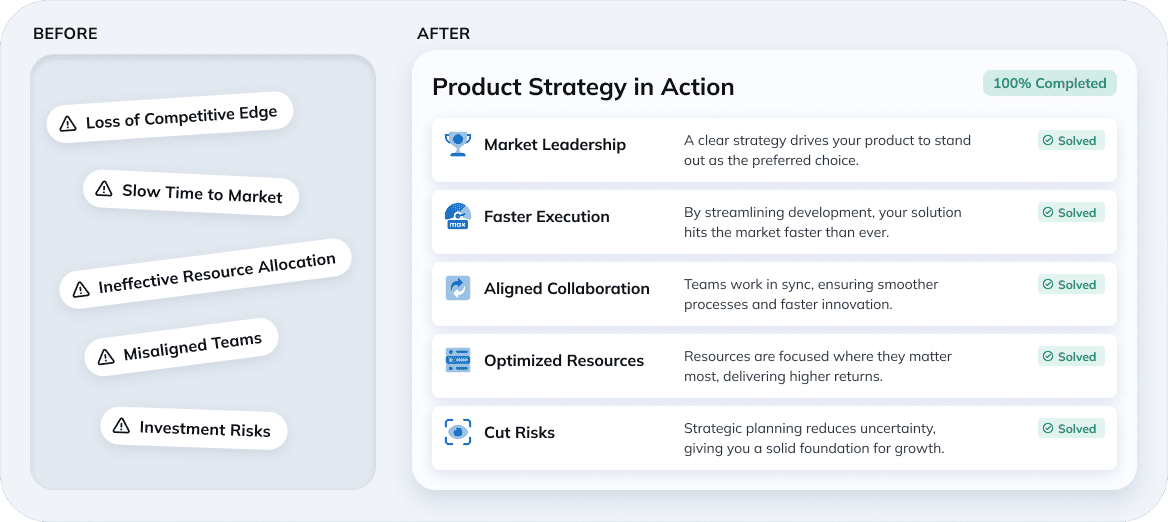
Creating a new solution is thrilling, though it can be risky. Without a clear direction for concept development, companies waste resources, miss market opportunities, or launch solutions that are not viable. That’s where product strategy development emerges as your best ally. Let’s break down why:
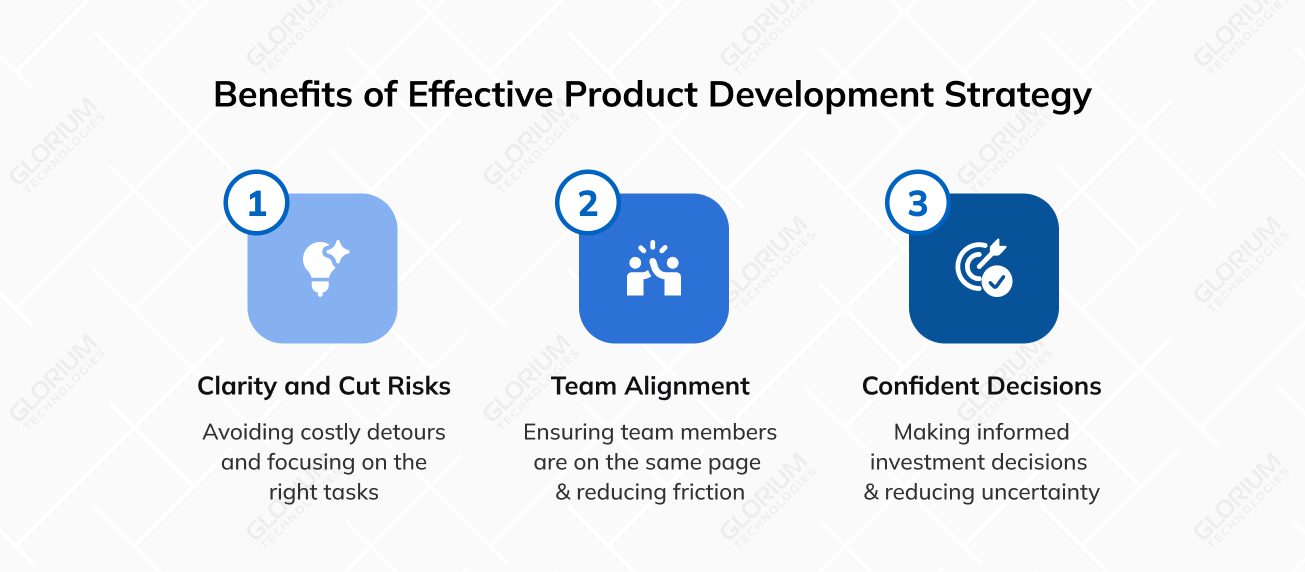
A well-planned strategy for product development helps you focus your resources on ideas that truly solve customer problems. With this clarity from the start, you avoid costly detours and stay locked in on the work that drives real impact. Instead of guessing which product features might stick, you make informed decisions grounded in research and real insights.
Without a strategy, teams naturally head in different directions. A designer focuses on creating a beautiful, intuitive experience. An engineer prioritizes technical precision and stability. A product manager seeks a budget-friendly marketing strategy to gain traction and attract customers quickly. A solid strategy unites everyone around a shared vision so every decision moves toward the same goals. It reduces friction, speeds execution, and keeps your solution on track.
Every development journey comes with its unexpected roadblocks. When such moments hit, having a plan in place allows you to reduce uncertainty in software development and respond with confidence instead of hesitation. You’ll know when to pivot, when to stay the course, and how to keep your team focused on what matters most.
In short, a new product development strategy allows you to build solutions smartly, move faster, and dramatically increase your chances of launching lasting solutions.
There is no golden standard for the product development process. Pick the one that works for your vision, target market, and resources. Let’s discuss the main approaches to help you determine which one fits your goals.
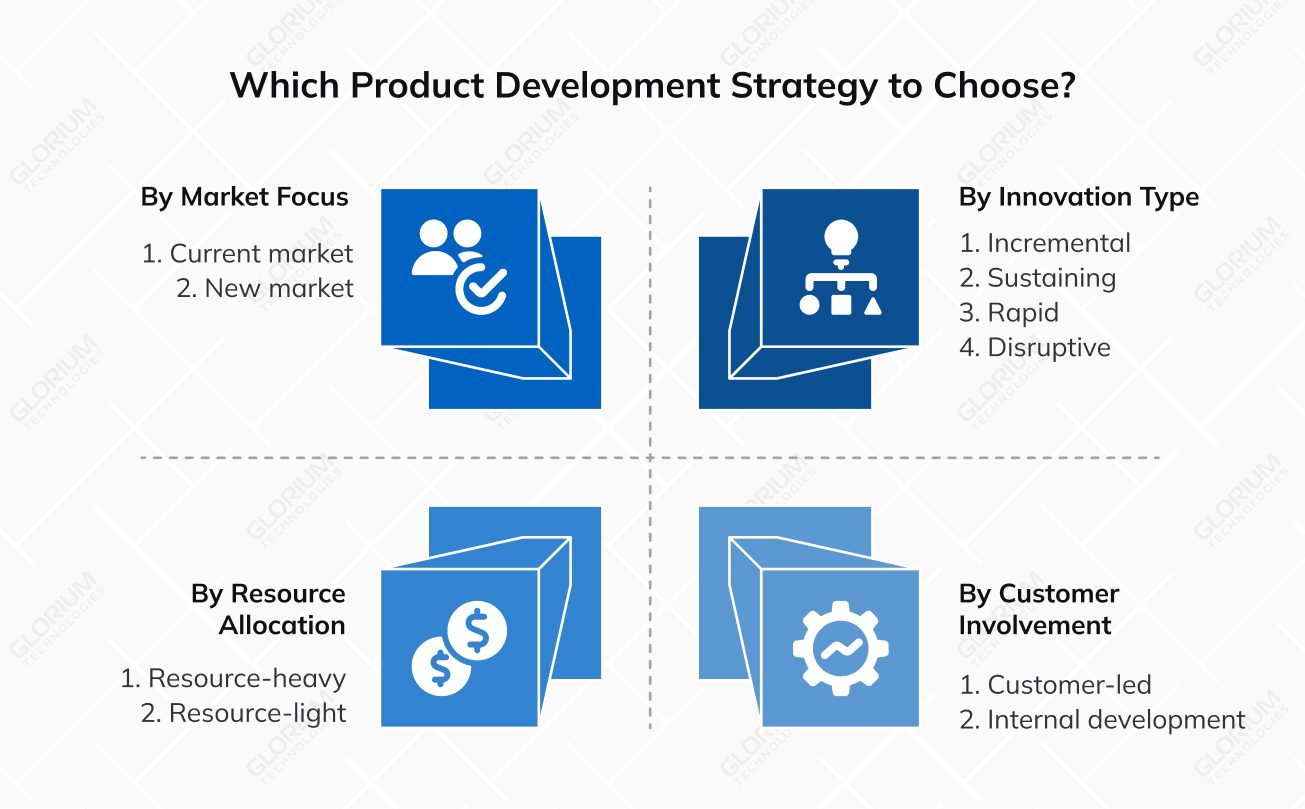
Current market strategy involves building on or improving solutions that already work for your current customer base. This approach is often less risky since you are aware of the existing market bottlenecks and understand what your audience values.
A new market strategy means targeting customer segments you haven’t served before. While it carries more uncertainty, this path can unlock rapid growth and position your business as a pioneer in a new space.
Incremental strategy involves steady, consistent improvements over time. If you prefer low-risk and predictable timelines, this approach keeps your solution evolving without significant disruption.
Sustaining strategy focuses on enhancing existing solutions to maintain a competitive edge and respond to shifting customer expectations.
Rapid innovation strategy introduces entirely new concepts or combines technologies in ways that can redefine how people interact with solutions like yours. This approach requires a bold vision and a higher tolerance for uncertainty.
Disruptive strategy changes the rules of an industry by creating new markets or reshaping existing ones with a completely fresh approach.
Resource-heavy strategy involves a significant investment of time, budget, and expertise. This approach often supports complex solutions with high stakes and long-term goals.
Resource-light strategy emphasizes lean principles and quick iteration. It allows you to validate new ideas at a low cost, reduce uncertainty, and adapt faster based on customer feedback.
Customer-led strategy centers on close engagement with users throughout the process. This helps ensure the final solution directly reflects customer needs and preferences.
Internal development strategy relies primarily on your development team’s technical expertise, using internal research and product team creativity to guide decisions and bring ideas to life.
Whatever path you choose, what matters most is staying intentional. The most successful projects don’t happen by accident — they result from teams selecting a strategy that fits their ambition, executing with focus, and adapting as they learn.
Every great solution starts with idea generation, but ideas alone don’t pay the bills. You need a plan that connects inspiration to action and keeps everyone moving in the same direction, even when things get messy.
Follow these stages of product development, tweak them to fit your style, and you’ll have a clear, actionable strategy that helps you build with purpose and less stress.
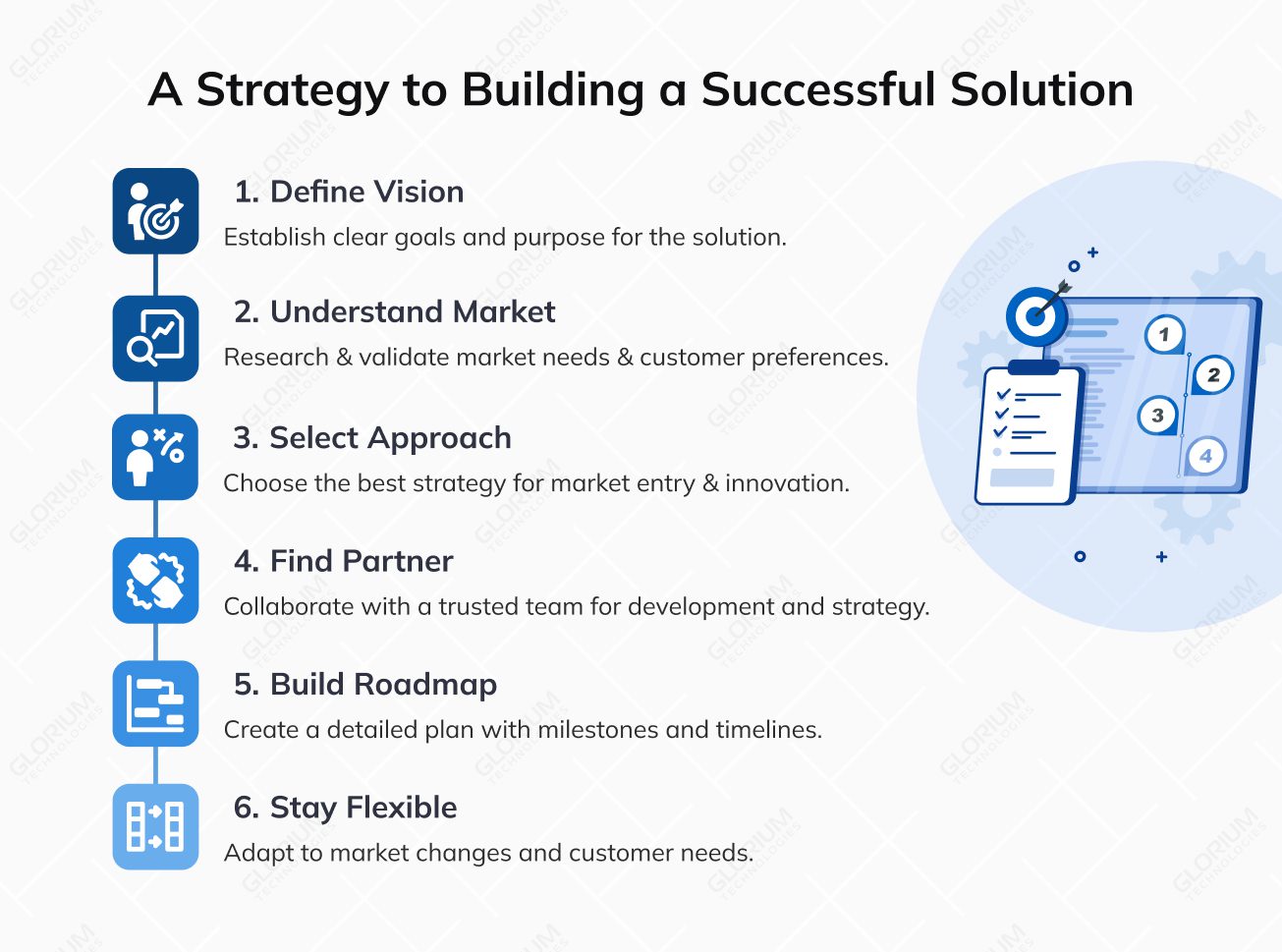
Start by conducting a thorough business analysis and getting crystal clear on why you’re doing this. What problem are you here to solve, and who needs you to solve it? What kind of impact do you want your solution to have in the market? Your vision is more than a statement — it’s the purpose that will keep you steady when decisions feel overwhelming. From there, set goals that are specific, measurable, and meaningful.
One of the reasons why around 42% of startups fail is building a solution that doesn’t actually address a real customer need. This underscores how crucial it is to validate your product design early on before pouring time and money into development.
Research is your wild card. Get inside your competitors, trends, and, most importantly, customer experience. What are they struggling with? What gets them excited? This step will help you create a solution your audience loves.
Will you enter an established market or target a new one? Are you making incremental improvements or targeting breakthrough innovation? At this stage of the product development process, you should decide how to position your solution, deploy resources, and engage your potential customers. This is where you choose the growth strategy that is best for your purposes.
If you can’t do it all in-house, consider bringing in a trusted software engineering partner. A capable team will let you refine your vision, avoid technical landmines, and get to market faster with fewer headaches.
Break your vision into milestones and stages. Together with your partner, agree upon the timelines, roles, and software development costs. A clear roadmap will help you turn lofty ideas into doable steps and keep everyone on the same page.
Even the best plan allows room for flexibility. Markets evolve every day, and so do customer needs. Being flexible is not a weakness — it’s the key to keeping your solution in high demand for years.
If you follow these steps, you equip your team with the focus, clear work scope, and clarity to build a solution that people genuinely love.
Sometimes, the most valuable lessons come from companies that quietly built their own playbook and earned lasting brand loyalty in the process. As a rule, they combine thoughtful planning, validation, and relentless focus to develop SaaS products people rely on. Here are a few examples that show how a clear strategy aids in launching a successful product:
Zapier: Zapier, a SaaS platform that connects thousands of apps so users can automate workflows without coding, didn’t start by trying to automate everything. Their team picked a narrow slice of integrations (just a few apps) and tested demand through a simple landing page before building the solution. This deliberate strategy of validating interest before writing a line of code helped them avoid wasted resources. As usage grew, they expanded integrations step by step, letting real-world feedback guide development priorities.
Basecamp: Basecamp is a project management and team collaboration software trusted by small businesses and agencies worldwide. Unlike competitors that kept adding new features, Basecamp adopted an intentional strategy to avoid feature bloat. They prioritized simplicity, clear workflows, and ease of use over chasing every trend. By sticking to their minimalist vision, they attracted teams who felt overwhelmed by more complex tools — and turned that discipline into long-term success.
Buffer: Buffer, a social media scheduling tool that helps individuals and businesses plan and publish posts across platforms, didn’t build an elaborate system upfront. Their founders validated demand with a minimal website explaining the concept. Only after collecting sign-ups and confirming real interest did they invest in developing the scheduling features. This lean validation strategy ensured they were solving a real problem before committing resources to full-scale development.
These examples show you don’t need to be the biggest or flashiest player to win in SaaS. You need a strategy that’s clear, validated, and true to the problem you set out to solve.
Even when the path is clear, launching a new solution often feels like trying to get out of a maze. Here are some best practices to assist you in creating a strategy that’s deliberate, resilient, and set up for success:
With these best practices on your side, you’ll have a SaaS product development strategy that’s not only clear and actionable but robust enough to help you cope with any unexpected twists along the way.
Creating a thoughtful SaaS product development strategy isn’t just a box to check — it’s what separates solutions that quietly fade away from those that make a real impact. Whether you’re launching your first MVP or scaling the current product, having a clear, actionable plan gives you the confidence to move forward and the resilience to adapt along the way.
If you’re ready to take the next step but need a clear roadmap, we’re here to help. Let’s explore how a tailored strategy can bring your ideas to life faster, smarter, and with less risk.
Book a free discovery call today to discover how to build a solution people will love, share, and remember.

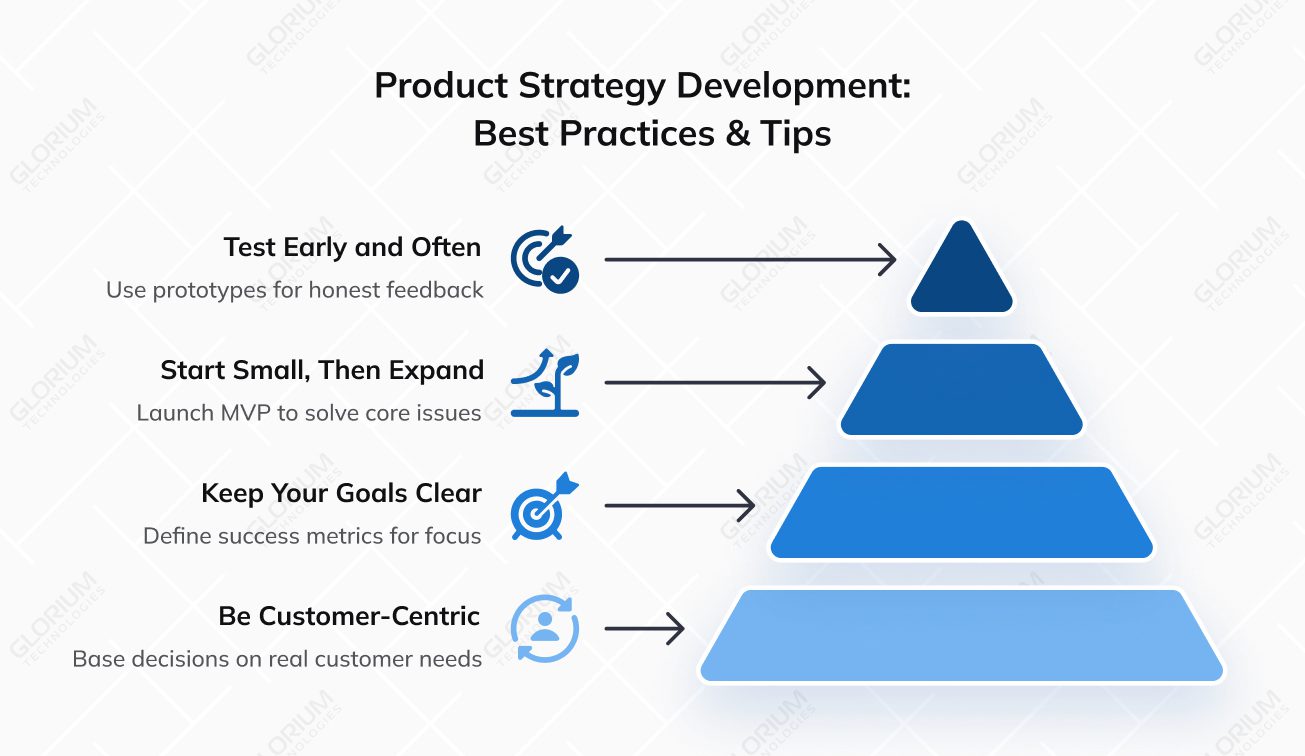
Early validation is the best way to test demand. Use surveys, prototypes, or even a simple landing page to gauge interest and get feedback before you dive into the new product development process.
Stick to the essentials first. Focus on the core features that address your customers’ primary needs, and gradually introduce additional features based on honest user feedback.
Customer feedback helps you refine your solution and make sure it’s actually solving their problems. Regular testing and listening to your users ensure your project stays relevant and valuable.
Set clear, measurable goals for each stage of development and track progress regularly. Stay flexible, and don’t be afraid to pivot if something isn’t working. Continuous iteration based on feedback keeps you aligned with your goals.