











Microsoft Dynamics 365 Business Central Services


Enjoy the 265% ROI Club Others Are In


Microsoft Dynamics 365 Business Central Implementation for Unified Processes


Microsoft Dynamics 365 Business Central
The Full Power of Dynamics 365 Business Central Implementation
From legacy migration to expert integrations, get the most out of your ERP investment.
Ready Whenever You Are
* Manufacturing and Service Management require a Premium license.
Plug in and Power Up
* Manufacturing and Service Management require a Premium license.
A Smooth Move to the Cloud
* Manufacturing and Service Management require a Premium license.
What Makes Dynamics 365 Business Central Implementation Worth It
Centralized Platform

End-to-end business management without the need for additional tools
Global Market Reach

47 languages, 180+ localizations for compliance and tax rules worldwide
AI-Driven Insights

Copilot AI and Power BI put real-time data intelligence at your fingertips
Security & Compliance

Azure-powered security, GDPR/SOX/ISO ready, and trusted by 45,000+ global customers, from agile startups to the Fortune 500
Microsoft Ecosystem

Microsoft 365, Teams, Outlook, and Excel – all working together out of the box, delivering a seamless and highly integrated experience
Why Choose Us for Microsoft Dynamics 365 Business Central Implementation

Secure your investment by neutralizing the 75% risk of ERP failure. We launch every partnership with intensive discovery workshops to map your true "as-is" processes, KPIs, and compliance needs before any configuration starts.

Why settle for fragmented support? Beyond initial analysis, we lead your configuration, customization, integration, go-live, and post-launch optimization sprints. Benefit from a dedicated partnership with full support and technical excellence.

Power BI, Azure ML, and AI automation are fundamental to our delivery, never just afterthoughts. Our team builds robust Business Central environments designed to predict trends, automate tasks, and advise right from the start.

We offer predictable pricing tied to delivery milestones. You always know exactly what to expect at each stage, ensuring you have total financial clarity and confidence throughout the Dynamics 365 Business Central implementation journey.
If you don’t want to settle for an out-of-the-box Business Central setup, we can customize it to your liking. With 16+ years in custom development, we can extend it via AL code, API integrations (Shopify, banks, WMS), and bespoke apps.

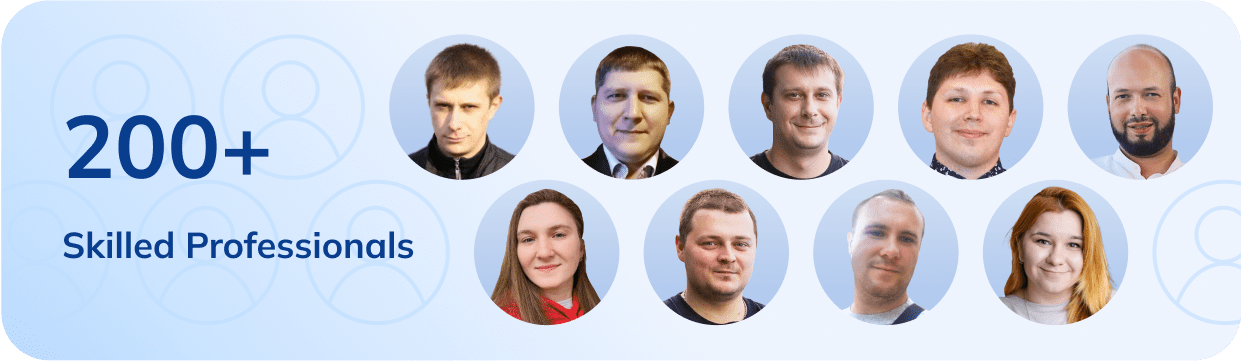
Our powerhouse of 200+ specialists across Princeton, Kyiv, and Kraków consists almost entirely of senior-level talent. We believe in high-stakes accountability, meaning you get a dedicated team of proven experts focused on high-velocity delivery.
Microsoft Dynamics 365 Business Central Implementation in Stages
Initial Consultation
Research complete, form submitted: you’re officially on our radar. Now that we have your project details, we can jump on a discovery call to turn that vision into a roadmap.
- Financial Management
- Specify your needs
- Learn about our processes
- Learn about our processes

Discovery
Before we build, we blueprint. We map your 'as-is' and audit your existing processes and define a flawless scope, ensuring the foundation is perfect before we build.
- Requirements analysis
- Gap analysis
- Risk overview
- Implementation roadmap

Kick-off
We present our proposal, and if it suits you, we’ll finalize the contract and step in as your Dynamics 365 Business Central partner, committed to your business transformation.
- Proposal presentation
- Scope confirmation
- Contract finalization
- Partnership launch
MVP
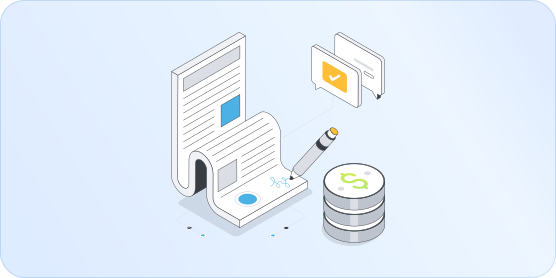
We trade “what if” for “what is” by delivering a functional Business Central pilot at breakneck speed. You can test-drive core processes and de-risk your future through actual performance.
- Core BC modules live
- User feedback loop
- First measurable results
- Rist mitigation strategy

Full Rollout
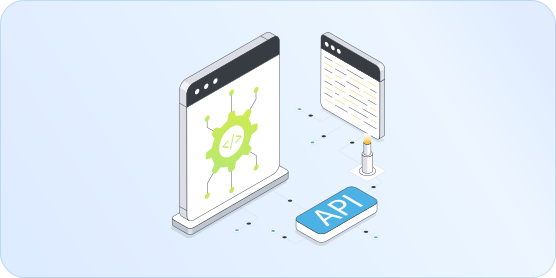
We provide end-to-end deployment, including custom AL extensions, core integrations (Shopify, WMS, banking), and advanced AI analytics, fully optimized for your business DNA.
- Full BC deployment
- Custom AL development
- API integrations
- AI & Power BI reporting
Ongoing Support
Consider us as your permanent post-launch partners. We stay with you after go-live with performance-boosting optimization sprints, user training, and Business Central updates.
- Post go-live optimization
- User training & onboarding
- BC major updates
- Optimization sprints

What our clients say about us







Our clients journeys










Who we are
About usGlorium Technologies is a full-cycle app & software development company which covers specific client business needs and manage them with the help of the best possible technology solutions.
Since 2010, we have been inventing digital breakthroughs, helping startups and businesses come out on top in their markets.
Why choose us





Certifications








Let's Connect!



FAQ
What makes intelligent business applications different from traditional software?
Intelligent business applications such as Microsoft Dynamics 365 do more than manage data; they connect people, processes, and technology. Unlike traditional software, they unify ERP, CRM, and productivity tools to automate daily tasks, streamline project management, and improve supply chain operations. With seamless integration and expert guidance from a Microsoft Partner, businesses like yours can manage complex business processes and reduce implementation costs through continuous improvement.
What do Microsoft Dynamics 365 consulting services include?
Microsoft Dynamics 365 consulting services cover every stage of your digital transformation, from system assessment and solution design to implementation and user training. A trusted Microsoft Partner, like Glorium Technologies, provides expert guidance to automate processes and optimize workflows. These services ensure project success, improved operational efficiency, and ongoing support across ERP, CRM, and Power Platform solutions.
When should you engage an implementation partner for your ERP project?
It’s worth engaging an implementation partner early in your ERP project to ensure alignment between technology solutions and project management. A certified Microsoft Dynamics 365 partner helps assess existing systems, define requirements, and implement solutions using proven methodologies. With expert guidance from the right partner, you can achieve successful deployment, improved efficiency, and long-term value from your technology investments.
What are the main pros of implementing Microsoft Dynamics 365 Business Central?
Microsoft Dynamics implementation services help you bring all your key operations, finance, sales, and supply chain management into one connected system. Instead of juggling multiple tools, teams can work from a single source of truth, saving time and reducing errors. The enterprise resource planning platform automates routine processes and enhances customer engagement, while integration with Microsoft Office, Teams, and Power Apps keeps collaboration effortless and consistent.
How does an implementation partner ensure continuous improvement after go-live?
When working with Glorium Technologies, you can expect us to provide ongoing support after successful implementation, including optimization services and system monitoring. Through regular ERP health checks, comprehensive training, and performance tuning, we help companies adapt Microsoft Dynamics 365 to their business goals. We focus on user adoption, system stability, and enhancements that align with your business model.
What are the key issues businesses face in digital transformation projects?
Some of the biggest challenges involve matching new technology to a company’s unique business requirements, integrating CRM systems without disruption, and keeping system administrators engaged through the change. Many organizations also find it tricky to push innovation forward while managing the demands of daily operations. When managed effectively, digital transformation can significantly enhance customer satisfaction, streamline workflows, and create a flexible foundation for future growth.