







Outsourced Product Development: Why Startups Should Use It
Updated December 17, 2025

 Summarize in ChatGPT
 Summarize in ChatGPT




Startup owners face a tough challenge: building a great solution without depleting resources or sacrificing quality to keep costs low. As a business owner, you’re likely seeking ways to thrive in unpredictable markets, not just survive. One effective approach is to partner with experienced software development services that specialize in helping startups succeed.
Popular tech companies like Slack, Skype, Microsoft, Meta, Google, and others have been using outsourced product development for years. Startups have also been thriving with outsourcing, with reports showing that approximately 70% of companies choose outsourcing for cost reduction and 45% of tech firms employ outside resources to address talent shortages.
So, how do you approach outsourced product development? In this article, we’ll explore this subject in depth and uncover how outsourcing custom software development can help you save costs, get access to expertise, and improve time-to-market.
Content
Startups outsource software development to save resources and gain access to expert input unavailable in-house. Outsourced product development not only brings expertise to the table but also helps startup owners avoid headaches associated with hiring and training an in-house team. So why do so many companies turn to outsourced software development?
This short list describes just a part of why we recommend you outsource developing new software for your startup.
The latest research shows that the outsourcing market will experience significant growth, with a CAGR of 8.9% from 2023 to 2030.

When a startup owner decides to launch their new product, they have two choices: develop the product in-house and deal with all the chaos that comes with it, or delegate this process to external product development teams. While both approaches have their own benefits, we want to explore how in-house development and outsourcing differ from each other.
Factor | Outsourcing | In-House |
Cost & Time | Eliminates expenses for recruiting, training, and infrastructure. Faster time-to-market. | Higher costs due to salaries, infrastructure, and longer development time. |
Expertise | Access to specialized technical skills and experienced teams with a proven track record. | Limited to in-house team skills; requires ongoing hiring and training. |
Control | Less direct control, but a reliable outsourcing partner mitigates risks. | Full control over the process and intellectual property. |
As the table above shows, in-house software development requires much more resources and engagement than outsourcing. Additionally, in-house teams are limited in terms of skills and expertise, while outsourcing opens up a whole new world of advanced IT services. Some startups choose to go with in-house creation due to more control over the process; however, outsourcing can also offer flexible collaboration methods, like outstaffing, team augmentation, and more.
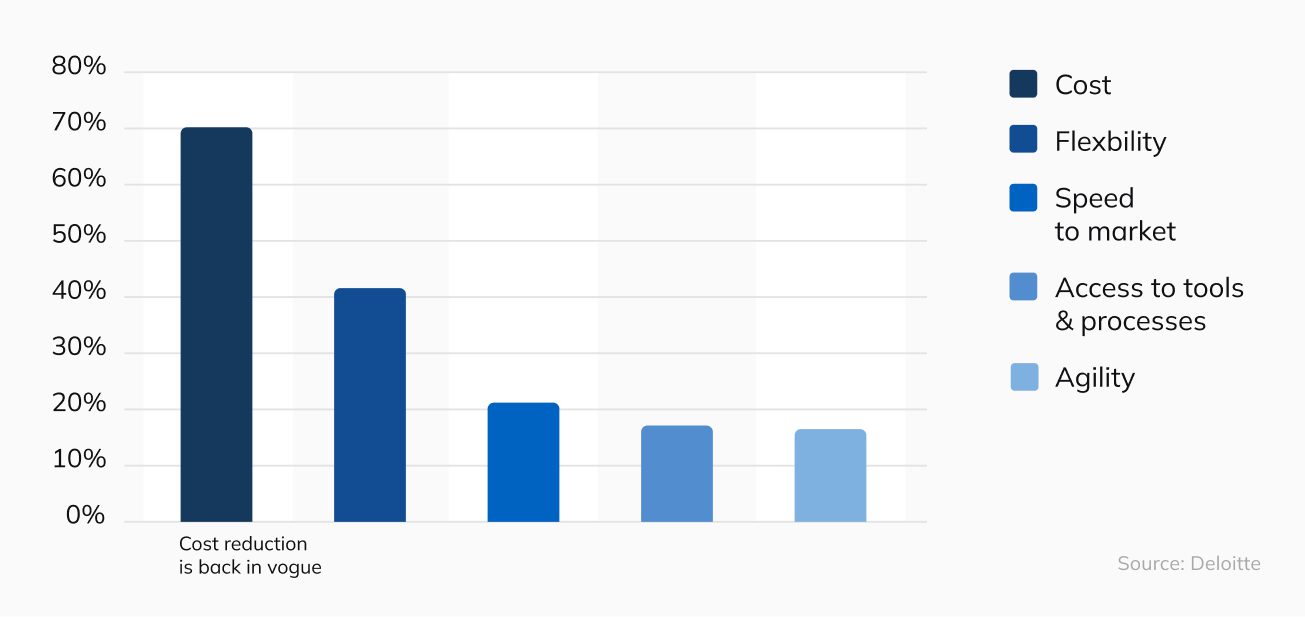
According to Deloitte research, cost reduction and flexibility remain the primary drivers of outsourcing, with over 70% and 40% of companies, while speed to market, access to tools & processes, and agility each contribute to the decision to outsource.
Want to know more about the various benefits of outsourced software development? Here’s an in-depth exploration of some of the most significant gains:
Hiring and training new team members can cost a fortune, especially if you mismatch a few times and have to rehire. Outsourcing offers cost efficiency.
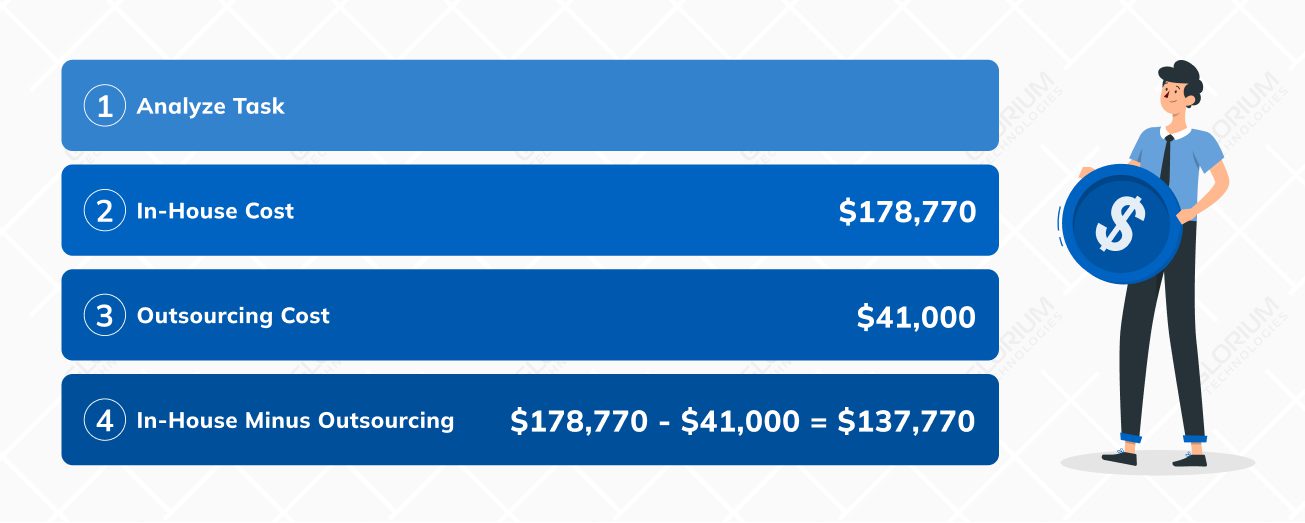
Incidentally, research shows that 70% of companies outsource primarily to reduce costs. In fact, reports highlight that some companies can save up to $88,000 annually by outsourcing. So, very often, instead of hiring new professionals, startups work with product development companies to save money on labor, resources, office space, infrastructure, etc.
Read more about the pros and cons of in-house and outsourcing software development.
Even large companies struggle with a lack of expertise, so it’s not surprising that startups decide to outsource to gain access to a global talent pool. Remote product development partners usually bring a team with software licenses, expertise in new technological tools, professionals with extremely specific scopes, and software solutions that are unavailable locally. Additionally, you’ll be introduced to new tech and best practices for your software creation.
Outsourced product development companies can provide startups with access to expertise in areas such as:
Startups often feel pressure to perform well and fast. A faster time to market is essential to introduce your product to the audience and attract investors and business angels. This benefit is essential for fast-paced industries that adopt new technologies at the blink of an eye.
By outsourcing product development, you can work with an experienced team that develops innovative solutions within a shorter time frame. They can also take care of product testing, ensuring that your product is bug-free and meets market demands and the necessary quality standards.
Anna VoznaClient Success Manager, Glorium Technologies
One of the biggest advantages of outsourcing product creation is the ability to scale up or down as needed. Startups often experience fluctuations in demand for their software, which can result in the need for additional team members. By outsourcing complete product management to a dedicated team, startups can quickly and easily meet the changing project needs.
Interested in software product development outsourcing? Read our article about the pros and cons of choosing an outsourcing team from Ukraine vs India.
Research shows that around 49% of companies outsource software development to free up resources in-house. Outsourced product development allows companies to spend more time making strategic decisions, improving their marketing efforts and business processes, reducing sales cycles, and more.
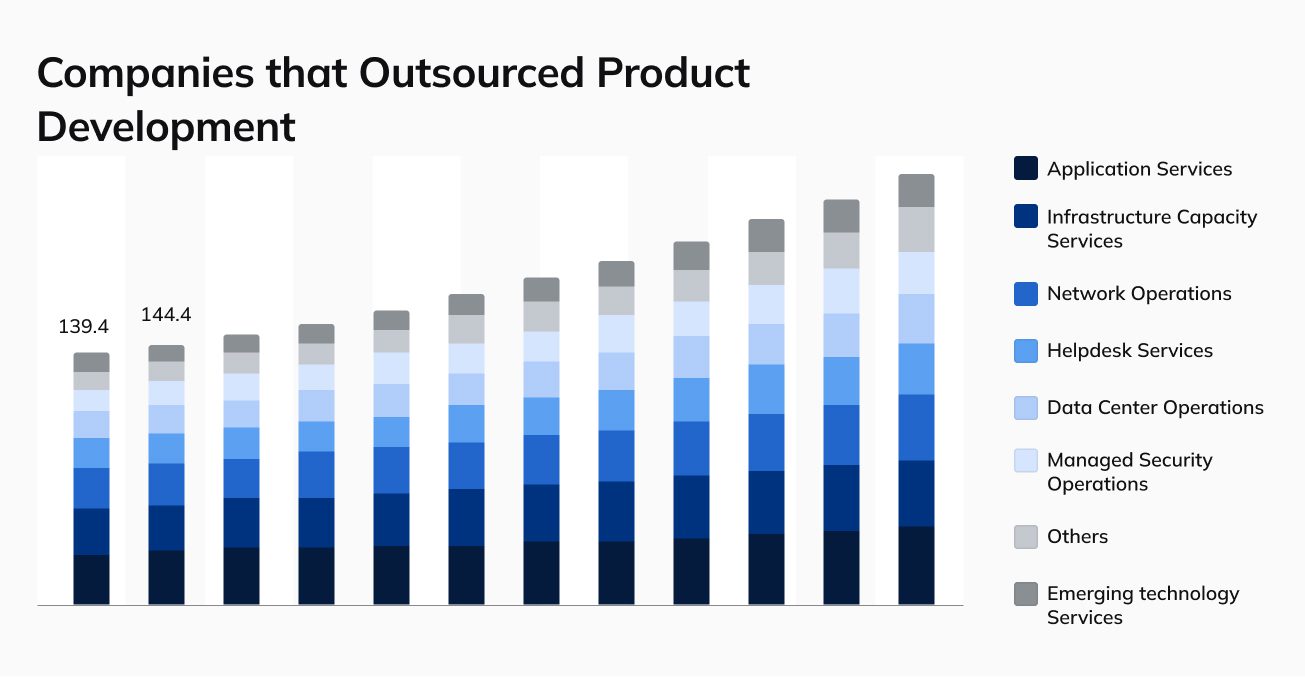
Source: Grand View Research
For example, Dropbox used external expertise to create Android and iOS apps and reach millions of users worldwide. Its partner undertook the entire development process, while its in-house team focused more on project management and improving file storage and sharing. Similarly, Netflix has prioritized improving its streaming platform and user interface by outsourcing software and app development, while its in-house team was busy with content acquisition, production, and curation.
Fears and uncertainties around outsourcing often lead companies to avoid this software engineering model. Instead, companies build everything in-house, even if it means paying three times as much, facing longer product development lifecycles, and stretching internal resources thin. Understanding these common fears is the first step to overcoming them and unlocking the potential of outsourcing for your startup.
You might wonder: how can communication be a problem in today’s hyper-connected world? Yet, partnering with an offshore software engineering team often brings hidden hurdles. Time zone differences and language nuances can slow down progress and cause costly misunderstandings. Imagine your software is deployed, but something goes down, and you need your team to fix it as soon as possible. However, your outsourced team is unavailable because it’s nighttime, and you must wait hours. Each passing hour means lost revenue, frustrated customers, and a hit to your brand reputation. It’s a nightmare scenario many have faced.
Handing over sensitive data to an external team can feel like handing over the keys to your home. No one wants to disclose information that could potentially be utilized for fraudulent activities, gaining a competitive edge, or reused in similar projects. What’s more, without proper data protection rules in place, there’s the chance of accidental data leaks, intellectual property theft, and even legal consequences.
Ever agreed on a project cost only to see it balloon unexpectedly? It happens to projects with unclear objectives and scope. New features, integrations, and enhancements are required, so you face the need to invest extra money into the project. This phenomenon, often called scope creep, can seriously damage budgets and deadlines. Without clear boundaries and smooth collaboration, every small request can result in growing costs and financial losses.
One of the biggest fears that keeps leaders awake at night is the feeling of losing control over their most critical asset — the product itself. When you outsource, you’re trusting a team outside your walls to shape your vision, make decisions, and deliver quality on your behalf. The worry comes down to control: a product overlooked, priorities changing without notice, and deadlines missed when you’re not steering the project.
You see, product design and development outsourcing raises fears. However, those fears are not roadblocks — they’re signposts. They warn you to proceed with awareness, diligence, and the right partner by your side. When you’re fully aware of them and prepare proactively, outsourcing becomes a powerful growth engine for your business.
Here’s what you can do to eliminate risks and entrust your project to the right hands:
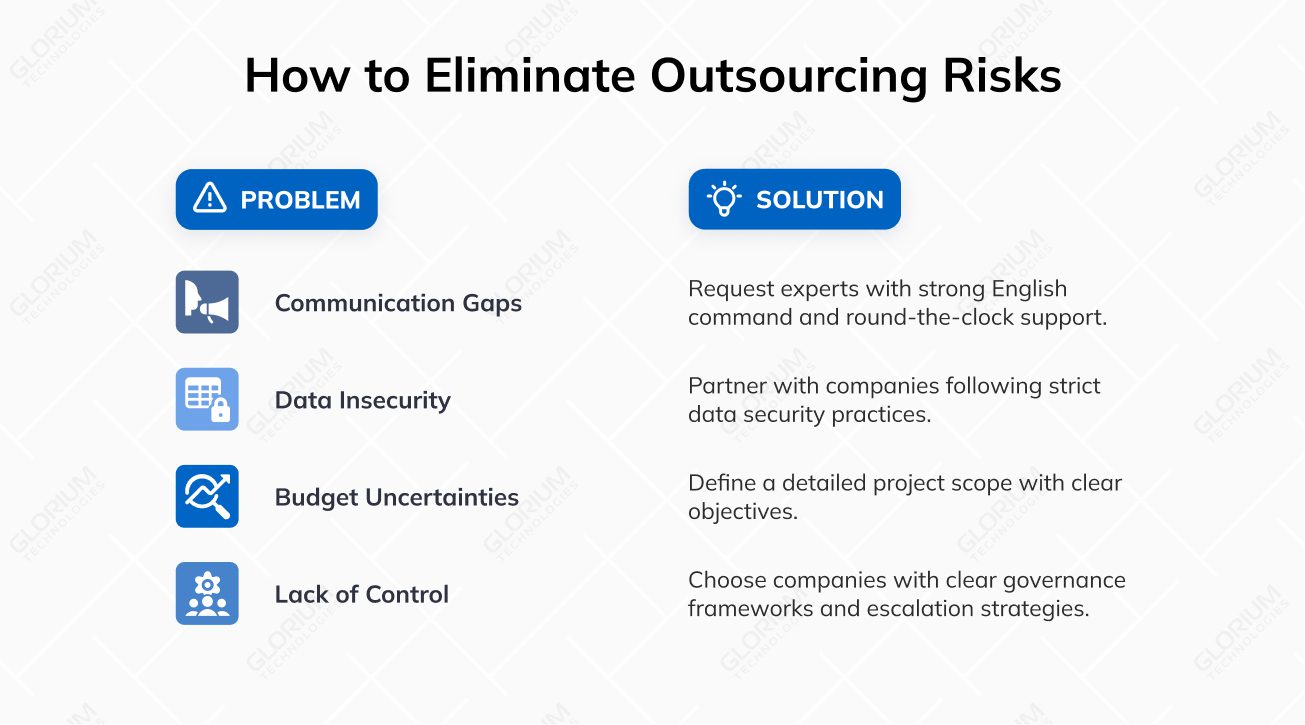
Select a partner that offers round-the-clock support and implements follow-the-sun development strategies. The latter implies that development and deployment happen by literally following the sun around the globe. This way, teams located in different regions and time zones hand off work smoothly.
Additionally, look for a partner with strong English proficiency and clear communication protocols for clients in different time zones. By knowing how often you will communicate and what tools will be used for this, you’ll secure your investment and keep your project on track.
Look for a trusted company that follows your industry’s compliance standards and has strict data security practices. Your potential partner’s data security routine should include end-to-end encryption, risk management, secure access controls, and regular security audits.
They should offer clear contractual terms about data management and intellectual property rights for your project. Additionally, you should insist on transparent compliance with relevant international standards like ISO/IEC 27001 to ensure robust information security management.
To prevent cost overruns, set a detailed and agreed-upon project scope upfront with your partnering company. This all starts with defining clear objectives. Though this phase may seem generic and obvious, it determines the project’s success in the long run.
Opt for a fixed-price or capped-budget contract when possible. If your project requires flexibility, look for a company that practices the incremental or agile approach to solution engineering. By having regular reviews and transparent communication about any scope changes, you will balance its financial impact and be aware of how each cent turns into business value.
Here’s the truth — control isn’t about micromanaging every line of code or sitting over someone’s shoulder. Real control comes from trust, transparency, and structured collaboration. It’s about having a partner who empowers you with clear visibility and a seat at the decision-making table every step of the way.
Choose a partnering company that cultivates transparency as a core value. Set expectations upfront about your level of involvement — whether you want to be deeply embedded or prefer to delegate — and find a firm flexible enough to adapt. Strong governance frameworks, well-defined roles, and clear escalation paths will keep you in control without the stress of micromanagement.
Now that you know how to avoid outsourcing challenges, it’s also important to talk about the financial side of the process. So, how much does it truly cost to outsource the software development process? Firstly, it’s essential to understand that the cost can be different and influenced by many factors. These include the product’s complexity and scope, the outsourcing partner’s geographical location, expertise, technology stack, and market rates at the development time.
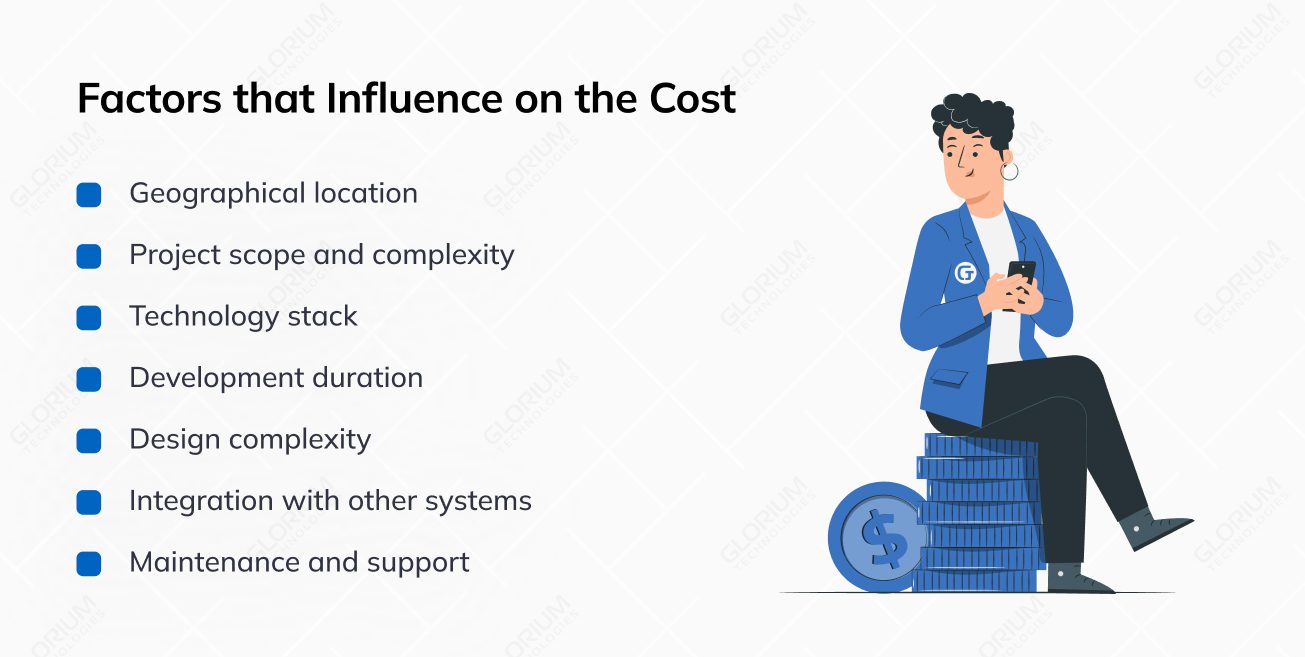
As a rough example, average outsourced product creation for startups can cost around $10,000 to $50,000, depending on the abovementioned factors.
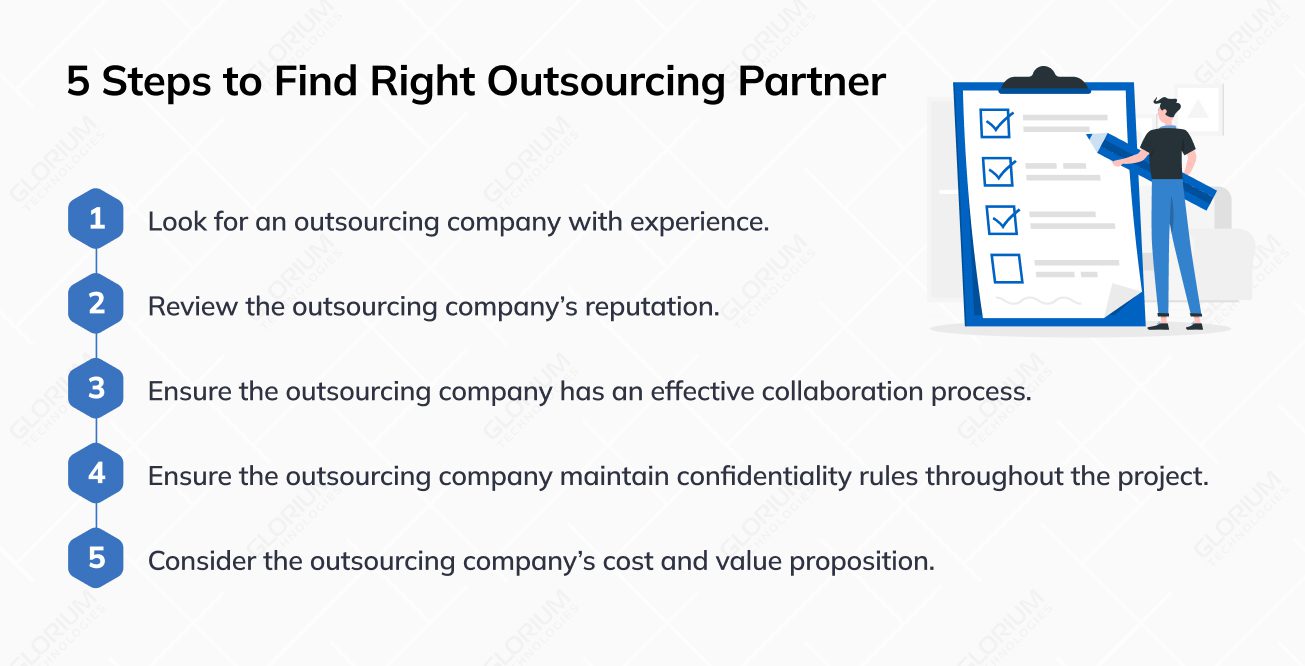
Choosing the right outsourced product development company can be a challenging task. You must research, interview, compare, and make a careful decision. Below, you’ll find some tips for outsourcing product development to the right partner:
By following these tips, you can find an outsourcing partner with experience that aligns with your startup’s needs and business goals. Read more about how to choose the right vendor for outsourcing programming.
Selecting the ideal outsourcing partner is a big step, but it’s only the start of your software development project. The actual process of establishing trust, communicating expectations, and carrying out the decision starts as soon as you’ve made it. The following is what you should concentrate on next to turn your collaboration into a real growth engine for your business:
In short, picking the right partner opens the door, but what happens after sets the trajectory for success. Approach the mentioned aspects with attention, clear communication, and shared accountability to turn your vision into a market-winning product.
As an outsourced product development company, Glorium Technologies offers startups comfortable and flexible collaboration models for high-quality software creation. We use Agile methodologies, transparent communication channels, and continuous improvement to provide you with the best possible services. If you’re looking for a cost-effective solution to help your startup thrive, schedule a free consultation with our experts and discuss your project idea.
Intellectual property ownership usually stays with the client, even when an outsourcing partner is involved. Agreements clearly define these rights from the project lifecycle to avoid misunderstandings. Although the partner provides specialized skills in design, coding, and testing, the intellectual property and all deliverables are usually handed over to the client once the project is complete.
Startups usually outsource software creation services. You can also outsource UI/UX design creation, product engineering, MVP creation, QA, and maintenance services with Glorium Technologies. We have professionals with technical expertise in all these (and more) fields.
Outsourcing is significantly beneficial for all industries. Tech startups often outsource product creation, but you can greatly benefit if you’re in fintech, healthcare, E-commerce, real estate, and more.
Yes — if you manage it right. With a clear product development process and a dedicated project manager, you can keep your team aligned, maintain communication, and ensure quality no matter the location. This setup also helps reduce costs while giving you access to the specialized expertise your project needs. Many companies use a structured outsourced product development process to coordinate specialists, manage risks, and deliver results that meet technical and business goals.
If your startup doesn’t have the right skills in-house or you’re working with a tight budget, partnering with an outside team might be the smartest move. Outsourcing gives you access to a wide range of experts without the cost and hassle of building a full internal team. Plus, it can speed up your launch since you’re tapping into professionals who know the best tools and methods to get things done efficiently.
Absolutely. We offer comfortable and flexible collaboration models that allow you to scale up or down whenever needed. What’s more, our pricing structure remains clear and transparent throughout. Even as your project grows or changes scope, you’ll never face hidden fees or surprise costs. We provide detailed estimates and regular budget updates so you can confidently manage expenses without losing control.
Freelancers are usually good for short-term collaborations, while outsourcing can provide you with a more reliable and committed team.