







Why Your Healthcare Facility Needs a Modern Hospital Management System
Updated March 4, 2026

 Summarize in ChatGPT
 Summarize in ChatGPT




Over the last few years, the demand for convenient medical services has increased. Along with the rapid digitization of the healthcare industry, more software systems and tools are emerging, contributing to enhanced patient safety and operational efficiency.
One of the most extensive all-in-one systems is the hospital management software system. In this article, we will explore SaaS-based HMS and its core benefits and features.
Hospital software development solutions automate daily operations, manage bills, documentation, and inventory, and reduce the pressure on clinicians.
So, how do you create hospital management system software that will perfectly suit your business? Read on to find out.
Content
The purpose of HMS development is to:
A comprehensive healthcare management system serves as the digital backbone for modern medical facilities, integrating clinical workflows with administrative processes to ensure seamless operations across all departments.
HMS unites scattered data (lab results, medical supplies, past and upcoming appointments, etc.), helping your admin staff streamline workflows and create a more responsive, efficient environment.

You should know how to distribute company resources effectively to deliver high-quality care while avoiding waste. A hospital management solution can help you with this process, reducing the administrative burden on staff and allowing more effective use of your team’s time and resources.
The advanced scheduling features of healthcare management software automate doctor-patient communication by offering subject-based alternatives. Additionally, digital healthcare solutions enable automated tracking of clinical, patient, and financial data by securely storing all records and transactions, which also reduces the manual, data-related workload imposed on your healthcare team. A comprehensive medical management system eliminates data silos by centralizing all medical information, from diagnostic results to treatment plans, enabling healthcare providers to make faster, more informed clinical decisions.
Hospital administration software’s consistency, scalability, and dependability enhance patient care and experience, making healthcare practice operations more efficient. By customizing care for individual patients, hospital management systems help ensure that each client receives personalized attention and tailored treatment plans. Such individualized care becomes possible because the hospital management software system stores comprehensive patient profiles that include medical history, preferences, and treatment responses.
Access to real-time patient data, provided by hospital management systems, allows you to adjust your healthcare delivery strategies for each patient’s needs, preventing issues such as misdiagnoses or delayed care for patients who require immediate medical attention. Thus, hospital management software improves the effectiveness and appeal of healthcare services to their key audience, doctors and patients.
A system that centralizes all data, inventory, lab results, and reporting can significantly boost a hospital’s efficiency. The software filters data automatically, resulting in speedier operational procedures and the removal of time-consuming, repetitive tasks.
A hospital management system significantly reduces the risk of manual errors. By enhancing data accuracy and streamlining processes, the system minimizes issues like duplicate records, typos, and other common mistakes, thereby improving your workflows.
How to develop a modern hospital management system that will fit your organization perfectly? The first step towards creating customized hospital management software is making a list of essential features that meet the industry’s expectations and your needs. The first step toward a successful implementation is finding the right development partner.
At Glorium Technologies, we take a systematic and collaborative approach to developing hospital and patient management software. Our healthcare management system software solutions are built with scalability in mind, ensuring they can grow with your organization and adapt to changing regulatory requirements and technological advances in the medical field.
Our team of experienced software developers, healthcare professionals, and project managers works closely with clients to understand their needs and objectives. We identify key requirements and potential challenges, and based on this information, we develop customized software that addresses each client’s situation, regulatory standards, and compliance requirements. Our team’s vast experience allows us to find efficient solutions for the most unusual challenges and implement them successfully. You can learn more about our healthcare software and application development solutions here.
A German hospital approached us with the challenge of low efficiency in their bed management software. They needed assistance updating the frontend to enhance patient care. The main functional requirement was to automate the generation of booking forms.
Considering that some users of the solution might have visual or motor impairments, all designs had to be fully accessible. We adhered to the Web Content Accessibility Guidelines (WCAG) 2.0, a set of standards by the World Wide Web Consortium (W3C) aimed at making the internet accessible for people with disabilities. As a result, we implemented inclusive design best practices, including features like day/night mode, scalable display, and screen narration.
The project resulted in mock-ups with user-flow & multiple screens, a new responsive design with an intuitive interface, and a set of tools needed to navigate bed management.
Valentyn RiaboshtanAngular Developer, Glorium Technologies
With more than 15 years of expertise in health tech solutions, Glorium Technologies helps medical professionals address their current challenges and reach the market with excellent service and custom solutions. Our dedicated team helps bring your plans to life by nurturing your ideas from concept to launch.
These selected case studies provide an idea of our approach and results for the projects we deliver.
Modern hospital software systems are designed with interoperability in mind, allowing different specialized modules to communicate seamlessly and share data across departments for improved coordination and efficiency. For example, clinicians primarily leverage an EMR system to manage medical records, while a Practice Management (PM) system is implemented to handle scheduling, billing, and administrative functions. Other hospital management systems also include modules covering medical equipment management, enabling smooth maintenance, compliance, and efficiency.
These are the most essential HMS systems modern healthcare facilities implement:
Your choice depends on the needs of your healthcare practitioners, the facility’s size, and your budget. Some healthcare departments prioritize combining several systems and creating an all-in-one HIS that ties everything together.
Consequently, the cost of hospital management systems varies based on the features provided and the complexity of the hospital’s request. When evaluating different hospital management software, healthcare facilities should consider not only the initial implementation costs but also long-term maintenance, scalability, and the potential return on investment through improved operational efficiency. Comprehensive systems like HIS are typically more expensive than narrow-focused systems like pharmacy management or laboratory information systems. The cost of implementation and maintenance in each case will depend on the level of customization required and the complexity of the hospital’s IT infrastructure.
The hospital management system is an all-in-one solution that acts as the consolidator between various departments and branches involved in hospital management. Usually, a hospital management system stores and manages all types of medical data, including the following:
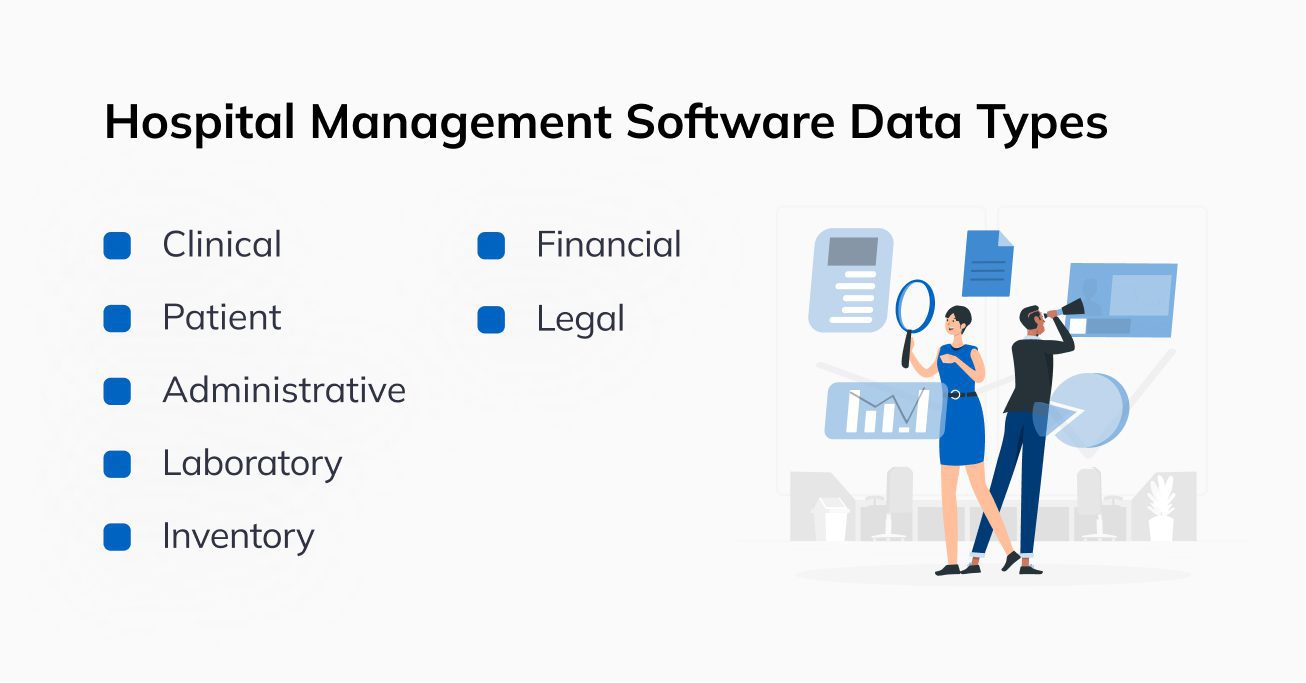
Data handling and protection are critical considerations in hospital management systems to ensure patient and hospital data confidentiality, integrity, and availability. Hospital management systems use various techniques to handle and protect information, including encryption, access control, and backup and recovery for all data types.
Strict regulatory requirements, such as HIPAA and GDPR, mandate the protection of patient data and impose penalties for non-compliance. To ensure full compliance, your healthcare development partner should conduct regular security audits and risk assessments to identify and address any vulnerabilities in the system. At Glorium Technologies, we take compliance seriously, using cutting-edge security measures and proactive audits to ensure your patient records are fully protected and meet all regulatory standards.
Medical practice management software has a range of modules, all designed to manage different aspects of healthcare operations.

These systems organize medical data in a clear, logical structure. By categorizing information for different departments and user roles, they ensure the right data gets to the right people efficiently.
A streamlined flow enables quick access to information, improves communication, and helps detect system issues early.
This module is the central hub for all patient data and reporting. That’s why we recommend implementing administrative systems in all hospitals dealing with large amounts of patient data. These systems track patients’ entire journey and compile the necessary reports for government bodies like the Department of Health.
This module also serves as the foundation for the clinical system. By linking administrative and clinical data, it ensures all hospital functions work together seamlessly.
Subject-based systems, often called electronic health records or electronic medical records, store patient information digitally. Hospitals mostly employ them to maintain and keep a complete digital history of patients.
Compared to paper-based records, EHR and EMR help reduce data duplication because all information is stored in a single file that is updated over time.
These systems are designed to assign and prioritize tasks for hospital staff. They automatically manage workflows, ensuring your staff have the right tasks at the right time. However, this module has a drawback: it sometimes creates duplicate data entries, which may slow down performance; that’s why it’s often combined with other modules or substituted with subject-based systems.
Billing systems manage a hospital’s financial operations. They automatically assign costs to medical services and procedures, ensuring accurate patient billing.
The system calculates these costs by analyzing past year’s spending data, which helps ensure charges reflect the actual use of resources. It also efficiently processes all payments and manages outstanding bills, essential for the hospital’s financial stability.
Developing a hospital management system involves incorporating essential features that streamline operations. These include, but are not limited to, electronic medical records, patient management, inventory management, billing and payment processing, and reporting and analytics. Let’s take a look at each of them in more detail:
One of the HMS features is the management of test results and patient data. Interaction with other software systems for data exchange improves workflow efficiency and accuracy and adds value to the patient treatment cycle. Doctors can make informed decisions faster, reduce errors, and provide timely and effective care.
Results management can include sample tracking, quality assurance, reporting, and other activities. The HMS system integrates with laboratory systems, collects needed data, and sorts it in the design, layering it with additional patient information if required.

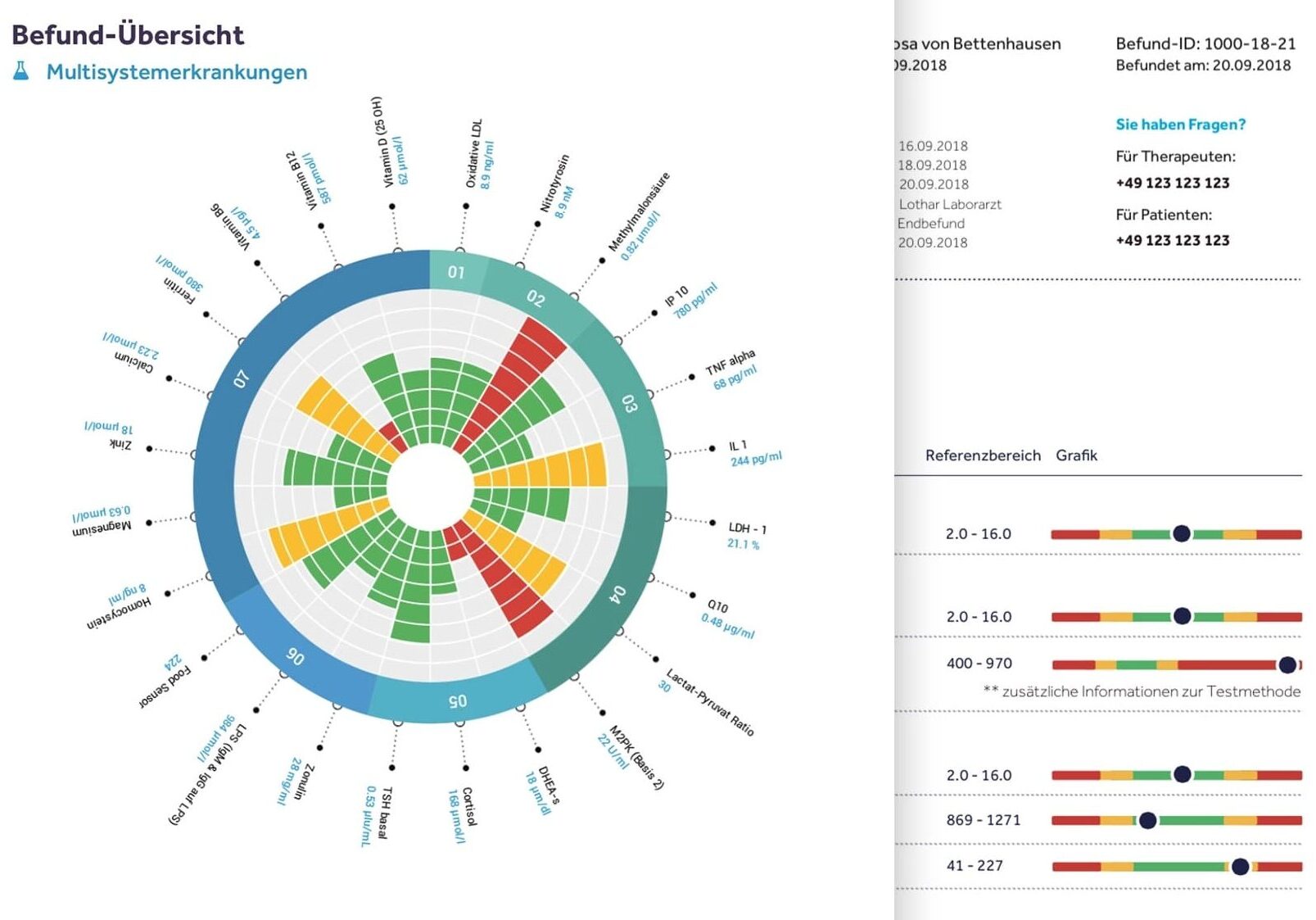
Image source: Pawel Malenczak, Fireart Studio
Imagine having a central repository for managing all your patient information, including medical health records, visits, vaccinations, medications, doctors’ notes, etc. That’s exactly what an electronic medical record allows for. By implementing this module, you give your staff access to all the essential data, which can later be used to deliver hyper-personalized treatments.
To make your workflow even smoother and more coordinated, you can integrate the EMR module with other medical software used in your healthcare facility. Instead of spending time on double data entry, you’ll get an integrated IT environment where all your systems work together and securely exchange data. As a result, departments will work more effectively with a comprehensive view of each patient’s medical history.


Image source: RonDesignLab, Seven Metrics
Healthcare solution developers sometimes overlook the patient’s side of the payment process. User experience is essential, especially when clients handle healthcare-related financial operations. Adding a billing feature to your hospital management software with user-centric visuals and easy-to-navigate functionality will help you keep the patients happy. With user-friendly payment options, the patients are more likely to pay on time, keep using your app, and stay loyal to your facility.
As a part of the billing module, you can also include a Real-Time Eligibility (RTE) system in your application. This functionality tracks insurance status and helps healthcare providers automatically check if the coverage is active and up-to-date. With this feature, your employees will have fewer manual tasks related to insurance management and more time to provide quality care.

Image source: Seven Metrics
Well-designed medical practice management software includes many scheduling options to assist healthcare staff and patients in communicating more effectively. With all the visits logged in the system, you can keep track of the appointment history and the doctor’s notes. The same platform could integrate patient registration features, allowing for smooth transitions between patient intake, scheduling, and care.
In addition, a patient scheduling system streamlines lab management. It provides automated reminders, follow-ups, and alerts when the results arrive and recommends scheduling an appointment as necessary.
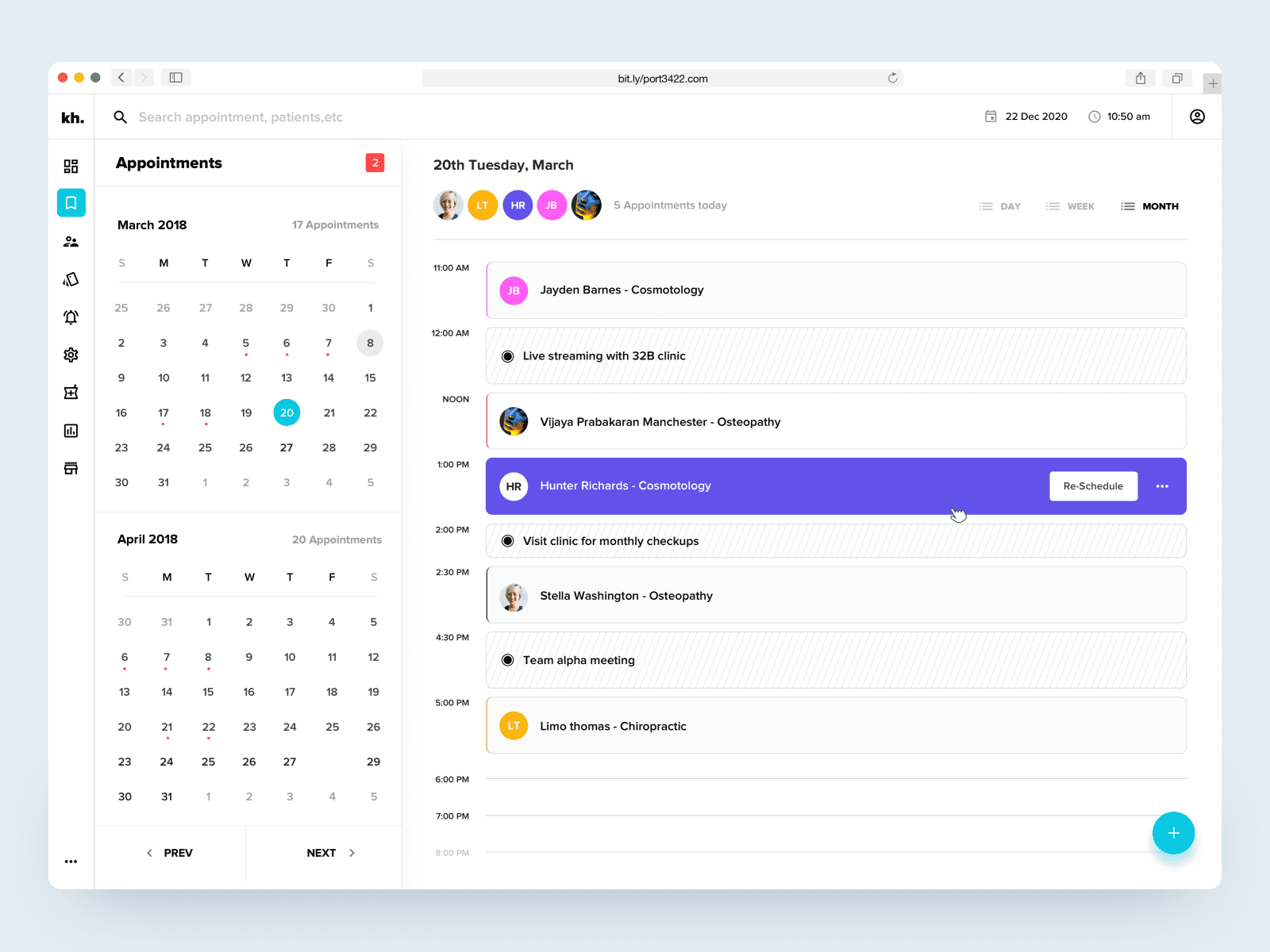
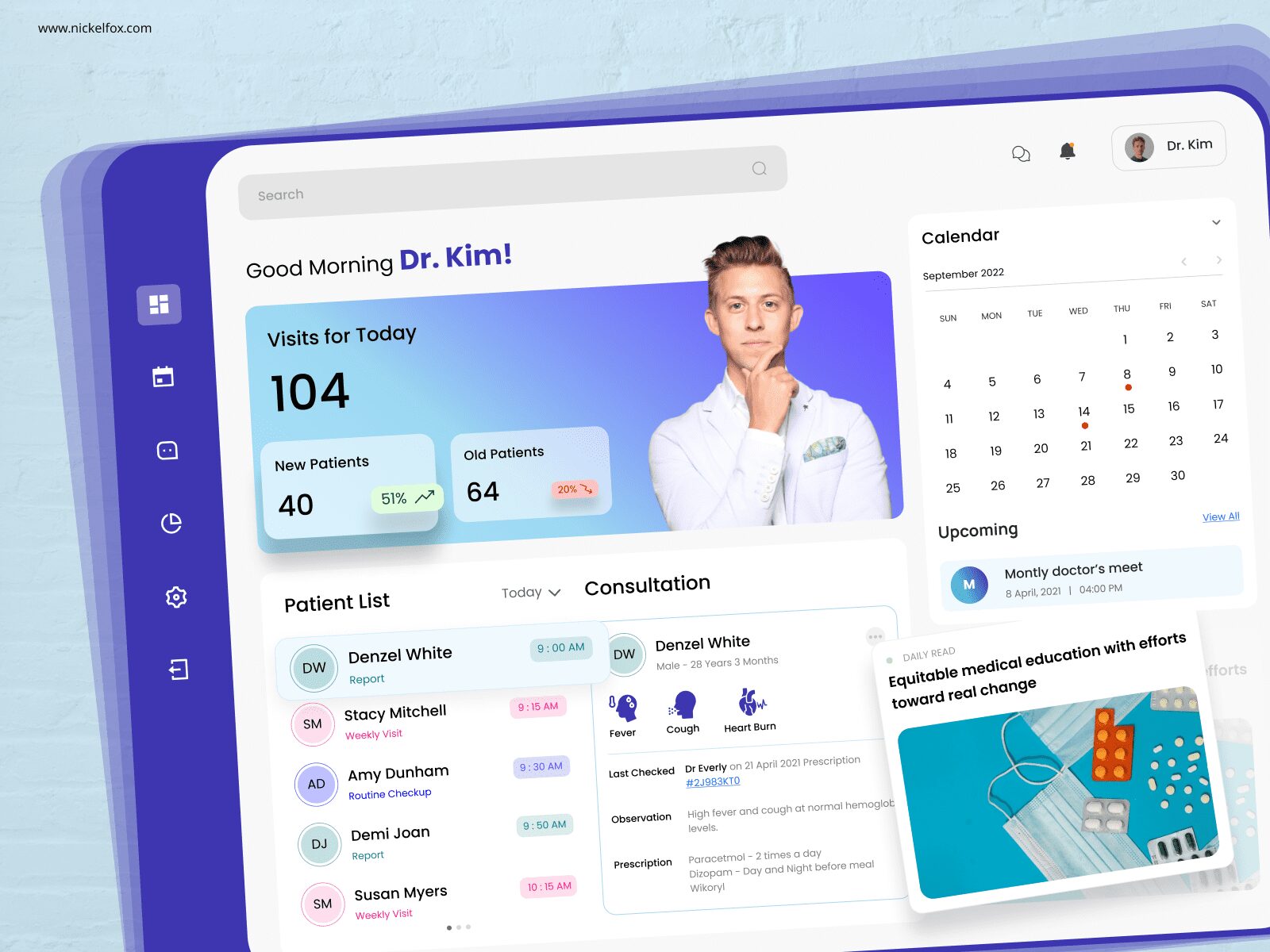
Image source: Divan Raj, NickelFox Design
The health tech industry is quickly growing, with a noticeable increase in patient-targeted applications and products. As a result, mobile healthcare apps have become an essential component of the hospital’s life cycle.
In a healthcare setting, the advantages of simple and functional application design extend beyond the obvious and help provide faster and more effective illness treatment.
A simple interface and enhanced functionality can alleviate patients’ worries, dramatically improve patient care, bolster treatment efficiency, and even prevent disease development.
Healthcare teams require intelligent reporting features in their hospital management systems to better understand procedures and detect performance gaps. In addition, leveraging massive amounts of data allows for more accurate financial statistics.
Medical practice management software uses cognitive analytics to identify areas of concern, such as overspending, a lack of data, payment failure, or other issues. It also provides insights and ideas on improving patient outcomes.

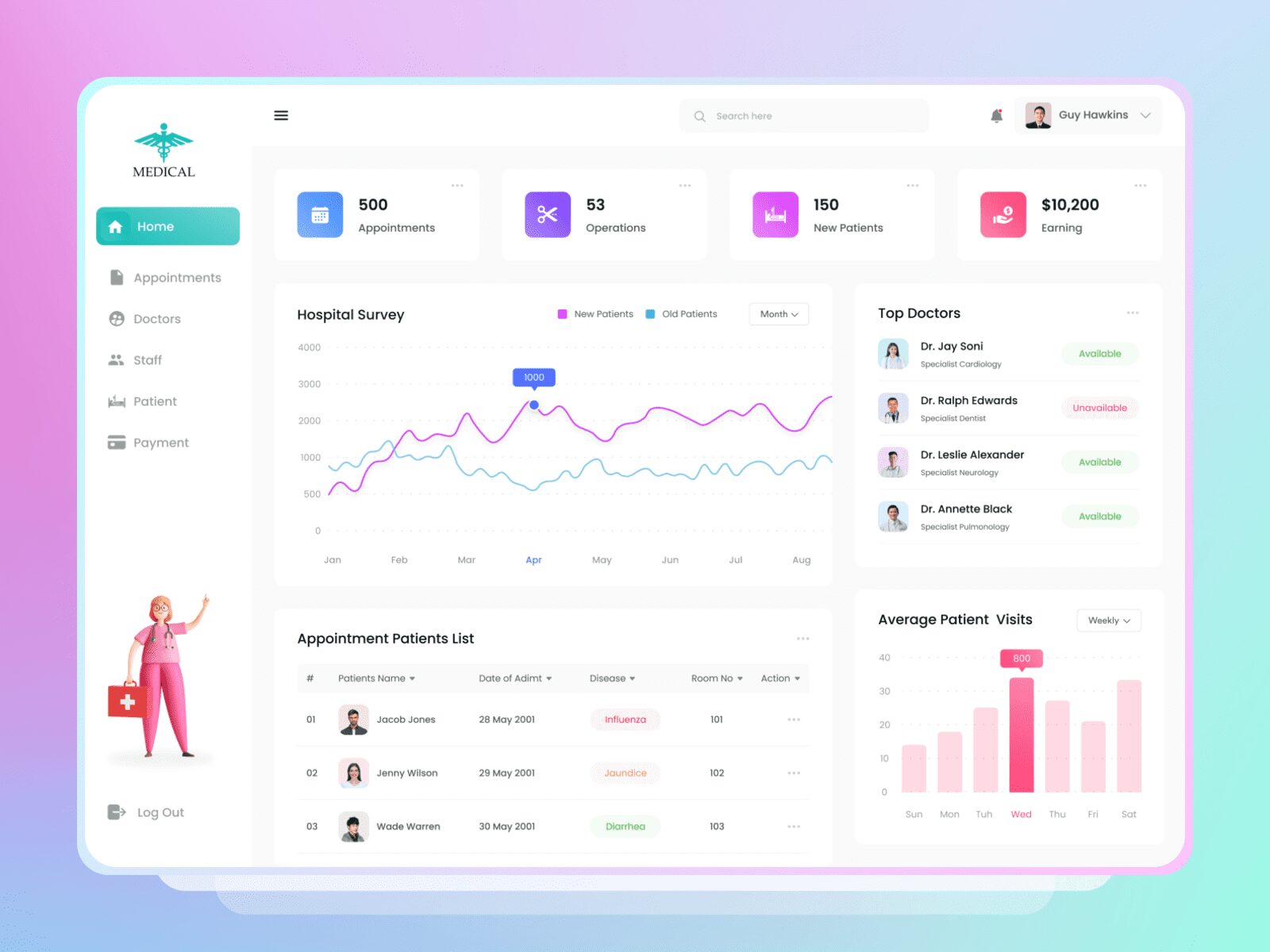

Image source: Nehal Hamim, Md Abadul Biswas, Ledo
Any health service is strongly linked with pharmaceutical companies, and the capacity to prescribe and request pharmaceuticals is a feature that most doctors and patients seek. Effective stock management ensures that pharmaceuticals and medical supplies are consistently available, reducing delays in treatment and improving patient care.
Inventory management features eliminate the time-consuming manual prescription process and ensure treatment safety and compliance. The following features are typically included in digital order management:
Healthcare facilities use inventory management functionality to ensure treatment accuracy. For example, some healthcare apps can identify potential drug interactions for patients with multiple prescriptions. It automatically sends alerts and recommendations, helping the patient avoid harmful interactions, and you to provide better care.
Healthcare institutions that go digital find it easier to stay efficient and meet patient needs. Effective digital systems ensure your healthcare organization meets market demands, compliance requirements, and rising patient expectations.
Have you chosen the type of solution you want to implement to transform your workflows? Glorium Technologies and our expert team can help you make that shift smooth, easy, and feature-rich. As a certified and compliant healthcare development partner, we know how to make your healthcare management easy. With our help, you’ll get a unified platform with a user-friendly interface, robust security, and advanced capabilities.
Ready to turn complex manual tasks into effortless clicks?
Get in touch with our team to bring your project idea to life.
The time required to build healthcare software depends on the complexity of the project, the features required, and the methodology used. Typically, it can take anywhere from a few months for basic hospital software solutions to a year or more for advanced hospital management systems. To get a precise estimate, share your project concept with us and let our experts provide you with a detailed cost and timeline breakdown.
The cost of creating a quality healthcare system depends on several factors, such as the scope of the project, its complexity, the features required, the location of the development team, and the development methodology used. Generally, the cost can vary from tens of thousands to hundreds of thousands of dollars or more.
One of the strengths of Glorium Technologies is that our estimates are always realistic and cost-effective. With us, you can be sure your project will proceed as expected, without surprises or unexpected charges.
To keep your eHospital system secure and protected, your development partner needs to follow industry best practices, which include data encryption, access control, user authentication, and backup of data on a regular basis. The software should also comply with any applicable legislation and regulatory standards, like HIPAA and GDPR.
With extensive experience in developing solutions for the healthcare industry, Glorium Technologies has in-depth knowledge of industry requirements, compliance standards, and regulatory obligations. Therefore, by working with us, you will receive a 100% secure solution that unifies various aspects of your operations, enhances patient experience, and boosts the productivity of your medical staff.
A hospital management system can reduce operational costs by automating routine work. It also supports safer care by keeping patient records accurate and easy to access. Staff saves time because there’s less manual paperwork and repeated data entry. With real-time visibility into beds, equipment, and schedules, hospitals can use resources more efficiently, which often leads to faster service and a more consistent patient experience. These systems also provide valuable analytics that help healthcare administrators make data-driven decisions for continuous improvement.