







Outsourcing vs. Outstaffing: Which Model Fits Your Software Project?
Updated October 13, 2026

 Summarize in ChatGPT
 Summarize in ChatGPT




Choosing between various recruiting options is an ongoing challenge for many startups and product development organizations. Although there are several employment models, outsourcing and other outstaffing models are two of the most commonly used methods.
Choosing which model is best can be difficult, as the difference may not be obvious at first. Many businesses wind up selecting software providers that are either under- or overqualified, depending on their budget. While both outsourcing and outstaffing have benefits and drawbacks, the optimal solution varies depending on the needs of a firm.
The main difference comes down to control and ownership. With outstaffing, also called staff augmentation, your team directs developers day-to-day. With outsourcing, the vendor takes responsibility for the final result, and cost, speed, risk, and code quality all follow from that choice.
Let’s take a deeper look at the overall function of outstaffing vs outsourcing, as well as the advantages and disadvantages of both solutions.
Content
Outsourcing refers to handing a defined piece of work, or the entire project, to an outside company that plans, staffs, manages, and delivers it. The outsourcing company hires the developers, assigns the project manager, runs quality assurance, and answers for deadlines and code quality.
Outsourcing software development has grown in popularity as it has proven to be a fast and flexible way for outsourcing companies to kick off a project. Furthermore, very little involvement and onboarding of external teams are required.
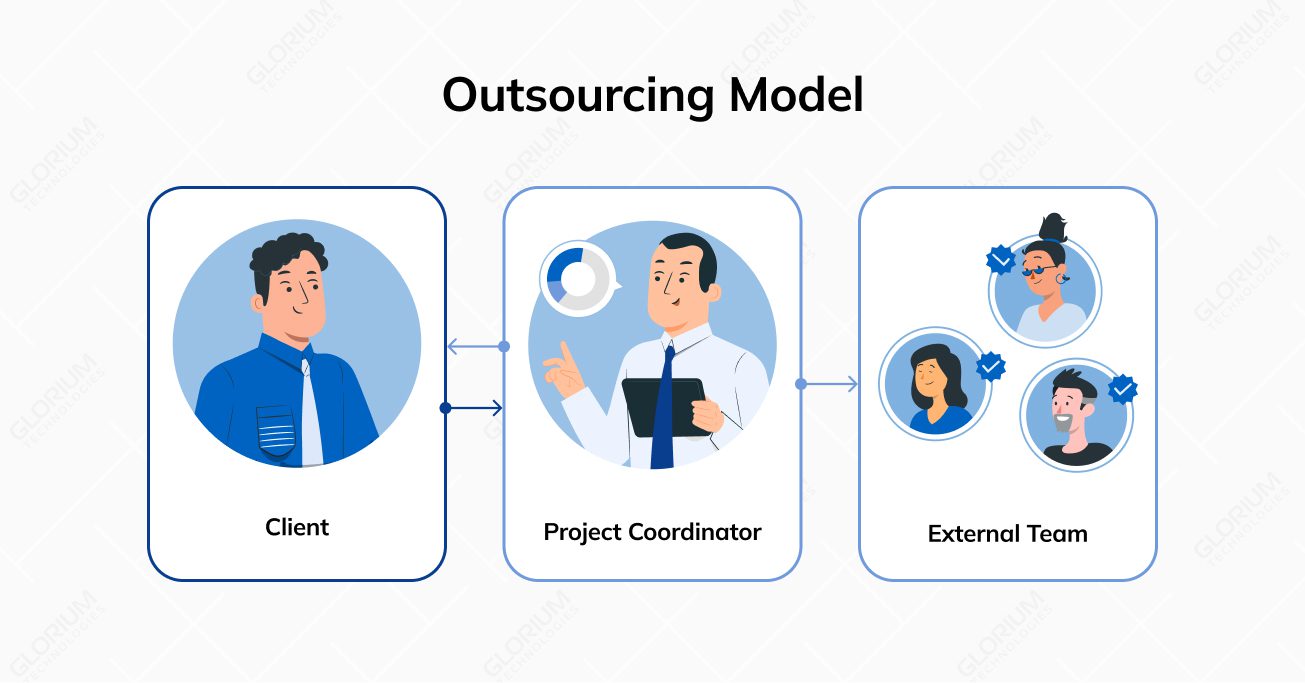
Some forms of programming outsourcing require a corporation to take over an entire project from the ground up. This can include everything from assembling a specialized team to delivering exceptional outcomes. As a result, your IT outsourcing company is not required to have a development team complete with specialized technical skills in place.
Because the firm you outsource to functions as a temporary team for a specific project, often, your in-house team doesn’t even require IT staff. Setting up this approach takes some time at first, and the hourly rate is higher because management and QA are included, but for a project with a clear scope, it often costs less overall than building a team yourself.
According to Deloitte’s 2024 Global Outsourcing Survey, 80% of executives plan to maintain or increase their investment in third-party outsourcing. Their reasons have shifted, though. Only 34% now name cost reduction as the main driver, down from 70% in 2020, while 42% point to access to specialized talent.
The pandemic sped up this shift, but the sector had been expanding for years before it. Organizations have grown comfortable with virtual meetings, signing contracts without a formal handshake, and substituting physical training with online sessions.
Companies are increasingly adapting to a remote work culture that enables them to access global talent from the most cost-effective regions. This has also allowed businesses to mitigate risk by diversifying their delivery sites.
Talent scarcity keeps pushing the trend forward. ManpowerGroup’s 2026 Talent Shortage Survey of more than 39,000 employers found that 72% struggle to fill open roles, and AI skills have now overtaken engineering and IT as the hardest to find.
Let’s take a closer look at the pros and cons of software development outsourcing to determine whether it’s worth the hype.
Outsourcing teams are more cost-effective than building an in-house team because they work on an hourly basis. You simply pay for the time they spend working directly on a project. There is also no need to invest in recruitment, office supplies, equipment, or other onboarding activities.
Furthermore, with such a large talent pool of offshore developers to choose from, corporations have more flexibility when selecting the degree of competence and price that best meets their needs. According to Accelerance, teams in Central and Eastern Europe offer savings of up to 30% compared with equally skilled engineers in North America.
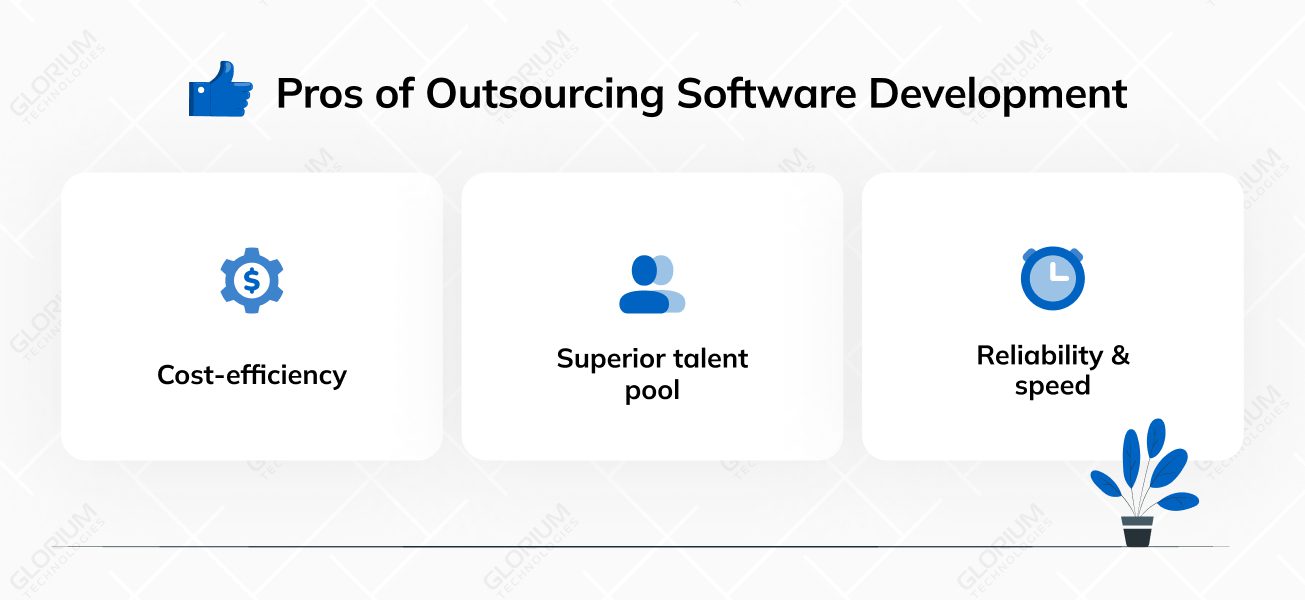
As mentioned, when you choose an outsourcing provider, you have access to a massive pool of global professionals with varying levels of expertise. This is a massive benefit to the healthcare industry as firms frequently require specific expertise or restricted industry experience, which can be difficult to obtain locally.
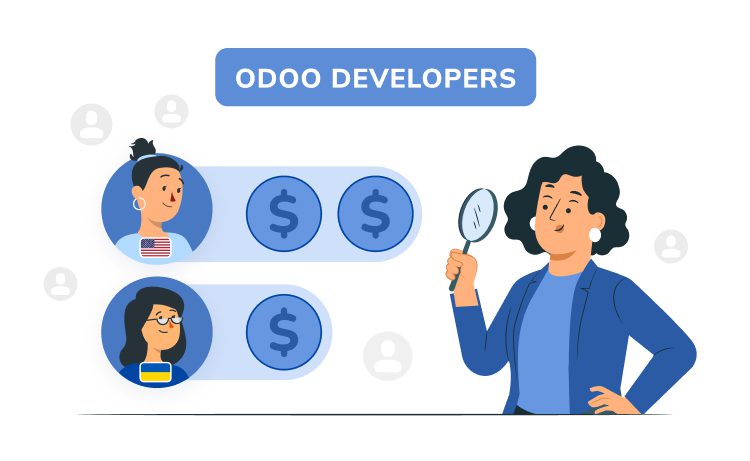
Outsourcing is an excellent choice for firms seeking to benefit from experts available for hire at a fair price in locations where developer costs are high, such as the United States and Western Europe. Popular regions for outsourced development include Eastern European countries, such as Ukraine. Here, suppliers offer unrivaled expertise and talent at a lower cost than other regions.
Most companies desire rapid development in order to get their products to market as soon as possible. Because the onboarding process is so short, outsourced teams can provide high-quality software much faster than in-house teams. In short, software outsourcing is an excellent method to accelerate the development process itself.
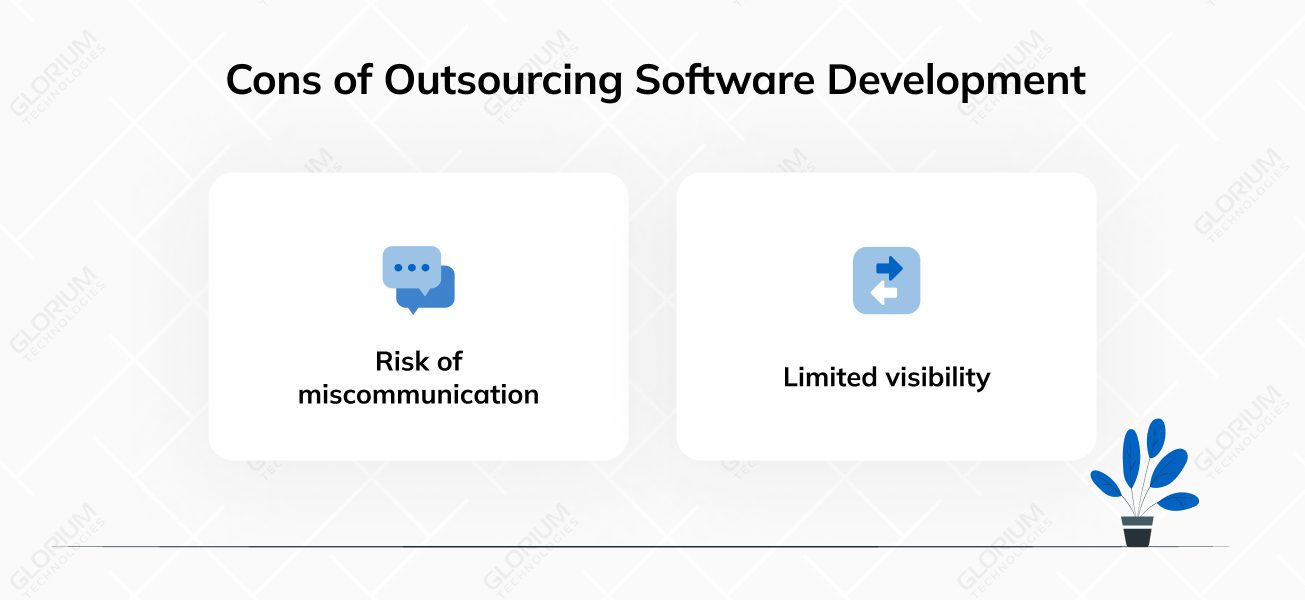
As with everything, working with remote teams comes with several risks. One of them is miscommunication due to time zones and language or cultural differences. Furthermore, face-to-face communication with remote developers is rarely possible.
While this was a serious issue in the past, in the age of remote employment and Zoom, it’s no longer such a barrier. Clear communication channels can easily be established, even in the early phase of cooperation.
Outsourcing implies less project transparency; yet, depending on corporate objectives, this can be both a benefit and a drawback. Outsourcing allows employers to focus more on their business as distractions from IT concerns are limited.
That said, if you value control and a high degree of participation, outsourcing your IT department may not be the ideal solution for you. Before signing, agree on how intellectual property and source code access will work. Many outsourcing providers share demos at set milestones, so ask for repository access from day one if your internal team wants to review code quality.
In-house vs outsourcing can be a strategic choice for your business. So before making this choice, you need to consider all the points that can influence it.
For startups with limited budgets, cost is a crucial factor. Establishing an in-house team entails various expenses, including salaries, benefits, office space, equipment, and training. These costs can quickly add up and strain your financial resources, potentially slowing down your growth.
On the other hand, outsourcing allows you to access a pool of talented professionals without the overhead costs. With outsourcing, you can often negotiate flexible payment structures that align with your budget, making it a cost-effective option for startups.
Building an in-house team provides you with control over your workforce and the ability to tailor it to your specific needs. You can hire professionals who align with your startup’s vision and culture, ensuring they fit your project perfectly.
However, searching and retaining top talent may be challenging and time-consuming. Building a skilled team might take months, delaying your project’s timeline. Outsourcing, on the other hand, allows you to tap into a ready-made talent pool, often with diverse expertise, and start your project promptly.
Swiftly getting your product to market is critical for success. In-house teams may require time to be recruited, trained, and integrated into your startup’s workflow. This delay can hinder your ability to react swiftly to market demands and maintain a competitive edge.
Outsourcing enables startups to hit the ground running. Experienced software development firms can assemble dedicated teams already well-versed in your project’s technology stack and development methodologies. This agility can help you bring your product to market faster, allowing you to seize opportunities as they arise.
Startups often face uncertain growth trajectories. While an in-house team can be scaled up or down to meet your needs, doing so can be complex and costly. Hiring additional employees or laying off staff can disrupt your organization and affect team morale.
Outsourcing offers unparalleled scalability. As your project evolves, you can easily adjust the composition and number of your dedicated development team without the hassle of recruitment and training. This flexibility allows startups to adapt swiftly to changing market conditions.
Data security
A reliable outsourcing partner should be able to show you:
- Security policies: Well-written privacy and security policies
- Team training: Regular training and/or certification of employees
- Vendor checks: Rigorous security assessments of third-party partners and vendors
- Incident response: On-site incident plans
Anna VoznaAccount Executive, Glorium Technologies
Startups often have limited resources, and spreading them too thin can hinder progress. Outsourcing gives the opportunity to delegate non-core functions like software development, so you can distribute your resources more effectively to areas that directly impact your startup’s growth, such as marketing, sales, and product innovation.
One more option is choosing an in-house team and staff augmentation variant. In project outsourcing, the outsourcing company takes on project management responsibilities and is responsible for delivering results. Conversely, staff augmentation necessitates in-house project management, squarely placing the accountability for results on your company.
Outstaffing and staff augmentation are commonly used interchangeably. Both describe a model where a vendor provides remote developers who work inside your development team under your management. “Staff augmentation” is the more common term in the US and in enterprise procurement, while “outstaffing” is widely used in Europe and among Eastern European vendors. Some providers also use “team extension” or “dedicated team” for longer engagements with a stable group of engineers.
Outstaffing is a form of outsourcing that involves employing professionals from outside a business for specific tasks or projects. Outstaffing assumes that you already have an in-house IT department or engineers with whom you have long-term contracts. Essentially, an outstaffing company is an extension of your team for as long as you need it.
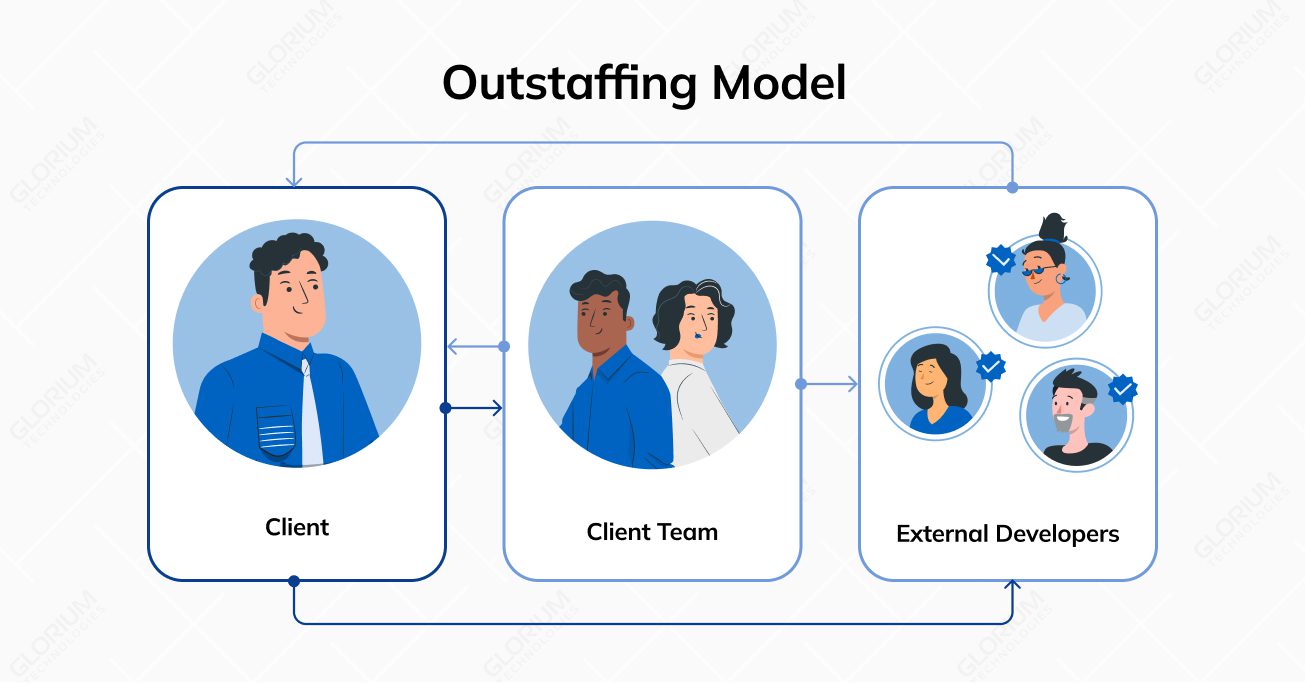
In the outstaffing model, the developers are formally employed by the vendor while they work on your product. The vendor handles payroll, HR, taxes, equipment, and office space. The client company that hires the team is responsible for managing the project, directing it, and paying for the developers’ time.
Outstaffing is a simple process in which you recruit skilled personnel through a vendor that remains their legal employer. For the length of the full project scope, you act as their day-to-day manager. These specialists are often developers, designers, business analysts, and others who perform the tasks they have been delegated.
Outstaffing allows employers to fill gaps in projects without devoting copious amounts of time and resources to the hiring process. Think of an outstaffing team as an extension of an existing team. In essence, this is a fantastic alternative when specific experience and skills are required.
Outstaffing is beneficial for any company that wishes to expand the capacity of its software development team to accelerate the development process. Glorium Technologies runs this model through its IT outstaffing services: you receive a shortlist of candidates, interview them yourself, and then manage the selected engineers with your own tools and processes.
Outstaffing moves day-to-day control to your side, along with part of the responsibility. Here is how that trade-off plays out in practice.
This employment model is probably one of the most flexible hiring models available. You can easily adjust schedules, the level of involvement, set directions, and delegate specific tasks and projects. At the same time, you don’t have to manage payroll, HR, or other hurdles related to in-house team maintenance: the vendor will handle it for you.
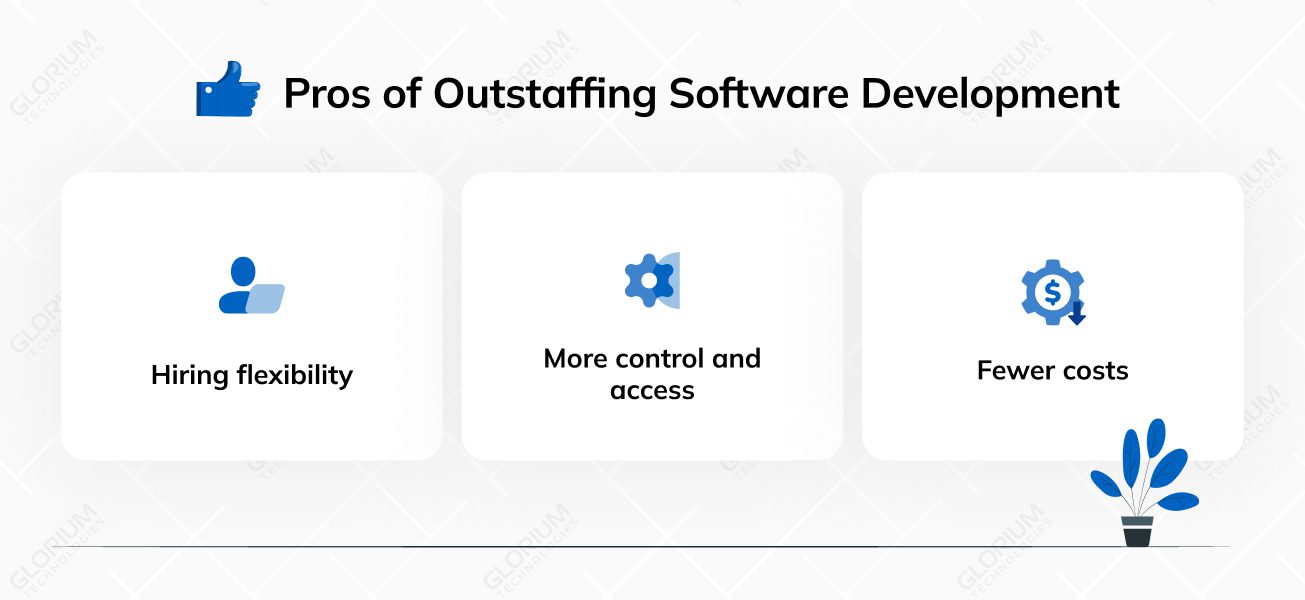
Unlike outsourcing (where the remote development team often holds the keys to the process), outstaffing enables an organization to take over project management duties. This provides a company with more control over the daily operations of the outstaffed software development team, allowing them to manage the process more accurately.
When choosing between an outsourcing agency and outstaffing, the decision often comes down to whether or not a business owner wants to manage a project on their own.
Because the client does so much of the heavy lifting in regard to management, the hourly fee of outstaffed team members is generally lower. This eliminates the hours spent on project management that vendors typically add to their estimates. As long as you’re willing to put in the extra effort, the savings can be substantial.
Communication channels between dedicated teams are critical as vendor staff frequently operate remotely, or at least separately, from the rest of the team. For this reason, your outstaffed team should have a firm grasp of all project management software, and their reporting should be transparent across corporate team members.
Setting clear goals and interacting with your outstaffed remote team members on a daily basis is equally important, just as it is with your corporate-based IT staff.
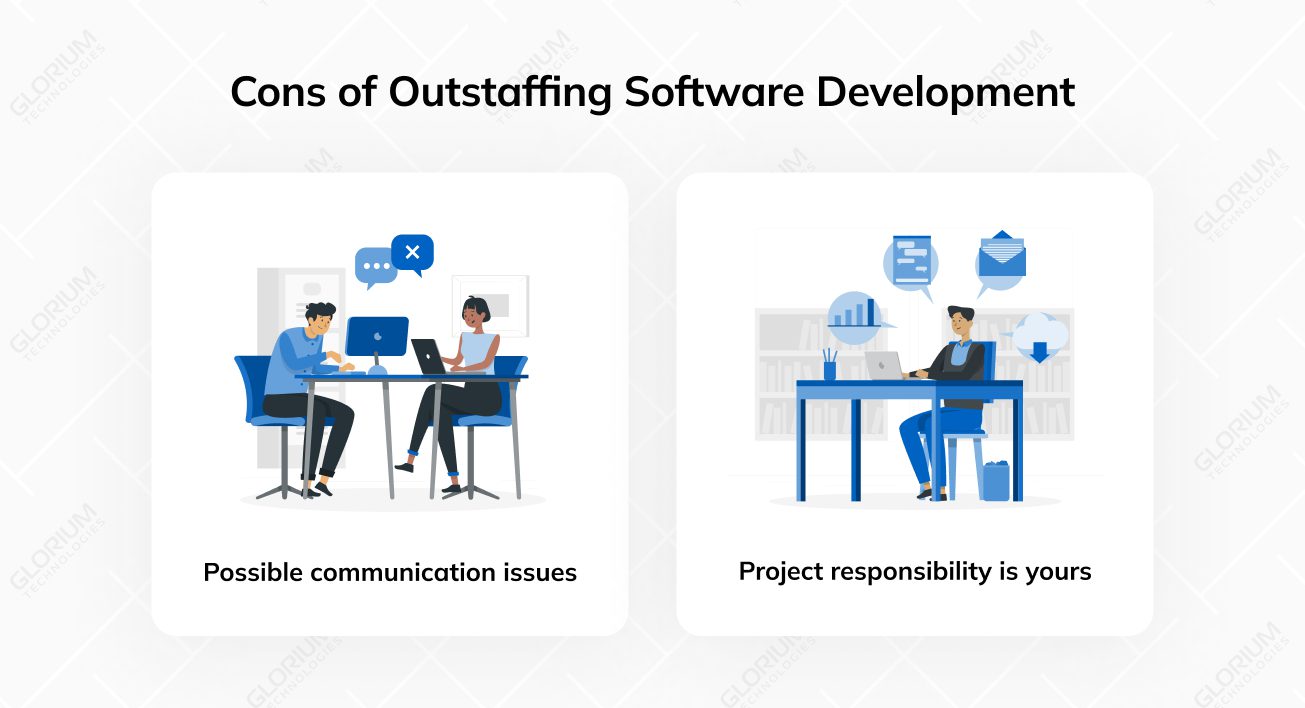
In addition to control over projects and management, there is also plenty of responsibility. With outstaffing, your temporary team members are not accountable for the delivery of a product as their primary task is project execution under a project manager or client’s supervision.
Should a project fail or something go wrong, the responsibility falls mainly on the client, since the client’s project manager directs the work.
Outstaffing works best when you already have internal technical leadership. Without a CTO, technical lead, or experienced project manager, you may struggle to vet candidates, review code, and keep remote developers aligned with business goals. In that case, a managed outsourcing team or a hybrid dedicated team is usually the safer choice.
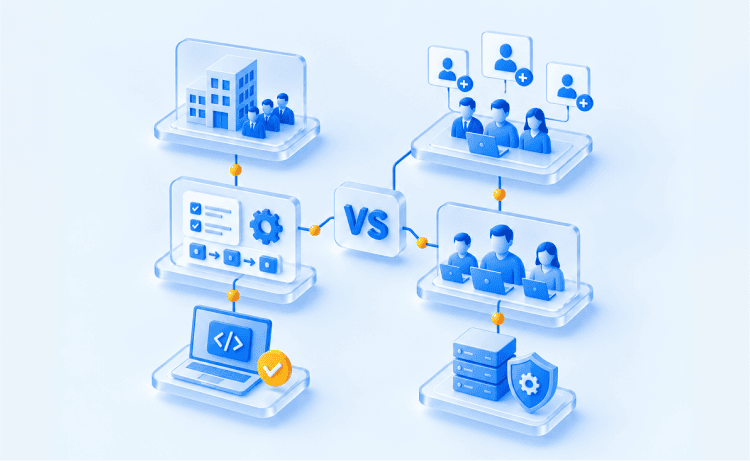
The table below sums up the key differences between the outsourcing and outstaffing models, from who manages developers to who owns the final result.
| Criteria | Outsourcing | Outstaffing (staff augmentation) |
| Who manages developers | Vendor’s project manager | Your project manager or technical lead |
| Who owns the result | Vendor owns delivery, deadlines, and quality | Client company owns the outcome |
| Client involvement | Low: milestone reviews and approvals | High: daily stand-ups, task assignment, code review |
| Internal team required | None, the vendor brings the full team | Existing IT team with technical leadership |
| Typical pricing | Fixed price contracts or time and materials with management included | Hourly or monthly rate per developer plus vendor fee |
| Scaling | Through contract change requests | Add or remove developers with short notice |
| Code and IP access | Often milestone-based until handover | Direct access to the repository from day one |
| Best for | Defined project scope, non-tech companies, MVPs | Long-term product development, skill gaps, scaling an existing team |
| Main risk | Less visibility into the development process | Management load stays with your team |
Many companies land somewhere in between. A dedicated team model gives you a stable group of engineers who work only on your product, while the vendor adds delivery support such as a project manager or QA lead. This setup suits clients who want direct access to developers without building project management from scratch.
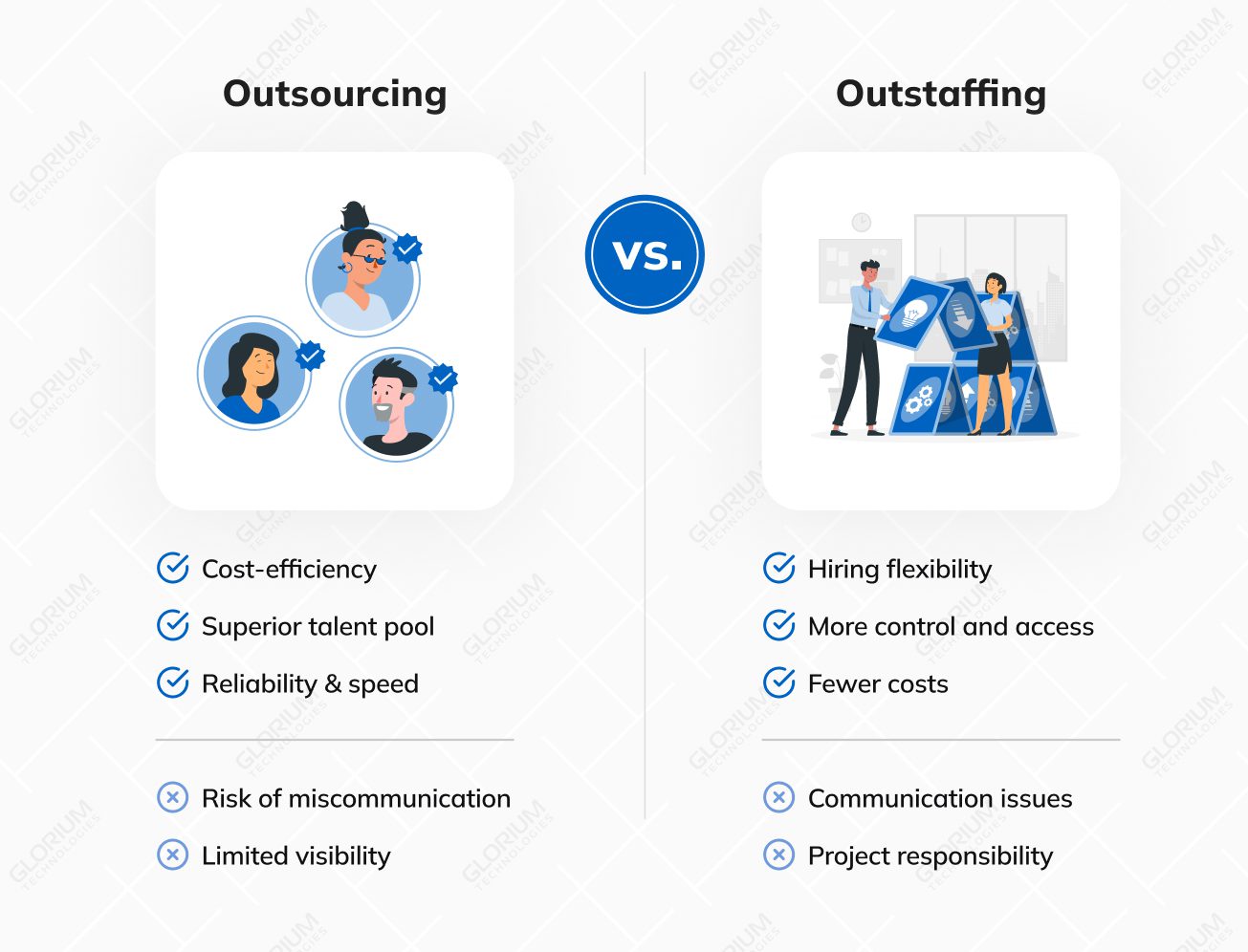
In short, outsourcing is better for those who don’t wish to create an entire IT department and who don’t want to be too involved in the overall project development process. Classic outsourcing enables you to assemble a complete, professional, and experienced team to entrust with a specific project.
Outsourcing works best when you can define the scope up front and want one partner to take the project from planning to release. Outsourcing doesn’t require you to have an in-house IT department, as the contractor company you outsource to will bring along its own professionals for this purpose. Outsourcing usually costs more per hour because management and QA are included, but it can cost less overall for short, well-defined projects.
If your company already has a solid tech department in place but still needs assistance with a few things (without turning to in-house staff expansion), then outstaffing services are the better option. Outstaffing allows you to hire professionals as required to complete a task. This model also affords you more control over the entire process from start to finish. In short, depending on the goals that a corporation wishes to pursue, both models can be effective.
Best fit: Outsourcing
Best fit: Outstaffing
Per hour, outsourcing tends to be the pricier choice for several reasons. Firstly, it comes with additional expenses, which include:
Additionally, one must consider expenditures related to non-technical positions (project managers, business analysts, etc.). On the other hand, outstaffing streamlines costs, reducing them to two primary components: the vendor fee and the developer’s salary.
The final bill still depends on project scope. For a short, well-defined IT project, outsourcing can cost less overall because you avoid hiring or reassigning a project manager internally. For long-term product development, outstaffing usually comes out cheaper.
India provides developers for outstaffing and outsourcing at more cost-effective rates, but managing cultural differences becomes a significant consideration. In addition, quality varies widely between vendors, so careful vetting matters.
Western firms often choose to outstaff and outsource from Eastern European nations. Eastern European developers are both budget-friendly and seasoned, renowned for their high-quality output. Furthermore, they possess proficiency in English and are at ease collaborating.
Once you know which engagement model fits, the next step is picking the right partner. Use these criteria to compare vendors side by side.
Before you start evaluating outsourcing or outstaffing providers, you need a clear understanding of your goals and needs. Think about the specific tasks or projects you want to delegate. Determine whether you need a team of experts for a long-term project (outstaffing) or if you’re looking for a third-party company to handle a specific task (outsourcing). Having a well-defined set of requirements will guide you in selecting the most suitable service provider.
One of the most critical factors in choosing an outsourcing or outstaffing company is their expertise and experience in your industry or niche. Search for companies that have a proven track record of delivering similar projects or services. Ask for case studies, client testimonials, and references to validate their expertise. An experienced provider is more likely to understand your industry’s nuances and deliver high-quality results.
The location of your outsourcing or outstaffing partner can significantly impact communication and project management. Evaluate the geographical location and time zone of the service provider to ensure alignment with your business operations. Overlapping working hours can facilitate real-time communication and collaboration, making it easier to manage your remote team.
Clear communication is vital for successful collaboration with an outsourcing or outstaffing company. Assess the language proficiency and communication skills of the team members you will be working with. Language barriers can lead to misunderstandings and hinder project progress. Choose a provider with teams that can communicate fluently in your preferred language and understand your business requirements.
Having the right tools and technology stack is essential for seamless collaboration and project management. Ensure that the outsourcing or outstaffing company you choose has access to the latest technologies and software relevant to your project. This will improve efficiency and help keep your project secure and scalable. Ask how the vendor uses AI coding assistants and how that affects code review, security, and pricing.
Data security is a paramount concern when outsourcing or outstaffing, especially if you share sensitive information. Inquire about the provider’s data security measures, protocols, and compliance certifications, such as ISO 27001 or GDPR compliance. A trustworthy provider should have robust security practices to protect data and ensure regulatory compliance.
Finally, carefully review the pricing structure and contract terms offered by the outsourcing or outstaffing company. Compare pricing models, such as hourly rates, fixed project fees, or retainer contracts, to find the most cost-effective option for your needs. Pay attention to contract terms, including service level agreements (SLAs), termination clauses, and intellectual property rights. For outstaffing, also confirm the notice period for adding or removing developers. Clarity on pricing and contractual obligations prevents misunderstandings down the road.
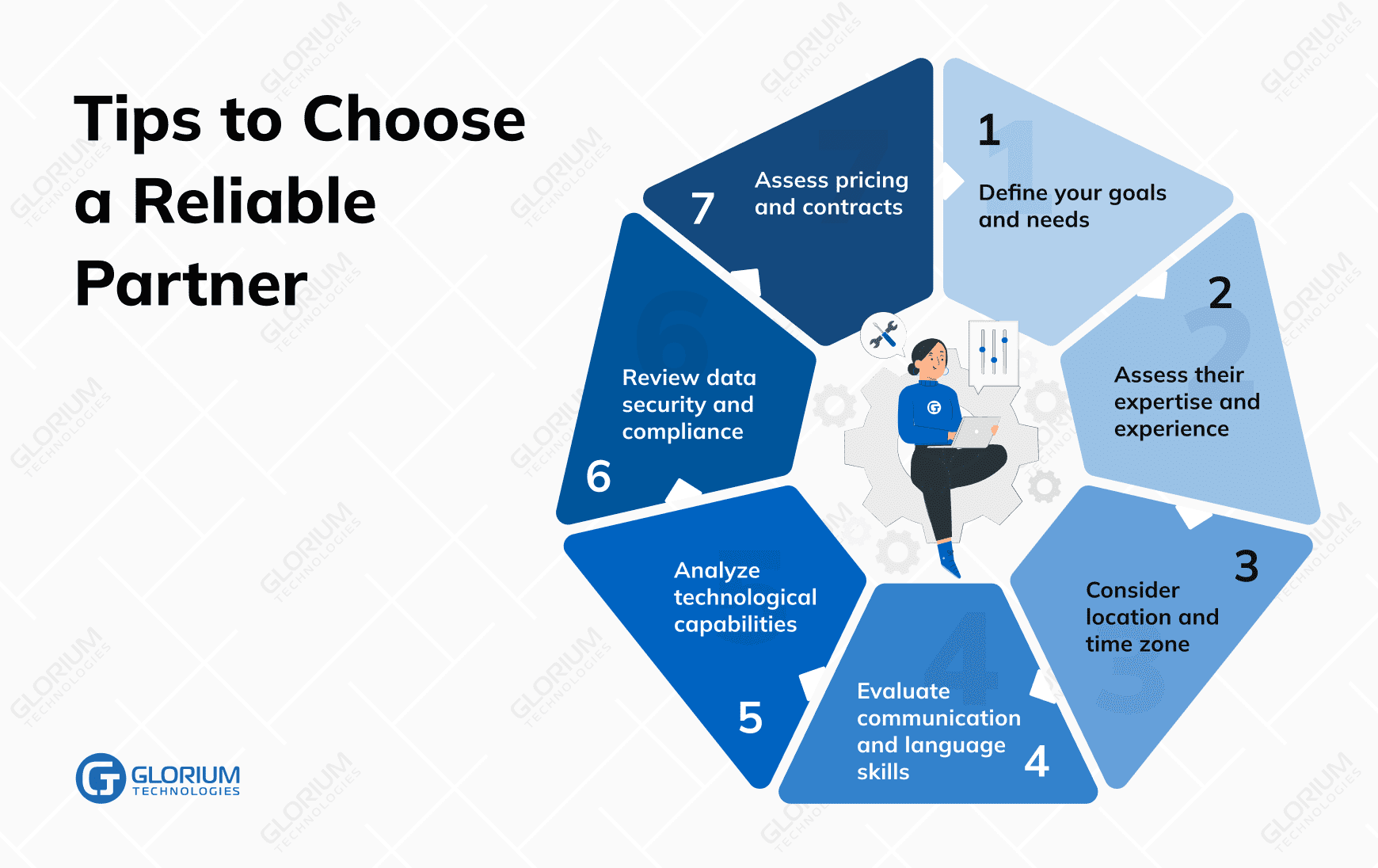
Choosing the right outsourcing or outstaffing company is a strategic choice that can significantly impact your business’s success. By defining your goals, assessing expertise, considering location and communication skills, evaluating technological capabilities, prioritizing data security, and reviewing pricing and contracts, you can make a well-informed choice that aligns with your needs and objectives.
Remember that building a solid and productive partnership with your outsourcing or outstaffing provider requires open and transparent communication, ongoing collaboration, and a clear understanding of roles and responsibilities. With a reliable partner, you can discover new opportunities, scale your operations, and achieve greater efficiency in your business endeavors.
Whichever model you choose, the right partner makes the difference between a team that ships and one that stalls. With more than 15 years of experience building tech solutions, Glorium Technologies helps businesses in the healthcare and real estate sectors hit the market running with excellent service and customized solutions.
We work with both engagement models. Choose project-based development when you want us to own delivery from discovery to release, or outstaffing when you need dedicated developers who join your in-house team and follow your processes. Our team sends a shortlist of candidates within four days, and you pick the engineers you want to interview.
Share your project details, and we will suggest the right model and prepare a free estimate. Learn more about our software and application development solutions today.
In most cases, yes. Both terms describe hiring remote developers through a vendor while you manage their daily work. “Staff augmentation” is more common in the US, and some vendors use it for short, role-based placements, while “outstaffing” often implies a longer dedicated engagement. At Glorium Technologies, both describe the same service: you get dedicated developers who work full-time on your product, and your team manages them directly.
Yes, and many companies do. A typical path looks like this: a vendor builds the first version under an outsourcing contract, and once you hire a CTO or technical lead, the same engineers move to an outstaffing setup. Plan a knowledge transfer and confirm code ownership before the switch. Glorium Technologies supports this transition, so the engineers who built your product can stay on as your outstaffed team.
Ownership is set by the contract in both models, so read the IP clause carefully. In outstaffing, code usually belongs to the client from the first commit. In outsourcing, rights often transfer at milestones or after final payment. Glorium Technologies spells out IP ownership in every contract and holds ISO 27001 certification for information security.
The two terms answer different questions. “Offshore” describes where the team is located, while outsourcing and outstaffing describe who manages the work. You can outsource or outstaff to offshore, nearshore, or onshore teams. Glorium Technologies, for example, offers both models with engineering teams in Eastern Europe.
Three to five is a practical range. Ask each for a sample team composition, a rate card, and one reference client with a similar IT project, then run a short technical interview with the proposed developers. Glorium Technologies sends a shortlist of candidates within four days, and you interview them before anyone joins your project.