Running a manufacturing business goes far beyond churning out products. It’s about keeping everything together, from production lines to financials. That’s a lot to handle. If you want to balance operational efficiency with strategic vision, you need an ERP system. It can act as the core framework that supports your company’s processes. However, not all ERP software systems are what you need.
Some ERP solutions may cost a fortune, while others lack features to cater to your business’s unique needs. The right one, though, can cut waste and advance inventory control and supply chains. Let’s round up the best software systems that can help you stay competitive and future-ready. After all, forecasts indicate that manufacturing market expansion will hold firm, pushing revenues to $673.4 billion by 2029.
What Should You Look for in ERP Solutions for Manufacturing?
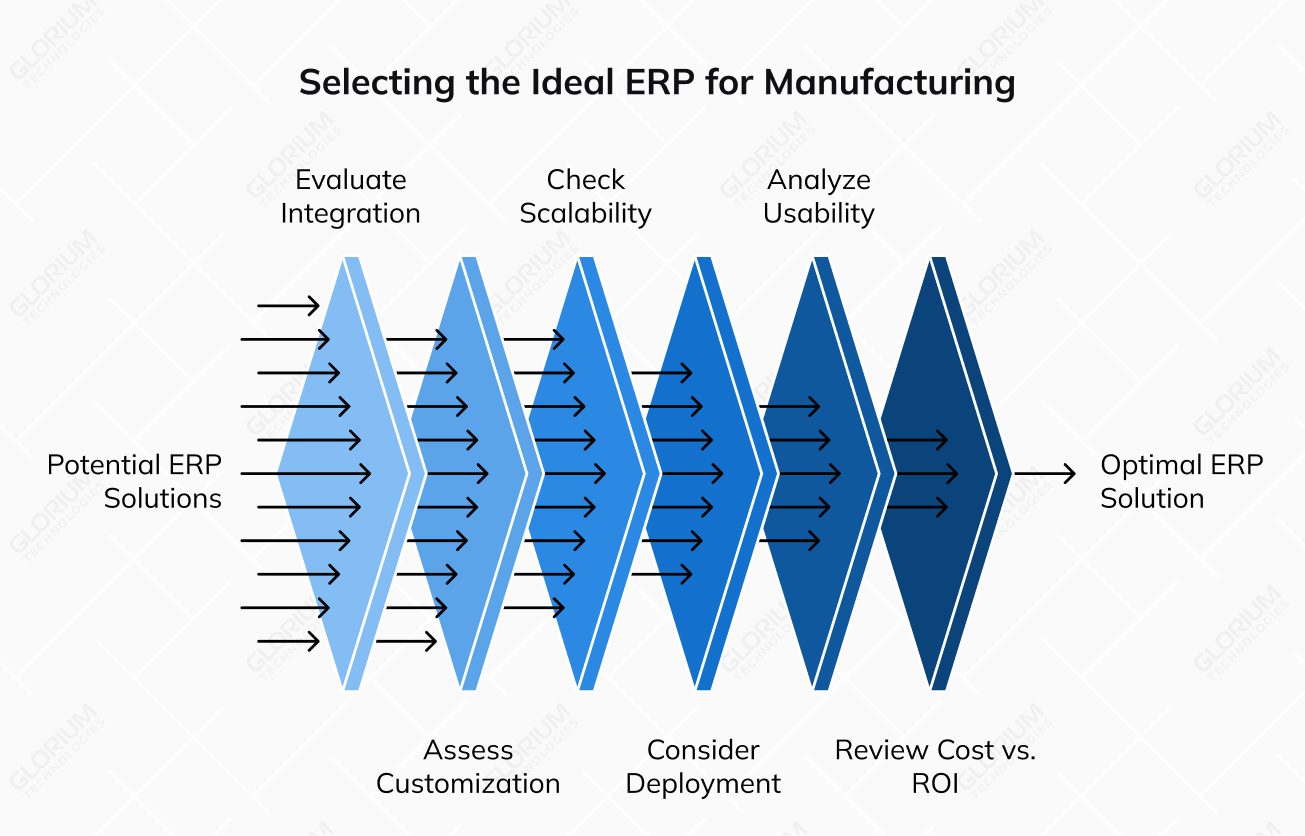
The ideal ERP software solution works for you, not against you. It helps cut inefficiencies in your business operations and strengthen your supply chains. But with so many options out there, how do you make the right call? It all comes down to finding a system that adapts to your business—not the other way around.
Integration capabilities
Your ERP shouldn’t live in a bubble but connect easily with your existing tools, from accounting software to IoT devices. Pay heed to built-in compatibility with accounting, CRM, and production tracking software.
Customization & flexibility
A one-size-fits-all approach is a poor strategy in the manufacturing industry. Your ERP should offer niche-suitable tools that let you tweak the system to match your needs. Why pay for features you’ll never touch?
For example, apparel and textile manufacturers often rely on fashion ERP software to manage product variants, size and color combinations, and fast-changing seasonal demand.
Scalability
If your ERP starts lingering when your business gets off the ground, it’s the wrong one. The right software should handle growth spurts without forcing you into a painful migration.
Deployment options
Whether you need full control over your data or prefer the ease of remote access, you can locate a befitting option. You can also find those offering the advantages of both worlds. Consider accessibility and long-term upkeep before sealing the deal.
User-Friendliness & training
If your team needs months to figure out the software, that’s a problem. After easy-to-follow training, your employees don’t have to struggle to use the system. It’s worth opting for an ERP solution with a straightforward interface.
Cost vs. ROI
A high price is not always synonymous with premium quality. Before deciding where to spend your money, you should also factor in implementation costs, ongoing maintenance fees, and efficiency gains.
Customer support & implementation
ERP rollouts can be tricky—and a weak support team can turn minor problems into major disruptions. Cooperate with a certified ERP partner who can provide a support team that’s ready to assist whenever challenges arise.
Compare the Best Manufacturing Software Systems
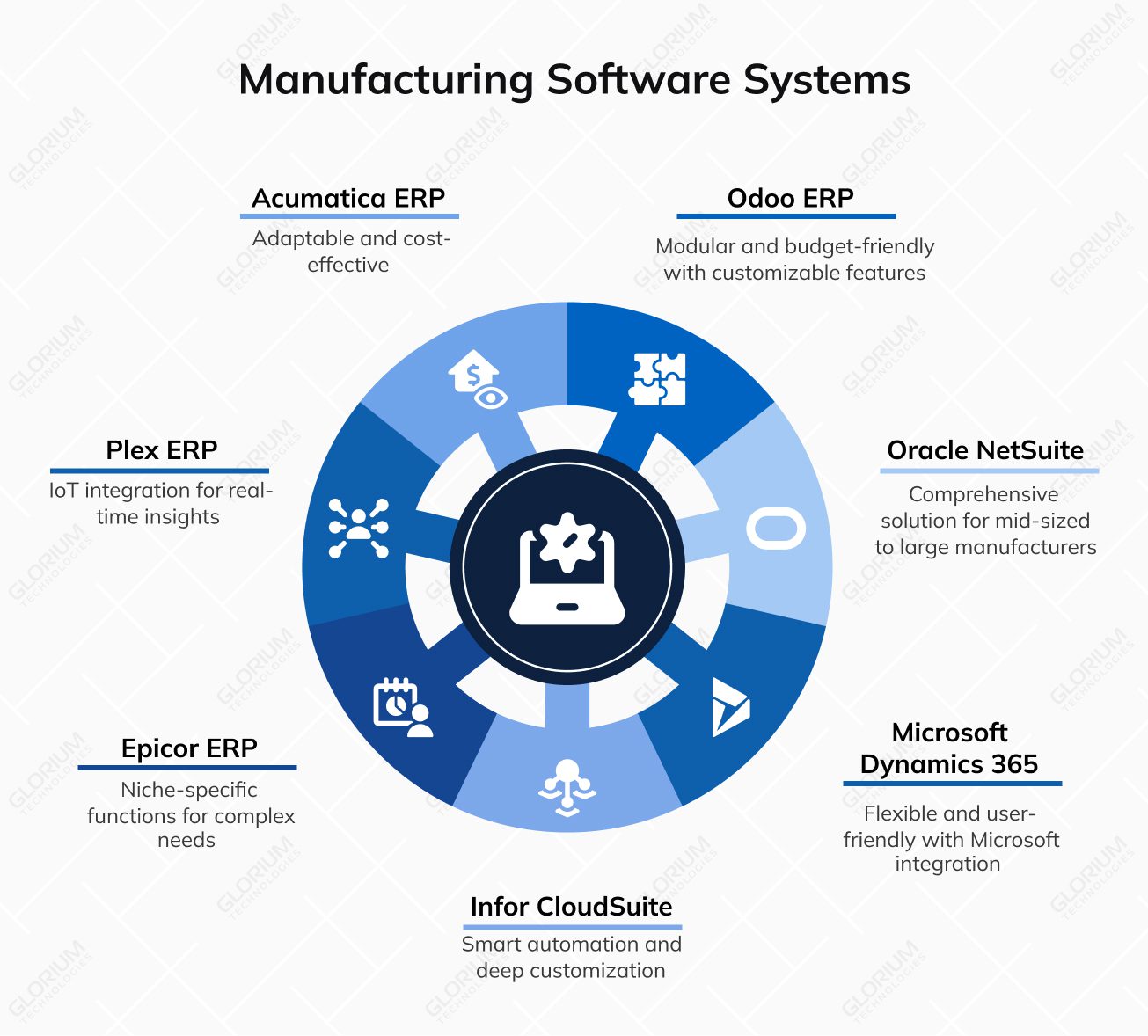
Manufacturing recalls a balancing act—materials, production, inventory, and logistics all need to fall into place. If one department falls out of tune, all business processes suffer. Without the right ERP, things can spiral out of control—costs balloon, supply chains tangle, and production setbacks stall all operations. Today, ERP software isn’t just a back-office tool – it is a must-have for a production company. Here are some tried-and-true manufacturing enterprise resource planning solutions to explore.
Odoo ERP for manufacturing
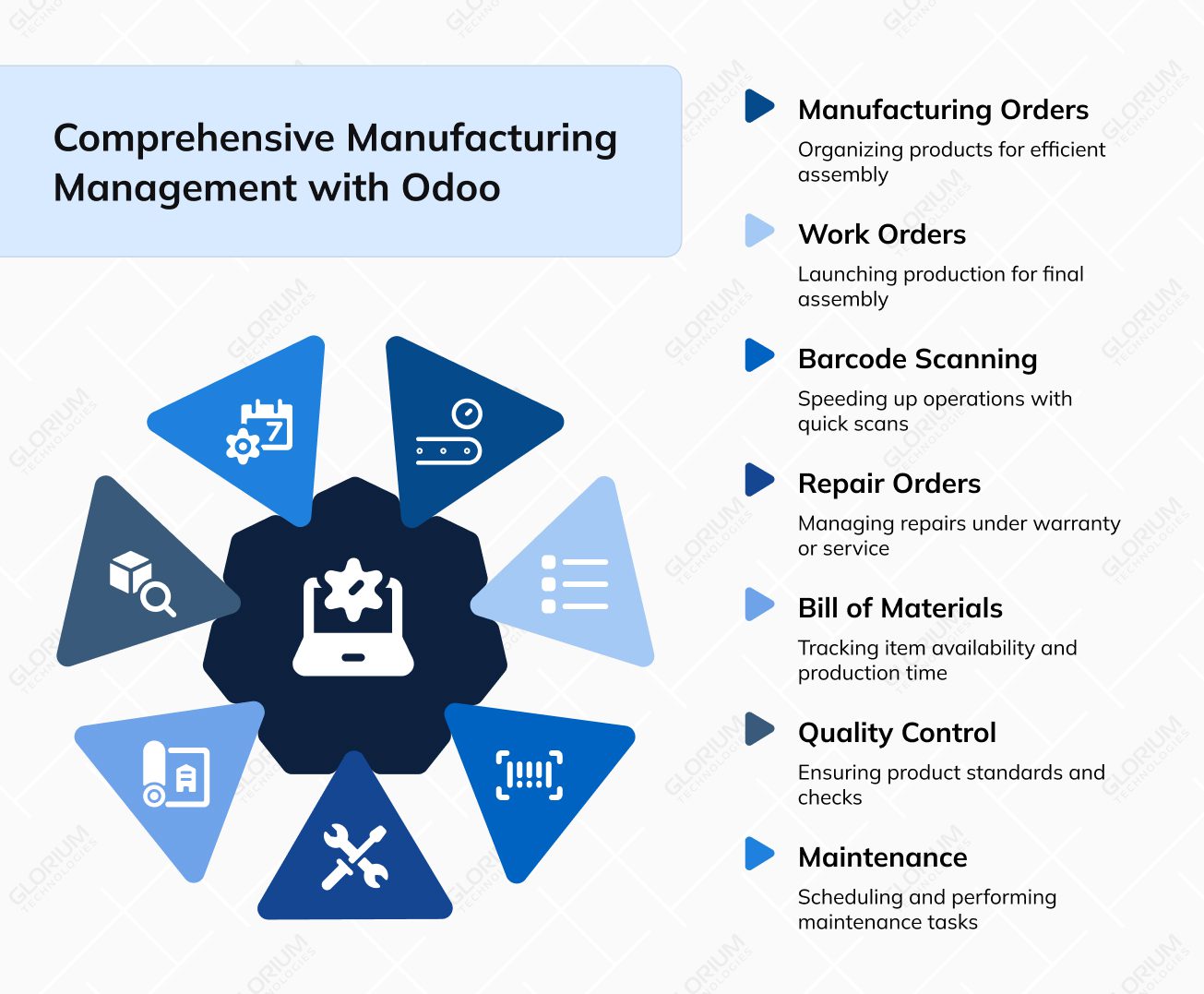
Odoo is a modular, pick-what-you-need powerhouse built for manufacturers who want to gain control without burning through their budget. It lets manufacturing companies cherry-pick the key features. You can fine-tune all your manufacturing processes with an intuitive interface and seamless integration across different departments.
|
Pros |
|
|---|---|
|
Cons: |
|
Whether you need system configuration or process optimization, Glorium Technologies is your go-to. As a fully licensed Odoo partner who has been around for over 14 years, we can meet all your ERP implementation needs. Capitalize now on the extensive expertise of the best Odoo developers!
Oracle NetSuite
It is not another cookie-cutter enterprise resource planning software but a heavy hitter. You can preside over production processes without using multiple systems – from quality control to order management. It’s a top pick for mid-sized to large manufacturers looking to scale without growing pains.
|
Pros |
|
|---|---|
|
Cons: |
|
Microsoft Dynamics 365 Business Central
MD 365 is straightforward yet powerful manufacturing ERP software designed for manufacturers who prioritize ease of use while keeping their systems flexible. It offers seamless integration with Microsoft tools. Your teams can crunch numbers, manage stock, and tune different types of operations in a single place.
|
Pros |
|
|---|---|
|
Cons: |
|
Infor CloudSuite Industrial (SyteLine)
It is a feature-packed ERP built for manufacturers who can’t afford guesswork. You can get better at production planning and financial management. With smart automation and deep industry customization, you can bolster shop floor operations and meet deadlines without scrambling.
|
Pros |
|
|---|---|
|
Cons: |
|
Epicor ERP software for manufacturing
Epicor is loaded with niche-specific business functions. Are you dealing with complex supply chains, quality assurance guidelines, or low-volume production? This manufacturing ERP system can save you from getting bogged down in inefficiencies.
|
Pros |
|
|---|---|
|
Cons: |
|
Plex ERP for manufacturing industry
Plex Manufacturing Cloud tracks everything as it happens, thanks to the Internet of Things integration, giving you instant insights into resource allocation and order status. Once adopted, you can keep production humming without constant oversight. If you need a manufacturing ERP system that grows with you, Plex is worth a look.
|
Pros |
|
|---|---|
|
Cons: |
|
Acumatica ERP software for manufacturing industry
Acumatica Manufacturing Edition adapts to changing demands and contributes to cost savings. With its tracking tools, you can get a clear idea of what’s working and what’s dragging you down. If you seek manufacturing management software that packs a punch without nickel-and-diming you for every user, Acumatica can do that.
|
Pros |
|
|---|---|
|
Cons: |
|
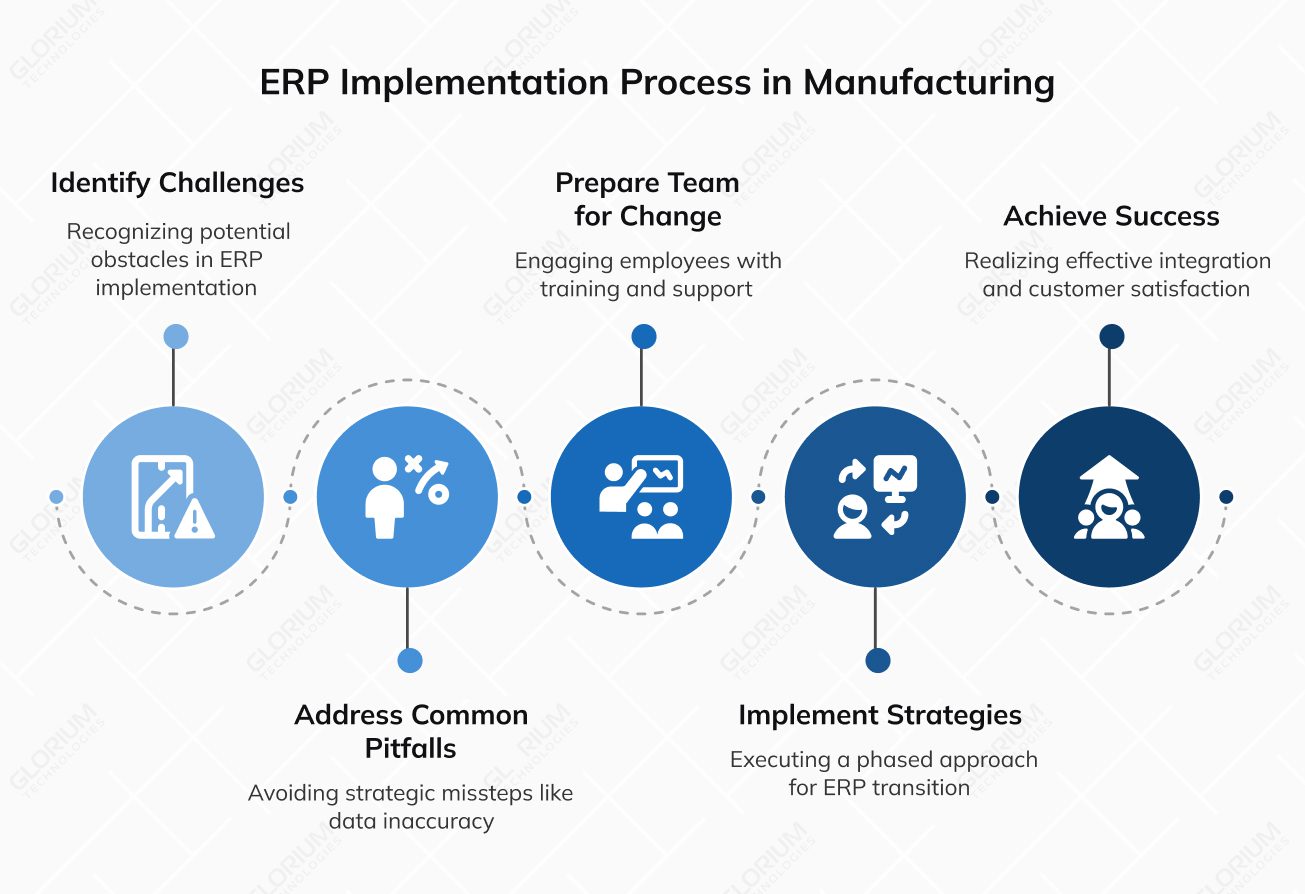
Challenges & considerations when implementing ERP systems for manufacturing
You can’t just get a manufacturing ERP solution and expect instant results. It requires careful execution to prevent it from feeling more like a burden. From technical hiccups to resistance from employees, the problems are plenty. But knowing what can go wrong—and how to avoid it—makes all the difference between a well-executed rollout and months of frustration.
Common pitfalls in ERP implementation
Jumping into an ERP without a clear strategy is like building a factory without blueprints—things will go south fast. While some companies overlook data accuracy, others underestimate the time and effort required to see first improvements. The adoption of ERP software solutions demands patience and planning. Ignoring employee training is another surefire way to stir up confusion and resistance, turning a promising system into a productivity killer.
How to prepare your team for ERP adoption
People don’t like change. No matter whether it’s about the need to comply with new material requirements or abandon the legacy systems. You need a strategy to get everyone on board. Offer hands-on training and address concerns before they become roadblocks. You should treat ERP adoption as a team effort, not just an IT project. For professional assistance, come to Glorium Technologies. We are time-proven experts in strategic ERP implementation.
Strategies for a smooth ERP transition
A phased rollout beats a chaotic all-at-once switch. Start small, test everything, and go the extra mile to ensure ease of use. Keep communication open, work closely with an ERP partner, and be ready to adjust when things don’t go as planned. ERP success isn’t just about software; it’s about customer satisfaction – how well you get your people and processes in sync.
Odoo Implementation Made Simple with Glorium Technologies
ERP implementation is no longer synonymous with a production delay once you collaborate with a certified ERP service provider. If Odoo speaks to you, we can help with adoption.
Glorium Technologies is an official implementation partner for Odoo, meaning we can tackle data migration, perform customization, and provide custom support. We focus on industry-proven strategies to enhance all-stage interactions.
Why wrestle with ERP setup alone? Let’s get Odoo working for you—book a free consultation today!
About Anna Voznaya