







A Complete Guide on AI Chatbot Development
Updated September 1, 2025

 Summarize in ChatGPT
 Summarize in ChatGPT
Every modern business depends on communication with customers, whether directly or indirectly. The sales chain always involves several players interacting with each other. Typically, these include the customer, manager, warehouse staff, delivery personnel, and others.
On one hand, the quality of communication between these participants determines the success of a business. On the other hand, too much focus on this aspect can drain the company’s resources and divert attention from key strategic functions and tasks.
For this reason, many enterprises turn to virtual assistants and AI chatbot development services. They implement smart solutions to reduce communication costs while still providing customers with excellent service. And the outcomes of AI chatbot implementations are more than great: they lead to an 87% reduction in average customer service resolution times, significantly enhancing operational efficiency.
The effectiveness of chatbot development services makes them a significant acquisition for any company engaged in commercial activities or providing services to consumers. And the more progressive the IT solution, the bigger the savings.
In this article, we’ll examine AI chatbot development in more detail. Keep reading to learn about its components, how it works, and how to create a chatbot that perfectly fits your business and delivers measurable results, including cost savings and more satisfied customers.
Content
Chatbots were simply a mix of programming algorithms designed to provide instant responses to basic user requests. However, with the advent of intelligent technologies, the possibilities of chatbot development services have expanded significantly.
Today, intelligent chatbots are not just solutions capable of answering questions. They are powerful tools that can increase customer satisfaction, learn, continuously improve based on user responses, and contribute to the enhancement of business functions.
Modern chatbots have become especially versatile since they can handle these vital business functions:
Using chatbot development solutions to build AI assistants for these functions helps companies streamline business processes, provide personalized service, increase customer engagement, and enhance overall efficiency.
Therefore, by partnering with an AI chatbot development company, businesses achieve long-term results through cost savings and increased revenue. And as the technology continues to evolve, AI chatbot solutions become smarter and more powerful every day.
To build chatbots that interact with your customers, only four simple steps are required, which can completely transform the way you do business.
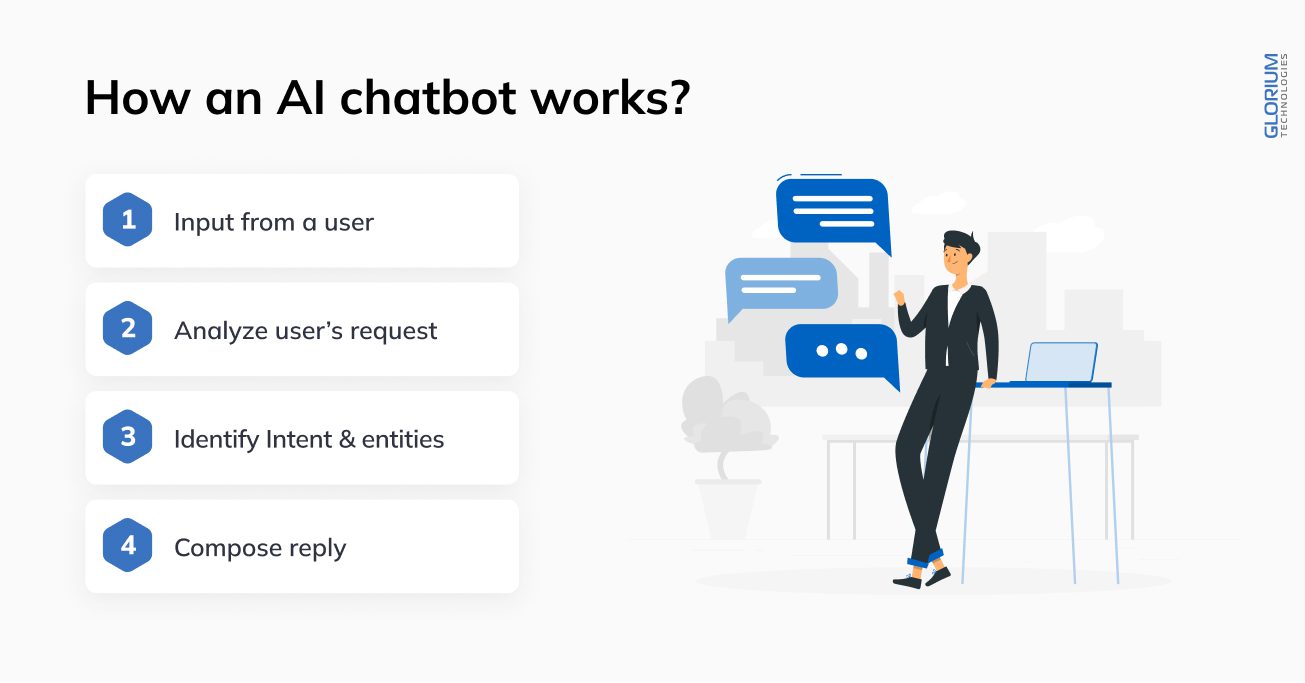
But before investing money in AI chatbot services, you’ll need to familiarize yourself with all the nuances and aspects of this process to choose the most effective solution and strategy for your needs. And we are here to help you with this.
Below, we’ll look through some critical aspects of chatbot creation to help you prepare your resources and strategy for an effective deployment.
Before deploying an intelligent virtual assistant, you need to know exactly which AI models and platforms you want to integrate it with. Businesses usually develop their websites, mobile applications, and a strong presence on social media platforms. And you can ensure seamless integration of your smart chatbot with any of these.
The most common platforms where smart chatbots are present include Shopify, Facebook Messenger, WhatsApp, Zendesk, LiveChat, Instagram, Magento, and so on. The choice of the platform should depend on which channels your customers use the most and where they engage the most with your resources.
Chatbots can handle more than 80% of customer queries without human intervention. But to achieve such results, you must consider the company’s core functions when building an AI chatbot. Depending on the business domain, the assistant’s command set can be as extensive and specialized as needed.
Let’s explore a typical set of features for a smart chatbot in a commercial company:
When choosing essential or advanced features, you must consider your specific business goals. For example, e-commerce businesses may prioritize product comparison and cross-selling features. Meanwhile, service-based companies may focus on customer support and appointment scheduling.
The key to selecting the right features for your chatbot is understanding your user engagement points and automating processes that will make the most impact. Consider what your customers frequently ask, what tasks are most time-consuming, and which functions can be streamlined to achieve greater business automation and customer experience.
Based on these insights, you can choose a chatbot framework that can evolve with your business and continuously improve over time.
Using the right technologies is the key to ensuring that your chatbot seamlessly operates within your business settings. AI, machine learning, and connectivity with data lakes are the building blocks of the conversational solutions today. These technologies enable your smart tool to deal with massive volumes of data, make better choices, and interact with customers more meaningfully.
Natural language processing (NLP) and natural language understanding (NLU) are the tech that make conversations feel natural and purpose-oriented. They allow your chatbot to understand the context of the conversations instead of giving them canned answers. And when you add self-learning algorithms to the mix, your chatbot will learn from each conversation, adapt to new scenarios, and self-improve over time.
When you combine all of these technologies, you have a chatbot that accurately understands user intent and is ready to grow with your business.
In this section, we’ll examine how AI chatbots are learning to speak our language. If your business wants to get the most out of AI-powered communication, understanding these capabilities is key to building stronger, more engaging customer experiences.
Joke-like phrases, friendly or formal communication, and a deep understanding of the context – these are the distinctions by which your customers can identify the interlocutor: a machine or a person.
In fact, that’s why many businesses continue to rely on human-based customer interactions instead of delegating simple queries to chatbots. Most are still afraid that implementing innovative solutions will cause more frustration than benefits for their customers.
However, you can blur the distinction between human and AI-powered conversations by training programs with innovative text and voice processing algorithms. This helps turn basic software into scalable chatbots that stay flexible, sensitive to the context, and engaging.
With these powerful algorithms, your chatbot will adapt to the style and tone of the conversation, producing authentic responses and engaging in contextual dialogues.
Does it impact sales? Definitely, it does, and for the better. Of the 41% of businesses that report chatbot integration for sales purposes, they’ve seen sales increase by an average of 67%.
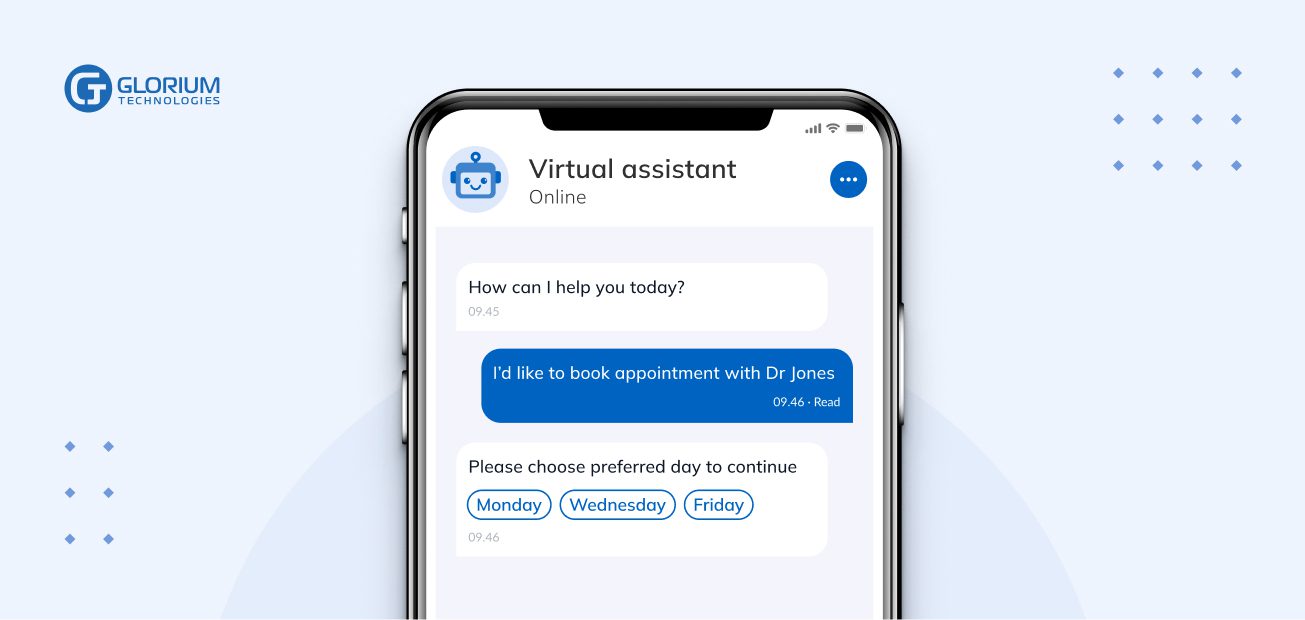
The problem with simple chatbots is that they cannot handle complex or complicated requests. At best, they answer according to a template or redirect the user to a chat with a company representative.
AI-powered assistants, in the meantime, have the capacity to deal with complex queries in multiple languages. To optimize the communication process, you can include slang phrases in the bot base, build a chain of dependencies, and create a query processing architecture. As a result, the conversation will follow a variation scheme with ready-made answer templates for a number of typical questions.
Typically, chatbot algorithms have several options for engaging in a dialog with a client. These templates work according to a prescribed pattern of phrases and are processed according to parameters such as key phrases or commands specified in the bot itself. Modern digital assistants have some semblance of intelligence and can interpret simple communicative language into complex commands.
For example, you can configure your chatbot to compare items, prices, or payment options to help customers make informed decisions. By analyzing the user’s input, the chatbot can dynamically adjust its responses, providing personalized recommendations and solutions.
This qualitative algorithm improvement makes it easier for users to communicate with bots. This reduces the time it takes to place an order and facilitates order processing in general, which ultimately leads to more sales and brand popularity among consumers.
A chatbot is not just answering yes/no and providing links to relevant products or services. A modern virtual assistant is a flexible information processing system that takes the automation of commerce or other types of services to a new level.
To ensure this adaptability, several strategies must be integrated during development. For instance, a chatbot can be programmed to understand the context of a conversation, not just individual queries.
If a user asks for product recommendations based on their previous browsing history, the chatbot can offer personalized suggestions that are more relevant to the user’s needs.
In addition, to enhance adaptability, chatbots can be integrated with real-time data sources, such as inventory systems, customer databases, or financial platforms. This allows the chatbot to streamline data management and provide up-to-date, contextually accurate information to users.
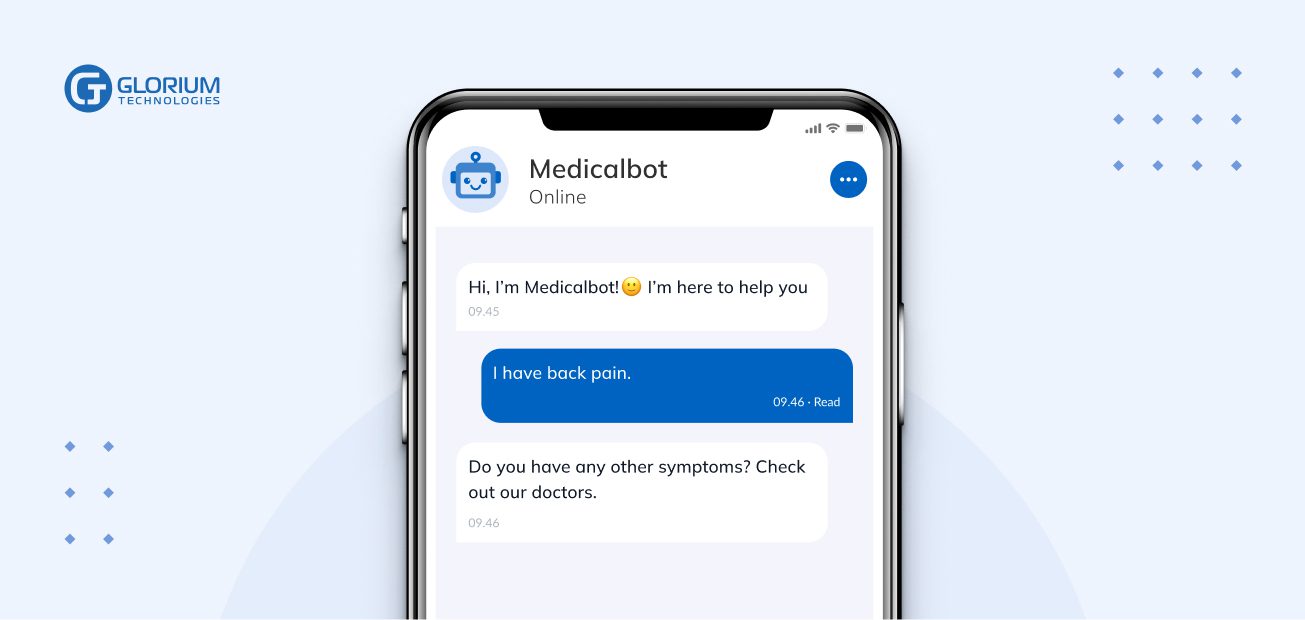
With AI chatbot technology, it is possible to realize virtual assistants competent in solving technical or financial questions. This can reduce the cost of company resources for consulting services, enhance user experience, and save time for the organization’s core business processes.
Today’s chatbots can work in isolated or shared information repositories, learning or providing enhanced consumer service. Such digital assistants can easily analyze data according to algorithms and research the market or competitors’ solutions.
By using application programming interfaces (APIs) and webhooks, you can connect your AI chatbot with different data sources and retrieve the necessary information. This allows the chatbot to pull data from diverse repositories, such as product catalogs, customer profiles, order histories, or financial records, and use it to provide personalized responses and informed insights.
By using these capabilities and adjusting your solution to your business needs, you get not only a commercial IT product but also a productive operating unit, which can be used for a number of routine tasks.
Chatbots can be either created from scratch or implemented on one of the existing platforms. This variability exists for a reason: you need different solutions for different needs.
For example, if you need a complex virtual assistant, it’s better to develop it yourself. Still, if you only need basic functionality, you can use a boxed solution with partial customization.
The platform for an AI chatbot (Telegram, Instagram, Facebook, etc.) also plays an important role in choosing key technologies for creating a digital assistant. There are peculiarities of programs and web solutions that need to be studied in advance and considered during development.
If you need expert guidance on chatbot app development services, we’re here to help.
Read more about AI consulting services.
The first stage of any development is always research. Competitors’ solutions, business specifics, the target audience, and their basic habitat platforms need to be thoroughly studied before your partnering team creates chatbots. The information obtained will give you a complete picture of the state of the market, trending solutions, and expectations of typical customers in your area of business.
If you decide to take the path of least resistance, then your choice is a platform for creating chatbots. They allow you to quickly set up communication templates, enter key phrases, connect assortments, etc. The main advantages of such solutions are the speed and cost of development.
The disadvantage of the existing systems for chatbot creation is that they have some limitations. These include weak AI, a simple interface, and basic functionality without the ability to scale.
Your next task will be to choose the best framework for custom chatbot development. There are several development languages, frameworks, and platforms specifically designed for creating chatbots as of 2025.
Technologies such as Python, Java, PHP, Ruby, or Lisp are also doing a great job. Python, in particular, has built-in tools for native work with AI and ML, which is a definite plus for intelligent chatbots.
Optimal frameworks for developing chatbots:
They all have support for NLP and NLU, as well as some features unique to each product. For example, Microsoft Bot Framework supports the LUIS speech recognition service, and IBM Watson Assistant features an advanced self-learning algorithm.
Before releasing a chatbot, it is necessary to test its functionality comprehensively. To do this, you can use the mechanical method (manual or involving testers from among the clients) and the automatic one.
By automating chatbot testing using frameworks such as Botium, you can not only check the IT solution’s workability but also train it using ML algorithms. To make the most of automation, you may need the services of experts, such as Glorium Technologies.
Chatbots need support throughout their lifecycle. This not only includes fixing problems or implementing new functionality. It is also necessary for scaling and learning integrated AI and adapting the digital assistant to new market trends, which change so often that sometimes the bot becomes obsolete before the end of development.
Therefore, it’s essential to find an AI development partner that offers ongoing support and maintenance services, like Glorium Technologies does. With our help, you can ensure the highest quality for your chatbot, guarantee its long-term reliability, and enable continuous improvement based on your evolving needs.
At Glorium Technologies, we specialize in the development of intelligent bots for businesses across the globe, helping SMEs and large enterprises enhance customer interactions, provide round-the-clock support, and increase satisfaction. Our expertise covers a wide range of needs, from creating bots that handle routine inquiries to building advanced assistants capable of performing tasks that go far beyond basic conversations.
We develop AI chatbots that seamlessly blend cutting-edge technology with human-like interaction, empowering companies to engage with their customers in the most effective and convenient ways.
Our portfolio includes numerous successful business cases where we helped our clients enhance customer interactions and optimize processes using AI. Our clients have achieved measurable results, such as saved money, reduced working hours, increased productivity, and more.
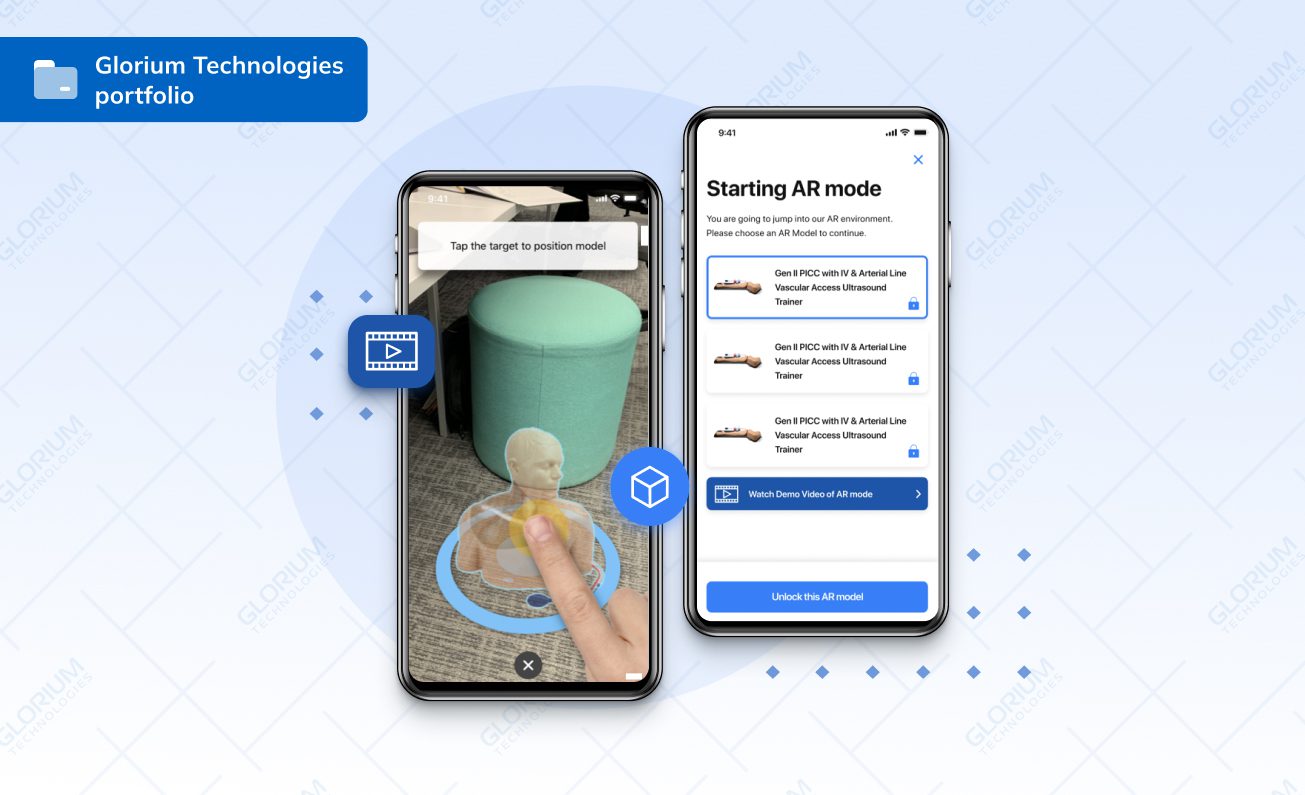
Our approach to chatbot architecture design is rooted in a combination of advanced technology and human-centric principles.
Before starting the development of the solution, we thoroughly analyze your needs, business challenges, and aspects of your operations that can be optimized with the help of a chatbot. Implementing a chatbot with our assistance is not just about handling simple user requests. It’s about freeing up company resources, saving the budget, and ensuring long-term success.
Our pricing is flexible and tailored to the specific requirements you provide. Factors influencing the cost of implementing a chatbot solution include complexity, scope of implementation, customization level, and support and maintenance needs.
Chatbots have come a long way. Not long ago, they were just simple little pop-ups answering simple questions. Now, they have become more significant, like digital coworkers who actually get what users say and respond almost human-like, meeting customer expectations to the teeth.
One of the latest advancements in AI chatbot technologies is that they’re starting to pick up on human sentiment and emotions. It’s not about understanding human words anymore; it’s about grasping the mood behind them.
So if someone’s having a rough day or just needs a bit of patience, these bots are learning to respond with a softer touch. That level of empathy can make a huge difference, especially in spheres like healthcare or customer service.
AI chatbots are evolving to handle more of the behind-the-scenes work for businesses. Instead of just chatting, they’re helping with tasks like updating records, sending reminders, or pulling up useful info. It’s like having a super-organized assistant who never takes a break.
But it’s not just about making life easier. Modern AI bots are also great at spotting patterns in data, including figuring out what people need, what’s working, and what could be better. And when you mix that with advanced technologies like virtual reality, you get customer experiences that are not only useful but also kind of entertaining.
As you can see from all these AI innovations, smart technology is turning from an auxiliary solution into a true team member that can optimize processes, improve customer service, free up company resources, and help employees complete tasks faster and more efficiently.
As of 2025, the AI chatbot market continues to grow, turning these tailored solutions into a necessity for businesses that want to stay competitive and keep pace with technology and market demands.
Today’s AI chatbots are an example of self-learning algorithms, though very far from the utopian image. Even in this form, intelligent assistants provide better and faster customer service, increasing the quantity and intensity of sales. Now is the best time to launch your brand bot to market and integrate it into all popular messaging apps and platforms.
Entrust the task of building an AI chatbot to industry experts – Glorium Technologies. We will create your own chatbot and teach it to speak the language of profit. With our service, not a single client of yours will leave empty-handed!
Natural Language Processing (NLP) is a branch of artificial intelligence (AI) focused on enabling computers to understand, interpret, and generate human language in a meaningful way. In the context of chatbot performance, NLP plays a crucial role, as it allows chatbots and voice assistants to comprehend user input, engage in conversation, and provide relevant responses, all coming with multilingual support and context awareness.
You can create a custom solution by leveraging NLP techniques and development platforms. These platforms provide tools and frameworks that simplify the process of building, training, and deploying AI-powered chatbots tailored to your specific needs and requirements.
The chatbot creation process typically involves several key steps:
Chatbot development can be organized in different ways. While prior programming knowledge can be beneficial, many development platforms offer user-friendly interfaces and tools that require minimal coding skills. However, having a basic understanding of programming concepts such as variables, functions, and conditional statements can facilitate the customization and enhancement of your chatbot’s functionality.
Creating custom chatbots that can engage in human-like conversations requires careful consideration of both the bot’s design and the underlying technology powering it. Bot builders should focus on incorporating robust natural language understanding capabilities into their bots, enabling them to comprehend the nuances of user queries and respond appropriately.
Additionally, training the bot on diverse datasets and continuously refining its algorithms can enhance its ability to mimic human conversation patterns and provide more contextually relevant responses.