Legacy Application Modernization · Free First Read
Inherited a Legacy Codebase? Know What It Does, Then Modernize What Matters
Know what your legacy app really does, then modernize it module by module or rebuild it with the same features while your team stays on the roadmap. The first read is free: a stack list and one architecture diagram, no code or repository access.


Trusted by Teams in High-Stakes Industries










Glorium is a custom software development company. Modernizing, rebuilding and extending existing products is part of the work we do for clients like these.
 IAOP® Global Outsourcing 100 in 2026
 AWS Select Tier Services Partner
 Microsoft Partner
 Stripe Partner
 Clutch
 Gartner Peer Insights
 GoodFirms
A Custom Software Partner for Critical Products
Senior engineers who have shipped critical products for healthcare, finance, insurance, manufacturing and other high-stakes industries.
- 16+
years
- 150+
projects
- 20M+
end users
When Nobody Can Say What the Legacy App Really Does
The app still earns money. But the people who understood it are gone or busy, the framework is aging, and the usual answers are a multi-week assessment, a program, or a request for your repository. A blind rewrite bets the product on behavior nobody wrote down.
The developer who built the core left, and nobody wants to touch that code
We read the system and write down its architecture, dependencies, critical behavior and risks, in documents you keep, before anyone changes it.
We shipped fast for years. Now nobody knows how the platform fits together, and the team talks about a rebuild
See how it actually fits together and where the risk sits, then choose: modernize module by module, rebuild with the same features, or leave it.
Our team is busy with the roadmap and new features. The legacy code is tomorrow's problem
Our engineers take the reading, documenting and migrating as a fixed-scope step outside your team, so your engineers keep shipping.
We inherited a codebase in an acquisition, and its customers came with it
A map of the acquired system's modules, dependencies and risk priorities, and a plan that starts with the part that matters most.
The framework is past its support date, and every security review flags it
Move the riskiest part first. What it must keep doing is written down as tests before the code changes. No blind rewrite.
The last upgrade broke things and was rolled back
A smaller first step: one module, its agreed behavior tested before and after the change, and a rollback plan at go-live.
Start here. Migrate later, or never
Start with Knowledge Recovery: Understand the System First
- ArchitectureHow the parts of the system fit together.
- DependenciesWhat calls what, and what breaks if it changes.
- Critical behaviorWhat customers and the business rely on.
- RisksWhat to fix first, and what can wait.
- Documents you keepBought on its own, with no commitment to migrate.
- One start for both pathsModernize module by module, or rebuild as a new app with the same features.
What We Modernize
Typical systems we take on. Each one starts the same way: understand the system first, then refactor, replatform, rebuild with the same features, or replace.
Web Applications on Outdated Frameworks
Move a web app off a framework past end of support, such as AngularJS (Angular 1.x), while keeping what users rely on.
Mobile Apps
Update or rebuild an aging mobile app so it runs on current OS versions and can take new features again.
Vibe-Coded and AI-Generated Products
Turn a product built fast with AI tools into maintainable, tested, production-grade code.
B2B SaaS and Multi-Tenant Platforms
Modernize the product your customers pay for, one module at a time, planned around your tenants.
Monoliths Split into Modules
Break a tangled monolith into modules or services a team can change and release separately.
Desktop and Client-Server Apps Moved to Web
Bring desktop and client-server software to the browser with the same features.
Internal Tools and Back-Office Systems
Replace or modernize the internal apps a business runs on, planned around daily operations.
Legacy ERP, CRM and Custom Business Systems
Move off an aging system to software that fits how the company works today.
IoT and Connected-Device Software
Modernize the apps, backends and dashboards that run connected hardware.
APIs and Integrations
Wrap or replace old interfaces with documented APIs so the legacy system connects to new tools.
Databases and Data Migration
Move data from aging databases to current ones, quoted as a separate item and checked against the old system.
UI and UX Refresh of a Legacy Product
Give a dated product a modern interface while the behavior underneath stays the same.


Why Teams Start Here Instead of a Big Program or a Blind Rewrite
The usual routes: an assessment-led program from a large firm, a modernization specialist that starts from your repository, or a code-mapping tool your own team has to act on.
| What Matters | Glorium | The Usual Route |
|---|---|---|
What you hand over before the first written answer | A stack list and one architecture diagram. No code, no repository access | Specialist: your repository or a paid week on your code. Large firm: an assessment engagement |
First step | A free first read, then a fixed-scope step that sales scopes after a call | Assessment-led firm: a structured assessment that typically takes 2-4 weeks, then a modernization program |
What you pay for | Scoped by sales after the call: knowledge recovery, assessment, one module. Data migration and cutover quoted as separate items | A modernization program, or a per-application tool licence plus your engineers' time |
Whose engineers do the work | Glorium's senior engineers read, document, test and migrate; your team stays on the roadmap | Mapping tool: your own engineers still read, check and migrate while shipping features |
Who owns the result | You: documents, behavior tests, the migrated module, rollback plan and handover | Mapping tool: the maps live in a tool you keep licensing |
When you can stop | After any step, keeping what was delivered. A rebuild is your choice once the system is understood | Large firm: a program comes first; a first production pilot can take 3-5 months. Specialist: a paid sample on your code before the proposal |
How It Works: From a Stack List to a Module in Production
A small senior team works in an AI delivery environment: tooling drafts dependency maps and proposed changes, and engineers check them against the behavior you agreed.
Get My Free First ReadFree First Read or Call
Send a stack list and one architecture diagram, no code, and get back a short written list of questions to resolve before any migration. Or book a free 30-minute call.
Free
Understand the System
After the call, sales scopes the first step: knowledge recovery on its own, or an assessment that maps modules, dependencies and risk priorities and picks where to start. Qualified teams can ask for a free summary version.
Scoped by sales after the call
Test First, Then Modernize
You confirm what the selected module must keep doing, and we write it down as tests. Then we modernize one module at a time, or rebuild the app with the same features, and run the same tests against it.
Before any code changes
Go Live with a Way Back
Deployment and rollback plan, test results, documented limitations and a handover to your team. Data migration and cutover are quoted as separate items. Then choose the next module, a rebuild, or stop.
Your call after each step
What Stays with Your Team
Every step ends with something your team can use, whether or not you go further.
After Knowledge Recovery
- Architecture and dependency documentation
- Critical behavior and risks, written down
- Yours to keep, with no commitment to migrate
After the Assessment
- A module map with dependencies
- Risk priorities: what to fix first
- One module picked to start, or a rebuild path
After the First Module
- The migrated module with before / after test results
- Documented limitations of the new module
- A deployment and rollback plan, plus a handover
Modernization Is Regular Glorium Client Work
View All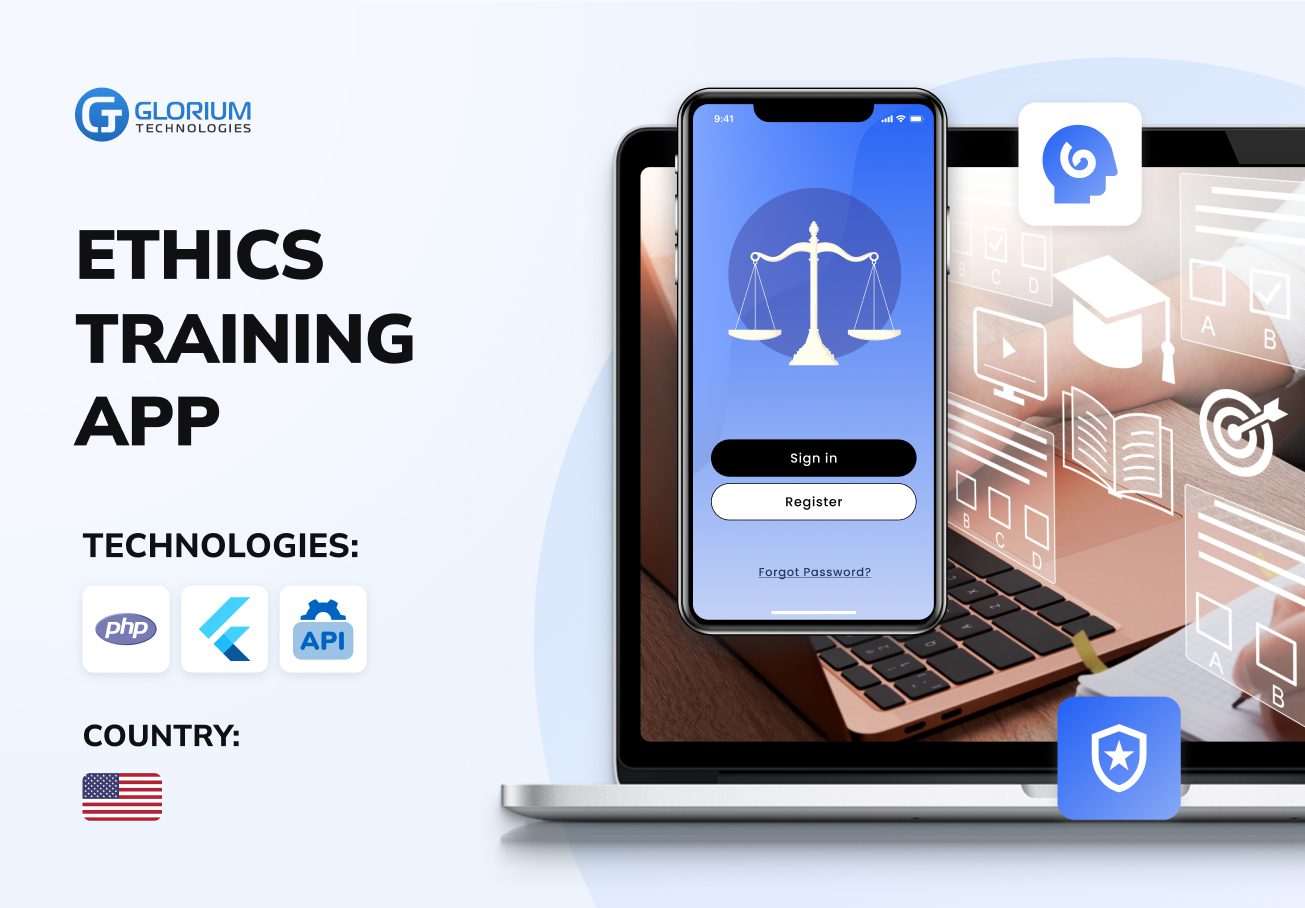
Modernizing a Police Training App for User Growth and New Market Entry
- The Challenge: The app's architecture could not support a growing user base, every content change required a rebuild, and the app was shared as a manual APK file.
- Our Solution: Starting with a code audit and roadmap planning, we rebuilt the app: new architecture and data handling, app store distribution, CMS integration and an admin panel.
- The Results:
- Faster update cycles, wider market reach through official app stores, and simpler subscription and user management.
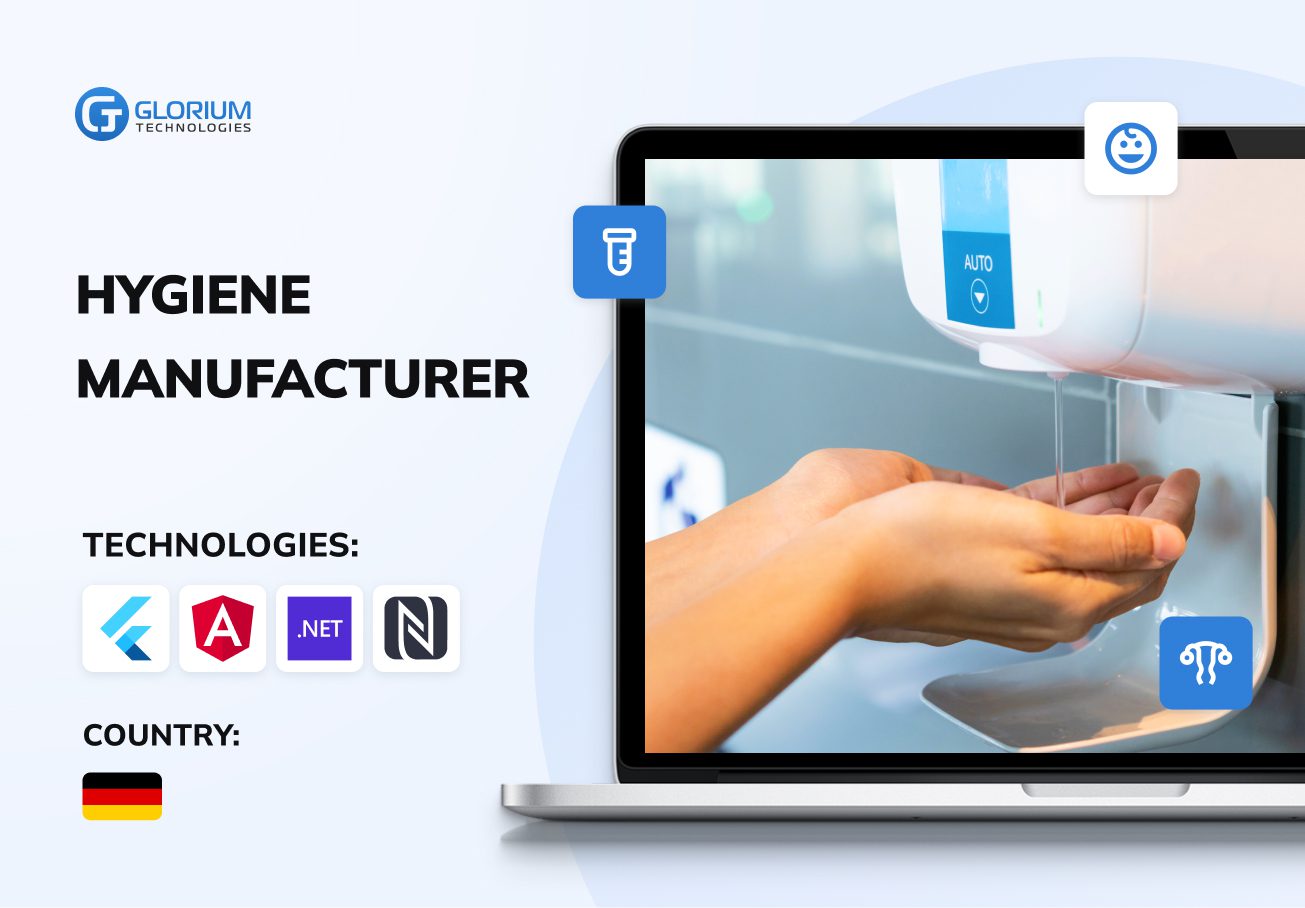
Modernizing Hygiene Product Manufacturer's Smart Dispenser Ecosystem
- The Challenge: A robust backend behind a clunky, outdated frontend, no in-house UI/UX or mobile expertise, and data volume growing fast.
- Our Solution: In phases, we rebuilt the web interface in Angular, built a cross-platform Flutter app and later merged separate apps into one codebase, and upgraded the .NET backend for growing data loads.
- The Results:
- Polished interfaces and mobile access attracted larger clients, including major hospital networks, on an architecture that takes new features more simply.
Secure Cloud Migration for a Media Company
- The Challenge: Move data and legacy applications from on-premises data centers to Google Cloud Platform with minimal downtime or data loss.
- Our Solution: A gradual migration architecture, legacy applications moved to a container platform, and CI/CD for applications and services.
- The Results:
- Data migrated with no data lost and minimal downtime; services began to work faster, and continuous delivery improved.
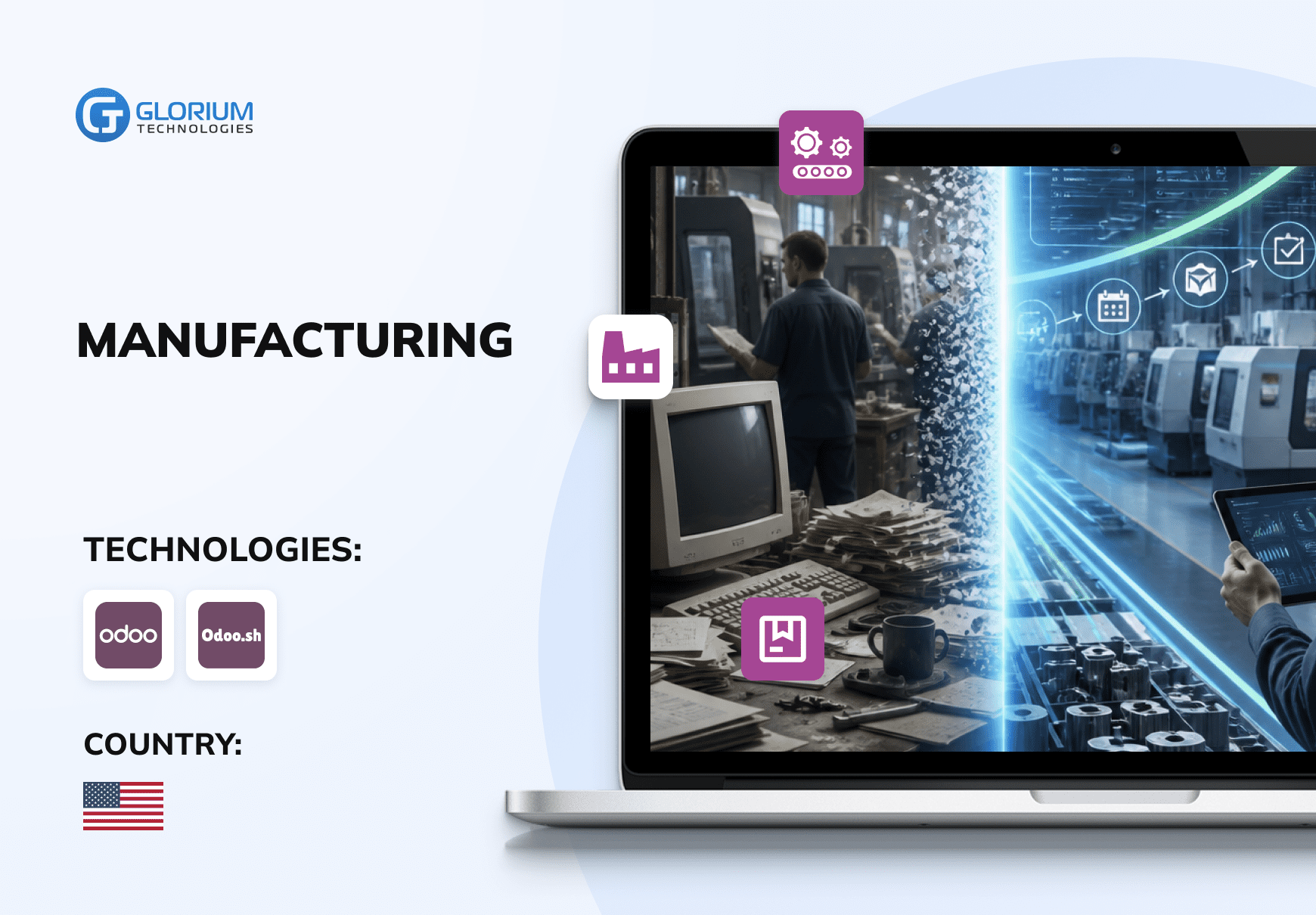
Moving Off JobBOSS: How a Contract Manufacturer Replaced Its Legacy ERP and Cut Job Turnaround by 31%
- The Challenge: After more than a decade on JobBOSS, jobs and financials lived in separate systems, and spreadsheets and re-keying filled the gaps as job volume grew.
- Our Solution: Odoo 17 Enterprise replaced the legacy ERP in four phases, with the old system kept live in parallel during the first two.
- The Results:
- Live job costing, automated reordering, and month-end close down from 8-10 days to under three.
Industries Where We Ship Critical Software
Years of shipping critical products in these industries let Glorium bring senior developers and industry experts who understand the business rules hidden in your code.


Who We Help Modernize
Any company that runs on, or sells, an application built on aging code. Every path starts with the same free first read.
B2B SaaS and Software Vendors
The product your customers pay for runs on code few people still understand: SaaS, vertical software and ISVs.
Industrial and Engineering Software
Software that runs machines, plants, devices or field operations, where wrong behavior costs real money.
Companies Whose Own App Runs on Legacy Code
Manufacturers, service businesses and others whose internal or customer-facing app is aging and hard to change.
Teams That Inherited or Outgrew Their Code
A new CTO, a team after an acquisition, or a product that shipped fast for years while nobody owned its structure.


Send a Stack List. Get Your First Read Free
No code and no repository access: a stack list and one architecture diagram return a short written list of questions to resolve before any migration. Prefer to talk first? Book a free 30-minute call.
Get My Free First Read