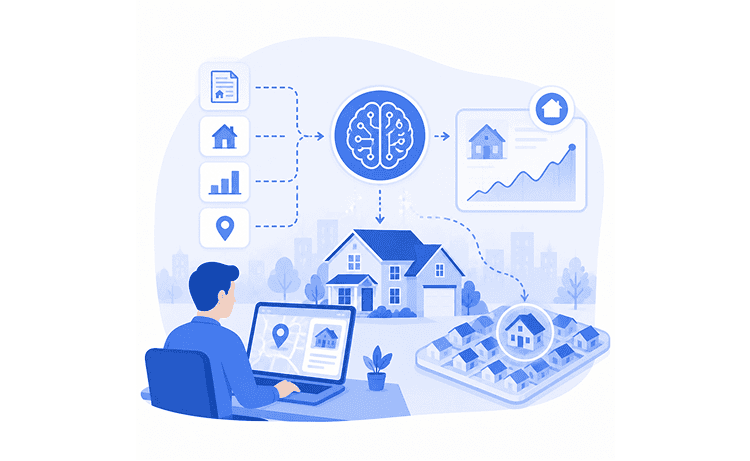









PropTech: Real Estate Tech Trends in 2022-2026
Updated April 26, 2026

 Summarize in ChatGPT
 Summarize in ChatGPT
How does the implementation of Proptech contribute to the digitization of the industry? Actually, real estate executives are looking for solutions that can help them stay competitive and meet the needs of clients and tenants.
Investing in property is a complex process that requires a live presence, with the choice often coming intuitively. Scheduled viewings provide customers with the chance to envision a possible future in their surroundings and gives them the opportunity to feel the property’s ambiance for themselves. When the pandemic began spreading across the world, this standard practice became a luxury and new concepts had to be created in order to keep the sales wheels spinning.
The COVID-19 has affected hospitality facilities and short-term rentals. Also, since traveling abroad has been restricted, audio and video calls have replaced live communication. Although technology relating to automation and VR were already commonplace throughout the industry, the pandemic skyrocketed their demand, cementing them as next-year essentials.
Content
Proptech (Property Technology) stands for general real estate technology. It can also be referred to as CREtech for the commercial market segment. These definitions refer to mobile and desktop apps, software in general, and innovation in the real estate industry. According to JLL Spark, the number of Proptech startups targeting new technologies has tripled to 8,000 over the past decade.
New generations of consumers and realtors choose innovative solutions that offer quick search, rent, and purchase of housing. PitchBook reports that the volume of venture capital transactions in the residential real estate sector was $6.2 billion in the first half of 2021, which is equal to the entire previous year.
Technology can improve employee efficiency by providing electronic storage, virtual meetings, and fast document processing.
The development of software for the real estate industry helps to provide buyers with unique opportunities and simplify the purchase/sale of housing.

Many countries switch to alternative energy sources nowadays. The study, published in the Energy & Environmental Science journal, envisions replacing 80–85% of existing energy in 50 US states by 2030 with 100% wind, water, and sunlight (WWS) systems. NEOM megacity, a complex of ecological buildings, is planned to be built in Saudi Arabia.
In construction, biodegradable materials (for example, milk-based paint), green insulation, geothermal heating, and solar energy are used. Zero Energy Homes (ZEHs) are cost-effective and save energy. Solar panels, wind collectors, and biofuels have become sustainable solutions for residential construction.
According to MarketsandMarkets, the BIM market was valued at $5.4 billion in 2020 and will reach $10.7 billion by 2026. The technology provides secure preparation of projects using remote communication methods. Planning of actions and prevention of collapse of sites is ensured at every building stage.

The thing about the real estate industry is that it already has enormous amounts of information regarding its owners, buildings, locations, etc. Every day, the real estate industry becomes more interconnected thanks to the Internet of Things and other software integrations which increase the layers of accumulated data.
Proptech innovations like IoT tools enable technicians to save fuel and increase daily productivity. Devices can operate remotely and store or exchange data online.
According to Statista, over 75 billion IoT-connected devices will be in use by 2025. Real estate agents use them to demonstrate objects remotely. With residential home apps, users can control lighting, set temperatures, and open doors. Intelligent technology can help to create a preventive maintenance plan to avoid unnecessary outages that impact tenants.
Memoori forecasts that the number of devices connected to commercial smart real estate will grow to 3 billion by 2025.
Giant corporations have already begun investing in innovative “smart property” technology, developing in-house software like Alphabet (Nest), Samsung (SmartThings), and Amazon (Alexa). Organizations like Trulia, Redfin, and Zillow obtain and accumulate data by purchasing trends, traffic information, and demographic data to improve decision making for both property investors and buyers.
The Matterport survey confirms that around 90% of potential buyers will open a 3D tour listing. A virtual home survey allows you to view rooms, walls, ceilings, windows, and other components online. The pandemic has made them an industry demand because it is the safest method for the health of buyers.
Virtual reality saves the financial and time resources of agencies. Houses are always prepared to meet guests who can smell and feel the tactile sensations during the tour. When your customers see a property inside and out, online, there is a good chance they may proceed further within the buying process.
The luxury property selling platform, Sotheby, has recently announced the ability to virtually tour a property with their own VR headsets. Another real-estate application, Realtor.com, lets users discover critical information about a property, including pricing information, building conditions, and other features, simply by pointing a smartphone at the property.
Not only does virtual reality technology benefit the potential buyer, it also helps with technical visualization and the detection of defective components, which significantly enhances property planning and construction. When combined with digitized building models, augmented reality tools can show otherwise hidden components, like pipes and ceilings. AR also works wonders for architects: an AVRspot app,
AResidence, allows you to create architectural models by layering virtual models on existing objects.
AI technologies provide information on the latest Proptech trends. Owners use the collected data to schedule price increases for properties. AI-powered management tools track tenant requests and identify service issues.
Compass, Zillow, LoanSnap, and others use these technologies to help buyers find housing. Introducing AI will be required in the real estate industry since it has several helpful capabilities:
In sales, smart algorithms are mainly used for filtering data and matching property owners and leasers with investors and funders. There are plenty of real estate startups that develop automation apps. These applications allow potential buyers to monitor market offerings with the ability to set their own requirements.
This way, the property search process is enhanced, increasing the likelihood for agents and sellers to close the deal. For instance, Israeli-based startup, Skyline AI, uses predictive analysis to correctly evaluate property price. Another AI-enabled real estate startup, Trulia, identifies their users’ tastes and offers them properties based on their preferences, including building color, style, price, etc.
More complex algorithms of advanced virtual assistants and conversational AI are used in commercial property, like corporate real estate and facility service departments, nursing home operations, concierges, hospitality, etc. This type of software responds to the requests of all stakeholders involved in property management and is able to provide advanced, more sophisticated solutions for emerging issues, like automatically handling technical maintenance requests.
Blockchain has impacted the industry and made purchases faster and safer. Innovative technologies automate transactions and reduce the risk of fraudulent transactions. The most famous crypto real estate transaction was in Miami. An anonymous buyer paid $28 million in cryptocurrency for a penthouse.
Smart contracts are developed based on blockchain. Technology facilitates the exchange of assets and eliminates the need for checks through banks.
Digitized contracts imply automatic payments to participants (brokers, lawyers, etc.) when a property is sold under particular terms. A single, publicly available version of the records establishes trust between the parties to the contract.
According to a Juniper Research report, consumers and businesses will save over 2.5 billion hours of customer service by 2023 by introducing chatbots. They help in finding homes to buy or rent. Virtual assistants provide instant 24/7 responses in multiple languages. Modern helpdesk representatives can perform the following functions:
As chatbot generations develop, smart and helpful chatbots of real estate agencies will soon become symbols of good customer service. The number of virtual tours will increase, leading to business growth. Chatbot Life believes that real estate is among the top five industries that benefit from chatbots.
Real estate companies that want to predict consumer behavior and expectations will invest in big data analytics. Globe News Wire reports that the predictive analytics market size will reach $10.95 billion by 2023.
Companies focus on creating positive customer experiences by leveraging the information they receive.
Proptech “fans” improve their buying and selling terms to meet consumer expectations. Data-driven real estate platforms build a buyer’s preference portrait and recommend appropriate options.
Today, more than 95% of property buyers use digital resources to guide them in their decision-making journey, and 44% of real estate buyers initiate their real estate research on the web. This is a massive opportunity to analyze their web behavior to detect buying trends.
Apart from defining digital habits, big data can be leveraged for the following purposes:
In other words, Big Data is the gold currency of the real estate industry, with promising potential for companies who refine it and use it the right way.
Apart from better scalability, the growth of big data use will surely reshape the business for property managers and agents. As technology evolves, becoming more sophisticated (along with its users), many functions that real estate agents often perform will most likely become redundant. Instead, real estate service providers will likely become the new partners of property buyers and sellers, as they will be able to satisfy their requests.
The bar of performance is definitely being raised, but efficient use of big data will result in better profit margins, fewer complaints relating to purchased property, and improved forecasting of market conditions.
The environmental situation, a large technological base, and a pandemic prompt entrepreneurs and innovators to create startups that will meet the growing needs of customers. So, in 2014, 261 Proptech companies were founded, and in 2018, only 2 were launched. In January 2020, there were more than 600 unicorns worldwide, created in the USA and China.
Notable companies like Zillow, Opendoor, and Trulia were startups as well. The most highly regarded Proptech unicorn in the world is WeCompany, with a $47 billion valuation.
Software development helps startups attract new investment resources. PwC survey shows that 64% of real estate companies are going or have already invested in Proptech startups. Among the leaders of new projects, the most popular are office and hotel real estate.

The COVID-19 pandemic has impacted online stores worldwide. In 2020, e-commerce retail sales were $4.28 trillion, and e-commerce revenues are projected to grow to $5.4 trillion in 2022.
Regular stores have been redesigned for logistics and industrial facilities. According to forecasts, the global instant delivery market will exceed $8.4 billion in 2021, and it will reach $26.4 billion by 2027. Significant volumes of orders require large areas for packaging and placement. This branch of real estate will grow, both in price and in the number of properties offered.
Housing search platforms are the first points of interaction between the agency and the user. Statista considers Zillow the most popular real estate website in the United States, with approximately 36 million unique monthly visitors. Mobile and web apps help to quickly find items with search filters and chatbots.
Online real estate markets create a new business model for the industry. For example, on Airbnb, you can find a room in a residential building and rent it without involving agents. TurnKey platform (Amazon and Realogy project) allows you to rent housing in any city in the United States.
As the real estate industry collects and processes increasingly massive volumes of personal and financial data, cybersecurity has become one of the most pressing real estate technology trends for PropTech adopters. IoT sensors in smart buildings, AI platforms analyzing buyer behavior, online marketplaces storing payment credentials, and blockchain ledgers recording transactions all create potential attack surfaces.
Real estate firms handle high-value financial transactions, store sensitive personal identification documents, and manage building systems that, if compromised, can affect the physical safety of tenants. Hackers increasingly target wire transfers during property closings. The FBI’s Internet Crime Complaint Center reported that business email compromise schemes, including those targeting real estate transactions, caused losses exceeding $2.7 billion in 2022 alone. A single intercepted wire instruction can redirect hundreds of thousands of dollars to a fraudulent account within minutes.
Smart buildings introduce another layer of vulnerability. Connected HVAC systems, access control panels, and surveillance cameras that rely on IoT protocols can serve as entry points for network intrusions. When a property’s lighting, locks, and climate systems all operate on the same network, a breach in one device can cascade across the entire infrastructure.
PropTech companies operating across borders must navigate a patchwork of data privacy regulations. In the European Union, the General Data Protection Regulation (GDPR) imposes strict requirements on how tenant and buyer data is collected, stored, and shared, with fines reaching up to 4% of global annual revenue for violations. In the United States, the California Consumer Privacy Act (CCPA) grants residents the right to know what personal information is being collected and to request its deletion.
For proptech real estate platforms that aggregate user search histories, location data, and financial records, compliance is not optional. Zillow, Redfin, and similar platforms must maintain transparent privacy policies and implement data minimization practices, collecting only what is necessary for the stated purpose. International PropTech firms expanding into new markets should conduct data protection impact assessments before launching services in regulated jurisdictions.
Real estate companies integrating PropTech solutions can take several concrete steps to reduce risk:
Among all property technology trends, this principle stands out: the technology only delivers its full value when the data powering it remains secure.
The goal of each technology and innovation is to bring people together, automate agency work, provide personalized service delivery, and introduce innovations remotely. The real estate sector is at one of the development stages.
Companies that have implemented Proptech technologies will attract more tenants and manage their investments properly. We suggest compiling a list of activities for the real estate market to prepare for 2026:
The pandemic has opened up new ways to work with Proptech using AI, VR, IoT, and other options. Drones, smart contracts, and 3D tours have become innovations of 2020-2021 and will be necessary for the real estate industry in the future.
One thing is for sure – innovation is the crucial driver for real estate industry development. Technology such as big data, VR, and AI hold massive potential for optimizing operations, reducing manual labor, and increasing profit margins, and will be widely implemented by real estate companies in 2023 and the upcoming years.
Proptech, also called Property Technology or Real Estate Technology, is a combination of innovative software solutions with the traditional norms of the real estate system. For example, websites for the sale and rental of housing, virtual 3D tours, or introducing chatbots.
According to Statista, the volume of US real estate transactions is approximately $7.3 billion. The demand for industry-specific technology is increasing every year, as is the number of unicorn companies.
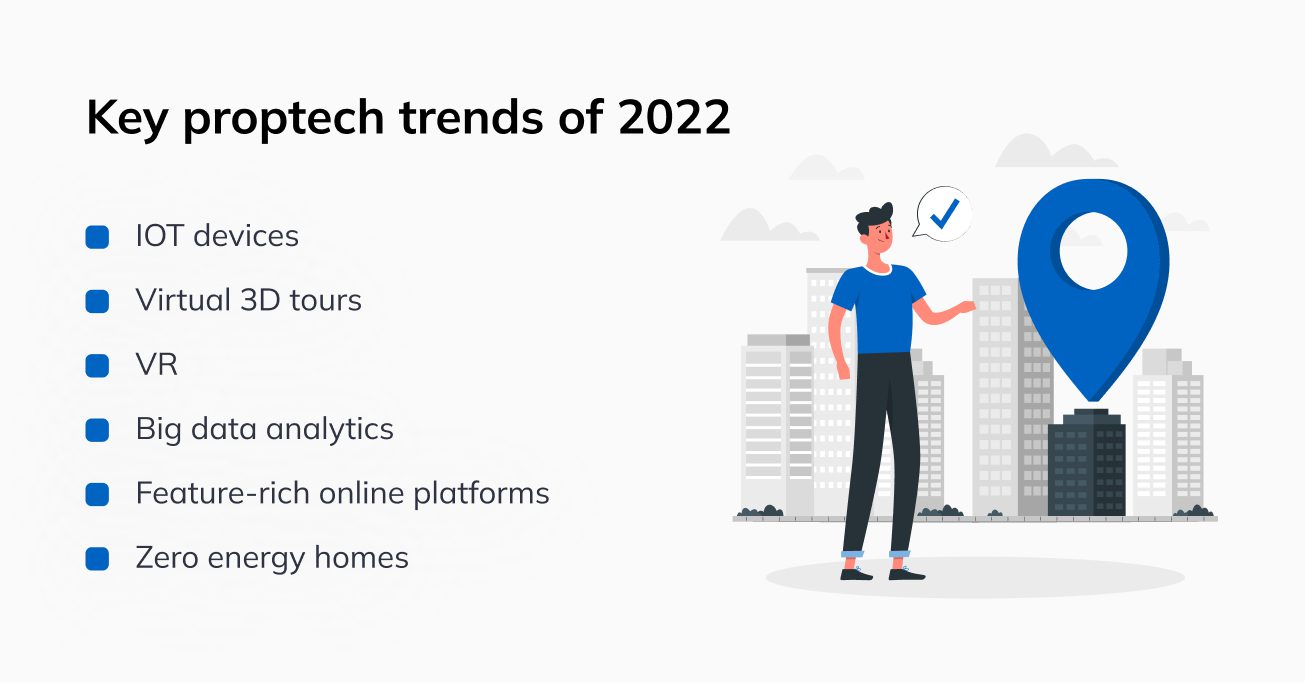
IoT devices, virtual 3D tours, VR, zero energy homes, big data analytics, feature-rich online platforms. Proptech has pushed the industry towards digital innovation.