Written by
VP of Sales & Delivery Strategy
Enterprise Resource Planning: The Decisions That Happen Before Software
Most executive teams treat enterprise resource planning (ERP) transformation like a software purchase. They pick a vendor, hire an implementation team, and expect the technology to fix their operational headaches. But software isn’t a magic cure, and treating it like one is where things start heading south.
Industry data shows that technical bugs rarely kill an ERP project, but unprepared organizations do. Gartner predicts that 70% + of recent ERP projects will not deliver on their primary business objectives by 2027. Companies focus on software features and ignore operational readiness.
Before a single demo is booked or line of code is written, you need to make some tough decisions: untangling messy workflows, aligning misaligned departments, and agreeing on what success looks like. If you don’t fix your processes first, all an ERP does is automate your existing chaos at a very high price tag. The real work of an ERP deployment always happens before the software ever arrives.
What ERP Selection Looks Like in Practice
Picking an ERP sounds like standard shopping: compare a few features, check the price, and choose one. However, everything can be more confusing in practice. The platform you pick locks in how your business runs, scales, and handles changes for years. Rush this stage, and the project can go wrong long before launch.
A smart selection process starts with your operations. Before booking a single vendor demo, map out how work gets done across your company. Where do orders originate? How do data move between departments? Where do the manual handoffs pile up? That initial effort turns a messy search into a structured comparison. When you understand your own operational requirements first, you can test software against real-world demands instead of slick sales pitches.
The stakes are higher than most teams realize. Research from McKinsey shows that top-performing companies are nearly three times more likely to redesign their core workflows during transformations than their peers. Selecting an ERP isn’t about finding software and hoping your business adapts around it. This is your best opportunity to fix how your company operates.
A structured ERP selection weighs several factors at once. Here’s a practical framework you can adapt:
| Factor |
What to assess |
Why it matters |
| Fit to workflows |
How closely core modules match your processes |
Poor fit forces costly customization later |
| Scalability |
Whether the platform grows with headcount and volume |
You don’t want to re-platform in three years |
| Total cost |
Licensing, implementation, and ongoing spend combined |
Sticker price hides the real number |
| Ecosystem |
Available integrations and third-party support |
A closed platform limits your future options |
| Vendor stability |
Track record, roadmap, and support quality |
You’re committing for years, not months |
Working with an ERP consulting firm at this stage gives you an objective comparison backed by real-world data (rather than vendor marketing). Independent guidance keeps the ERP vendors honest and keeps your own team focused on outcomes.
Who Owns Your ERP Project and the Role of the Project Manager
Software takes the blame when projects go wrong, but ownership is usually the real gap. Someone has to hold the timeline, the budget, and the hundred small calls that surface each week. Without a clear owner, even a great platform can underperform.
A capable project manager does far more than track tasks. They translate between your business teams and the technical crew, keep scope in check, and flag risks while they are still small. That discipline matters more than ever, because people are worn out. McKinsey reports that the average employee now goes through ten planned change programs a year, five times as many as a decade ago. In other words, an ERP rollout lands on teams that are already stretched thin.
The upside of getting ownership right is real. McKinsey notes that although the old assumption held that most change programs fail, well-informed leaders can flip those odds and reach success rates of 70 to 80 percent. That swing rarely comes from the tech stack. It comes from someone who owns the human side of business transformation.
Good governance covers a handful of core duties:
- Scope control, so the project ships what you agreed to and not an endless wishlist
- Stakeholder alignment, keeping human resources, finance, and operations pulling the same way
- Risk tracking, catching trouble while it is still cheap to fix
- Decision logging, so a call made in month one still makes sense in month six
That structure is much of what you pay an independent ERP consultant team to bring. They supply the discipline that keeps technology initiatives on track.
The Contract That Protects You Before Signing
When companies rush to pick an ERP, contract details often get treated as an afterthought. That is a massive, expensive mistake. The agreement you sign locks in the rules for years, and anything you skim over now will almost certainly turn into a headache down the road. Spending extra time fine-tuning the fine print always pays off.
Smart contract negotiation covers the points that bite later: what happens when scope shifts, who owns the data, how support is priced, and what your exit looks like if the relationship sours. Service levels shouldn’t be based on oral promises; they belong in writing. The same goes for software upgrades: if costs aren’t laid out upfront, you may face a surprise bill during a major version release.
A few clauses deserve extra attention. Confirm how business applications and enterprise applications get licensed as you add seats. Nail down data ownership and portability. Clarify what technical support includes and what costs more. Put your industry standards for security and compliance in writing, especially under regulation. Each point settles far more easily before you sign than after.
Proving the Value Through Measurement and Data
Plenty of ERP implementations cross the finish line, go live, and then quietly stall out without ever proving their value. The software technically works, but nobody can point to a tangible return on investment. That silence usually means trouble: if you can’t measure the real-world impact, you can’t defend the budget or build momentum for future improvements.
Real value has to be engineered into the project from day one. After all, technology alone doesn’t generate ROI. The payoff is when teams change their ways of working, reinvent their roles, and pivot to higher-value work. Launching a new system is just step one; delivering actual results is what counts.
That kind of tracking requires clean, reliable data. Once your ERP becomes the single source of truth for information systems across your company, its numbers need to be rock-solid and tied directly to business goals. Decide early what success looks like: faster order cycles, fewer errors, a quicker month-end close. Then hold the project to those figures.
This is where process optimization and business process improvement turn continuous instead of one-and-done. Once you can see how work flows through the system, the next fix reveals itself, and the one after that. A good consulting firm helps you build that loop so the value keeps compounding.
Building the Team and Skills Around the System
A new platform is only as effective as the team operating it. This is a simple truth that often gets lost in the rush to celebrate a successful go-live. The first few weeks after launch are critical in determining whether your team will buy into the system or revert to old habits.
Technical glitches seldom lead to breakdowns in adoption. Change management is one of the hardest parts of an ERP rollout, as cloud platforms change how day-to-day work gets done. User training shouldn’t be an afterthought squeezed into a rushed afternoon. People need to understand why the new processes exist and how they make their jobs easier, and only after that, which buttons to click.
Building long-term internal capabilities is just as vital. Pairing your own staff with outside specialized skills lets your team grow its own technical skills over time, so you are not tied to external help forever. Whether the roots sit in information technology, computer science, or business administration, the aim is a team that can run and extend the platform on its own.
System adoption succeeds when human capital management and business management receive the same focus as technical execution. The right partner plans for that, offering ERP offerings and solutions tailored to how your people work, with ongoing support as your needs move.
Why Companies Choose Glorium Technologies for ERP Consulting
The platform question gets all the attention, but as you have seen, the decisions around it carry as much weight. Selection, ownership, contracts, measurement, and people together decide whether your investment delivers. Choosing the right partner for that work is where many companies find their edge.
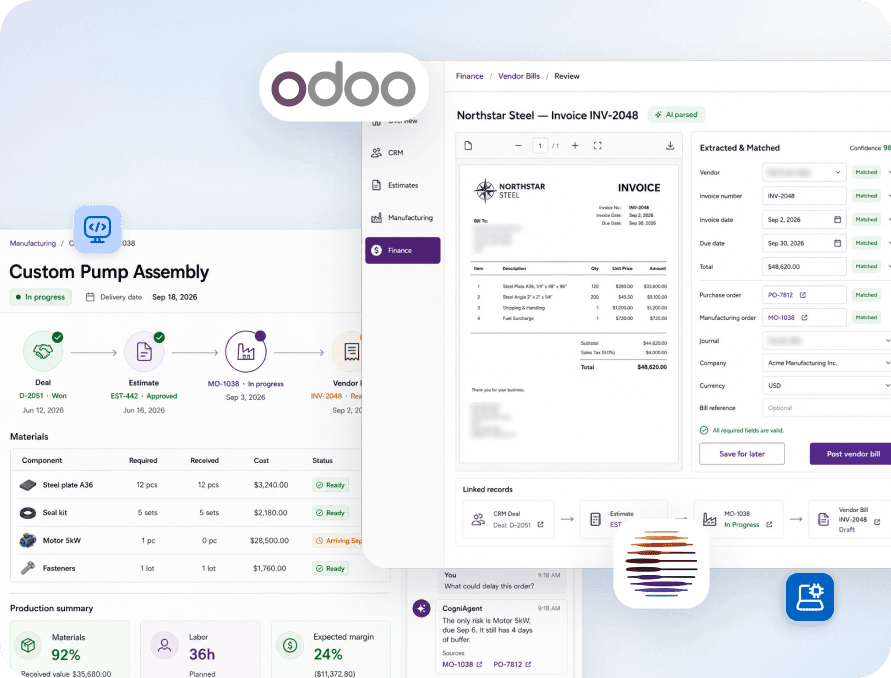
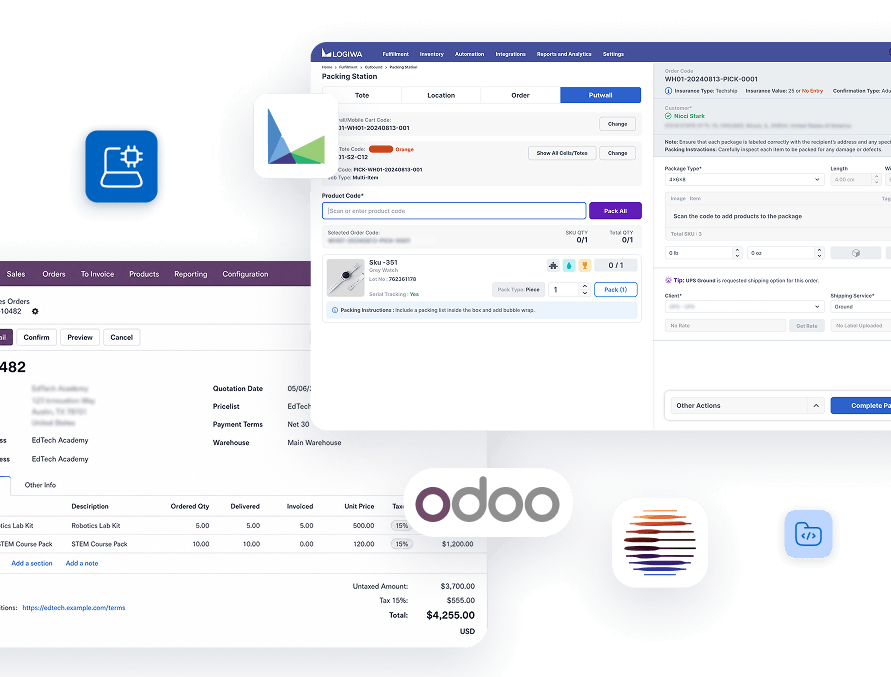
Glorium Technologies brings all those pieces under one team. As an official Odoo partner and a Microsoft Silver partner, we guide the selection, own the delivery, and stay through go-live, so nothing slips in the gap between separate vendors. We go beyond market trends and build solutions around your business needs.
What sets us apart comes down to a few things:
- One accountable team that carries you from strategy through ongoing support, with no finger-pointing between advisors and builders
- AI-native automation through CogniAgent, our own agent platform, adding intelligence most ERP-only firms cannot credibly offer
- Deep industry focus in manufacturing, healthcare, retail, construction, and food and beverage, so guidance fits how your sector operates
- Flexible engagement, from staff augmentation to dedicated teams
When you decide to implement an ERP system, treat the software as one piece of a larger plan, and choose a partner who sees the whole picture. Show us your workflow, and we will map the platform, the automation, and the rollout to match it.
Ready to get your ERP decision right? Talk to our ERP consultants and see where the smart path leads.