







Software Development Challenges in 2026
Updated April 19, 2026

 Summarize in ChatGPT
 Summarize in ChatGPT
If you’ve written a line of code recently, you already know that what worked last year is being rethought today, and what seemed like a distant problem has arrived at your doorstep ahead of schedule.
The software development world in 2026 is a study in contradictions. Developers have more powerful tools at their disposal than any generation before them — AI-assisted coding, cloud-native infrastructure, and low-code platforms that were science fiction a decade ago. And yet, teams are under more pressure, navigating more complexity, and making higher-stakes decisions than ever before. The challenges that today’s engineering teams face are technical, yes, but beyond that, they’re organizational, ethical, and strategic.
We’ve spent years working with teams across industries with various tech stacks and development capabilities. And we’ve seen it all—all the challenges they face, and all the solutions required to solve them. What follows this introduction is a grounded look at what’s actually hard right now, and what the most resilient teams are doing about it. Whether you’re a solo developer trying to keep up, an engineering lead wrestling with team dynamics and software development process, or a CTO making bets on the next three years, this article is for you.
In most cases, issues in the development lifecycle build up over time. At first, it seems that one can easily manage rushed releases or unclear requirements, but later, they often lead to delays, extra costs, or stability issues. These are among the most significant challenges for teams working on modern projects, as they influence the delivery of the final product. Missed deadlines, repeated fixes, and growing technical debt make it harder to keep things on track. At the same time, teams are expected to move faster while still maintaining quality and avoiding security vulnerabilities, which adds pressure across the board.
Content
Most technical issues stem from many smaller ones that gradually accumulate throughout the software development life cycle. Tools change, systems grow, and what worked at the start of a project doesn’t always hold up later. That’s why even well-planned projects run into complications over time.
New frameworks, tools, and approaches emerge constantly, and development teams need to keep up. For example, choosing the wrong stack can create long-term limitations, especially when software product development requires flexibility.
Let’s see how companies adopt new tech. Many already rely on AI features, about 48% use automation, 36% work with predictive analytics, and over 40% have moved toward cloud-native microservices. Things change quickly, and decisions don’t stay relevant for long. A setup that works today may need updates sooner than expected, so software developers have to keep learning and adjusting as new approaches go live.
In many projects, even simple actions depend on multiple services operating together. For example, let’s take a simple action like placing an online order. At a glance, it seems easy, but the whole process involves authentication, payments, inventory, and notifications. If one part slows down or fails, the whole flow can break.
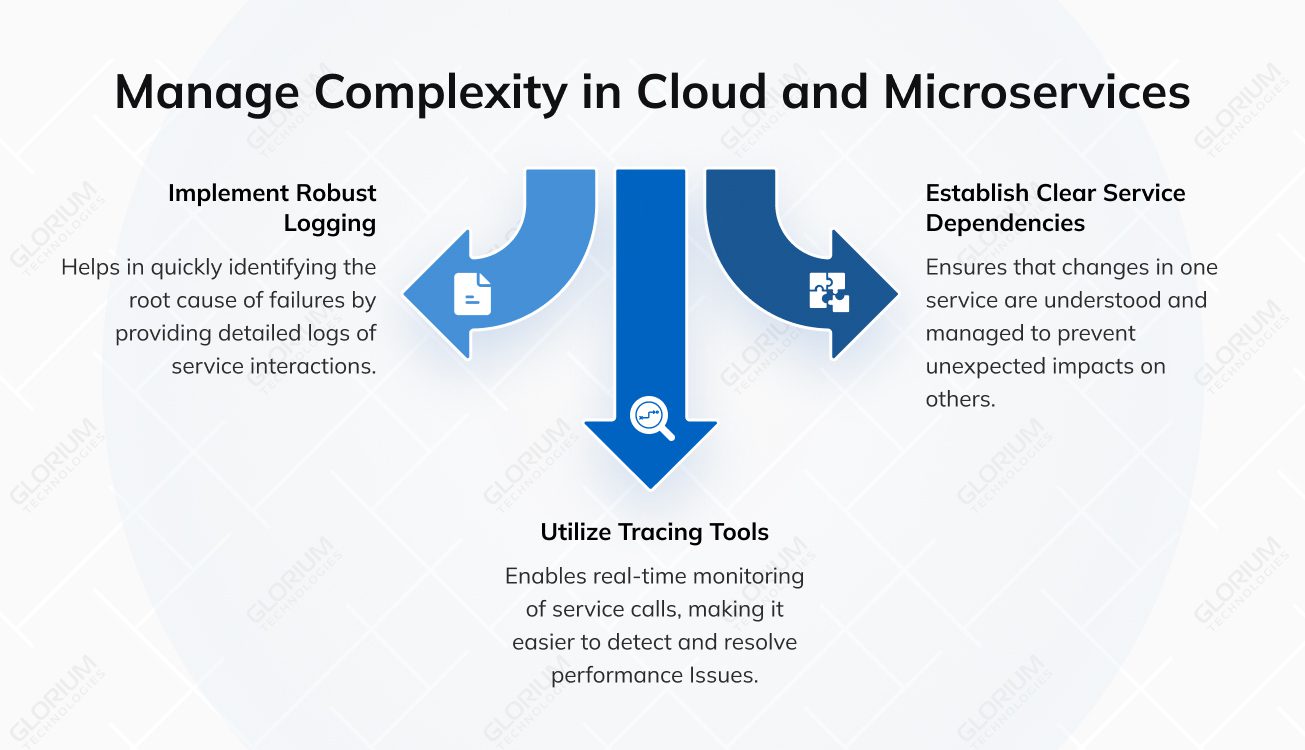
The most complex task here is to figure out what actually went wrong. It could be a failed API call, a timeout between services, or even an issue with a third-party tool. Without proper logging and tracing, teams often spend hours just locating the problem.
And when systems grow, these dependencies pile up. A small change in one service can affect others, sometimes in unexpected ways. Therefore, keeping everything stable becomes an ongoing effort.
Sometimes older systems don’t work well with newer technologies. For instance, a company still relies on a monolithic application or an outdated database that doesn’t support modern APIs. When teams try to connect it with newer services or move parts of it to the cloud, integration becomes complicated.
We can see this in older ERP setups, where companies run heavily customized systems that are hard to update or connect with newer tools. Even simple changes like adding a new payment option or updating user authentication can turn into larger tasks because of hidden dependencies in the code. And this is where technical debt starts to slow things down and influences the software development lifecycle.
Maintaining quality becomes harder when releases come every month. In practice, dev teams often see cases where everything passes automated tests, but issues still appear after release. The most vivid example is when real users interact with the product in ways that weren’t covered during testing: entering unexpected data, using the product on slower (older) devices, opening multiple sessions at once, etc.
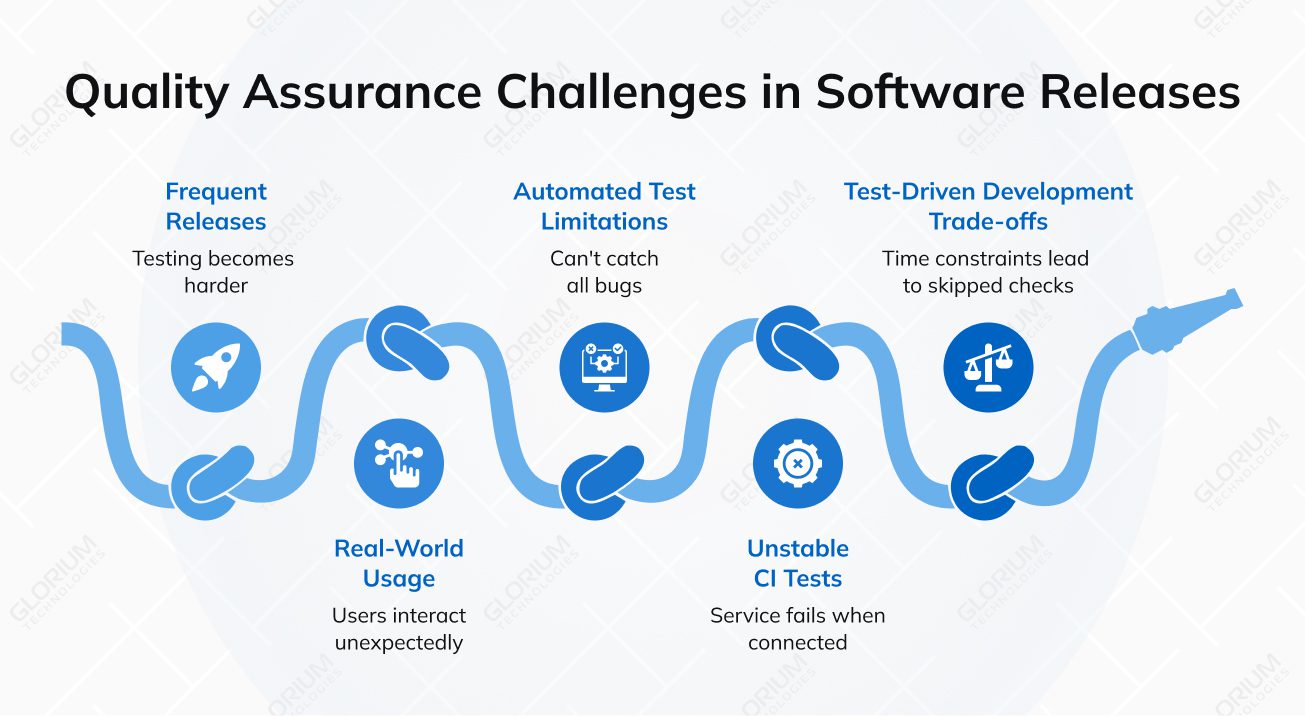
Of course, automated testing does a lot of work and helps find bugs, but unfortunately, it can’t catch them all. It’s common to deal with unstable tests in CI pipelines or situations where a service works fine on its own but fails when connected to others. Even small updates can break parts of the system that weren’t directly changed.
Approaches like test-driven development can improve consistency. However, they need time, some checks get skipped, and this may lead to problems that will only become noticeable later.
Delays also come from how teams are organized and managed. Demand for digital products grows, and companies are investing more. For example, global IT spending is expected to exceed $6 trillion in 2026, but building teams that can keep up with modern software systems still remains a problem. In this section, we’ll discuss operational challenges for programmers.
Finding a professional, experienced developer is still a challenge, especially for roles in AI, cloud, and DevOps. Moreover, teams often need to choose between hiring a new specialist and training an existing one, but in either case, it takes time. All this puts extra pressure on delivery and project management, especially when this happens in the middle of the development cycle.
One of the best solutions is to partner with a professional team or get access to outstaffing services. For example, Glorium Technologies offers outstaffing and team extension services, which allow businesses to fill in the skill gaps without the costs associated with traditional hiring.
After the COVID pandemic, distributed teams became more common. Many modern companies have in-house and outsourced developers. Around 72% of organizations outsource development in some form. They do this to find talent, meet growing demand, manage costs, or improve quality.
But working across locations creates day-to-day issues:
Moreover, when teams work in different time zones, communication slows significantly. Software developers need more time to complete tasks, and even small updates sometimes require extra clarification. As a result, project managers need to spend more time tracking progress, setting up meetings, and so on.
Workloads keep growing, but deadlines don’t change a lot. Dev teams need to deliver faster, handle updates, and switch between tasks. Unfortunately, this means they need to jump between tools, fix issues on the go, and keep everything moving at once.
Too many tools can make things worse. Instead of simplifying work, they add extra steps: checking dashboards, updating tickets, syncing statuses. Of course, all this takes time and breaks focus. Over time, this constant switching wears people down, and you start to see it in missed deadlines and overall team fatigue.
And we have numbers that highlight this – around 39% of companies report longer delivery timelines, and 33% say growing system complexity is becoming a serious barrier. Both add to the workload teams are already dealing with.
Security and compliance are a part of everyday development work. As systems grow more connected, there are more entry points to monitor and more common challenges to address. This is especially true when teams are working quickly and trying to meet rising user expectations. Let’s take a closer look at the main problems dev teams deal with in this area.
Modern applications rely on third-party libraries, APIs, and external services, and each of these can introduce risk. For example, according to the 2025 Verizon Data Breach Investigations Report, the share of breaches linked to third parties grew from 15% to 30% in just one year. Supply chain attacks are becoming more frequent, especially when widely used components are compromised.

PIs also require a lot of attention. If they’re not properly secured, they can expose sensitive data or allow unauthorized access. Open-source tools also need attention; their main goal is to help teams move faster, but without proper checks, vulnerable components can slip into production. This is one of the challenges teams face when they try to move quickly and, at the same time, keep systems secure.
Data privacy requirements continue to grow and vary by region. For development teams, this means extra steps across the workflow, from how data is collected to how it’s stored and accessed.
In many cases, all regulations still involve manual processes, especially when tracking data flows, managing permissions, or preparing for audits. Overall, it becomes harder to stay compliant and keep up with legal standards and user expectations around data protection.
Check out the table below to see the real costs of a data breach:
| Metric | Impact of Non-Compliance (2024-2025) |
| Average Non-Compliance Cost | $9.4 Million (2.65x higher than the cost of compliance). |
| Productivity Loss | $2.4 Million on average due to inefficient data handling. |
| GDPR Fines (2024 alone) | $1.26 Billion issued in a single year. |
| Consumer Trust | 71% of consumers say they would stop doing business with a company that doesn’t protect their personal information. |
In many teams, security checks still happen late, for example, right before release or during final QA. And at this stage, such problems as exposed API endpoints, weak authentication, or outdated libraries are discovered. As a result, all of them force teams to delay releases or rework parts of the system.
DevSecOps helps move these checks earlier, but setting it all up takes a lot of time. Moreover, this often includes adding automated scans to CI/CD pipelines, reviewing dependencies regularly, etc. All these changes influence the way teams already work, so adoption isn’t always as fast as it looks on paper.
Some companies support this through internal training programs. This approach helps programmers spot risks earlier and develop solutions before they reach production. However, even in this case, balancing speed and security is not simple, especially when teams are working under deadlines and can’t afford delays.
AI tools, low-code platforms, and decentralized systems are all new technologies that have hit the market recently. They do help teams build faster, but they also introduce new challenges around reliability, scalability, and long-term maintenance.
Many software teams in 2026 can’t imagine their everyday work without AI tools. Around 90% of developers report using AI, and more than 80% say it helps them work faster. However, not everyone fully trusts the output – about 30% still say that AI-generated code is not 100% reliable.
Still, AI accelerates innovation in the software development lifecycle. It also introduces new challenges in different dimensions:
Another detail worth noting is that AI changes the way programmers work. They don’t write everything from scratch; instead, they spend more time reviewing, changing, or validating the code. So, this changes the focus but doesn’t remove the workload fully.
Tools such as OutSystems, Mendix, and Microsoft Power Apps are often used to build internal tools. They also automate workflows or launch quick MVPs without full development.
Common issues development teams usually face are as follows:
Web3 and decentralized systems are still evolving, and many tools are not yet fully mature. Software developers often work with frameworks like Hardhat or Truffle, but documentation can be inconsistent, and standards change frequently. Even getting something as ‘simple’ as a MetaMask integration to work consistently can feel like a roll of the dice.
Then there’s the legal headache. Staying compliant is a moving target because every region has its own rulebook. For example, storing user-related data on-chain can conflict with privacy requirements (in some countries). And of course, this adds extra risk when building products in this space, especially when trying to align technical decisions with real-world requirements.
Most issues build up over time; they don’t come from only one random mistake. That’s why solving them takes time, and it usually means adjusting how teams work. Review some tips that can help overcome these challenges.
Delays in projects depend on how work is organized within the team. For example, gaps in planning, too much manual work, or unclear priorities can slow down software engineering.
Here’s how teams can improve their workflow:
However, improving these processes requires specialized skills, especially when projects become more complex. At Glorium Technologies, teams focus on refining workflows based on real project experience; this helps reduce delays and make development more predictable.
Operational silos between Jira, GitHub, and Slack break a developer’s flow. Between chasing approvals and replicating manual steps across different platforms, the actual work of building software gets sidelined. This inefficiency snowballs throughout the week, eventually manifesting as missed milestones and rushed releases. To meet tight deadlines, you have to first eliminate the repetitive noise that slows the team down.
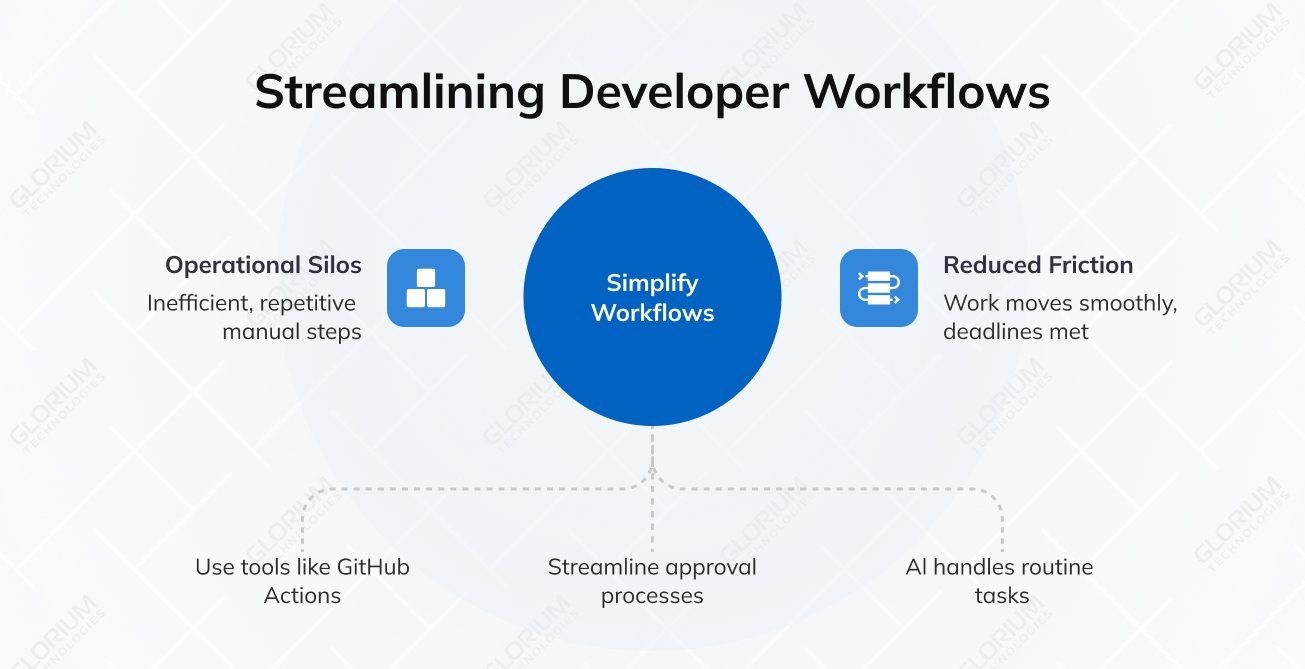
The best way to deal with this is to simplify workflows where possible. For instance, they can automate builds and deployments with tools like GitHub Actions or Jenkins, reduce unnecessary approvals, or create small internal tools with the help of AI that can handle routine tasks.
In many cases, these improvements are planned as part of a broader software development roadmap, where teams address the biggest issues first and adjust the rest over time.
When these changes are practical, they help reduce friction and keep work moving. The key is using the right tools and removing steps that don’t add much value.
Architecture decisions made too early affect everything that comes later. Modular systems and API-first approaches make the work easier; they help scale and update parts of the system without breaking others.
Experienced engineers plan for change from the start, even if the product is still small, reducing the risk of major rewrites later and keeping systems stable as they grow.
Even in the most experienced teams, security checks still happen too late—often right before release. And at this stage, problems like vulnerable dependencies, exposed endpoints, or misconfigured access controls are usually discovered. However, trying to fix all these at that stage can delay the whole release.
The best way to avoid this is to plan all security checks earlier in the workflow. This usually includes:
Of course, setting this up takes time. Software developers need to adjust pipelines and update workflows, and when everything is in place, fewer problems show up right before release.
The choice of tools and workflows has a direct impact on how teams handle everyday issues. In many cases, the difference between a stable project and a constantly delayed one comes down to how well the tooling supports the development process.
Some tools have become standard because they address specific problems teams deal with on an ongoing basis:
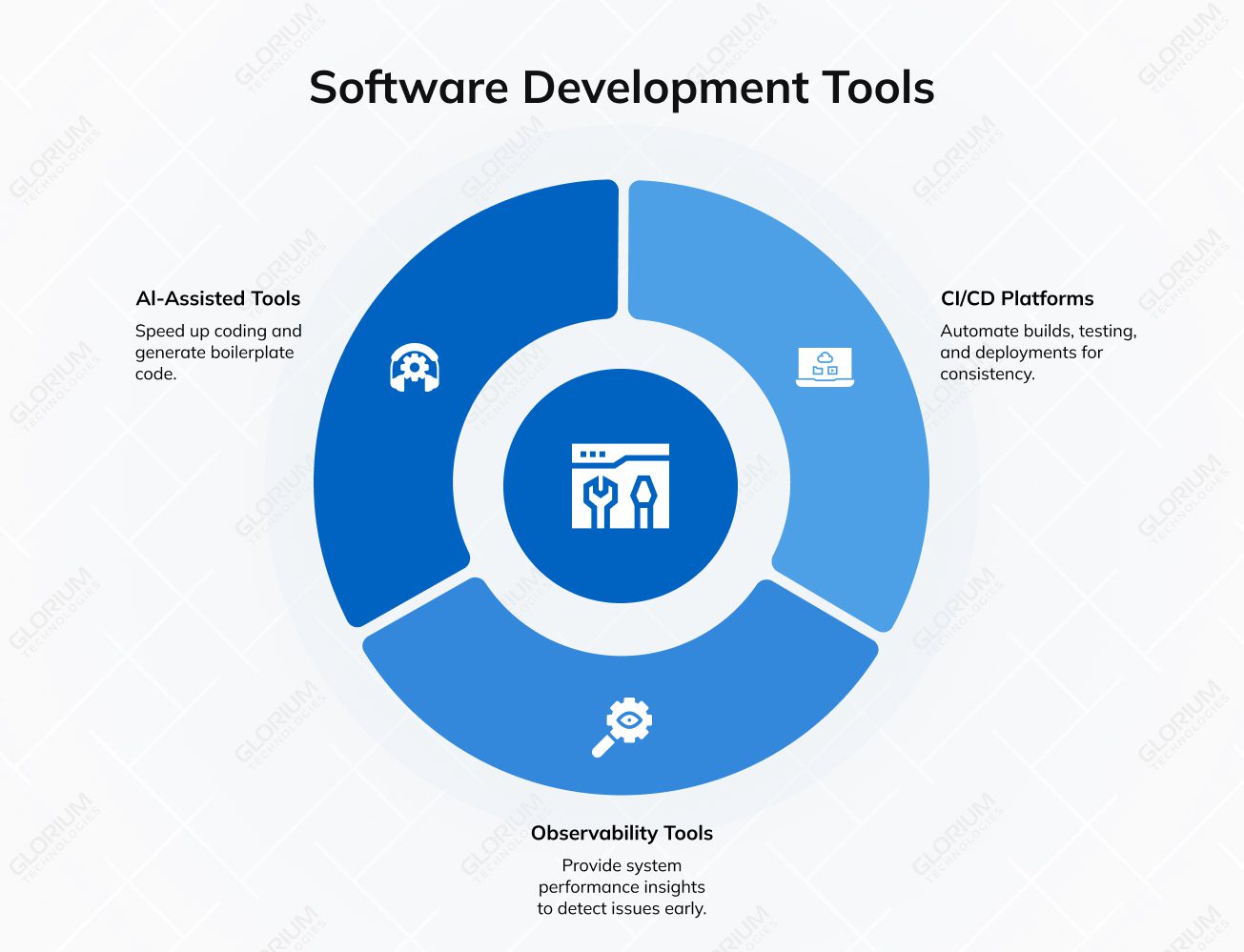
Although these tools don’t solve all problems, they help reduce manual work and allow developers to notice issues before they escalate.
Technical debt builds up gradually, especially in fast-moving projects. If it’s not managed, it starts to slow down development and increase the risk of errors.
Common approaches teams use:
Before analyzing the current trends of 2026, let’s categorize the foundational methodologies that still provide the structural backbone for modern delivery:
In 2026, software development is moving toward faster delivery, higher expectations, and more complex systems. The main change is in how teams work, plan, and maintain products over time. So here are the main trends that shape the industry.
AI is already a part of everyday development workflows. Tools that support code generation are already used for writing boilerplate, tests, and simple logic. The statistics from Gartner back this up—by 2028, about 90% of enterprise software engineers will use AI code assistants. In 2024, for example, only 14% of developers used them.
At the same time, development teams don’t rely on these tools blindly; they still need to review AI output to maintain code quality, especially in larger systems where small issues can scale quickly.
AI also helps automate repetitive tasks, such as documentation, test creation, and minor fixes. It saves time, but it doesn’t replace the need for experienced developers who can validate and adjust the results.
Teams are becoming smaller, but that doesn’t mean the work has slowed down – if anything, the pressure on each developer is higher than ever. Companies are moving away from massive teams in favor of speed and efficiency, but that model only works if everything is planned properly. If the project scope is vague or the deadlines aren’t realistic, a small team just can’t keep up with the demands of launching an MVP and handling the constant feedback loop that follows.
‘You can’t only know HTML and land a safe career. Nowadays, you need to become a valuable back-end product or full-stack engineer. Not just a regular developer, but an AI native one. An engineer will understand systems with AI tools and can do what used to take three developers, maybe in a couple of weeks. So, companies stopped hiring developers. They started hiring more engineers.”
Zen van Riel, How To Dominate 2026 as a Software Developer
Developer experience is getting more attention as teams try to remove friction from everyday work. Tools like Jira or Linear help keep tasks structured, but they’re only part of the solution.
Engineering teams also build internal tools, such as simple dashboards to track deployments or scripts to speed up environment setup. These changes may seem small, but they reduce routine work and help developers spend more time on actual development.
Security is moving to continuous monitoring. As security threats evolve, teams need to track vulnerabilities, update dependencies, and run checks throughout the lifecycle.
This shift is also visible in tooling. By 2028, more than half of enterprises are expected to use AI-based security platforms to manage third-party services and protect their own applications. Therefore, security is planned from the start and stays part of the whole development process.
Software projects are easier to manage when there’s a professional team working on the project. Nailing down requirements early on is the best way to prevent problems later in a project. At Glorium Technologies, we’ve spent 15+ years helping businesses handle that heavy lifting across the entire development cycle. Our goal is to create stable, practical tools that actually last and help businesses grow.
Take our recent work with a U.S. healthcare provider as an example. The client needed a way to help people manage stuttering through AI and speech recognition. We built a cloud-based app that gave users real-time feedback and personalized exercises. This solution has been a game-changer for patients and allowed them to work on their speech control consistently without needing a therapist looking over their shoulder 24/7.
You might also find our work on a U.S. radiology workflow system interesting. We essentially built a platform that takes the guesswork out of case assignments by automatically routing tasks to the right specialists based on their specific expertise. Beyond just speeding things up, we integrated real-time analytics to give hospitals a clearer picture of their operations. The result was a much more balanced workload for the radiologists and, more importantly, faster turnaround times and sharper diagnostic accuracy for the patients.
Looking for a reliable software development partner? Glorium Technologies has over 15 years of experience in custom development, digital transformation, and AI/ML with different delivery models that can fit your needs. You can schedule an intro call with our team or use the form to estimate the cost of your project.
Development teams typically consider the combination of indicators that influence the quality of the future product, delivery speed, and the general business impact. For instance, on the delivery side, deployment frequency and lead time demonstrate how quickly all updates go from development to production. In terms of quality, teams usually analyze defect rates, unsuccessful releases, and other issues caused by insufficient testing.
From a business perspective, success is measured by how well the product aligns with business objectives (if new features improve performance, reduce user drop-off, or help meet user expectations). However, the most effective approach is to analyze a small set of metrics on an ongoing basis and not to try solving everything at once.
The best approach is to avoid trying to solve this all at once. New ideas are usually tested in smaller parts of the system, not in core functionality. Architectures built around independent components make this easier because one service can change without affecting everything else. Plus, stability depends on discipline. Teams rely on staged rollouts, monitoring, and clear rollback plans as part of risk mitigation.
Some costs are not immediately visible in budgets and accumulate over time. Switching between project management tools and collaboration tools, dealing with integrations that don’t quite work for this particular purpose, or fixing issues caused by insufficient testing – all of this slows teams down. If we add legacy systems and unclear workflows, the cost becomes noticeable over time. However, teams with more experience usually try to prevent this early on by simplifying workflows, reducing unnecessary tools, and prioritizing proper testing.
Unfortunately, there’s no perfect stack that can be used for all projects. Software development teams usually analyze how well different technologies work together to achieve a certain goal. That includes programming languages, frameworks, and infrastructure. Support for cross-platform functionality is also of utmost importance, especially for products targeting multiple environments.
Scalability also depends on discipline. Even a well-chosen stack can fail under load or become hard to maintain without comprehensive testing and robust security measures.
The tech industry is rapidly growing, and the same happens to the tools and approaches used for development. Therefore, dev teams that want to grow must focus on continuous learning and keep up with the latest trends and achievements. Simply put, they need to pick up new practices, avoid outdated solutions that already don’t work, and keep systems relevant without constant rework.