






The Best ERP for SMEs: Find the Perfect Fit
Updated July 23, 2025

 Summarize in ChatGPT
 Summarize in ChatGPT
While large corporations leverage extensive IT resources to maintain their complex business systems, small and mid-sized enterprises often trail behind. That’s where ERP solutions come in — and they’re proving their worth. In fact, 74% of companies report significant improvements in productivity and efficiency after implementing an ERP system.
The number of SMEs adopting ERP systems is skyrocketing, and for good reason. With the right tools, you gain real-time insights, streamline turnaround times, and eliminate manual data processing. This not only fuels business growth but also strengthens customer relationships. Forward-thinking SMEs are embracing ERP solutions to stay agile, competitive, and ready to thrive in an ever-changing market.
So, what is the best ERP software for small businesses? Let’s figure out.
Content
Gone are those days when enterprise resource planning software was exclusive to big names. Whatever category your enterprise belongs to, you can get your hands on the right solution. Typically, cloud-based, SME-tailored ERP systems offer ease of use, flexibility, and lower upfront costs. Small teams can manage operations without extensive IT support.
Do routine tasks drain your time and energy? By integrating ERP functions, you can automate all key business operations. Here’s what a modern ERP software for small businesses should deliver:
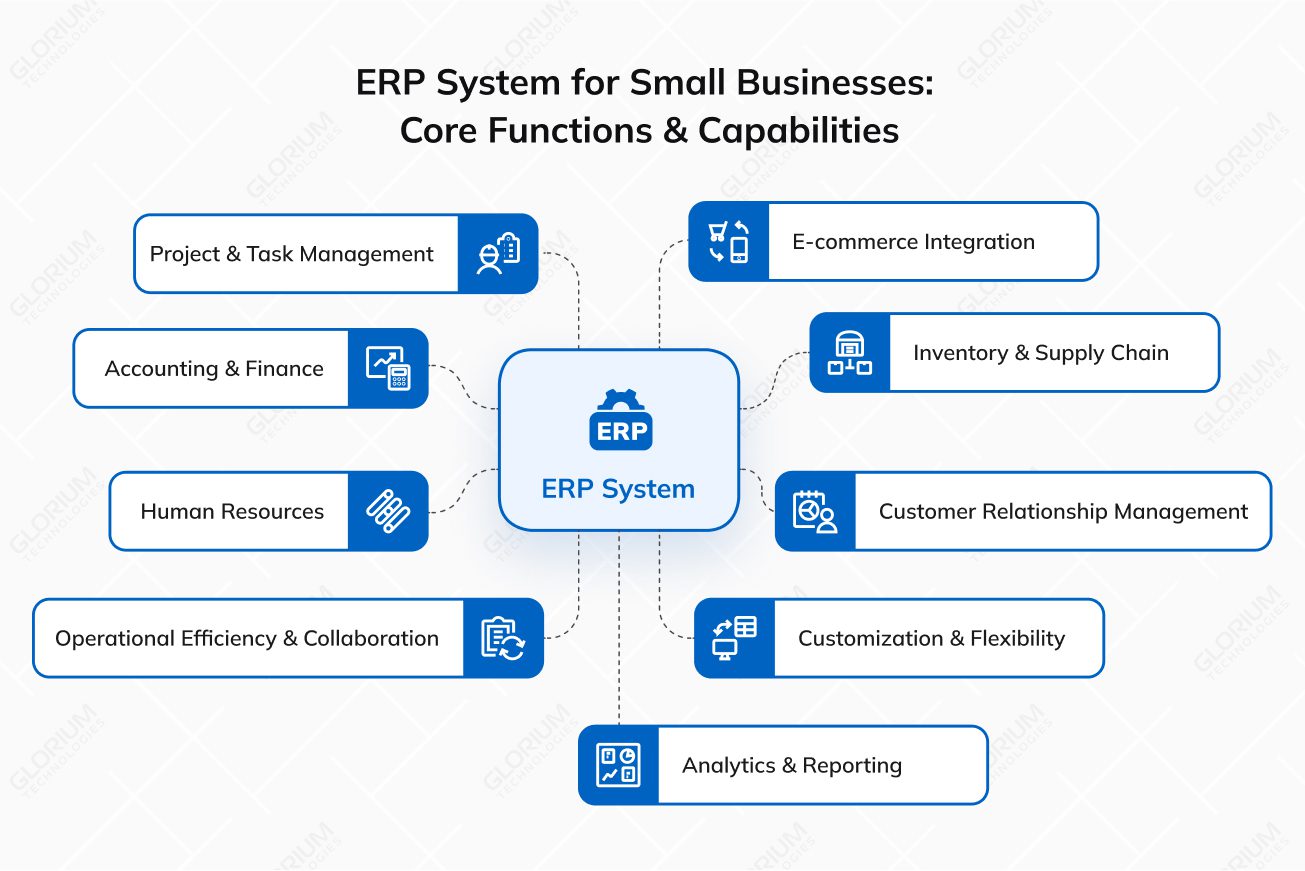
ERP software for small businesses makes it easier than ever to scale operations and adapt to changing markets, without the complexity or high costs of legacy systems.
Managing business processes is tough, especially as your company grows. Challenges like compliance issues, time-consuming manual tasks, and inefficiencies can hinder your growth. Staying competitive feels like chasing rainbows when you face outdated tools, lack of real-time visibility, and increasing data silos that slow progress and limit opportunities. Without a central system, scaling becomes a struggle.
This is where adopting ERP software for small businesses can make a significant difference.
Implementing the right ERP software for small businesses can be the key to getting your business to the 30-year mark. It makes balancing growth and profitability less stressful and more sustainable. The right ERP can become a game-changer, and here’s why:
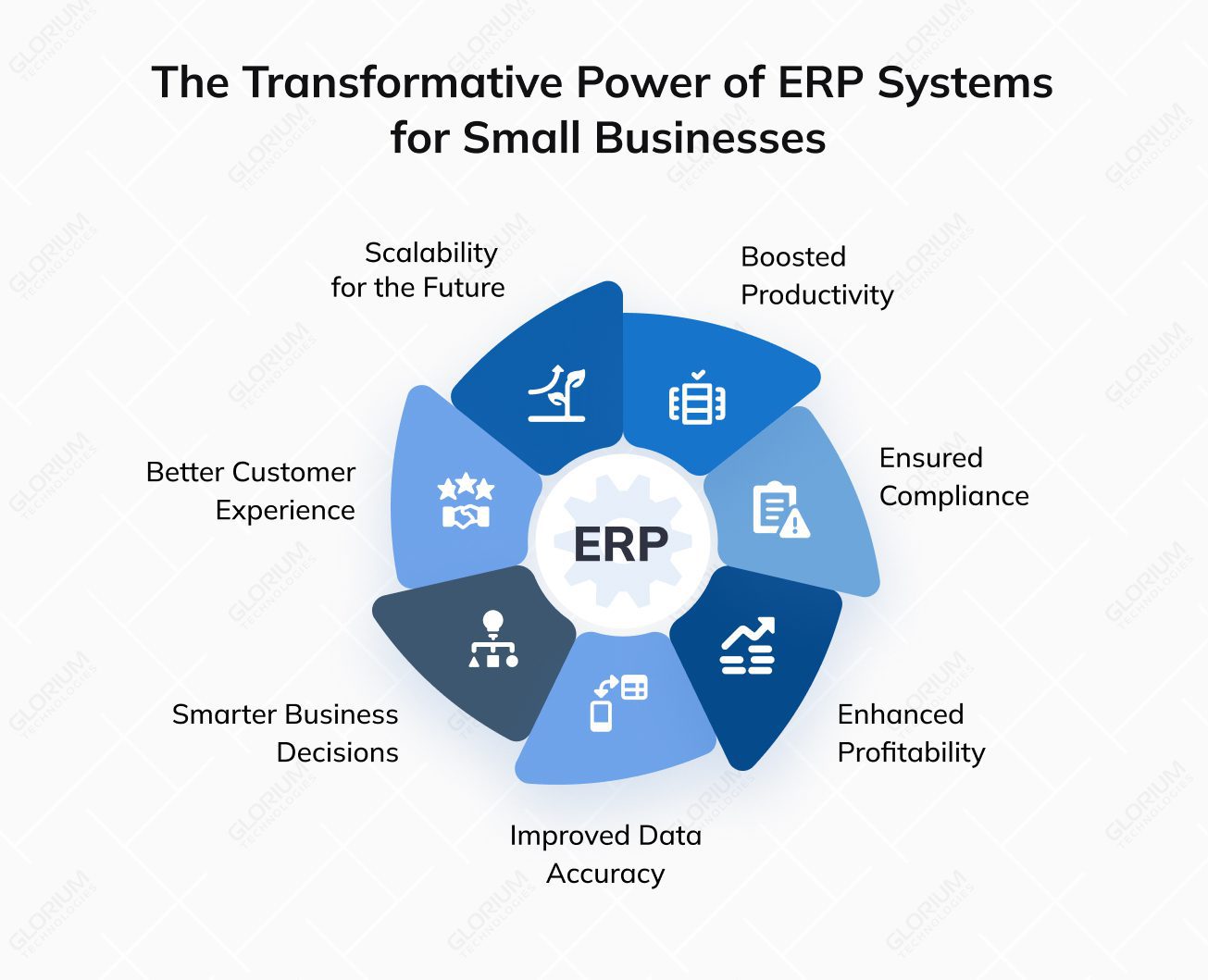
ERP for a small business is synonymous with automation. Once adopted, you can save your team the hassle of performing repetitive, tedious, and error-prone tasks, streamlining warehouse operations and processes across departments. Employees can hone in on creative and high-value activities rather than mundane administrative work.
Regulatory compliance is a critical concern for companies operating in various industries. ERP systems for small businesses are designed to help you adhere to industry regulations. They provide accurate record-keeping, audit trails, and automated reporting, minimizing compliance risks. 51% of organizations report improved compliance after ERP implementation, demonstrating the practical impact of ERP systems on regulatory adherence.
According to a PwC report, small business ERP systems help companies boost their bottom line. They allow you to cut corners and decrease human input. You can monitor cash flow, adjust your project budgets based on current data, and identify unnecessary expenses. With better visibility, you can adjust the solution to your business needs and increase your enterprise’s financial performance over time.
A centralized ERP for a small business eliminates data redundancy and ensures all team members work with the same, freshest information. You can enjoy end-to-end visibility across the supply chain, along with uncompromising accuracy in financial transactions.
Gartner report highlights how ABI platforms empower faster, data-driven decision-making with features like business intelligence, data visualization, and AI integration. The specialized ERP systems for a small business empower you to make informed, strategic decisions based on data rather than guesswork.
With connected systems for sales, inventory, and support, you deliver faster, more personalized service. Order processing happens more quickly, communication stays clear, and customers feel valued. The result is stronger loyalty and higher lifetime value.
Flexible architecture and cloud capabilities allow you to scale as you grow. Adding locations, new products, or sales channels happens seamlessly. Your small business ERP system evolves with you, supporting growth without disruptions.
The market is chock-full of ERP solutions, but not all are created equal. Thus, you shouldn’t be guided by a one-size-fits-all approach if you want your system to align with your growth strategy. Let’s discover what ERP small business software should offer in your niche.
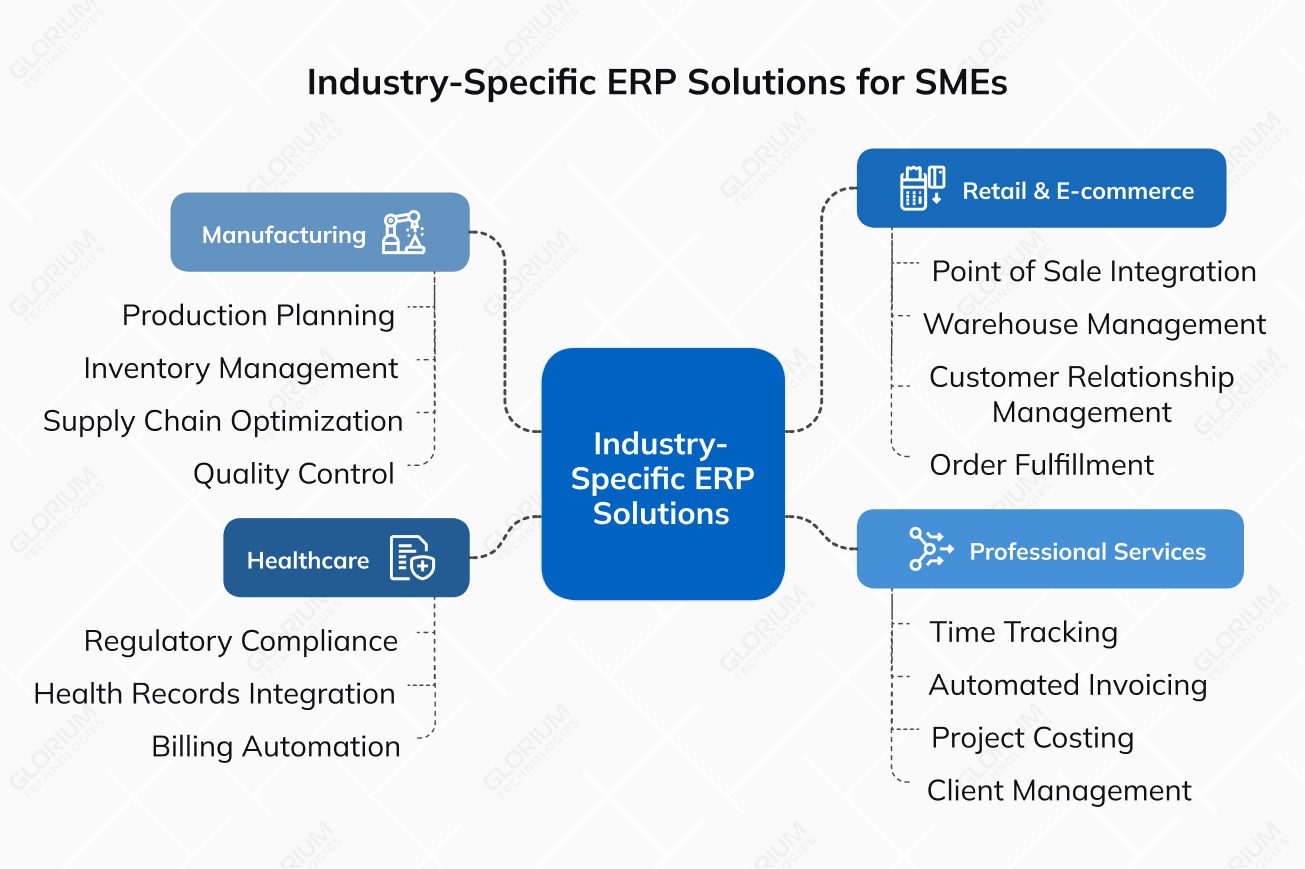
Manufacturers operate in highly complex conditions where precision and resource planning come first. A manufacturing ERP can improve production cycles and boost supply chain performance, saving you expenses and improving customer satisfaction down the line. To achieve the objective, their business management solution must offer:
Retailers and e-commerce businesses need ERP systems that run seamlessly across channels. A retail-focused ERP empowers you to handle high transaction volumes, streamline operations, and keep customers coming back. The most effective solutions include:
Healthcare organizations must prioritize data security, compliance, and efficient patient care. The right ERP system for a small business centralizes operations and safeguards sensitive information. Make sure your system offers:
Consulting, legal, accounting, and IT firms rely on project-based workflows and client relationships. A service-focused ERP brings visibility and control. Look for systems that support:
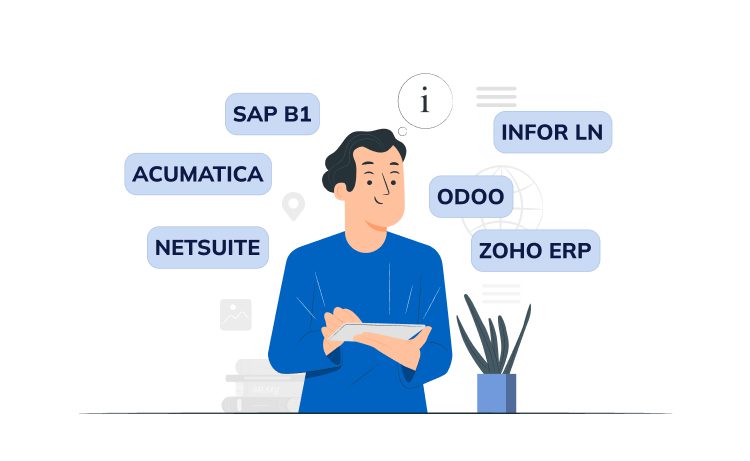
Investing in the right ERP system for a small business is a go-to for companies looking to remain competitive in 2025. Let’s take an in-depth look at the top 5 solutions, concentrating on their strengths and weaknesses.
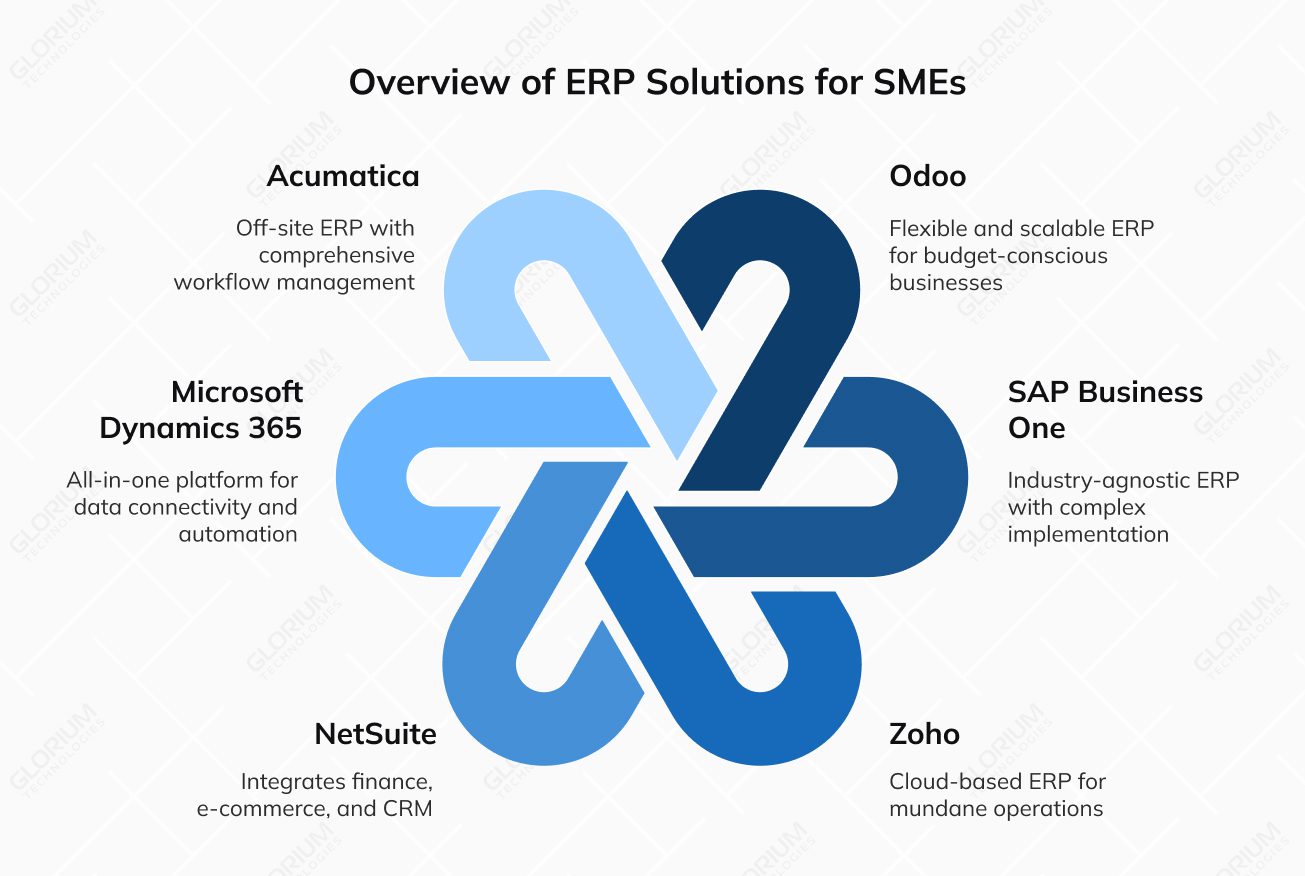
A cloud ERP software that’s popular among budget-conscious businesses aiming to boost efficiency and get greater control of all their operations.
Key strengths:
Key weaknesses:
A mature and complex solution designed to boost the efficiency of SMEs, especially in manufacturing and distribution.
Key strengths:
Key weaknesses:
A cloud-first software solution targeting the complex needs of manufacturers and supply chain-focused businesses.
Key strengths:
Key weaknesses:
A cloud-native platform built for a wide range of industries and aimed at flexibility and mid-market growth.
Key strengths:
Key weaknesses:
A popular all-in-one platform for SMBs seeking Microsoft ecosystem integration.
Key strengths:
Key weaknesses:
A cloud solution known for robust financial management and enterprise-level functionality.
Key strengths:
Key weaknesses:
A suite ideal for smaller companies that need simplicity and affordability.
Key strengths:
Key weaknesses:
Selecting the right ERP for smaller businesses isn’t just a technical decision — it’s a declaration that a company is ready to run operations smarter and with more clarity than ever before. But even the most powerful solution needs the right hands to bring it to life.
If Odoo is on your radar, you’re in the right place. And with Glorium Technologies as your certified Odoo implementation partner, you can skip the guesswork and move straight to results.
We don’t believe in cookie-cutter rollouts. Instead, we combine deep Odoo expertise with an understanding of your industry to deliver a solution that fits perfectly, from initial setup and data migration to fine-tuned customization and responsive support.
Book a discovery call to explore how we can tailor Odoo to your unique needs.
Start by identifying the key areas in your business that need improvement — whether it’s inventory, finances, or customer management. Choose an ERP system that fits your current needs and can grow with you as your business expands.
Cloud-based ERP software enables your team to access real-time data from anywhere, ensuring everyone is on the same page. Whether your team works remotely or in the office, they can collaborate seamlessly on projects, sales, and customer service.