

End-to-end process analysis with the discovery phase
10x Less Production Downtime with Microsoft Dynamics 365 Business Central
Client Overview
Disconnected Systems Slow Down Metal Structure Manufacturing
This Belgian metal structures manufacturer, with more than 100 employees, designs and produces complex steel constructions for industrial facilities, warehouses, and infrastructure projects.
For years, the business ran on several disconnected systems: a standalone accounting tool, a separate order management application, and an isolated warehouse system. A considerable part of planning and reporting lived in Excel. Every department had “its own truth,” and aligning them meant emails, exported files, and manual reconciliations.
As orders grew more complex and deadlines tightened, the leadership team realized the current setup could not support further scaling. They needed a unified platform that would bring finance, production, and inventory together, providing them with a reliable, real-time view of their projects and costs.
The Challenge
Decision to Move to Microsoft Dynamics 365 Business Central ERP
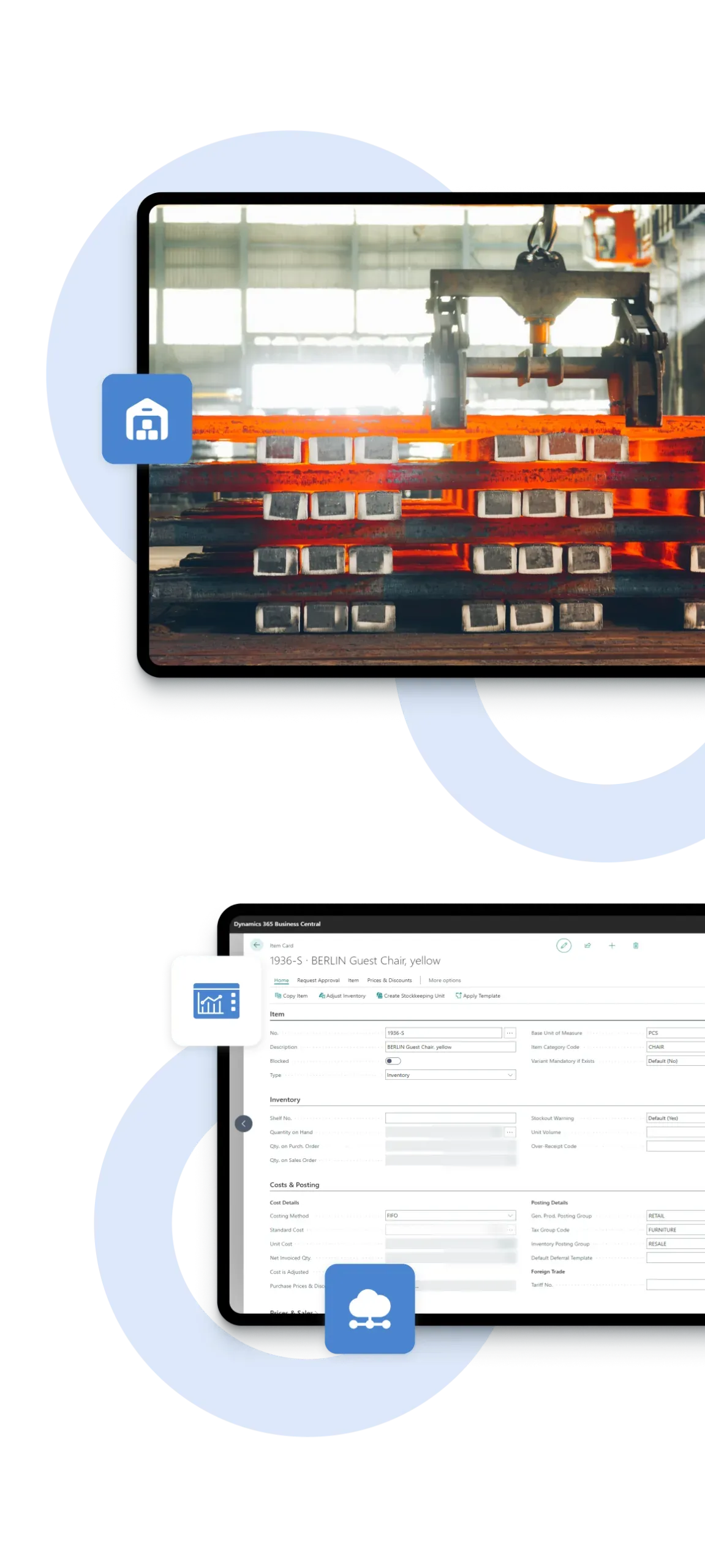
When the company approached Glorium Technologies, it had several issues:
- Manual data exchange between systems Accounting, warehouse, and sales each worked in their own tool. Data was re-entered by hand, increasing the risk of errors and consuming hours of productive time.
- No single, integrated view of the business Project managers struggled to see the connection between orders, material availability, and financial performance. Tracking the status of a specific project meant calling multiple departments and merging spreadsheets.
- Production downtime due to material shortages The production line was periodically stopped because critical materials weren’t on site when needed. Planners were unable to reliably match customer orders, purchase orders, and stock levels.
- Weak understanding of project profitability Overhead and direct costs were scattered across different systems. Management lacked a clear, consistent picture of the real cost of each project and its contribution margin.
- Need for a future-ready system "out of the box" The company sought a modern ERP that would meet most of its current requirements without requiring extensive customization while still allowing new functional blocks to be added as the business evolved.
What Set Our Microsoft Dynamics 365 Business Central Implementation Apart
Why They Chose Glorium Technologies
The client selected Glorium Technologies and Microsoft Dynamics 365 Business Central based on a combination of expertise, methodology, and platform capabilities:
Clear migration roadmap to Microsoft Dynamics 365 BC
Future-state (“to-be”) process design
High functional coverage out of the box
Modular expansion without disrupting existing workflows
150+ Successful projects
99% Client satisfaction rate
Expertise in Manufacturing
Compliant infrastructure
The Solution
Building a Unified Platform with a Two-Phase Implementation

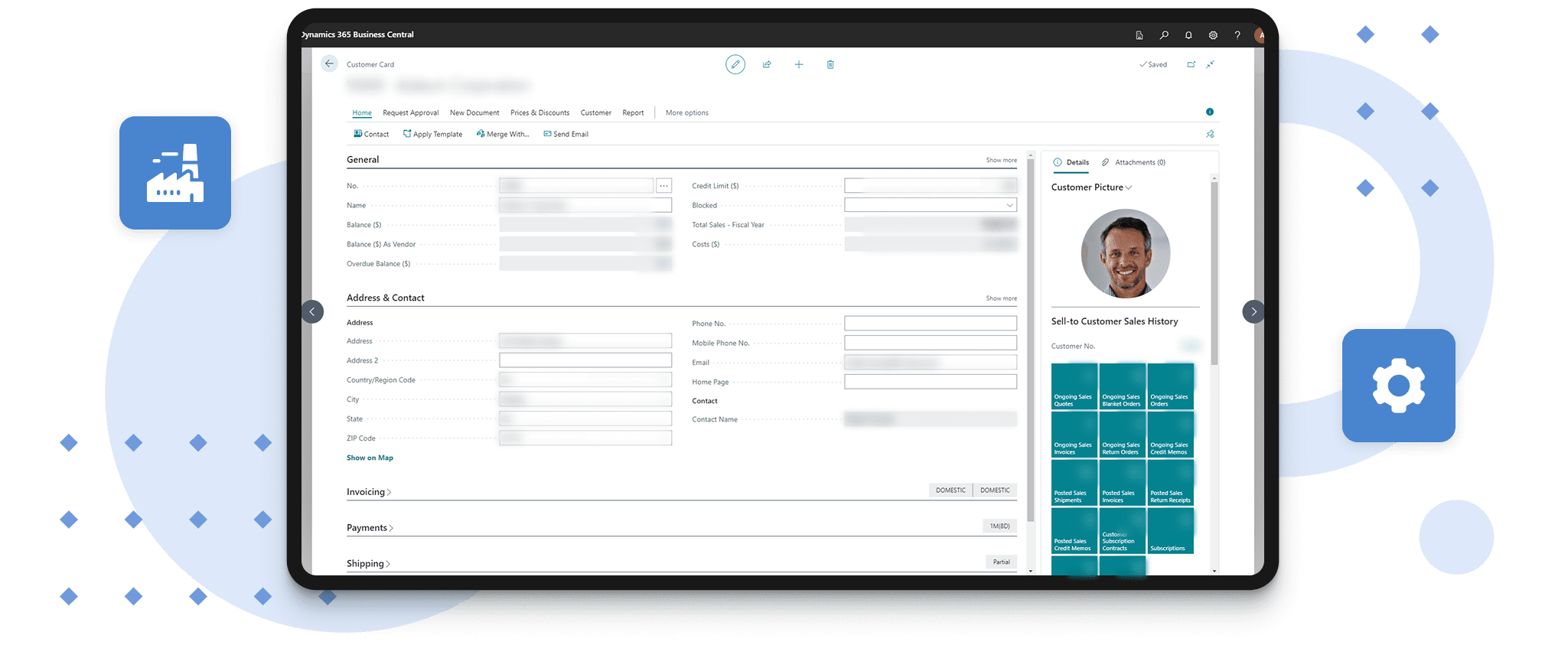
To replace the fragmented toolset with a single source of truth, Glorium implemented the latest cloud version of Microsoft Dynamics 365 Business Central.
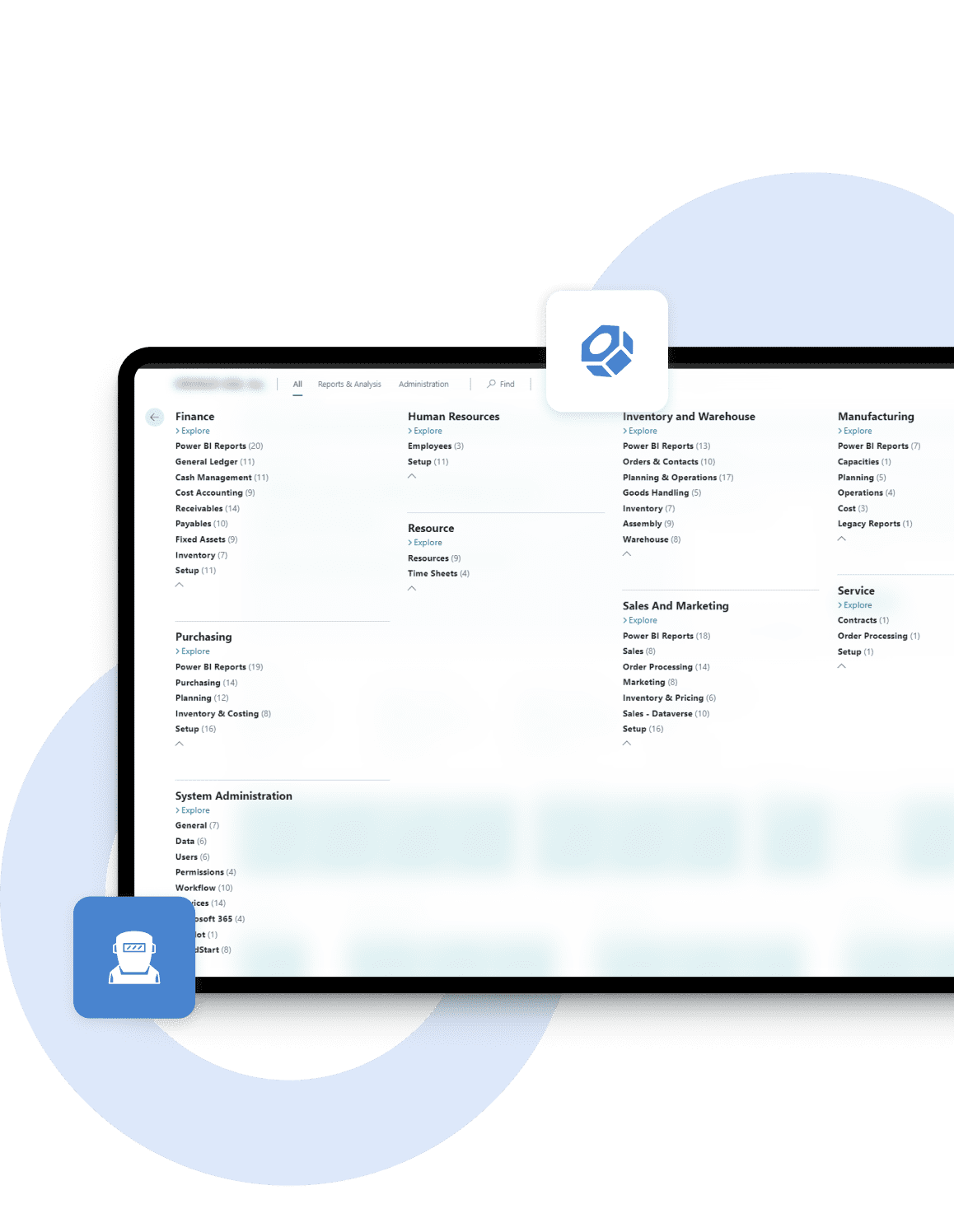
All key operational blocks were deployed within one integrated environment:
- Finance and general ledger
- Fixed assets and reporting
- Sales and customer orders
- Purchasing and vendor management
- Production and shop floor control
- Inventory and warehouse management
The company transitioned from manually synchronizing multiple systems to operating on a unified platform where production, inventory, and finance systems communicate with each other in real-time.
In the second phase, the focus shifted to refining processes based on actual user feedback, enhancing planning for materials and production, and embedding better inventory analysis and replenishment logic directly into daily operations.
Features
Putting Microsoft Dynamics 365 Business Central Features to Work
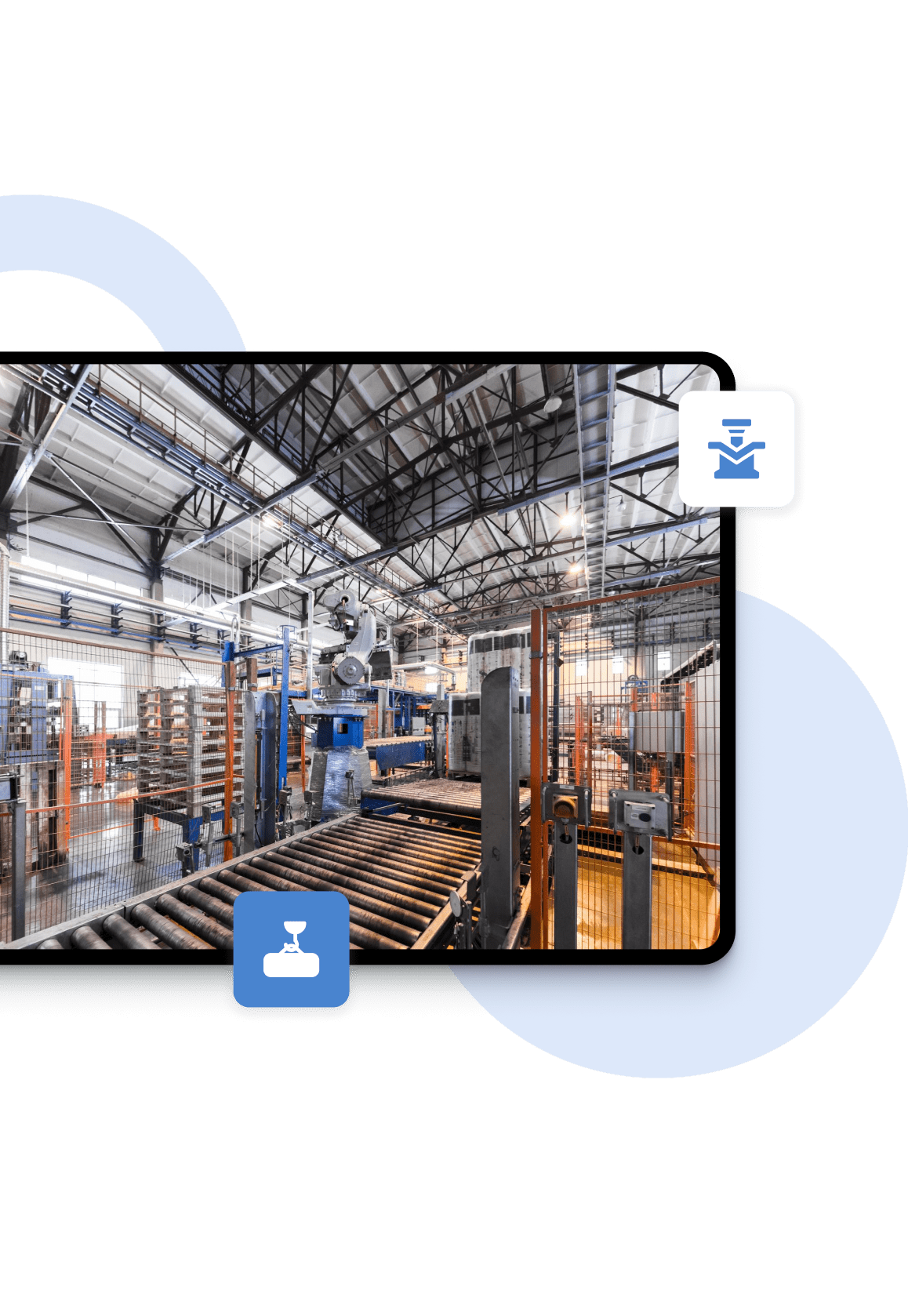
- Manufacturing & Production Management Business Central manages the entire production flow, from sales order to finished metal structure. Work orders are created directly from demand, linked to bills of materials and routings. Planners identify the necessary materials, machines, and work centers and can schedule production with realistic lead times.
- Inventory & Warehouse Control All materials are now tracked in real-time. Business Central provides visibility into stock levels across locations, supports reservations against specific orders, and helps avoid both stockouts and overstocking. New processes for inventory analysis and replenishment were introduced, taking into account actual customer orders and forecasted demand.
- Purchasing & Supplier Collaboration The purchasing module automates purchase suggestions based on current stock levels, safety stock, and open sales orders. Buyers can compare vendors, track delivery reliability, and ensure critical materials arrive on time, directly reducing the risk of costly downtime.
- Finance, Costing & Overhead Control Finance is closely tied to production and procurement. Direct and indirect costs are allocated more accurately, providing management with a clear picture of project profitability. Overhead is monitored as a share of total costs, helping leadership keep general production expenses under 10%.
- Reporting & Management Dashboards Decision-makers now work with dashboards that show order status, material availability, shop floor load, and financial performance in one place. Reports that once took days to compile from multiple systems can now be generated in minutes from Business Central.
- User Training on Real Business Scenarios Instead of generic training, the team learned BC using their actual orders, projects, and materials. This accelerated adoption reduced errors and helped users understand not only “which button to press,” but also why the process works that way.
Implementation Approach
A 16-Week Journey and a System Rollout Focused on Real User Needs
The implementation was delivered over approximately 16 weeks in three main phases, with an ongoing improvement loop:
Phase 1: Planning & Core Rollout
- Discovery workshops to map current (“as-is”) processes across finance, production, inventory, and purchasing
- Design of future-state (“to-be”) processes aligned with Business Central best practices
- Configuration and rollout of Finance, Sales, Purchasing, Production, Inventory, Fixed Assets, and Reporting
- Data migration from legacy accounting and warehouse systems into BC
- Initial dashboards for management reporting
Phase 2: Process Refinement & User-Driven Enhancements
- Collection of user feedback from planners, accountants, and production supervisors
- Fine-tuning of workflows, approval rules, and document flows based on real operational needs
- Implementation of inventory analysis routines and replenishment logic that consider open orders and demand trends
- Optimization of cost allocation and overhead tracking to improve project profitability insights
Phase 3: Training & Continuous Improvement

- Role-based training for finance, warehouse, and production teams using real-life orders and materials
- Coaching sessions for key users to build internal champions and reduce dependency on external support
Iterative improvements to reports, KPIs, and dashboards to support data-driven decision-making
Results
10x Less Downtime, 15% Lower Inventory, and Full Visibility
The move to Microsoft Dynamics 365 Business Central delivered measurable improvements across production, finance, and planning.
Manufacturing & Operational Efficiency
- Production downtime reduced 10× With better material planning, automated purchase suggestions, and real-time stock visibility, the number and duration of production stoppages dropped significantly.
- Order delays eliminated through transparent planning Planners finally see the whole picture: customer orders, material availability, and production capacity are aligned in one system, which helps keep commitments to customers.
Cost & Inventory Optimization
- General production overhead kept below 10% Better cost allocation and process transparency enabled management to effectively control indirect costs and maintain them below a defined threshold.
- Material stock value reduced by 15% Depending on the material category, inventory levels were optimized, freeing up working capital without increasing the risk of stockouts.
Visibility & Control
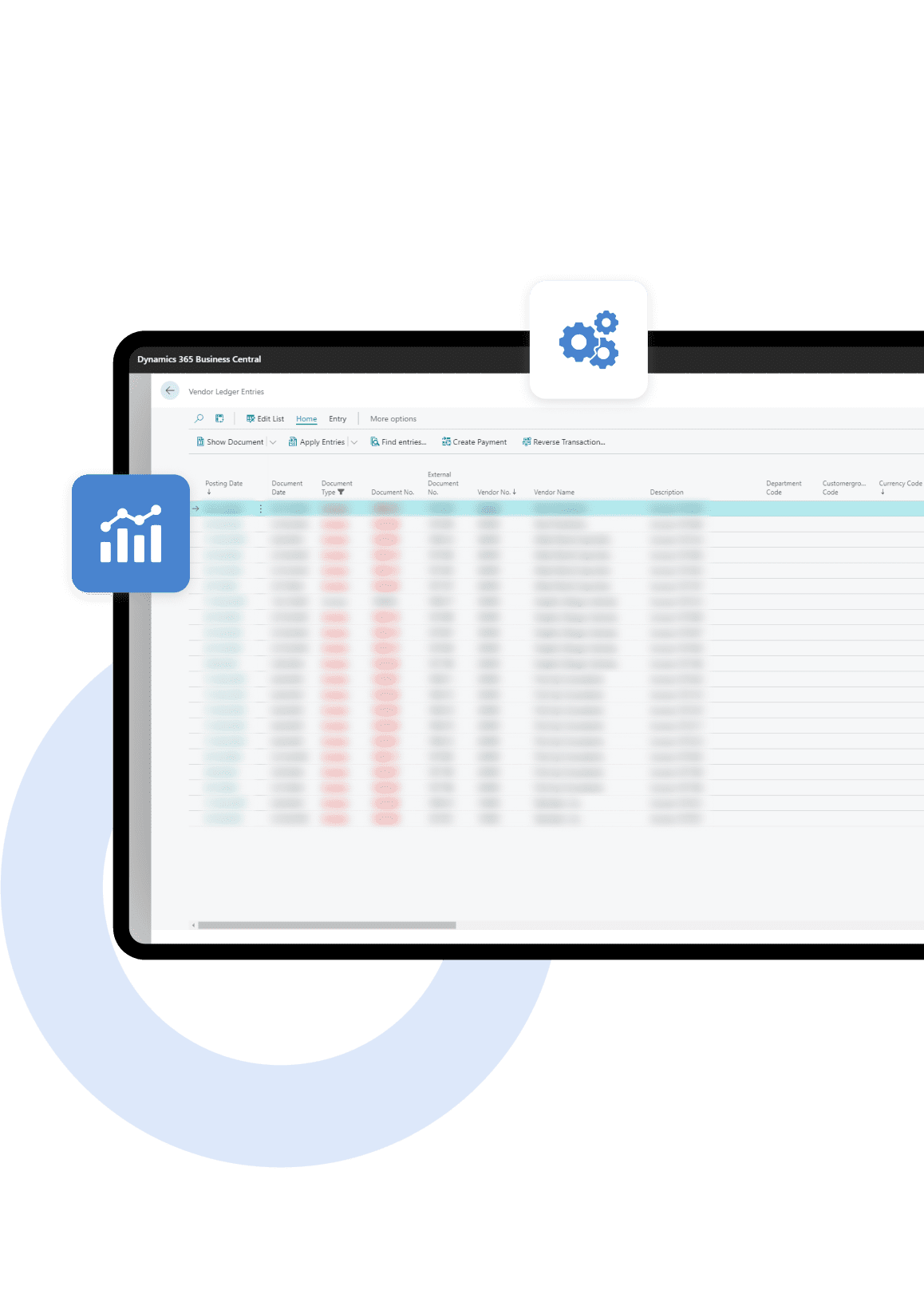
- Clear real-time understanding of each order’s status From sales to shipment, every order is traceable. Project managers and executives can see exactly where a project stands, what has been produced, what is in progress, and what is waiting for materials.
Business Value
What a Unified System Actually Delivers
 Operational Predictability
The company eliminated unexpected production stops by synchronizing material planning, purchasing, and shop-floor operations. With real-time visibility, planners finally had a reliable system to support on-time delivery and stable production cycles.
 Cost Optimization
Better cost allocation and accurate stock planning helped reduce material inventory by 15% and keep general production overhead below 10%. Leadership gained a proper understanding of project profitability, something that was previously impossible.
 Full Transparency
All departments now operate within a single, integrated platform, providing managers with complete visibility into order status, material availability, and financial performance. Decisions that previously required days now happen in minutes, supported by real-time data.
Testimonial
Project summary:
Glorium Technologies provided mobile app development services for a healthcare education organization. Their team helped build an application for COVID-19 relief. The solution features simulation training.
Feedback summary:

“Glorium Technologies sticks to the end goal and is willing to jump on an initiative and not give up on it.”
The app is being handed off and will soon go live. Glorium Technologies implemented an effective project management style. The engagement had its challenges but their team took the time to resolve issues and deliver on expectations. They follow through on commitments and work in a quick turnaround.
 Project ManagerHealthcare Education Organization
Get a Unified System and Connect all Departments