






Glorium Technologies at Odoo Experience Americas 2026
Updated September 24, 2026

 Summarize in ChatGPT
 Summarize in ChatGPT
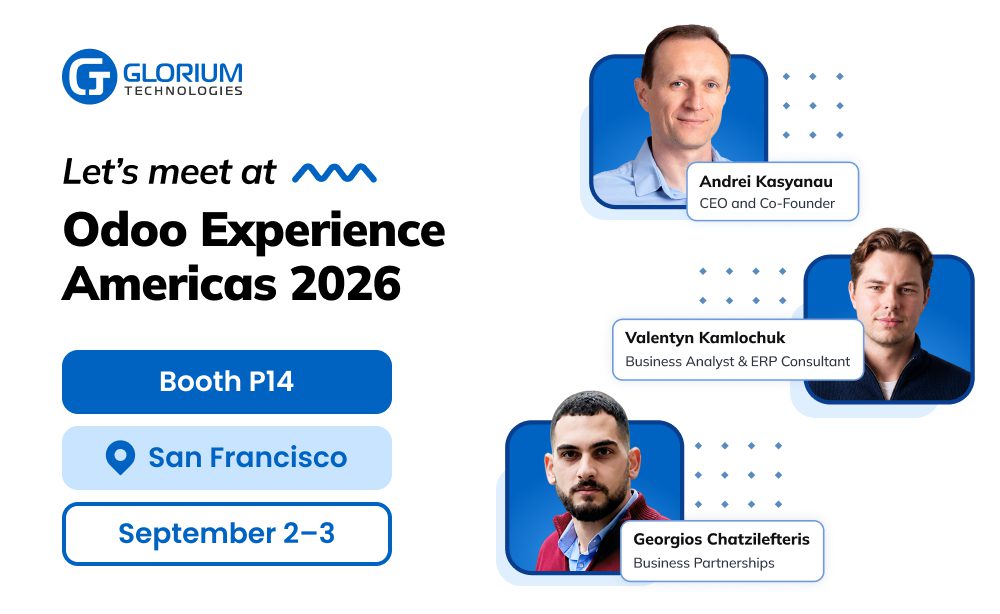
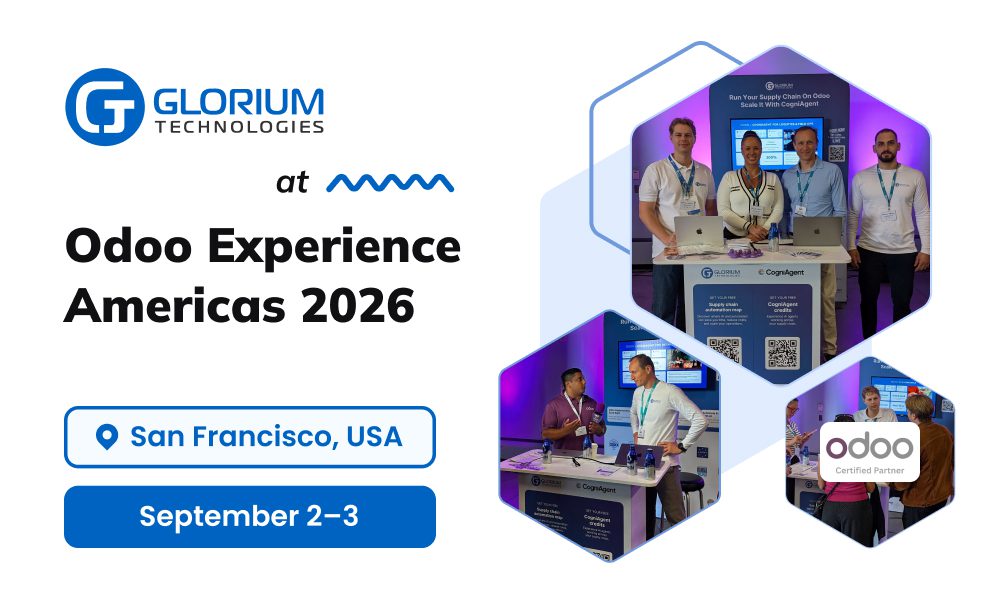
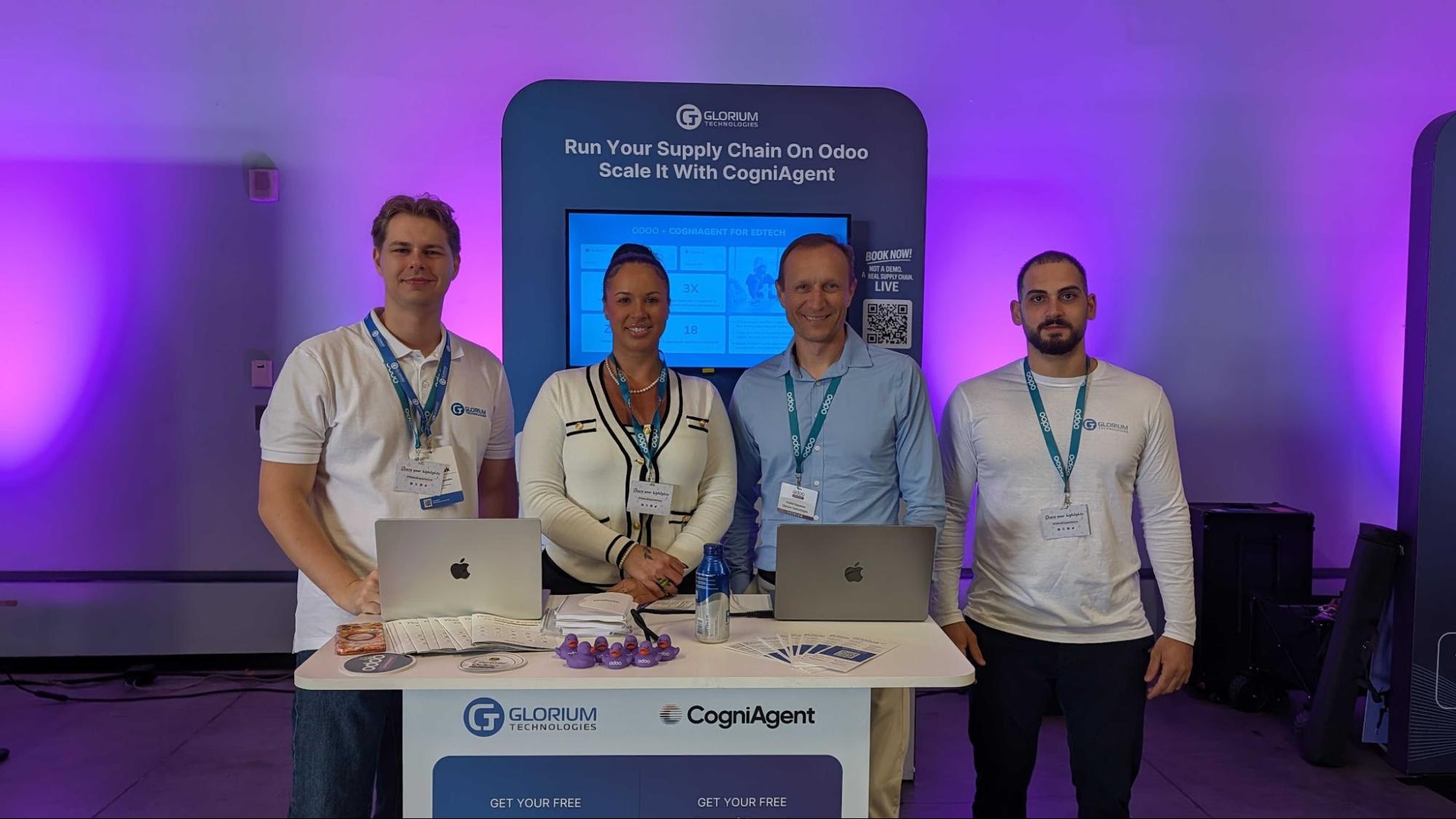
On September 2 and 3, our team joined industry leaders in San Francisco for Odoo Experience Americas 2026 to explore the future of enterprise software. The event brought together over 6,000 attendees, 50-plus exhibitors, 100 talks, and five masterclasses across two days.
We went to San Francisco to show companies what practical automation looks like on a real production floor or supply chain. As an official Odoo partner, we had the exact ERP system insights needed to tackle the complex operational headaches attendees brought to our booth. We worked through each issue together, often sketching out a custom fix right on the spot.
San Francisco brought us a different kind of buyer than Brussels did last year. Attendees arrived with specific operational bottlenecks and allocated budgets in mind. Working from structured goals made our conversations far more productive, and the two days flew by.
CEO and Co-Founder
Content
At its core, Odoo Experience Americas 2026 was about connection: bringing together business owners, partners, and consultants from across the ecosystem. The venue offered the perfect setting for dynamic conversations, unexpected run-ins, and building genuine long-term partnerships. For many, the main draw was hands-on access, a chance to scale their operations on Odoo, alongside the experts who know the platform best. Our team walked into the event with a clear goal: showing business leaders how targeted automation can transform supply chain operations and free up their teams to focus on growth.
Today, people show more interest in business automation. Truck dispatching, voice order intake, and finance approvals—they named the process before they asked what our platform does.
Business Partnerships Representative
Attendees were particularly eager for an exclusive look at the Odoo 20 release and the upcoming features across warehouse, manufacturing, and accounting operations. The event also drew an unusual roster of keynote speakers outside the typical ERP space, including tech journalist Kara Swisher, NYU professor Scott Galloway, and Planet Money co-host Jacob Goldstein.
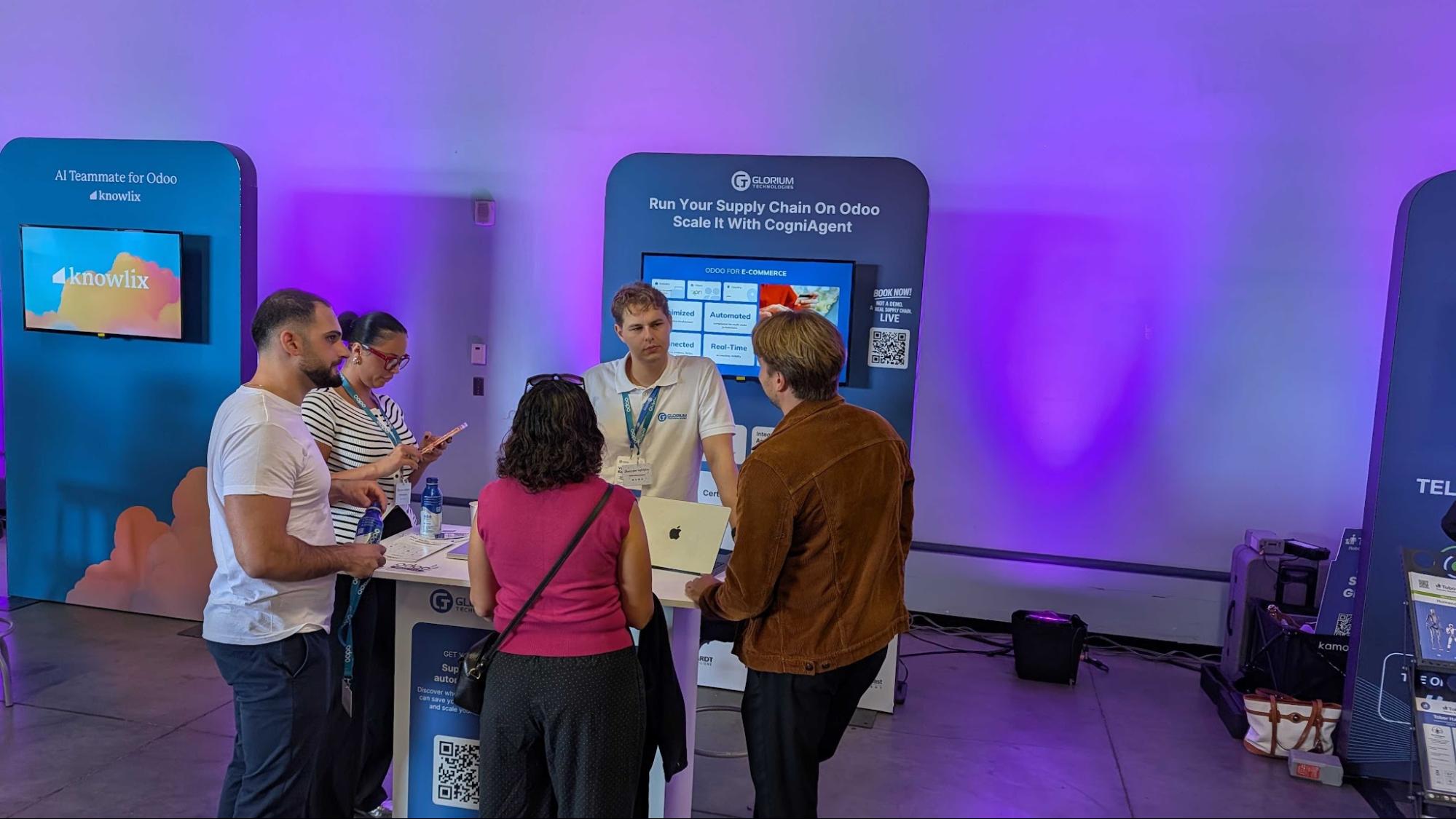
Over two days, our team sat down with everyone from manufacturers and nonprofits to fractional CFOs, fellow ERP partners, and operators managing multi-plant production. Some had outgrown QuickBooks, Sage, or Salesforce and were ready for something built for where they are now. Others were partway through an Odoo implementation and looking to pick up the pace. A few arrived with hard deadlines to replace legacy systems supporting hundreds of employees.
Despite the different backgrounds, they all describe a mid-market that has outgrown its software stack and is now evaluating every option with a close eye on cost and return.
Among smaller retailers and manufacturers, we kept seeing the same setup. Teams are running QuickBooks for books, a separate point-of-sale system in the store, and a storefront on Shopify or BigCommerce. Each subscription is its own line item, the data between them rarely lines up on its own, and reconciling it all by hand adds real time to every month.
Nobody complained about product features, as each tool did the job it was bought for. The cost sat in the seams between them: manual re-entry, reconciliation, and a subscription list that keeps growing. Consolidation, not capability, is what buyers came to price out.
The cost of traditional enterprise tools makes for a different frustration. Teams using platforms like Salesforce like the functionality but find the rising bills difficult to defend. Business Central licensing is often out of reach for smaller companies, which is exactly why more of them are choosing Odoo—enterprise capability without the enterprise price tag.
Nonprofits feel this pressure most acutely. These organizations require enterprise capability on a limited budget, whether it involves managing food preparation or executing intricate workflows across donations, events, and education. To make any shift happen, they have to build a clear ROI case for boards and CPAs working with tight margins.
One of the most complex projects we discussed came from a spin-off. The business used to operate as part of a 20,000-person corporation and now runs independently with roughly 500 employees. It has a year to replace SAP with CRM, Sales, Project, Procurement, and Asset Management with Maintenance, including multilevel serial number tracking for equipment.
A high-volume medical device maker described the same pressure from a compliance angle: managing multi-country operations while meeting strict traceability, sanction screening, and EU digital passport standards. Spin-offs and regulated mid-market companies often inherit enterprise-level complexity without always getting the enterprise-level budget or runway to match—a gap Odoo and CogniAgent are built to close.
One international materials supplier already has Odoo v19 in place, but their shipping workflows remain largely manual, leaving container updates spread across a dozen carrier portals. What they wanted wasn’t another dashboard to check. They need real-time arrival dates and delay alerts pushed directly into their daily system.
We heard this same demand for hands-off efficiency across transport, distribution, and aviation. A trucking operator wanted to automate load assignments instead of hiring another dispatcher, and a food distributor asked directly about voice-based order processing. They all wanted to stop logging into separate portals and let automated workflows handle the routine work.
Conversations came from every angle, spanning different industries, business models, and starting points. But the common thread was what happened when we ran Odoo alongside CogniAgent, our AI agent builder platform, right there at the boot. CogniAgent adds a conversational and automation layer that Odoo doesn’t offer out of the box. There are agents that handle real inbound chats across channels, background agents that run repetitive tasks, and workflow automation that bridges the systems already in place. Paired with Odoo, it turns the ERP’s data into something you can act on.
The point of running it live wasn’t to demo features. It was to show each visitor what could be automated in their business. When someone watches their problem take shape on the screen and get solved with a flow built around their business logic, the question of fit answers itself. And they leave with a clear idea of what the next step looks like.
CogniAgent doesn’t replace existing systems. It sits on top of Odoo data to automate complex tasks. Here is what that looks like in practice:
Beyond the AI capabilities, the core implementation message was simple: the same team of experienced consultants stays with you from initial scoping through to go-live. That promise resonated deeply, as almost every leader we spoke with had already lived through the alternative. A project handed off mid-build, a partner who vanished after kickoff, or a half-finished system left for someone else to fix. For those teams, true continuity meant more than any single software feature; they wanted a partner who would see the job through.
At Odoo Experience Americas 2026, the offer was simple: bring the process that sets you back the most, and get an on-the-spot map of exactly how to automate it. That offer still stands, even for those who couldn’t connect with the team in San Francisco.
Pick the single process that costs you the most: the monthly reconciliation that eats a full day, the container no one can locate, or the orders still being entered by hand. We’ll walk through your workflow together and give you straight answers on what matters: where to start, what to automate first, and what a realistic path to a working system looks like.
You’ll leave that session with two things: