








Rehosting
Lift-and-shift moves apps to cloud infrastructure as-is, with no code changes. It's the fastest way to migrate and cut data center costs, though legacy designs won't always fully use the cloud.
Learn More
Trade Hardware Limits for Speed
Every hardware refresh cycle costs you time, money, and momentum. Adopt infrastructure that scales with your business, lowers your operating costs, and keeps your products running when traffic spikes.

Launch products up to 60% faster

Add up to 60% more features

Same budget and no extra hires

80-100% Al-Generated Code

Copyright Compliance

Cost-per-Feature Tracked Every Sprint

SAST + Security Review on Every Commit

Multi-Layer Al + Human Review

SOC 2 / HIPAA-Ready
The right time to move is before a breakdown decides for you. Every delay adds hidden cost in wasted spend, lost uptime, and mounting security risk.
When legacy systems are near the end of their life, another costly hardware refresh rarely pays off. A cloud migration shifts spend from fixed costs to usage-based cloud resources.
If a single failure could take you offline for days, your recovery plan needs work. Migrating to the cloud adds automated backups and continuous monitoring to protect your data.
Seasonal surges and launches expose the limits of static infrastructure. Migrating to cloud computing lets you add capacity instantly and protect business continuity all year round.
Every migration carries its own constraints, timelines, and risks worth planning around. Choose a strategy that aligns with your priorities rather than forcing your systems into a fixed model.
Lift-and-shift moves apps to cloud infrastructure as-is, with no code changes. It's the fastest way to migrate and cut data center costs, though legacy designs won't always fully use the cloud.
Learn MoreYou can migrate your apps to the cloud with few changes, then shift them to cloud services once there. After moving a database, you might switch from a hosted VM to a managed service.
Learn MoreYou can rearchitect your apps to use cloud features fully, like breaking monoliths into microservices. Choose it to add features, scale, or boost performance your current setup can't support.
Learn MoreThe lift-tinker-shift strategy sits between rehosting and refactoring: you optimize apps for the cloud without a full rewrite. You might swap a manual setup for a managed cloud database.
Learn MoreYou can swap your existing applications for cloud-native SaaS instead of migrating what you have. It fits when a SaaS offering matches your features or costs less than migrating a legacy app.
Learn MoreHere you decommission apps you no longer need, freeing resources and cutting migration costs. Retire an app when usage is low, another system covers it, or migrating costs more than it's worth.
Learn MoreSome apps are best kept where they are for now, revisiting migration later. This fits stable, recently upgraded systems, apps with compliance questions, or those with complex dependencies.
Learn MoreEvery workload calls for a different route to the cloud, and picking well is what separates a smooth move from a costly one. Weigh each option against your goals before committing.
The main objective is to make your apps work better after migration. We map each app's dependencies, then move its code and data to the cloud, from simple relocation to full modernization.
Learn More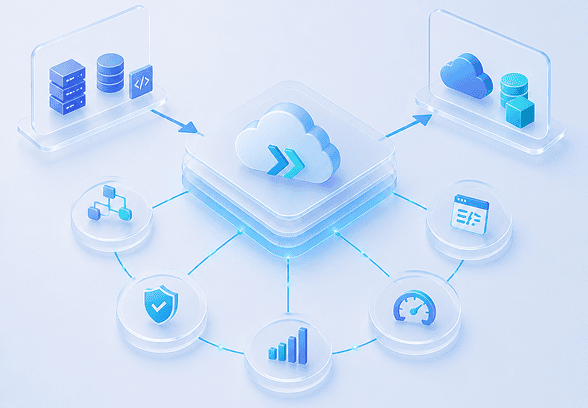
Transfer your SQL and NoSQL databases to the cloud without losing a single record. You get tighter data integrity, dependable uptime, and a handover that keeps systems live from start to finish.
Learn More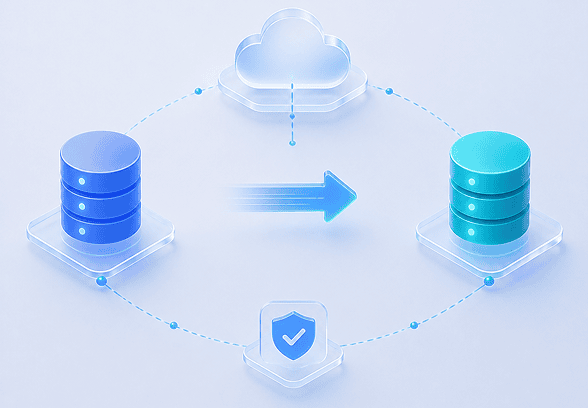
Bring your digital records, assets, and business processes onto cloud-native platforms, where they can scale further, offer quicker response times, and operate with less overhead across your work.
Learn More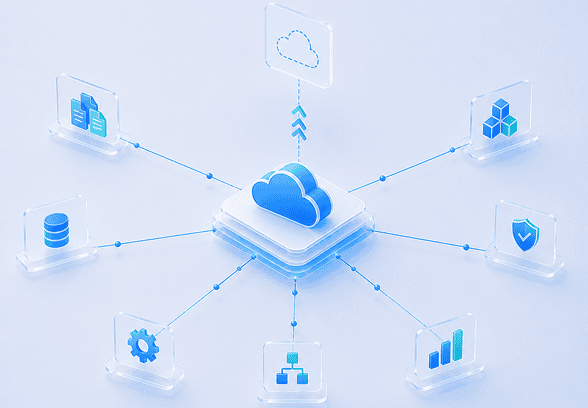
Relocate your servers, networks, and databases off local hardware and onto AWS, Azure, or GCP, where your infrastructure stays resilient under pressure and adapts far more easily to change.
Learn More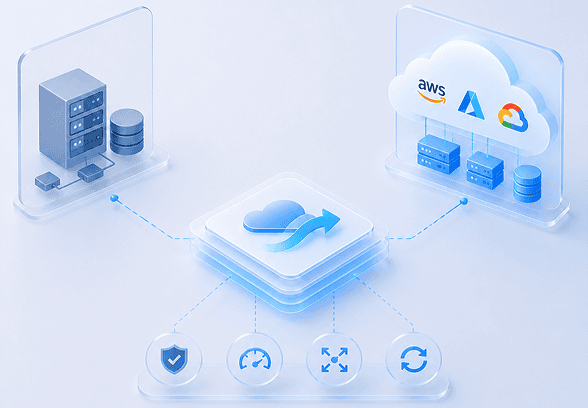
Move your knowledge management systems, including SharePoint, Confluence, and custom wikis, onto the cloud environment you prefer. Your teams keep finding what they need, with no disruption.
Learn More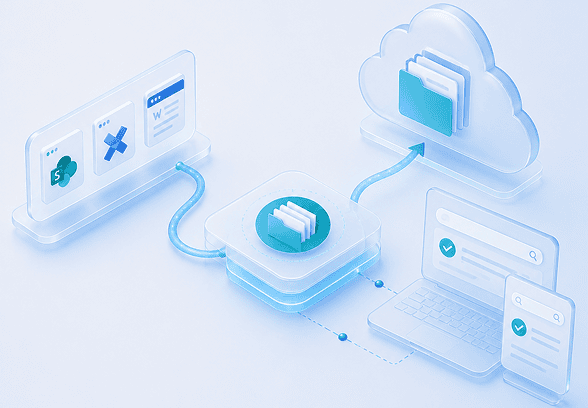
Stronger growth starts with clean data and a solid plan. We prepare and cleanse your records before relocating your essential processes onto modern cloud ERP systems.
Learn More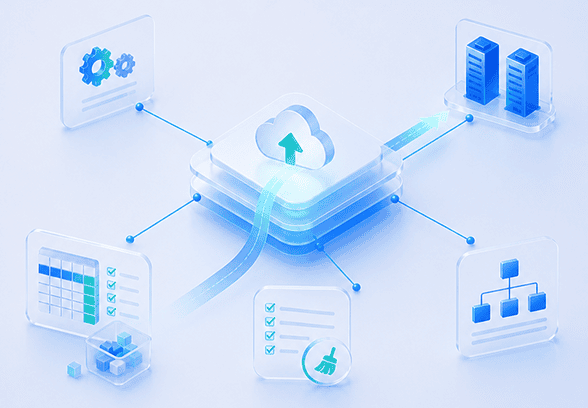
Upgrade your delivery pipelines with CI/CD, infrastructure-as-code, and automation, then ship releases faster once everything runs in the cloud. Spend less time on manual steps and more building.
Learn More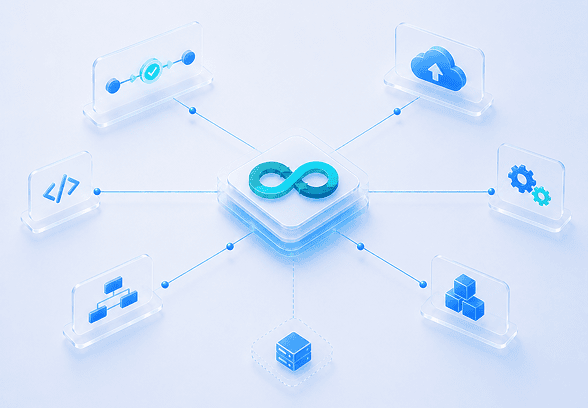
Every migration project brings its own risks, and you won't face them alone. From migration execution to continuous support, we keep critical workloads live and your data intact.
Our cloud migration experts stay with you beyond go-live, covering post-migration stabilization and the ongoing support your systems need to perform. Rely on proven methodologies that protect data and minimize downtime.
Learn MoreThe first weeks after go-live decide whether your migration pays off. We stay during that window, tuning performance, closing gaps, and steadying systems, so problems get solved before they spread.
Running in the cloud well takes constant attention most teams can't spare. Our team handles it, watching performance, trimming waste, and hardening security, so your systems stay fast, safe, and cost-efficient.
In regulated industries, compliance gaps can cost more than migration itself. We keep your obligations front and center, embedding the right controls, access, and monitoring, so your cloud setup stays audit-ready.
No two industries measure success the same way, yet the cloud delivers for all of them. Find the outcomes that matter most to your sector before you plan your own move.
Sensitive patient data and round-the-clock care leave no room for downtime or breaches. The cloud keeps records secure, accessible, and audit-ready.
Traffic spikes, seasonal peaks, and customer expectations never let up. The cloud scales with demand and keeps your storefront fast, even at its busiest.
Agents and buyers are always on the move, so data can't stay in one office. Once it's in the cloud, records, listings, and client details stay accessible anywhere.
Keeping shipments, inventory, and routes in sync is hard when data sits scattered. The cloud consolidates it into one real-time view every team acts on.
Spoilage waits for no one, and neither do inspectors. Move operations to the cloud, and keep inventory and safety records accurate the instant anything changes.
A line stoppage costs a fortune, so factories can't afford blind spots. Cloud-connected operations reveal machine and production data as it happens.
Every transaction has to clear compliance, dodge fraud, and settle instantly, which is exactly what the cloud lets finance firms deliver, all at once and at speed.
The ceiling your servers set today is one the cloud simply doesn't have tomorrow.

The gap between on-premises environments and modern cloud platforms shows in operational costs, system availability, and recovery speed. See where each path leaves your business before you commit.
| Cloud Infrastructure | On-Premises Infrastructure |
|---|---|
|
Pay only for the resources you actually use each month
|
Large upfront spend on hardware you own and maintain
|
|
Capacity scales up or down the moment demand shifts
|
Capacity is fixed, so peak demand risks slowdowns
|
|
Provider manages upkeep, backups, and system uptime
|
Your team handles patching, backups, and downtime
|
|
Built-in redundancy keeps data safe and recovery fast
|
Recovery is slow when hardware fails or data is lost
|
A structured process is what separates a smooth migration from a costly scramble halfway through. Explore each stage and see how we protect your data, limit downtime, and deliver a move you can trust.
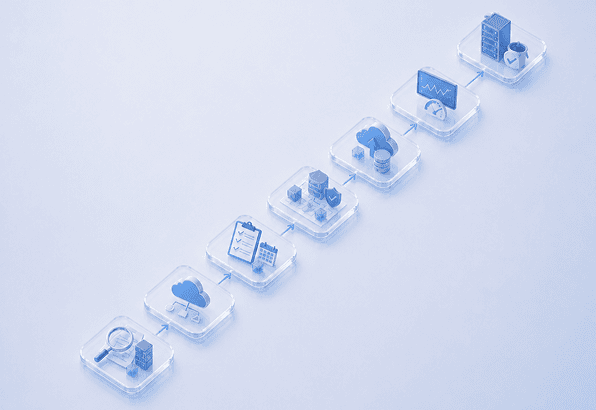
We begin by taking stock of your servers, applications, and how they connect, revealing what should move, change, or be retired.
Step two sets the direction: we pick the migration approach that fits each app, balancing speed, risk, and long-term value for you.
With the strategy set, we build the roadmap: timelines, sequencing, and rollback plans that keep the move predictable and low-risk.
Compute, storage, and security come together into a target design here, shaped for a cloud that stays stable and scales with demand.
Now the move happens: systems transfer to the cloud step by step, with checks along the way to catch issues before they spread.
Post-launch, performance is measured around the clock, surfacing anomalies early so small issues never grow into outages.
Once the move is confirmed, legacy infrastructure gets shut down, ending upkeep on hardware you no longer need to run or maintain.
Your systems carry the weight of everything your business does, so moving them is a decision you only want to make once and make well. The trouble is that aging hardware rarely announces its limits until a peak in demand exposes them, and by then fixing costs far more than a plan made ahead of time. A move to the cloud reshapes how your teams work, how your data stays protected, and how quickly you can grow into whatever comes next. Done poorly, it stalls projects and rattles trust. Done properly, it hands you elastic capacity, lower running costs, and room to build. The difference lives in the details, and this is what a migration done right looks like.
Aging hardware quietly drains budget long before it fails outright, and the cost of standing still keeps climbing. Somewhere between a looming refresh and a traffic spike your servers can’t handle, the question stops being whether to move and becomes how soon.
In PwC’s 2024 Cloud and AI Business Survey, the most cloud-mature companies were twice as likely as their peers to have already achieved measurable value across profitability, productivity, and speed to market. The gap between them and everyone else was the result of treating migration as part of a wider digital transformation rather than a simple change of servers.
So why does cloud migration deliver what hardware refresh cannot? A move gives you:
McKinsey is blunt about where the real payoff comes from: cloud adoption is not simply about reducing cost, and its real value comes from business agility, resilience, and developer productivity. Lift-and-shift gets you to the cloud. Strategy gets you the business value once you are there and turns a migration into a lasting competitive advantage.
Migration is only as good as the plan behind it, and most failures trace back to a step someone skipped early on. A clear, staged process is what separates a smooth cutover from a costly scramble halfway through. Here is how the work unfolds.
Our process runs end-to-end from the first read of your environment through the support that keeps everything stable long after go-live. Each stage is planned, tested, and reviewed before the next one begins, so you always know where your migration stands.
| Stage | What happens | What you get |
| Assessment | We map your servers, applications, and dependencies | A clear picture of what moves, what changes, and what to retire |
| Strategy | Each workload is matched to the right approach | A plan that fits your goals, budget, and risk tolerance |
| Architecture design | The target environment takes shape | A blueprint built for performance, resilience, and scale |
| Migration execution | Data and apps move in controlled waves | Minimal downtime and full data integrity throughout |
| Monitoring and support | Automated monitoring stays active post-launch | Cloud operations that stay fast, secure, and cost-efficient |
The assessment phase is where risk gets caught early, before anything moves. From there, strategy decides how each system travels, whether that is a simple rehost of your virtual machines or a full rebuild using cloud-native technologies.
When it comes to transferring data, Glorium Technologies does it in stages and validates each one, so we ensure data integrity rather than hoping for it. Security is not bolted on at the end either. Strong identity and access management controls are built into the design, which matters most for niches where regulatory compliance is non-negotiable.
This is where many providers stop short. Plenty of firms will list the same three hyperscalers and promise an “end-to-end” move, but far fewer build compliance, downtime planning, and post-migration operations into the core of the work. For healthcare, fintech, and other data-sensitive fields, that depth is the difference between a successful migration and an audit you would rather not sit through. Whatever a cloud provider offers on paper, execution is what protects your enterprise data.
The way companies move to the cloud in 2026 looks different from even two years ago. The destination is no longer a single platform, and the finish line keeps moving. Knowing where the market’s headed helps you make a move for the long haul.
The most visible change is the move away from “one cloud” thinking. Gartner predicted that by 2027, 90% of organizations would adopt a hybrid cloud approach, distributing workloads across public, private, and more local environments, rather than putting all their eggs in one provider’s basket. That reflects a simple truth: no single platform fits every workload, and placing each one where it performs best gives you more control over cost and compliance.
Three trends stand out for anyone planning a move this year:
Gartner forecasted worldwide IT spending would grow 9.8% in 2026 to exceed $6 trillion for the first time, with cloud and AI infrastructure leading the charge. Planning your migration around these patterns, rather than yesterday’s, keeps your investment relevant as the ground shifts.
The honest answer is that it depends, though that rarely satisfies anyone asking. Timelines swing widely based on how much you are moving and how much of it needs reshaping along the way. Still, some realistic ranges help you plan without guessing in the dark.
A small, straightforward move, a handful of applications lifted and shifted with little change, can wrap in a few weeks. A larger effort that spans your core systems, involves database migrations, and calls for re-architecture more often runs several months. Complex enterprise programs with heavy interdependencies and strict compliance needs can stretch longer still.
Three factors shape the timeline more than any other:
What you should be wary of is any provider promising a fixed timeline before they have seen your environment. A credible estimate follows the assessment, not the sales call. That said, a disciplined process shortens the path considerably. Careful planning up front, phased rollouts, and clear checkpoints keep the project on schedule and prevent the mid-migration surprises that quietly stretch weeks into quarters.
This is the question that keeps decision-makers up at night, and for good reasons. An outage during a move can cost revenue, trust, and momentum all at once. The goal is never zero risk because that does not exist, but a move planned so downtime stays negligible.
Some downtime is possible during any migration, but with the right approach it can be reduced to minutes, or in many cases avoided during business hours entirely. Phased rollouts move workloads in controlled waves rather than all at once, so a problem in one batch never takes down everything. Rollback plans provide a safety net in case something behaves unexpectedly. Scheduling cutover during off-peak windows avoids disruption during your busiest hours.
Client-side errors (simple misconfigurations) remain the culprits for a large share of cloud breaches. That is exactly why sequencing, testing, and security monitoring matter as much as the move itself.
Done properly, migration protects continuity rather than threatening it. The redundancy you gain in the cloud often leaves your systems more resilient than the private data center you left behind.
A migration is not finished the moment your workloads land. The first weeks decide whether the move truly pays off, which is why post-launch support, compliance, and ongoing cloud operations sit at the center of how we work. Bring us your current setup, and we will map a path that turns a risky move into measurable business outcomes.
Excellent experience from both professional expertise and customer experience perspectives.

They’re truly exceptional.

Their punctuality and delivery capabilities were exactly as advertised.