








Must-Attend Startup Events in Europe for 2026
Updated September 7, 2026

 Summarize in ChatGPT
 Summarize in ChatGPT
The European startup scene is seeing significant expansion in 2026, providing startup founders and their investors with greater funding opportunities. Pitchbook reported that European venture capital (VC) investment reached €65 billion in 2025, with expectations of further growth in 2026. US and global funds continue to support European startups through increased cross-border investment.
Funding for European startups grew by 32% between 2024 and 2025, and this trend continues in 2026. Startup events can help you raise funds, find corporate partners, make investments, build partnerships, and expand into new markets. If you’re looking for an upcoming event you can attend, network, and bring value from, this article is for you. Explore the 2026 events in Europe and find the one that suits you best.
Content
The value of a startup event depends on the proper combination of the region chosen, format, and industry elements. The combination of these factors allows you to select European events that provide the actual ROI and high investment potential instead of granting only visitor access.
In 2026, regional startups are becoming more important in Europe, affecting where and how startup events are planned.
The data shows that more upcoming events are taking place in these specific regions, which means that local ecosystems (like CEE and the Nordics) are becoming more important for early-stage startups, networking, and deal-making.
Post-pandemic trends have significantly changed in recent years. In 2026, in-person events account for about 79% of all startup events in Europe and worldwide, while only 21% of events are in online format, according to Statista. Offline events are especially useful for collaboration with business leaders, fundraising, and partnerships. Hybrid formats still exist, but are now primarily used for content distribution rather than networking
This change reflects the new modern market norms: fellow investors are being more strict about where they make investments, especially at later stages. So, in-person attendance at the right events is now a competitive advantage, not just an option.
AI and deep tech are now at the center of European innovation. In 2025, European deep tech and AI companies got 36% of all VC funding, and 55% increase in funding for defense tech. Hence, more and more startup events are centered around AI, technical showcases, and finding investors in these areas.
There’s also the topic of climate tech and sustainability. For Europe, climate tech remains a strategic priority. Europe funds twice as many climate tech startups compared to the USA (30,000 vs. 14,300). So, dedicated startup events, such as summits focused on climate change, are becoming very important for startups that want to attract ESG (Environmental, Social, and Governance) and impact-driven investors.
In 2026, startup events have become places where businesses can not only meet industry leaders but also share knowledge about new ideas. The right event can speed up deals, confirm strategies, and open up opportunities that would take months to gain for both founders and investors:
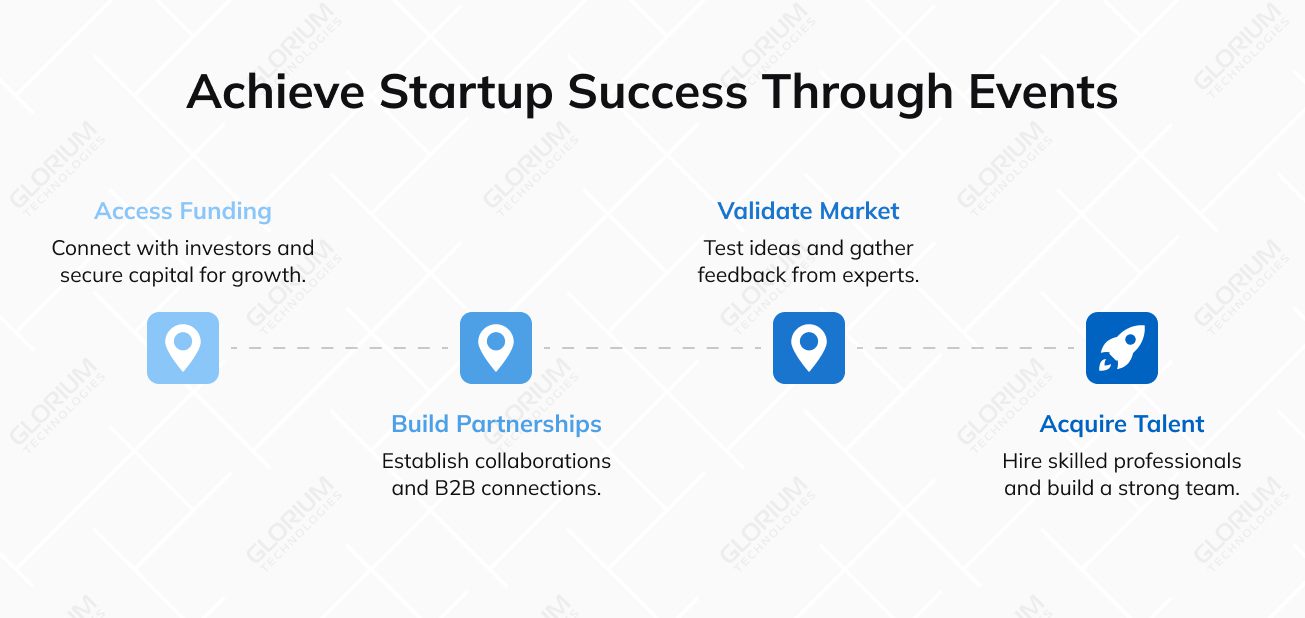
The following list provides the most strategically important startup conferences and events in Europe in 2026, so you can choose which one will provide more value for your startup or investment opportunities:
The EU-Startups Summit is one of the key events in Europe for early-stage startups and investors. This event brings together 2,500 attendees, including more than 1,200 founders and more than 300 investors. The conference focuses on networking and making deals between founders and investors. More than 8,500 one-on-one meetings are set up using special matchmaking tools. The uniqueness of this event is in the startup pitch competition, so early-stage companies pitch to top investors for funding and publicity. The summit is especially valuable for founders seeking to raise capital and investors seeking to build connections within the European startup ecosystem.
VivaTech stands as a major European hub for startups and innovation, drawing over 180,000 participants, including 2,800 exhibitors and a multitude of investors. This conference serves as a vital meeting ground for emerging companies and established global corporations, all seeking fresh technologies and potential collaborations. It’s an excellent opportunity to connect with industry leaders, discover promising startups, and explore investment prospects. The event’s central focus areas include artificial intelligence, the latest tech trends, digital transformation, and the newest technological breakthroughs. VivaTech provides specific benefits for tech startups looking to land enterprise clients, build strategic partnerships, or secure funding.
London Tech Week is a global tech event that takes place all over the city and has more than 30,000 people attending. The event explores AI, quantum tech, and sustainability, featuring over 600 speakers, startup showcases, and networking. London Tech Week has a mix of exhibitions, networking events, and industry-specific meetups. Whether you are an investor or a founder, you should attend this event as it connects global influencers, with a focus on future unicorn companies and investment opportunities.
GITEX AI Europe 2026 promises to be a significant gathering for the tech and startup communities, spotlighting AI, digital advancements, and cybersecurity as catalysts for accelerating Europe’s digital economy. The event will draw together B2B and B2G innovators, investors, and key policymakers. With over eighty speakers and hundreds of exhibitors already confirmed, GITEX AI Europe offers ample opportunities for forging partnerships, securing substantial deals, and expanding business ventures internationally.
Web Summit is one of the biggest and most important tech conferences in the world. It has more than 70,000 attendees, 3,000+ companies, and people from more than 170 countries. The event covers a wide range of topics in the tech ecosystem, including AI, SaaS, fintech, cybersecurity, and digital innovation. It also draws a lot of decision-makers and senior executives. This event is a good choice for both investors and startups to gain media attention, find international partners, and build a community.
Regional startup events in Europe give you direct access to local ecosystems, investors, and opportunities specific to your market. Each area has its own strengths, such as the fast-growing CEE hubs, the highly digitalized Nordic markets, and the mature ecosystems in Western Europe. This diversity allows you to select events that align with your specific growth strategy, the industry you’re in, and your funding objectives.
CEE is a rapidly growing, low-cost region with abundant engineering talent and investors, making it ideal for early-stage startups seeking funding, validation, and growth in the region.
The Deep Tech CEE Summit is one of the premier events, bringing together more than 1,000 experts and investors to accelerate deep technology in Central and Eastern Europe. It connects startups (from pre-seed to seed) with capital, focusing on practical innovation in AI, biotech, and advanced materials. The summit includes an Investor Day (for matchmaking) and a main Summit day with keynotes and pitching competitions at the conference. So, whether you are an investor or a founder, you can choose one of these days to visit the Deep Tech CEE Summit.
Infoshare is one of the biggest tech and startup conferences in Central and Eastern Europe. More than 6,000 people, including founders, developers, and investors, plan to visit it. One of the best parts is the startup competition and the dedicated startup stage, where new businesses can pitch their ideas to investors and get noticed. The focus of this event is squarely on software development, product creation, and the expansion of tech startups. If your company is in the business of developing SaaS platforms, AI-powered solutions, or any other digital products, then this gathering is worth your attention.
This region is digitalized and focused on innovation, with a long history of creating unicorns. It has great networking opportunities and access to cutting-edge tech ecosystems in fintech, AI, and deep tech.
Slush is one of the most important events for startups and investors in the world. It is known for its carefully planned networking and focus on fundraising. More than 20,000 visitors are expected, including thousands of startups and investors from over 130 countries. Slush focuses on meaningful, pre-booked meetings; the “Meeting Area” is designed to host over 25,000 one-on-one meetings. Slush is great for founders who want to raise money because it makes it easy to connect with angel investors and VCs directly. Investors who want to find valuable startups to add to their pipeline quickly should definitely attend this event.
Latitude59 2026 is Estonia’s premier startup and tech event, showcasing the country’s vibrant digital society. This year’s theme, “Where Technology Meets Humanity,” will bring together founders, investors, and innovators. They’ll network, pitch their ideas, and engage in discussions about DeepTech and its worldwide implications. Latitude59 anticipates attendance from over 3,500 individuals, representing 60 to 70 different countries. This event in the Baltic region will be especially valuable for tech professionals and investors who want to learn more about Estonia’s growing, tech-savvy ecosystem.
Western Europe has a lot to offer for startups. It’s one of the most well-funded areas in Europe, with Germany, France, and the UK at the top for total VC investment and late-stage deals. The events you find in this list are some of the most popular conferences and summits that most European startups are preparing for.
Dublin Tech Summit is one of the fastest-growing tech conferences in Western Europe. It draws more than 8,000 people, including investors, startups, and tech companies from around the world. The event is primarily about software-driven innovation, with topics such as AI, cloud computing, cybersecurity, and data. The summit is a great place to build B2B partnerships, connect with investors, and expand into markets, especially in the Irish and European tech ecosystems. The event is worth your attention if you are a startup founder, looking to connect with international companies and scale their software products in global markets.
Bits & Pretzels is one of the most exclusive startup festivals in Europe. It brings together more than 7,500 founders, investors, and decision-makers. This event is known for its focus on networking among founders, giving investors access, and fostering real business conversations rather than big shows. Bits & Pretzels is especially helpful for startups that are growing and seeking funding, making long-term strategic connections in the European tech ecosystem, and expanding their business.
Pitch competitions are now one of the best ways for early-stage startups to get funding. For instance, at Slush 2025 in Helsinki, the deep-tech startup Diffraqtion won the Slush 100 competition and got a €1 million equity investment. These results show that pitch stages are effective deal funnels that help startups go from being seen to meeting with investors and getting funding in just a few days.
At GITEX AI Europe, the Supernova All‑Stars Pitch Competition is one of the event’s biggest highlights. Startups can compete for a €50,000 equity‑free grant and get attention from investors. The 2026 Supernova challenge has three top prizes: €25,000 for first place, €15,000 for second place, and €10,000 for third place. The winners will also get curated access to global VCs and the chance to speed up their growth in GITEX’s international ecosystem. Around 50 startups will be chosen to pitch in the semifinals. The finalists will then pitch live at the main event. This is a very important stage for early- and growth-stage companies that want to turn pitches into funding and strategic connections.
The Latitude59 Pitch Competition is the premier annual event for early-stage startups to get up to €1,000,000 in syndicate investment from Specialist VC and EstBAN. The event invites people from all over the world to compete for funding, mentorship, and international exposure. The 2026 competition has a top-78 final on May 22. If you are a founder of a technology-based business, this competition can help you grow and gain market potential.
In 2026, industry-targeted startup events are often more effective than global general conferences, especially for founders who know their product’s peculiarities and the target market. Global events attract more visitors, but niche conferences offer closer interactions because attendees are directly related to your field, such as specialized investors, partners, and customers. For instance, climate tech startups get more funding from impact-focused investors, while deep tech companies often rely on specialized VCs and corporate R&D partnerships.
European companies capture a major share of investment in the cleantech, sustainability, and climate technologies sector. As climate change accelerates and the need for innovative solutions increases, European events are welcoming startups in the sustainability and climate tech industry.
GITEX Green Impact Europe 2026 is a major event for climate tech and sustainability. It takes place at the same time as GITEX EUROPE 2026 and focuses on climate tech, sustainability, and green innovation. The event brings together businesses, investors, and startups that are working on solutions like smart cities, renewable energy, cutting down on carbon emissions, and building infrastructure that lasts. If you’re a founder, this event gives you direct access to investors and business partners who care about ESG and are actively seeking climate solutions that can be scaled up. If you’re an investor, it provides a steady stream of startups aligned with Europe’s long-term funding and sustainability goals.
In 2026, VC share hit a record in the European deeptech market, reaching $690 billion. VC-backed companies on the market are highly valued, and the sector continues to grow and outperform the broader technology market. If you’re looking for events in the deeptech sector, you can get ready for May 20-21 and attend Deep Tech Momentum 2026.
Deep Tech Momentum is Europe’s top marketplace for deep tech and AI innovation. The event draws together more than 3,000 participants and over 300 deep tech startups, all to accelerate funding and forge new partnerships. Its core focus is on commercialization and deal-making, facilitated by meticulously organized matchmaking sessions that connect startups, major corporations, and investors. Furthermore, you’re invited to participate in the DTM100 Pitch Competition, a platform where selected deep tech startups present their ideas to leading investors and potential business partners. The event also features the Deep Tech Award, which awards €50,000 to innovative companies in fields such as AI, quantum technologies, and advanced manufacturing. Deep Tech Momentum is especially useful for founders who need specific investors and industry partners.
Simply attending a startup event does not guarantee results. The real value comes from how you connect, not just where you show up. With so many people and not much time, founders and investors need a clear networking strategy to turn conversations into funding, partnerships, or deals. Below, you can find some useful ways to get through events and make connections that actually lead to results.
Each type of networking serves a different purpose, so knowing how to apply each is crucial to getting real value from startup events. Using a mix of these formats makes it much easier to go from first contact to real business relationships.
Most global events now offer AI-powered meeting systems that let you schedule a dialogue with attendees in advance. For instance, events like Slush and the EU-Startups Summit make it easy for thousands of people to set up 1:1 meetings, greatly increasing the chances of investors and founders meeting each other compared to random networking.
These formats bring together 5 to 15 people to discuss a specific topic. You can have meaningful conversations with co-founders and industry leaders in a small group, building trust more quickly than in large-scale networking.
Often organized by VCs, accelerators, or corporates, these invite-only sessions attract high-quality, decision-maker audiences.
How do investors and corporates engage at events?
Importance of informal networking:
A simple, casual conversation, not a formal pitch, can start some of the best partnerships and follow-ups.
To achieve the desired outcomes, select events that align with your current startup stage, professional objectives, and your business’s needs. The checklist below helps you determine which option will provide the best ROI for your needs.
You should choose which events to attend based on your startup’s stage. Each startup stage requires different results, such as validation and fundraising, scaling, and partnerships. Founders in the early stages need to communicate with investors and get feedback. Companies in the growth stage should focus on gaining greater visibility, building business connections, and expanding into new markets. Choosing events that are right for your stage increases the ROI from both networking and attending.
Pre-seed or seed (from idea to MVP stage):
If you’re still working on your MVP, having a working project is very important. At this stage, Glorium Technologies can help you estimate the MVP cost and prepare a product that investors can evaluate and consider investing in.
Growth or scale-up stage:
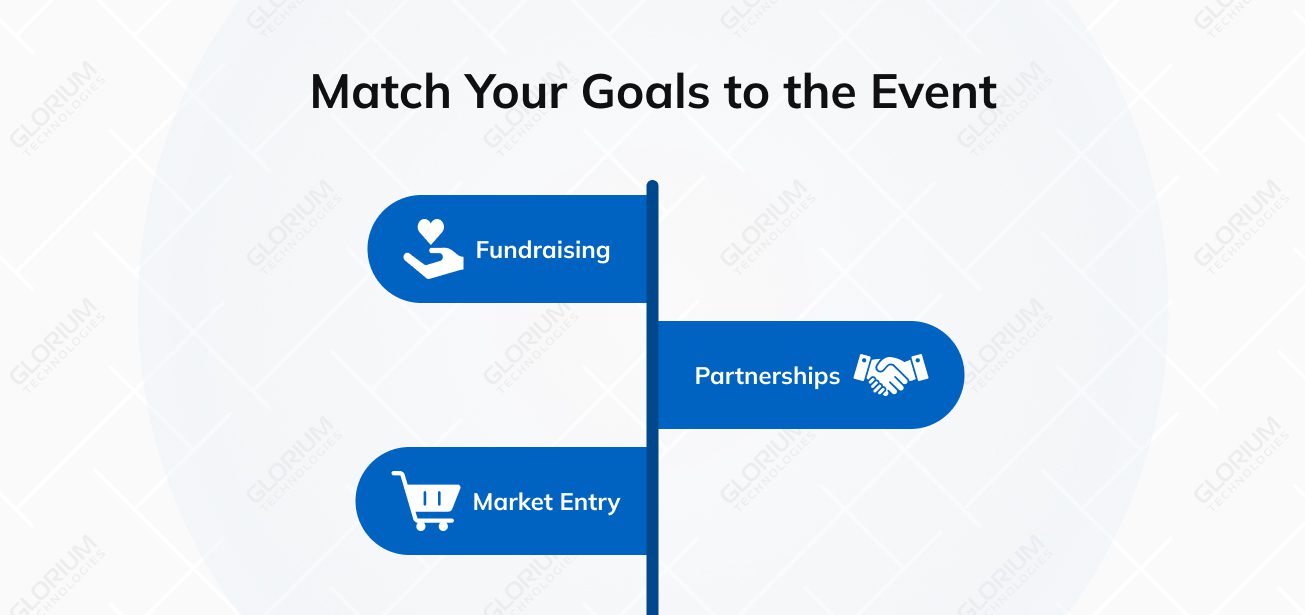
Each startup event yields different results, so it’s important to make sure your goal aligns with the event’s format and audience. A clear goal helps you make the most of your time, reach the right people, and turn meetings into real results.
Fundraising:
Partnerships (B2B):
Market entry or expansion:
Glorium Technologies, an experienced partner for startups, helps your business to develop by turning your ideas into investor-ready products. We work with small-to-medium-sized companies to achieve their goals by making MVPs, estimating costs, and making a clear growth plan. Having a real product greatly increases your chances of getting funding and partnerships at startup events. Book a free call with us, and we’ll discuss all your business needs, answer questions, and provide a realistic plan.
You should prepare with clarity. Interactions are more effective when you have a clear narrative, a working MVP, and scheduled meetings through matchmaking tools. It’s also better to focus on smaller, carefully chosen events and use them to test your idea and improve your pitch. Most importantly, you need to follow up quickly, within 24 to 48 hours, to turn conversations into real chances.
Your MVP should be more than just an idea or a prototype; it should demonstrate your main value proposition. People who invest in or work with you at events want to see how your product works in real life, not just hear about the idea. Your MVP should at least solve one problem, include all necessary features, and let users interact with it or see it in action in a demo. If you don’t know how to plan or build your MVP, Glorium Technologies can help you estimate the cost, what features it should have, and develop an MVP that is ready for investors and that you can confidently show off at any event.
Preparation should start 4-8 weeks before the event, especially for international conferences. This window gives you enough time to set clear goals (for example, hiring, partnerships, and fundraising), improve your pitch, and make sure your product or MVP is ready for demos. Before the event, use matchmaking sites to schedule meetings, learn more about attendees, and decide whom you want to meet first. As the event gets closer, focus on finalizing these: finish your pitch deck, get ready for demo scenarios, and make sure everyone on your team is on the same page about what to say.