










10x Less Production Downtime with
Microsoft Dynamics 365 Business Central


Client Overview
Disconnected Systems Slow Down Metal Structure Manufacturing

The Challenge
Decision to Move to Microsoft Dynamics 365 Business Central ERP
- Manual data exchange between systems Accounting, warehouse, and sales each worked in their own tool. Data was re-entered by hand, increasing the risk of errors and consuming hours of productive time.
- No single, integrated view of the business Project managers struggled to see the connection between orders, material availability, and financial performance. Tracking the status of a specific project meant calling multiple departments and merging spreadsheets.
- Production downtime due to material shortages The production line was periodically stopped because critical materials weren’t on site when needed. Planners were unable to reliably match customer orders, purchase orders, and stock levels.
- Weak understanding of project profitability Overhead and direct costs were scattered across different systems. Management lacked a clear, consistent picture of the real cost of each project and its contribution margin.
- Need for a future-ready system “out of the box” The company sought a modern ERP that would meet most of its current requirements without requiring extensive customization while still allowing new functional blocks to be added as the business evolved.
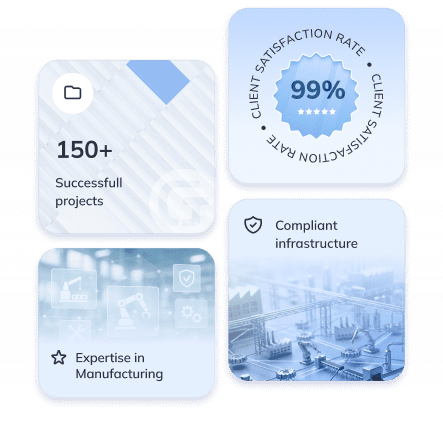

Why They Chose Glorium Technologies
What Set Our Microsoft Dynamics 365 Business Central Implementation Apart
- End-to-end process analysis with the discovery phase
- Clear migration roadmap to Microsoft Dynamics 365 BC
- Future-state (“to-be”) process design
- High functional coverage out of the box
- Modular expansion without disrupting existing workflows

The Solution
Building a Unified Platform with a Two-Phase Implementation
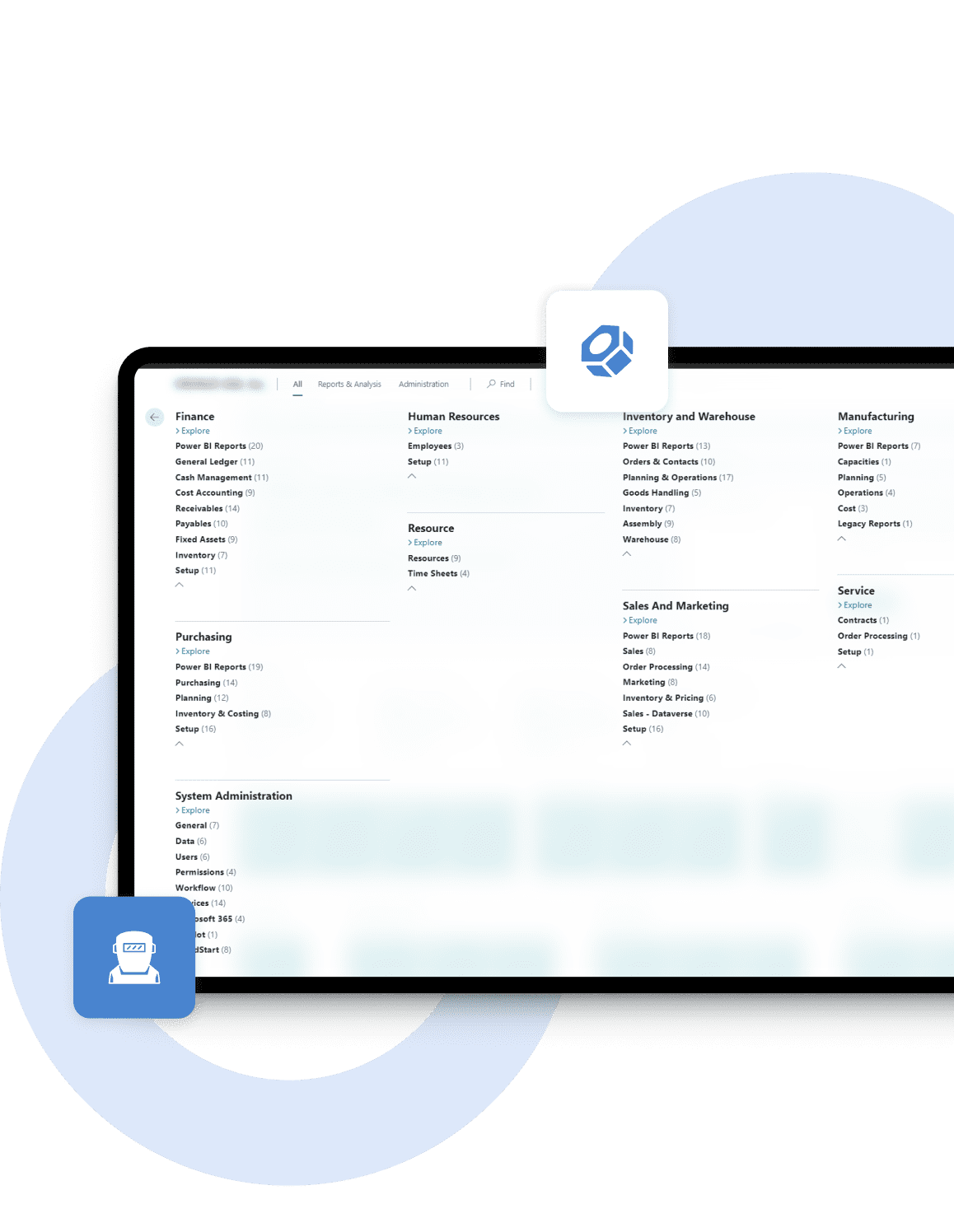
- Finance and general ledger
- Fixed assets and reporting
- Sales and customer orders
- Purchasing and vendor management
- Production and shop floor control
- Inventory and warehouse management

Features
Putting Microsoft Dynamics 365 Business Central Features to Work
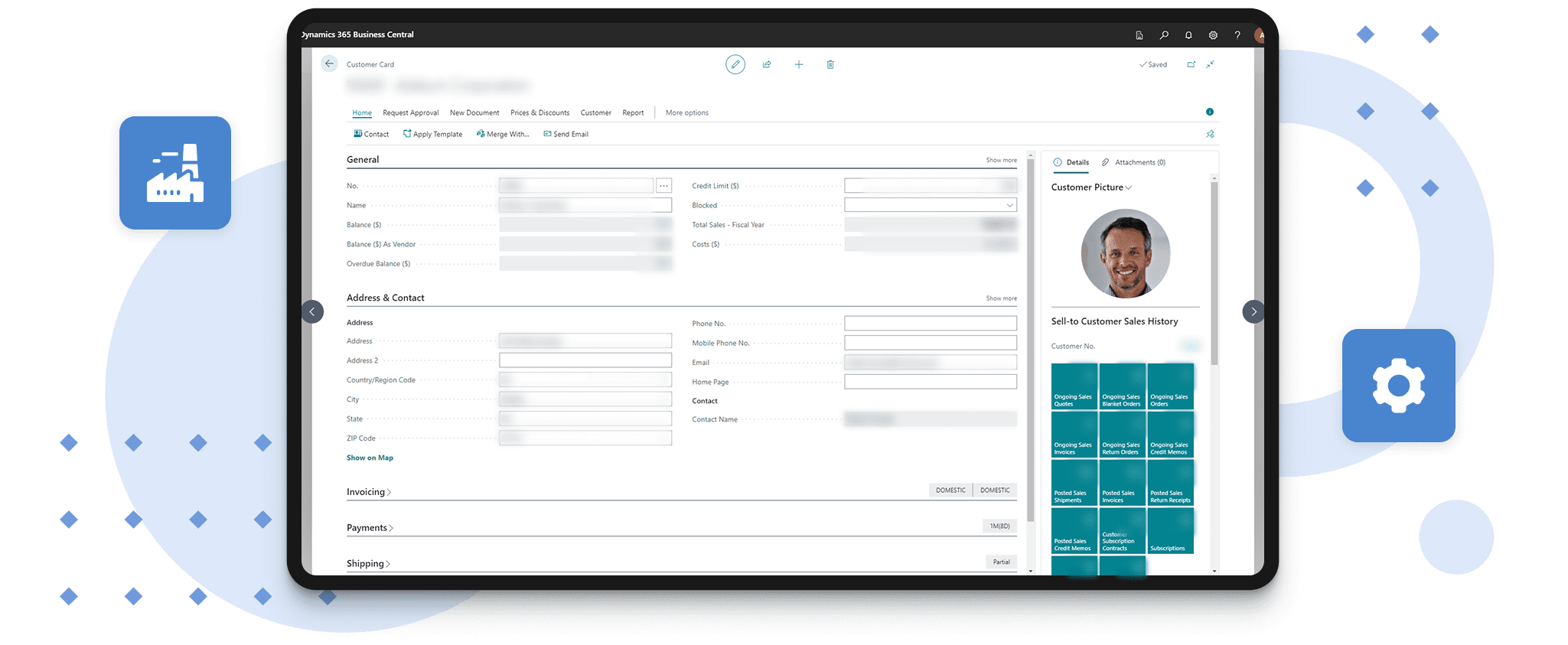
- Manufacturing & Production Management Business Central manages the entire production flow, from sales order to finished metal structure. Work orders are created directly from demand, linked to bills of materials and routings. Planners identify the necessary materials, machines, and work centers and can schedule production with realistic lead times.
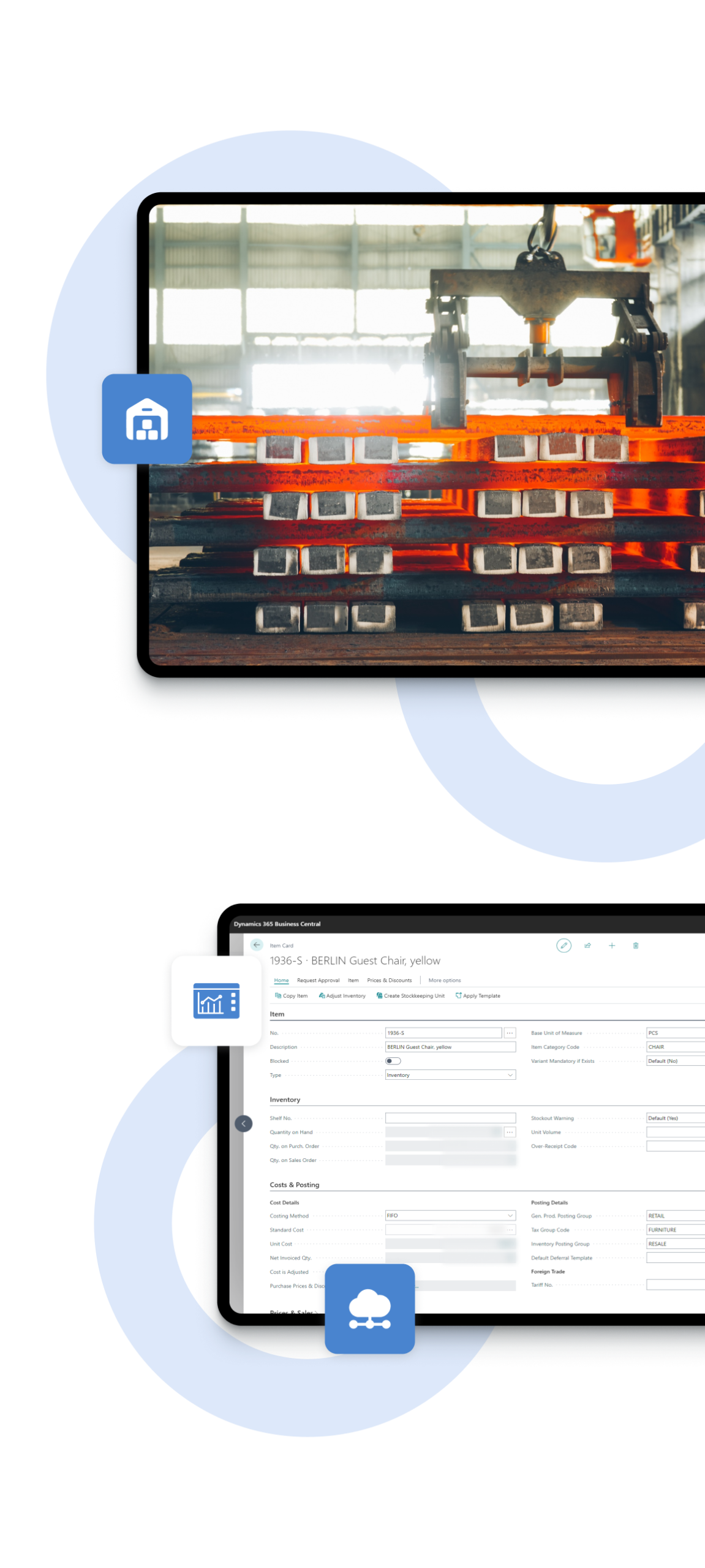
- Inventory & Warehouse Control All materials are now tracked in real-time. Business Central provides visibility into stock levels across locations, supports reservations against specific orders, and helps avoid both stockouts and overstocking. New processes for inventory analysis and replenishment were introduced, taking into account actual customer orders and forecasted demand.
- Purchasing & Supplier Collaboration The purchasing module automates purchase suggestions based on current stock levels, safety stock, and open sales orders. Buyers can compare vendors, track delivery reliability, and ensure critical materials arrive on time, directly reducing the risk of costly downtime.
- Finance, Costing & Overhead Control Finance is closely tied to production and procurement. Direct and indirect costs are allocated more accurately, providing management with a clear picture of project profitability. Overhead is monitored as a share of total costs, helping leadership keep general production expenses under 10%.
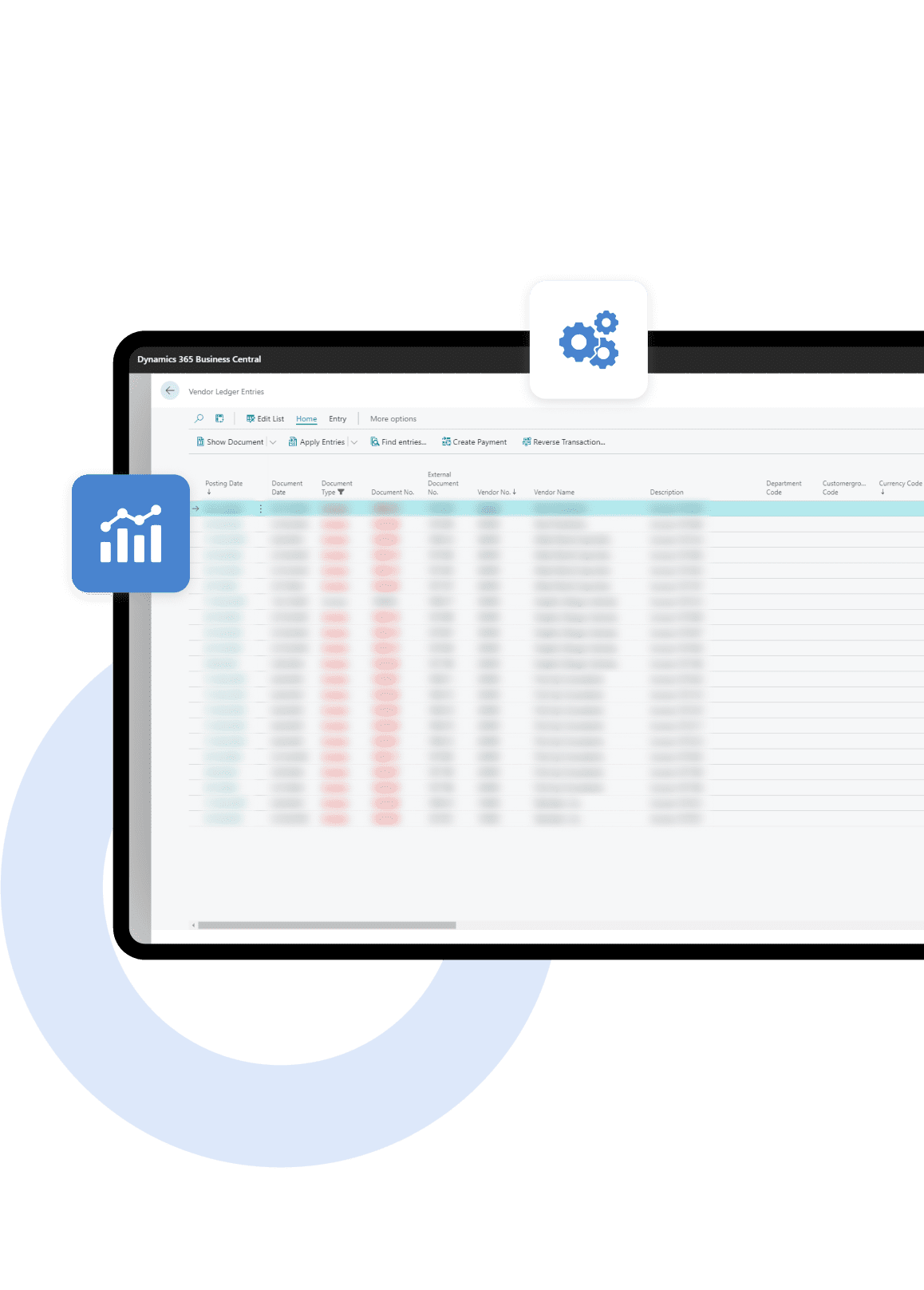
- Reporting & Management Dashboards Decision-makers now work with dashboards that show order status, material availability, shop floor load, and financial performance in one place. Reports that once took days to compile from multiple systems can now be generated in minutes from Business Central.
- User Training on Real Business Scenarios Instead of generic training, the team learned BC using their actual orders, projects, and materials. This accelerated adoption reduced errors and helped users understand not only “which button to press,” but also why the process works that way.
Implementation Approach
A 16-Week Journey and a System Rollout Focused on Real User Needs
Phase 1: Planning & Core Rollout
- Discovery workshops to map current (“as-is”) processes across finance, production, inventory, and purchasing
- Design of future-state (“to-be”) processes aligned with Business Central best practices
- Configuration and rollout of Finance, Sales, Purchasing, Production, Inventory, Fixed Assets, and Reporting
- Data migration from legacy accounting and warehouse systems into BC
- Initial dashboards for management reporting
Phase 2: Process Refinement & User-Driven Enhancements
- Collection of user feedback from planners, accountants, and production supervisors
- Fine-tuning of workflows, approval rules, and document flows based on real operational needs
- Implementation of inventory analysis routines and replenishment logic that consider open orders and demand trends
- Optimization of cost allocation and overhead tracking to improve project profitability insights
Phase 3: Training & Continuous Improvement
- Role-based training for finance, warehouse, and production teams using real-life orders and materials
- Coaching sessions for key users to build internal champions and reduce dependency on external support

Results
10x Less Downtime, 15% Lower Inventory, and Full Visibility
Manufacturing & Operational Efficiency
- Production downtime reduced 10× With better material planning, automated purchase suggestions, and real-time stock visibility, the number and duration of production stoppages dropped significantly.
- Order delays eliminated through transparent planning Planners finally see the whole picture: customer orders, material availability, and production capacity are aligned in one system, which helps keep commitments to customers.
Cost & Inventory Optimization
- General production overhead kept below 10% Better cost allocation and process transparency enabled management to effectively control indirect costs and maintain them below a defined threshold.
- Material stock value reduced by 15% Depending on the material category, inventory levels were optimized, freeing up working capital without increasing the risk of stockouts.
Visibility & Control
- Clear real-time understanding of each order’s status From sales to shipment, every order is traceable. Project managers and executives can see exactly where a project stands, what has been produced, what is in progress, and what is waiting for materials.

Business Value
What a Unified System Actually Delivers
 Operational Predictability
 Cost Optimization
 Full Transparency





Certifications




Questions You May Have
Is Microsoft Dynamics 365 Business Central customizable for unique manufacturing needs?
Yes. Microsoft Dynamics 365 Business Central ERP is a highly customizable system. Out-of-the-box functionality is beneficial, but can be extended through integrated apps or tailored configurations. With the right Microsoft Dynamics 365 Business Central implementation partner, you can easily adapt it to complex manufacturing environments.
How much does Dynamics 365 Business Central cost?
The Microsoft Dynamics 365 Business Central cost is based on a predictable per-user, per-month subscription model. There are different license tiers (Essential and Premium) to match job functions, and pricing can vary slightly by region and partner.
Is Dynamics 365 Business Central a CRM or ERP?
Microsoft Dynamics 365 Business Central is a comprehensive, cloud-based ERP. However, it does include integrated CRM-like capabilities for managing sales contacts and opportunities. The system consolidates core operational functions (finance, manufacturing, supply chain, etc.). For a full Microsoft Dynamics 365 Business Central overview, think of it as the central operational and financial brain of your business. In contrast, a CRM is more specialized for the sales and marketing funnel.
Will implementing a new ERP disrupt our current operations for months?
Not necessarily. A well-planned Microsoft Dynamics 365 Business Central implementation is designed to minimize disruption. Partners like Glorium Technologies use a phased approach, often rolling out core financials and inventory first before moving to more complex areas like production. The key to minimal disruption is thorough planning, clear communication, and role-based training.
Can we reduce our inventory costs without risking material shortages?
Yes. This is why many manufacturers turn to Microsoft Dynamics 365 Business Central ERP. The system provides data intelligence to find the optimal balance. With it, you can:
- Set minimum stock levels and reorder points based on actual usage patterns
- Differentiate between fast and slow-moving items to adjust the purchasing strategy
- Tie inventory purchases directly to firm customer orders and realistic forecasts