








The 8 Best AI Events Europe Has to Offer in 2026
Updated March 11, 2026

 Summarize in ChatGPT
 Summarize in ChatGPT
The global AI market is predicted to grow from $390.91 billion in 2025 to $3.49 trillion by 2033, with a 30.6% CAGR. For many companies in Europe, it means making real decisions about investment, rollout, and compliance, and often all at once. Many AI conferences already mirror these challenges in their agendas. They gather technology leaders, startups, enterprise teams, investors, and regulators from all over the world. The discussions are grounded in practical applications of artificial intelligence. Here, you’ll learn how systems are rolled out, what breaks during integration, how teams handle governance reviews, and much more.
Panel sessions focus on strategy, but valuable insights that can help your business grow can also come from informal conversations, 5-minute networking chats, and accidental bump-ins.
In this article, we will take a closer look at the best AI events in Europe for 2026 that consistently attract decision-makers and shape industry conversations. Don’t miss events that could change your perspective on AI strategy!
Content
Not every AI conference is worth the trip. A few are really worth your attention since they attract experienced software engineers, founders, enterprise leaders, and research scientists who speak openly about real deployments. These summits offer a practical look at the future of AI in Europe. Let’s explore the top 8 AI events in 2026 that make visiting Europe even more exciting:
This event is held at the Palais des Festivals in Cannes. WAICF is one of the most visible AI events in Europe. The program combines enterprise case studies, sector-focused panels, and public-policy discussions, which makes it relevant for companies operating in regulated markets.
Event highlights:
It’s hard to overestimate the value of this event for enterprise teams. You can see how other companies structure AI programs, compare vendors in person, etc. Moreover, networking here often leads to follow-up meetings and long-term partnerships.
AI Summit London takes place within London Tech Week and attracts enterprise teams, founders, investors, and technical leaders from the UK and the wider global AI community. The focus is on how AI systems move from the pilot stage into production environments.
Most sessions center on AI implementation. You’ll learn what production-grade AI looks like inside banks, healthcare providers, and large enterprises.
Event highlights:
If you are a company owner launching a large-scale rollout, you should visit the summit. It offers a realistic view of enterprise deployment in one of Europe’s most active AI markets. Plus, you’ll find the Networking Café, the Start-up & Investor Village, the VIP-only VisionAIres Programme, live demos, the AI Trail, hands-on masterclasses, and workshops.
This event is a meeting point for developers, founders, enterprise teams, and a strong group of German SMEs. The atmosphere is technical and direct. Discussions focus on applied AI, data science, and large-scale big data systems that are already running inside manufacturing, logistics, and industrial environments.
You’ll hear engineers walk through architecture decisions, integration issues, and performance trade-offs. Some sessions are led by experienced practitioners, others by leading researchers working at the edge of applied computer science. For companies scaling AI across Europe, this event can’t be missed. On top of that, many Mittelstand companies attend, so discussions will focus on real operational challenges, existing infrastructure, and practical rollout plans.
Event highlights:
World Summit AI is a global hub for founders, investors, enterprise leaders, researchers, and public sector representatives from across the global AI community. Simply put, it is a well-known European conference that is often used for product launches and market announcements. Startups present new tools. Larger vendors share case studies across areas like generative AI, computer vision, automation, and cybersecurity.
Why it matters:
Sessions focus on real-world applications in finance, healthcare, mobility, and public services. If your company is working on digital transformation, the event provides a clear view of emerging products and enterprise-level implementations within Europe’s AI landscape.
This is a policy-focused European conference centered on data infrastructure, public investment, and the long-term direction of artificial intelligence in the EU. Participants usually include representatives from the European Commission, industry groups, research institutions, and several European association stakeholders.
The agenda follows EU-level priorities. The program often includes practical sessions and targeted discussions on how funding instruments and governance models are applied in real projects. The main goal of the forum is to create alignment between industry, research, and policy communities across Europe.
Core themes:
This two-day conference and exhibition is focused on conversational systems such as chatbots, virtual assistants, voice interfaces, and related generative technologies in the European market. The speaker lineup features practitioners from enterprise companies and innovators across the space, ensuring that both technical topics and business challenges will be covered.
Key areas:
Rise of AI takes place in Berlin, aligned with the German approach to technology—methodical, research-driven, and focused on practical implementation. Germany has a long history of engineering and applied innovation, and you can see this influence in the way AI is discussed here.
The audience includes startup founders, enterprise teams from industrial sectors, investors, policymakers, and researchers. You’ll hear from leading researchers and founders sharing lessons from real deployments. This event is for professionals in manufacturing, mobility, fintech, and public infrastructure.
Discussions will be focused on practical ideas, technical decisions, and how to build strong systems for the long term.
Focus areas:
Three days, 3,000+ leaders, and sessions about AI and Azure, cloud security, and enterprise infrastructure – all this is about this summit. The program includes over 100 speakers, technical deep dives, tutorials, etc. Moreover, a large expo area with over 90 sponsors and partners is also available.
Most sessions are practical and architecture-focused. Topics range from AI in business and Azure-based deployments to governance, compliance, and cloud security. Many speakers come from the Microsoft ecosystem, including product leaders, Regional Directors, and MVPs. CIOs, cloud architects, AI leads, security teams, and companies building AI solutions on Microsoft Azure are the main target audience of this incredible event.
Key focus areas:
The AI adoption rate and strategies have shifted—the market’s backed by investments, and companies are actively deploying the systems at scale. We already discussed the market’s projection—it’s expected to reach $3.49 trillion by 2033. And the global AI spending is projected to pass $2 trillion in 2026.
Even with these predictions and concrete cases of companies actively adopting AI into their workflows, the adoption remains patchy and varies from country to country:
When analyzing these figures, we can see a clear gap—Investment is rising quickly, but widespread operational maturity across Europe is still catching up. However, the next two years will define which companies move from pilot projects to embedded AI systems and which stay stuck in ‘pilot mode’ forever.
AI adoption in European countries is growing, but companies are moving at different speeds. Regulation is the main challenge. Businesses are expanding AI systems and also adjusting to new legal requirements.
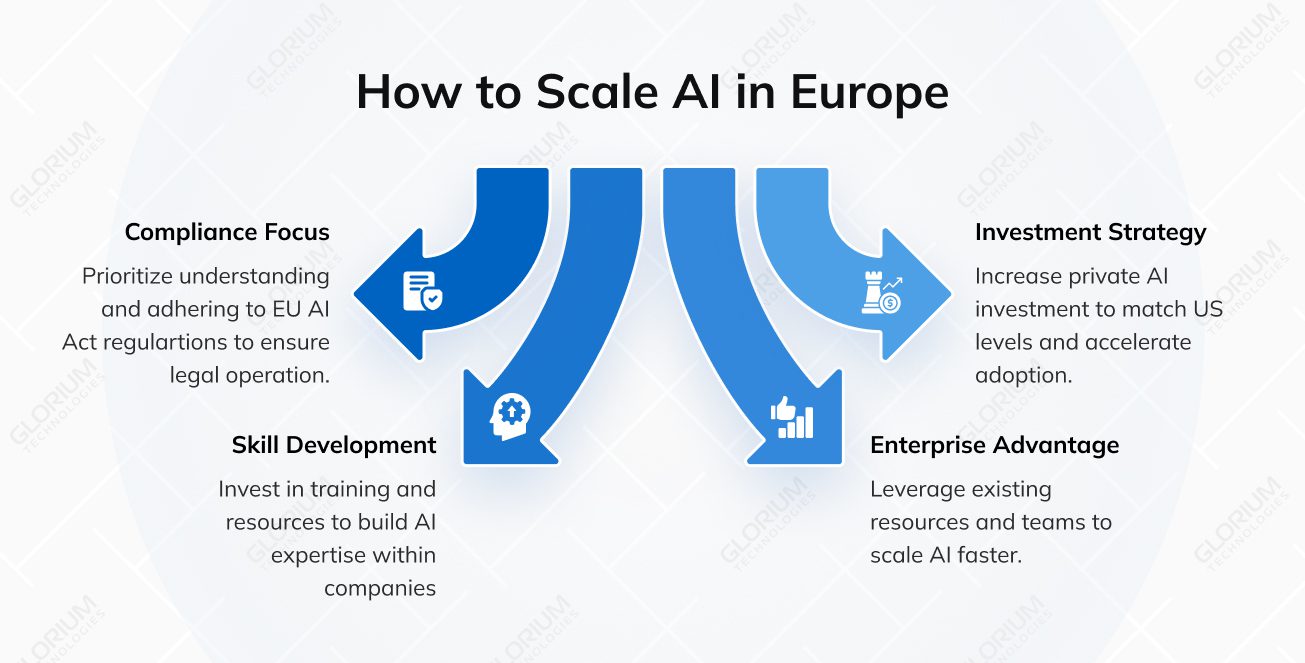
Here are the factors that influence the pace:
Overall, scaling AI means balancing rollout plans with compliance work for many countries. Larger enterprises can move faster because they have professional teams and enough money. But smaller firms often need more time to build skills and internal structure. So, progress varies across industries and countries, even though overall investment and interest continue to rise.
The EU AI Act has influenced how artificial intelligence is discussed across Europe. Besides technology sessions, conference agendas regularly include compliance, documentation, risk assessment, and governance.
The following regulatory milestones influence these discussions:
In 2026, more sessions will focus on practical questions. Companies want to understand how to classify their AI systems, what documentation is required, and how to organize internal oversight.
Regulatory sandboxes are also frequently discussed, since every EU country must establish at least one by August 2026. Panels often address the role of the EU AI Office, how AI regulation interacts with GDPR, what DORA means for financial institutions, and how cybersecurity rules affect AI deployment.
All in all, for many enterprise teams, conferences have become places to compare interpretations of the regulation and clarify responsibilities.
Before committing budget and time, you should define what outcome you expect from attending. Different conferences serve different purposes, and the right choice depends on where your company stands today. Here’s a practical checklist that will help you make the right choice:
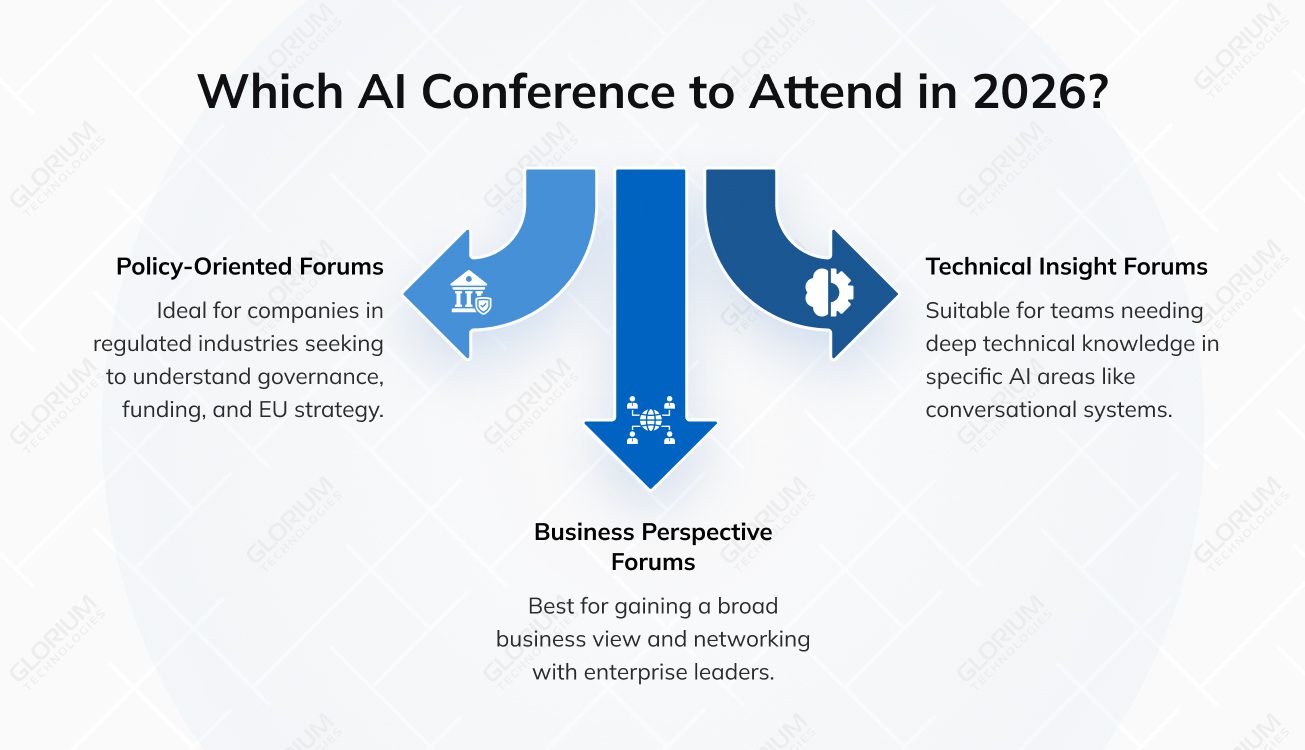
Remember that clear priorities make event selection more strategic and reduce the risk of attending conferences that do not support your current objectives.
Overall, artificial intelligence in Europe is becoming more regulated and more operational. Companies need to deliver results while also meeting compliance standards and internal governance requirements.
European conferences play a practical role in this process. They unite founders, enterprise teams, chief data officers, and chief scientists, who share real deployment experiences. Beyond stage talks, hands-on workshops, and direct peer conversations give access to applied knowledge that rarely appears in reports or media summaries. So, for many companies, taking part in such events is a competitive advantage. They provide access to insights, contacts, and implementation lessons that function as a strategic resource when scaling AI across Europe.
This is where a lot depends on what you’re looking for. They all serve a different purpose. For example, World Summit AI Amsterdam is a good choice for startups and companies seeking investor visibility. At the World AI Cannes Festival, you can meet enterprise leaders and policy stakeholders. AI Summit London focuses more on production-grade deployment. You should define your priorities and decide if you are looking for funding, partnerships, compliance insight, or real-world deployment experience.
The AI Summit London is known for production-level case studies; the World AI Cannes Festival attracts board-level executives and policy stakeholders. These conferences usually gather department head roles, including CTOs and chief data leaders, who speak openly about budgets, integration challenges, and long-term strategy. They’re also good places to meet technology partners, including Glorium Technologies, and discuss practical next steps for AI implementation.
The EU AI Act has influenced the tone of many discussions. Companies now talk about documentation, risk classification, internal controls, and the ethics of using AI. Exhibitors will explain what their systems can do and how they comply with transparency and governance rules. On top of that, such conferences have become places to compare interpretations of regulation and develop a practical sense of what compliance looks like in real projects.
WAICF is one of the most visible AI events in Europe. It takes place in Cannes and combines enterprise case studies with public-sector dialogue. The atmosphere reflects both business ambition and European regulatory awareness. Here, participants can learn how organizations are actually deploying AI across industries. If you want exposure to a broad audience at the forefront of European AI, this event is worth considering.
Yes. The European Big Data Value Forum is policy-oriented and often includes representatives from the European Commission, research institutions, and industry associations. You have the opportunity to attend sessions on governance models, funding mechanisms, and implementation frameworks. All in all, these events discuss accountability, long-term infrastructure, and the institutional side of AI development.
AI Summit London runs during London Tech Week and attracts founders, investors, and technical specialists. The focus is on moving systems from pilot to production. You’ll meet professionals from finance, healthcare, retail, and the public sector. The audience includes experienced engineers, product leads, and fellow practitioners who are involved in deployment.
The United States recorded more than $109B in private AI investment in 2024, and this exceeds funding levels in European markets. Higher capital availability often supports faster enterprise rollout. Across the European continent, adoption rates vary by country. The UK, for example, reached around 22% enterprise AI adoption in 2024. So, the United Kingdom is now among the stronger performers in the region.
World Summit AI Amsterdam is the best event for startups looking for visibility, investors, and partnerships. Data Unplugged in Germany also attracts a strong base of SMEs and technical founders. These conferences give companies room to explore partnerships and meet peers who are actively developing new tools, including applied AI in areas like robotics and industrial systems.
Yes, definitely. Many sessions focus on regulated industries such as healthcare and financial services. Topics often include compliance, cybersecurity, responsible AI, and risk management. In healthcare, conversations sometimes extend to AI applications for diagnostics, operational efficiency, and even broader challenges (climate change and public health resilience). For fintech companies, regulatory alignment and operational transparency are at the centre of discussion (not just product features or short-term hype).
They often mirror the culture of the city where they take place. For instance, conferences in Berlin, London, or Amsterdam each have a different tone and focus. Moreover, many have strong ties to a local university or research community, and all this adds technical depth to the agenda.
Besides business topics, some sessions also touch on AI’s impact on humanity and broader challenges facing the planet, especially in cities with active academic and public-sector involvement.