








How to Hire an Offshore Development Team That Feels Like an Extension of Yours
Updated May 5, 2026

 Summarize in ChatGPT
 Summarize in ChatGPT




Starting a tech startup can be quite challenging due to rising costs, ever-changing software technologies, and stiff competition. That’s why many startups and companies choose to hire an offshore development team for support.
Content
In the simplest terms, offshore software development means partnering with a professional software team located in a different country. Think of it as extending your office globally, often in regions known for tech expertise (like Eastern Europe, Latin America, or Asia).
If you’re wondering, “Are offshore development team services only for tech giants?” Not at all! It’s a strategic move for businesses of all sizes. Giants like Google, Microsoft, and Apple all have massive engineering centers overseas; However, Trello, Medly, and similar companies have used a dedicated offshore development team in their early days.
Here are a few situations where the right offshore development team shines:
Offshore software development is really about access. This approach gives you access to a wider talent pool, specialized skills, and flexible capacity for your software development project, regardless of its size or project complexity.
Working with an offshore development partner is globally popular due to its cost-effectiveness balance. An equally enticing idea is having skilled developers with global expertise and niche experience that supplement your in-house team. Below, you’ll explore the key advantages of hiring dedicated offshore developers:
Often, companies find offshore developers in Eastern Europe and Asia. These regions have a developed IT industry with the most significant number of developers and a lower cost of life compared to the US, Canada, and UK. These regions are considered the best options in price/quality ratio, with prices for software development ranging from $20 to $100 per hour.
The United States and Western Europe are traditionally the most expensive regarding offshore and outsourcing services. Hiring costs often exceed $70 at minimum, with a $200 maximum price per hour of work.
In general, offshoring services are cheaper than hiring a dedicated team in-house. As you reduce the project’s total cost, the ROI increases, which is one of the critical catalysts for successful scaling. As a result, people consider offshoring the best solution for small or medium-sized businesses with limited budgets.
Contrary to the common belief, external specialists usually have extensive IT industry knowledge and provide a more comprehensive range of services than in-house specialists. It results in the higher quality of final digital products. For example, when you hire offshore developer service from Glorium Technologies, you get the following:
We provide measurable results for all development processes from the early stages. Thus, you can control development, making timely adjustments remotely. As a result, you can be sure that your digital product fully meets the target audience’s market requirements, specifications, and expectations.
As a rule, when hiring in-house specialists, companies lose flexibility and profitability in development. Why is this so? Full-time employees specialize in a particular tech stack, ignoring market trends. Their training costs money, and the result only sometimes justifies the investment.
Hiring offshore software development services gives businesses access to various technologies and tech solutions. Companies that exclusively provide IT services develop employees’ skills, seeking to ensure multiple:
Hiring skilled offshore developers allows you to attract a variety of industry experts to your team.
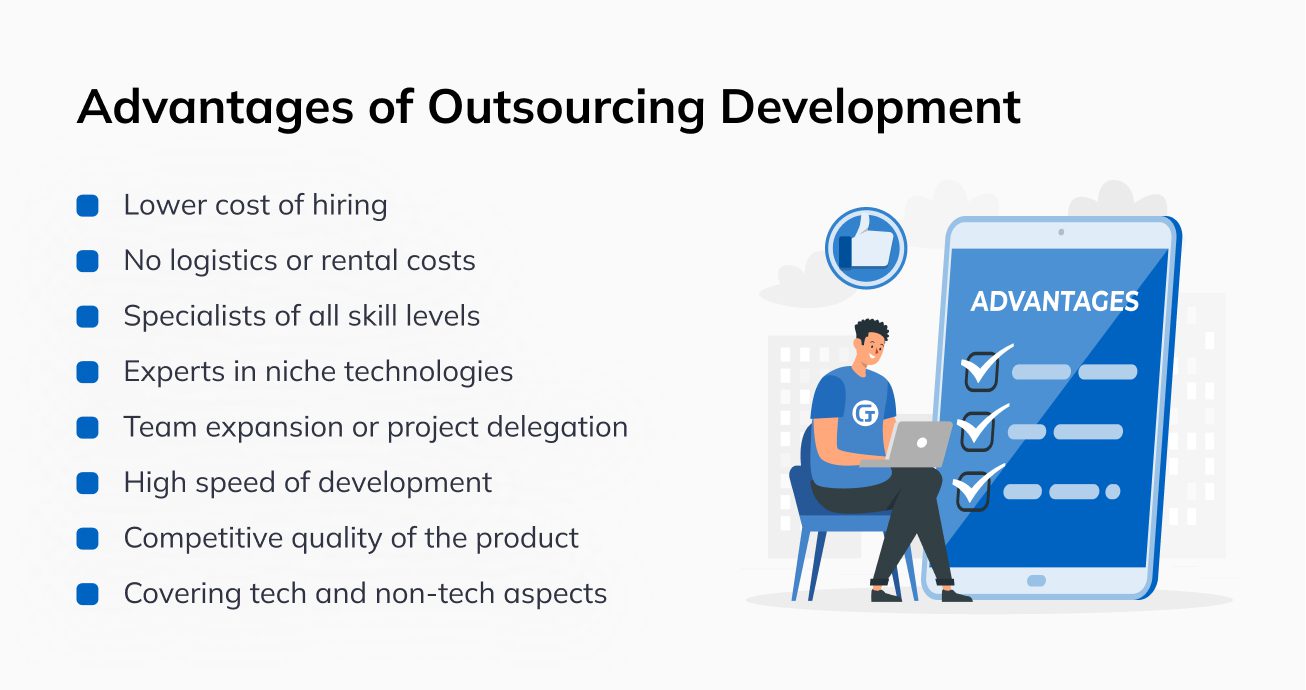
When you hire offshore developers, you can significantly increase the project success and reduce the time to market your digital solution. Several factors contribute to this:
When hiring dedicated developers or building a remote team, you only have to monitor the process and make timely adjustments or corrections. And the contractor does the rest of the work.
When you go for offshore software development, start by getting super clear about what you want to achieve with your project. Invest time in partner research. Ensure your team possesses the right skills, expertise, and cultural fit for seamless collaboration.
Prioritize effective communication, strong project management, and rigorous quality assurance. On the legal front, focus on confidentiality agreements, legal compliance, and adhering to timelines. This approach sets a strong foundation for offshore success.
Elena KorkhHR Director, Glorium Technologies
Hiring offshore software developers can scale your digital product easier and faster. There are several reasons for this:
Additionally, offshore development teams are less constrained in skills and techniques. As a result, it allows faster adaptation to the existing technology stack and better expansion.
A dedicated offshore team, especially when they employ Agile methodologies, is now suitable for a wide range of businesses, including enterprises, startups, and even government entities and non-governmental organizations (NGOs).
Whenever we speak to companies looking for enriching their in-house teams or their development process with niche technical skills, they often express concern about time zone differences, managing offshore teams, cultural compatibility, project timelines, etc. All this is natural—you’re hiring remote developers, of course, you want to know if this model is suitable for your business growth, and whether there will be challenges or not.
Let’s get straight to the point: Yes, offshore engineers can be an excellent fit for many businesses—but not for every situation. Below, you’ll find a quick checklist to help you understand whether remote software developers are a good fit for your business or not:
| If Your Business Needs… | Then Offshore Teams Excel Because… | Key Benefit |
|---|---|---|
| Specialized, Scalable Talent | You can hire overseas developers who are software development experts in niche tech. | Access to skilled professionals without a long local search. |
| Predictable, Professional Collaboration | A dedicated team integrates into your workflow, unlike freelance developers worldwide. | Get a committed partner, not just a coder. |
| Budget Efficiency & Quality | Cost savings from global rates let you hire professional developers and reinvest in quality. | Maximize value without sacrificing talent. |
| Clear Direction & Leadership | With a strong project manager providing clear goals and processes, offshore teams execute flawlessly. | Clear leadership drives outstanding results. |
If you’re looking for cost efficiency and skilled talent, we recommend collaborating with a professional team in offshore projects. Since the market is saturated and you may get lost in the sea of offers, here’s a few factors that scream “a professional partner:”
Glorium Technologies, for example, is the ideal high-trust partner, offering dedicated, industry-specific offshore development teams. We have 15+ years of experience and a 99.9% project success rate, and provide end-to-end solutions.
Our commitment to excellence is externally validated: we have been recognized in the IAOP Global Outsourcing 100 ranking for three consecutive years (2023-2025) and included in the Inc. 5000 for four years. Furthermore, our teams ensure your product is built securely and legally compliant from the start by holding ISO 27001 certification and adhering strictly to HIPAA and GDPR standards.
You’ll find hundreds of companies that specialize in developing and supporting software products. A flexible filter system allows you to narrow your search to a few items valid for your business.
Carefully study the reviews of companies and completed work examples. This information will give you a good understanding of whether the team of offshore developers suits your project.
Delegating any project, including software development, requires careful planning and preparation. It is essential to clearly define your project requirements, set realistic expectations, and establish effective communication channels with your offshore team to ensure successful collaboration and project completion.
Additionally, conducting thorough research on potential offshore software development companies and their expertise can help you make an informed decision when selecting a team to work with.
It is a typical example of the delegation and implementation process. Your concern is choosing a contractor. After that, the development team takes care of the rest – development, testing, release, support, and scaling (the complete list of services depends on the contract, terms, and type of cooperation).
The real challenge when hiring offshore developers is turning a group of remote professionals into a team that shares your goals, understands your product vision, and communicates as naturally as the people sitting in your office. Here’s how to close that gap deliberately and consistently.
Most companies that hire offshore software developers send them a technical brief and expect them to hit the ground running. That’s a mistake. Before diving into code, invest time in cultural onboarding. Share your company’s mission, values, and the “why” behind your product. Walk them through how your internal teams communicate, make decisions, and handle disagreements. Record a short video from your product lead explaining what the company stands for. This 30- to 60-minute investment creates context that pays off in every future interaction.
For example, if your company values direct feedback over diplomatic hedging, say so explicitly. Many offshore regions default to more formal, hierarchical communication styles. Without clear guidance, your offshore developers may avoid pushing back on a flawed technical decision simply because they perceive it as overstepping. Setting these expectations early eliminates months of subtle friction.
Standing meetings are necessary, but they don’t build trust on their own. What builds trust are shared rituals that make remote teammates feel included in your company’s everyday rhythm. Consider these practical tactics:
One of the most effective (and most overlooked) moves is assigning someone on your side as the integration lead. This person is not the project manager. Their role is specifically to ensure the offshore dedicated development team stays connected to the internal context: product strategy shifts, company announcements, organizational changes, and informal knowledge that never makes it into Jira tickets.
Without this role, offshore teams operate in an information vacuum. They build what’s specified but miss the strategic nuance that shapes great product decisions. An integration lead bridges that gap with a weekly 15-minute sync, a shared internal newsletter, or simply looping offshore members into relevant Slack threads they’d otherwise never see.
The fastest way to make an offshore team feel like outsiders is to hand them tickets and expect them to execute silently. The fastest way to make them feel like insiders is to involve them in decisions. Invite senior offshore developers to architecture discussions. Ask for their input on tech stack choices. Let them propose solutions, not just implement yours.
Teams that feel trusted contribute more. They flag risks earlier, proactively suggest optimizations, and take ownership of outcomes rather than just deliverables. This shift from “vendor mindset” to “partner mindset” is what separates companies that get mediocre offshore results from those that build products they’re genuinely proud of.
If budget allows, fly your key offshore team members in for a kickoff workshop, or send your product lead to visit them. Even a single in-person meeting dramatically accelerates trust. Teams that have met once, even briefly, collaborate more effectively for months afterward. If travel isn’t possible, a half-day virtual team-building session with cameras on (not a status call) can accomplish much of the same bonding.
Building a team that feels like an extension of yours doesn’t happen by accident. It requires the same intentionality you’d apply when learning how to hire offshore software developers for your own office, just adapted for distance and the commitment to truly hire dedicated offshore developers as long-term partners.
Regardless of the business size or peculiarities, employing offshore developers saves your budget and speeds up the release. This approach is optimal for small and medium-sized software projects and works best in the long run.
If you’re unsure if the model is suitable for your business or have additional questions, request a quick, free, no-obligations intro call with our representatives. We’ll walk you through our hiring and vetting processes, help you identify a suitable engagement model for you, and supply you with the top 5% of the talent pool.
Our offshore engineers are differentiated by a foundation of deep industry expertise, a commitment to senior-level talent, and rigorous compliance focus. Our teams are not generalists; they possess specialized domane knowledge, which allows them to anticipate regulatory challenges (HIPPA, ISO 13485) and deliver solutions that are market-ready and compliant from the first line of code.
We always recommend establishing clear protocols in the beginning of the project. Defining specific communicatio channels (like Slack for urgent messages and email for formal communication), helps with response time expectations, and highlights the roles and responsibilities upfront.
Additionally, we recommend scheduling overlapping working hours if your team is more than 5 hours ahead/behind from your local time zone.
This model lowers development costs, shortens release times, and opens up access to talents worldwide. As a result, you have the perfect implementer for your software project.
If a developer or team promises to deliver a project in an unreasonably short timeframe or with unrealistic features, it’s a red flag. It’s better to work with a team that is realistic about what they can deliver and when. Another red flag is security concerns. When working with an offshore team, there can be security concerns related to confidential data and intellectual property. Look for teams that have strong security protocols in place and are willing to sign a non-disclosure agreement.
The Agile framework is a popular choice when working with offshore developers because it allows for regular check-ins and adjustments, ensuring the project stays on track. Agile offshore software development has become popular worldwide.
DevOps can be a good choice, too, because it allows for seamless communication and collaboration between teams in different locations.
An Agile offshore software development company is a company located in a different country that specializes in using Agile methodologies for software development. This approach enables businesses to benefit from the flexibility and iterative nature of Agile while leveraging cost advantages and accessing global talent pools through offshore outsourcing.
Effective communication and collaboration tools are often employed to bridge geographical distances and ensure seamless cooperation between the client and the offshore development team.
Yes. Regardless of your business’s niche, the task’s complexity, or the implementation deadline. Teams working on the outsourcing model and offshore adapt to any conditions and easily solve the set goals.
You should use profile platforms and their services to solve this problem, for example, Goodfirms, Clutch, 99firms, and IT Firms.
It depends on several factors: the complexity and scale of the project, the technology, and the preferred timing of implementation. It also depends on the region where the team works, the internal price list, and the range of services.
In other words, all such projects are calculated individually and may cost as much as $5,000 or $100,000. Don’t hesitate to contact our manager for more information about the cost of your task.
The right time to hire offshore developers is when your project requires specific skills that are not available in-house or when you need a cost-effective solution for development. It can also be a strategic choice for scaling your team quickly or gaining access to a broader talent pool.
To find reliable offshore developers, start by conducting thorough research and due diligence on outsourcing firms or individual developers. Look for reputable companies with a proven track record, check client references, and review their portfolio of past work.
Additionally, consider using reputable freelancing platforms or job boards that have review and rating systems to help you identify reliable offshore developers based on feedback from other clients.
Common pricing models include fixed-price contracts, time and materials (hourly or monthly rates), and dedicated development teams. The choice depends on the project’s scope and requirements.
Implement strict NDAs (Non-Disclosure Agreements), secure communication channels, and choose reputable offshore development companies with a track record of security practices.
Proficiency varies, but offshore developers often have expertise in popular technologies like Java, Python, JavaScript, PHP, and frameworks such as React, Angular, and Node.js.
Use project management tools, establish clear communication channels, conduct regular meetings, and foster a collaborative and inclusive work environment. Transparency and documentation are key.
A nearshore software development team is a group of software developers and professionals who work remotely for a company or organization located in a neighboring or nearby country. This outsourcing model combines the benefits of offshore and onshore development, offering a middle-ground solution.
When choosing a trusted nearshore software development company, start by clearly defining your project’s requirements and objectives. Research companies that are geographically close to your location, as this can facilitate communication and collaboration. Check client reviews and testimonials to gauge the company’s track record and reliability. Assess the technical expertise of the team, ensuring they have the skills necessary for your project.
Additionally, consider their communication and language skills, project management capabilities, data security practices, and compliance with relevant regulations. Budget and cost considerations are also important, so request detailed pricing information.
Outsourcing and offshoring are both strategies for software development, but they differ in terms of geographic location. Outsourcing involves contracting a third-party company, which can be either domestic or foreign, to handle specific software development tasks or projects.
Offshoring, on the other hand, specifically involves contracting with a company located in a different country, often with the goal of reducing costs. While outsourcing may involve working with both domestic and foreign providers, offshoring typically focuses on overseas partners.
Outsourcing comes with inherent risks, including potential quality issues, communication challenges, and security concerns. Quality may suffer if not managed effectively, and miscommunication due to geographical and cultural differences can lead to delays or misunderstandings.
Data security is also a significant risk, as sensitive information may be exposed. Mitigating these risks of outsourcing involves careful partner selection, clear contracts, robust communication protocols, and security measures to protect your data and intellectual property.