







Smart Building Technology: Key Connectivity Solutions for Building Automation
Updated September 11, 2026

 Summarize in ChatGPT
 Summarize in ChatGPT
The rules for commercial property changed on May 29, 2026, the transposition deadline for the recast Energy Performance of Buildings Directive. The requirement is now national law across the EU: non-residential buildings need a building automation and control system where heating, air-conditioning, or combined ventilation exceeds 290 kW rated output and installation is technically and economically feasible. That threshold falls to 70 kW at the end of 2029.
The same pattern is running well beyond Europe. New York’s Local Law 97 caps annual emissions for roughly 50,000 buildings over 25,000 square feet, with fines of $268 per metric ton above the cap charged every year a building stays over. The Institute for Market Transformation counted 16 active building performance standards across US cities, counties, and states as of July 2026. Singapore reaches existing stock through the Mandatory Energy Improvement regime under its amended Building Control Act.
Most properties already own the hardware that generates the data these regimes ask for: HVAC controls, submeters, lighting, access control, occupancy sensors. The gap stays between them, because separate protocols and vendor-locked software mean a building can hold hundreds of connected devices and still fail to produce the continuous energy logging and fault detection that compliance now requires. This guide covers the connectivity layer that turns installed equipment into a building that reports on itself.
Content
A smart building is a property powered by a set of technologies, including connected devices and sensors, all with the ultimate goal of automating facility maintenance.
In fact, there are a variety of different technologies that are used to help proptech startups keep buildings connected. Popular methods include smart devices and sensors networked with the Internet of Things that collect and transmit property data into a centralized infrastructure.
In addition, AI-enabled technology and deep-learning algorithms are often used to automate and interpret volumes of building data.
This technology can be used to automate detection to spot and correct potential issues relating to building maintenance and can also be used to provide analytics for long-term strategies.
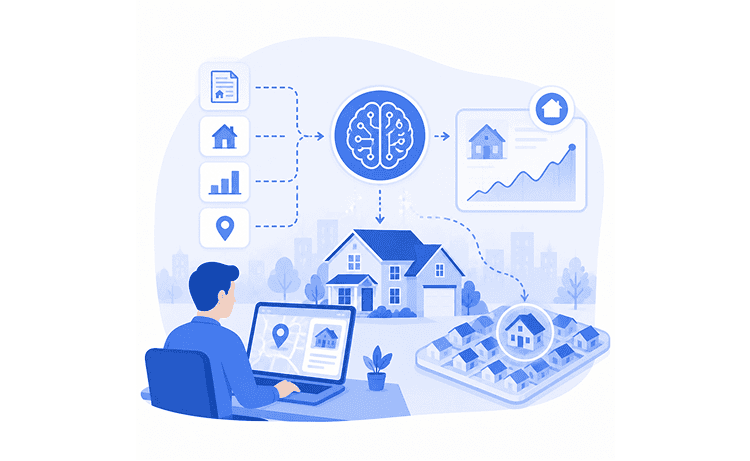
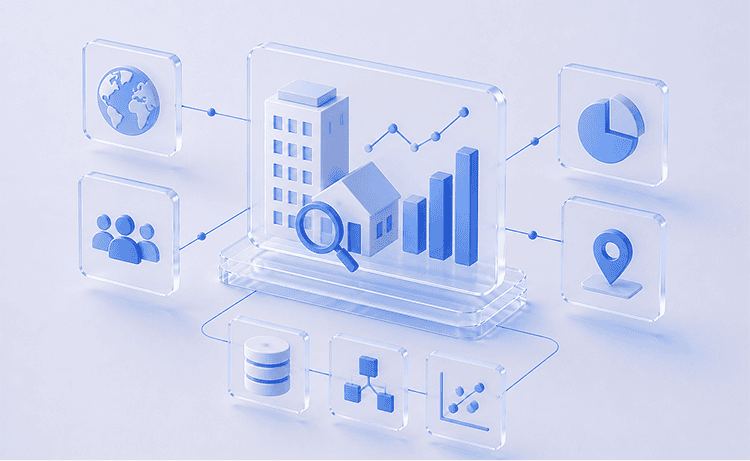
Intelligent building systems are usually described in four layers. Smart sensors and controllers sit in the field, network protocols carry their readings, a central management system normalizes everything into one data model, and applications turn that model into dashboards, alerts, and tenant tools. Most properties have the first two layers and only part of the third, which is why data collection so often outpaces action. Intelligent building systems collect data from every subsystem so that building technology decisions rest on measurement rather than assumption.
A useful test separates automated buildings from modern smart buildings. Building automation systems follow rules a person wrote: lights on at 7:00, chillers on above a set outdoor temperature. Smart building systems adjust those rules against real conditions, using occupancy sensors, weather forecasts, utility tariffs, and equipment performance history.
Far from being solely limited to existing commercial properties on the market, smart technology can also be used to enhance building construction quality to maximize ROI throughout the building and planning stage.
Smart building adoption varies sharply by asset class, and smart building solutions that work in an office tower rarely transfer intact to a warehouse. Not every smart building solves the same problem. The mix of intelligent building technology depends on who occupies the space and what the operator is optimizing for. The market breaks down by asset class, and again by the system function that dominates the investment case.

Office towers prioritize occupancy analytics, smart HVAC systems, and access control systems. Desk booking, visitor management, and air quality reporting have become lease negotiation points rather than perks, and building performance data is now requested during tours.
Multifamily operators focus on submetering, leak detection, smart locks, and package logistics. Payback comes from lower turnover, fewer maintenance callouts, and utility recovery rather than from headline energy savings.
Warehouses and plants care about equipment uptime, lighting systems that cover large footprints efficiently, and cold chain monitoring. Predictive maintenance carries most of the return here, since an unplanned line stoppage costs far more than the smart sensors that would have flagged it.
Hospitals run the strictest environmental tolerances of any asset class: pressure differentials, humidity limits, and continuous documentation for accreditation. Air quality control and asset tracking for mobile equipment add a second layer of return.
Universities, corporate campuses, and mixed-use districts manage many buildings under one energy contract. Portfolio-level data analysis and intelligent building networks matter more than any single building’s control systems.
| Building type | Primary building systems | Main payback driver | Data volume |
| Commercial office | HVAC systems, occupancy, access control | Rent premium and cost savings | High |
| Multifamily residential> | Submetering, leak detection, smart locks | Utility recovery and retention | Medium |
| Industrial and logistics | Predictive maintenance, lighting, cold chain | Equipment uptime | High |
| Healthcare and labs | Air quality control, asset tracking | Accreditation and clinical safety | Very high |
| Campus and mixed-use | Energy management systems, analytics | Aggregated demand management | Very high |
A second way to classify smart buildings looks at which function drives the budget rather than which asset class owns it:
Owners rarely fund all four at once. Sequencing usually starts with energy efficiency, because the savings finance the next phase, and ends with experience, because that layer depends on data the earlier phases produce.
How Smart Buildings Are Changing the CRE Market
A decade or two ago, smart building technology mainly focused on indoor climate control and HVAC systems; today, however, smart technology coverage has vastly expanded.
Connectivity tools and data-driven analytics encompass virtually all processes, including property construction, monitoring operations, climate and lighting, security, and facility servicing.
Brokers and property owners can now successfully implement smart technology to maximize the use of commercial real estate properties in a variety of ways.
The office market has split into two tiers. Moody’s Analytics recorded a record 21% US office vacancy rate in the first quarter of 2026 across 79 markets, up from 17% in 2020. Demand has not disappeared, but it has concentrated in high-specification space with strong connectivity, air quality data, and app-based access.
Smart tech can be implemented to maximize space, reserve energy, and manage building operations remotely. In addition, commercial properties can be visited virtually with help from AR and VR technology that creates a realistic viewing experience.
Space connectivity appears to be the key when it comes to maximizing commercial real estate yields. According to JLL’s 2026 corporate real estate outlook, energy and maintenance sit among the largest controllable operating costs in a portfolio, and AI-driven predictive controls can reduce them by 10% to 30%. On a mid-size office portfolio, that range decides whether a retrofit pays back in three years or eleven.
A second driver comes from regulation. New York’s Local Law 97 covers roughly 50,000 buildings over 25,000 square feet and charges $268 per metric ton of CO2e above a property’s annual cap, with limits tightening again in 2030. Comparable minimum performance standards are rolling out across the EU. Meeting those caps requires metered, verifiable energy consumption data by floor and by system.
There’s a clear trend forming. Occupants are beginning to consider smart technology to be a must-have feature, meaning that digitally unconnected spaces will soon become redundant and unprofitable.
Smart building automation covers every system that lets a property run with less manual input. Every smart building depends on it. Building automation systems handle the controls, smart building management platforms handle the data, and smart building solutions built on top turn both into decisions building managers can act on. Smart building automation systems in a modern tower typically span heating, ventilation, and air conditioning, lighting, access, and metering at once.

The Internet of Things (IoT) is typically first mentioned when it comes to connectivity and smart building automation. IoT encompasses a set of devices and sensors that are connected through a robust data ecosystem where information is collected, processed, and responsive actions are assigned.
IoT systems lead to vast savings via energy conservation and space optimization. JLL’s 2026 research places the achievable reduction in energy and maintenance spend at 10% to 30% once predictive controls are running on clean data, which makes building management systems the single highest-leverage investment in most portfolios.
Modernized connected systems can even automate building operations with systems that can detect potential maintenance issues (plumbing, electricity, etc) and proactively assign technicians to investigate.
Connected systems in smart buildings can provide the following:
Heating, ventilation, and air conditioning typically account for the largest share of a commercial building’s energy usage, which makes them the first target of any serious efficiency program. Energy management systems combine submetering, weather data, and utility tariffs to shift loads and trim setpoints without occupants noticing a difference. Optimizing energy usage this way produces measurable cost savings within the first heating and cooling cycle, and the same data helps improve energy efficiency across a whole portfolio rather than one asset.
Smart HVAC systems add a forecasting layer on top. Rather than reacting to a temperature that has already drifted, they precondition space based on expected occupancy, which reduces peak demand charges alongside consumption. Air conditioning loads in particular respond well to forecasting, and reducing them lowers operating costs without any change to occupant comfort. Building efficiency gains of this kind are among the cheapest available, because they need software and sensors rather than new plant.
Smart lighting solutions use occupancy sensors, daylight harvesting, and zone scheduling to cut one of the most visible lines on a utility bill. Lighting systems connected over Power over Ethernet also double as a sensing network, since each fixture can host air quality sensors and occupancy detection without separate cabling.
Air quality control has moved from a comfort issue to a leasing issue. Tenants ask for CO2, particulate, and humidity records during negotiations, and smart windows with automated shading help hold conditions stable while reducing solar load.
Access control systems have absorbed a large share of smart building products in recent years. Mobile credentials, destination dispatch in elevators, and visitor pre-registration all run through the same platform, and the resulting access logs feed occupancy analysis that space planners rely on.
Security and safety systems sit alongside them: fire detection, video analytics, and emergency communications, increasingly integrated into one operator interface rather than four separate consoles.
Smart building management sits above the controls layer. Where a BMS runs equipment, a smart building management platform benchmarks building systems across sites, ranks faults by cost, and pushes work orders into existing maintenance software. Portfolios running smart building technology at scale rely on this layer to improve energy efficiency without adding headcount, and the resulting improved efficiency shows up in both energy efficiency metrics and labour hours.
CRE-connected systems offer much more than simple motion sensors and lighting control. The biggest advantage in regard to the commercial real estate sector lies in the data generated by the IoT environment.
Such a powerful connection network, complete with multiple data sources, requires businesses to have an integrated system that connects with the required devices and allows property owners and managers to access the necessary data easily.
IoT itself isn’t a ready-made infrastructure, but rather an ecosystem of various information sources. Here, data centralization comes into play to reduce friction and make the most of the connectivity provided by smart devices.
Having a single integrated infrastructure of property data allows property managers and owners to proactively monitor and manage building operations and leverage data for business decisions.
Consolidating that data is exactly the problem Glorium Technologies solved in a full-scale ecosystem and data warehouse for property managers in Germany, where fragmented property data was unified into a single reporting environment on Angular, .NET Core, and Azure. A similar problem at larger volume shaped our work on data-driven software for commercial real estate in the United States.
Investing in specific software solutions like integrated BMS to drive the most value from connected systems allows CRE companies to unlock further opportunities to increase revenue.
Such data can be used to analyze valuable insights and analytics, enhance the overall tenant experience, diagnose and prevent issues, and foster better investment decisions to maximize profits.
Semantic tagging standards such as Project Haystack and Brick Schema exist to make that data usable. Both give every point in the building a machine-readable meaning, so a query for supply air temperature on floor 12 returns the right sensor without a human translating four installers’ naming conventions. Adopting one early costs weeks; retrofitting one across a mapped portfolio costs months.
As mentioned earlier, digitally-enabled and optimized spaces are becoming increasingly important issues to CRE users. Real estate companies can develop tech solutions to provide tenants with access to relevant information to prove that a property is safe and connected.
To achieve this, all solutions must have sophisticated mobile applications or platforms complete with high-end user interfaces to clearly interpret building data.
In practice, that means desk management software, meeting room booking systems, mobile access credentials, and service requests inside one app. Adoption depends almost entirely on interface quality, which is why mobile and web development sits on the critical path of most smart building programs. A booking flow that takes six taps loses to a message to the office manager every time.
Interactive applications can be a game-changer for CRE software providers as they transform the traditional customer experience into a fun and exciting experience.
With a massive spike in demand for efficient space utilization, smart services are also a great way to increase revenue and present a company as environmentally responsible.
In previous decades, security meant physical safety. Today, digital security is equally as important. Huge volumes of data that are accumulated within smart building systems require not just an integrated and interoperable BMS, but also a robust security program.
With more connected systems, security threats are becoming more prevalent as a result of a growing interest in the misuse of valuable user data.
To deliver the most value and provide a high-end experience to their clients, CRE companies and brokers need to provide strong, industry-specific security solutions that cater to both physical and virtual safety.
With data encryption and AI-based solutions, software providers can make platforms and applications resistant to data breaches and set up access baselines for different types of users.
In terms of smart building security, this kind of technology can enhance safety with video monitoring, smart locks, and access gateways, and can be used to control systems to monitor motion, unauthorized building access, and send timely alerts to all responsible parties.
Connecting operational technology to corporate IT expands the attack surface considerably, since access control, cameras, and HVAC controllers all become entry points. Network segmentation and certificate-based authentication belong in the architecture from the first design session, because retrofitting them into a live connected building costs several times what designing them in would have.
The value of CRE data extends to the primary stages of construction, where analytics and insights from tenant behavior and building management can help design and construct more efficient spaces.
With help from advanced analytics tools powered by artificial intelligence and deep learning, certain patterns can be defined and used by designers to develop and construct buildings more efficiently.
Smart building design decisions made at this stage are difficult to reverse later. Sensor placement, cable routing, and riser capacity all constrain what intelligent building components can be added afterwards, so intelligent building design now runs alongside structural and MEP design rather than after it.
Equipped with this data, CRE investors can make smarter property decisions and attract high-value tenants.
AI-enabled automation has multiple uses in CRE management. Based on the data provided by connected systems, the software will suggest automated actions that can be performed with little to no manual involvement.
Traditionally, this is the most convenient way to cut operational costs, as automation technology not only handles tasks without human labor but prevents costly mistakes due to human error.
Predictive maintenance is where artificial intelligence delivers the clearest operational efficiency gain. Instead of servicing equipment on a calendar, facility managers act on vibration, runtime, and power-draw signals that indicate a failure weeks ahead. Predictive maintenance smart buildings run this way convert emergency callouts into scheduled work, which is consistently cheaper.
These smart building technology examples span new construction and retrofit. Three named projects show what a fully integrated stack looks like in practice.
Deloitte’s Dutch headquarters remains the reference project for the category. The 40,000 square meter tower runs roughly 28,000 IoT smart building sensors tracking movement, light levels, humidity, and temperature, feeding a dashboard that lets facility managers shut down unused zones in real time. BRE awarded it a BREEAM score of 98.36%, and the combination of solar generation and aquifer thermal storage helps the building use around 70% less electricity than comparable offices.
The City of London’s tallest tower runs a converged Cisco network linking BMS, HVAC, CCTV, access control, lighting, energy management, and smart blinds. Microsoft Azure Digital Twins sits above that network, and Smart Spaces supplies the occupant app handling access and destination control. Building managers adjust conditions in real time through a digital twin with connected controls, while ICONICS analytics run automated fault detection across the plant.
Flagship new construction generates the headlines, but the larger opportunity sits in existing stock. The Empire State Building retrofit, delivered by Johnson Controls, Jones Lang LaSalle, and Rocky Mountain Institute, targeted a 38% energy reduction worth $4.4 million annually across 2.7 million square feet, using new building automation controls, revenue-grade metering, a chiller plant retrofit, and a tenant energy portal. The compliance value appeared later: the property cut emissions by 54% against its pre-retrofit baseline, which is the difference between clearing the 2024 Local Law 97 cap and paying seven figures in annual penalties.
The vendor landscape splits into four groups, and most real projects combine several. Analyst firm Memoori assesses Siemens, Honeywell, and Johnson Controls as operating the three most complete AI-in-buildings stacks, with Schneider Electric holding the broadest position across buildings, grid, and industrial systems.
Off-the-shelf platforms cover common cases well. They rarely cover a landlord’s specific lease structure, an operator’s existing ERP, or a proptech founder’s product roadmap. Smart building products from these vendors overlap heavily, so procurement usually turns on integration depth rather than feature lists. A practical middle path shows up often: license an incumbent platform for control and compliance, then build a custom layer above it for the workflows and tenant-facing features the vendor will never prioritize.
Though smart technology is nothing new to the real estate industry, modern technology has allowed for revolutionary solutions to combat the current problems of the real estate market.
With one in five US office square feet sitting empty, CRE companies are constantly on the lookout for new ways to increase revenue, attract tenants, and maximize space.
Smart building technology delivers three measurable outcomes: reduced energy usage, improved efficiency in maintenance operations, and cost savings that compound across a portfolio. Sensors collect data continuously, data analysis turns it into ranked actions, and building managers execute against those actions rather than a fixed schedule. That loop is what separates smart building systems from advanced technology that merely reports.
Owners tracking building performance quarterly see improved efficiency in two places first, fewer reactive work orders and lower peak demand charges. Optimizing energy usage against tariffs delivers the second, while intelligent building networks tying multiple sites together deliver the first at portfolio scale.
Smart technology is the solution. Apart from traditional IoT and connected systems, there are many other factors that make a building ‘smart’. In short, more data, connectivity, and analytics will increase property value and drive demand.
As such, commercial property software providers should focus on offering interoperable, integrated BMS solutions and platforms for data management and communication.
The benefits of smart buildings are easiest to justify when they are tied to a specific line in the operating budget rather than to smart building solutions in the abstract. Sensors collect data, the platform ranks what to fix, and the savings appear where they can be audited.
The benefits of smart buildings land differently for each party. Building owners gain the evidence needed for emissions filings, insurance negotiations, and refinancing conversations, since lenders increasingly ask for building performance data during underwriting. Brokers gain specifics: twelve months of actual conditions on the floor a prospect is touring beats any brochure claim. Tenants gain fewer temperature complaints, faster maintenance response, and a credible number for their own reporting.
For investors, property infused with smart tech and automation will lead to better purchasing options with in-demand space, regardless of the current conditions.
For brokers, this is an opportunity to make more specific and customer-oriented offers, which leads to faster and more profitable deals. For tenants, smart tech means increased safety and connectivity.
Ultimately, smart CRE has an impact on a much broader ecosystem than simply just property investors and brokers. This technology has huge potential for global energy savings and sustainability, and could even play a massive role in fighting climate change in the near future.
Building owners come to this point with one of three needs: a property that records data nobody can act on, a compliance deadline that requires auditable reporting, or a proptech product that has to be built. All three come down to the gap between what a building measures and what anyone can decide from it.
Glorium Technologies has been engineering software since 2010, with real estate and proptech among our deepest verticals. Our teams work across the full smart building stack: sensor integration, data pipelines, building management interfaces, tenant applications, and the analytics layer on top.
Most conversations start in one of three places. Some clients arrive with sensors already installed and no way to make sense of the output. Others need a tenant application their BMS vendor will not build. A third group is building a proptech product for other landlords and needs the platform engineering behind it. Engagements run as an MVP, as project-based development for a defined build, or as outstaffing when you need engineers who understand IoT and real estate inside your existing team.
Tell us what your portfolio needs to do, and we will scope it. Get in touch for a consultation.
A single-building pilot covering energy metering and HVAC analytics typically runs three to six months from survey to live dashboard. Portfolio rollouts stretch to eighteen months or more, mostly because each building carries different legacy equipment. Phasing by system rather than by building tends to move faster. Glorium Technologies usually recommends starting with a single representative asset, since the integration problems it surfaces apply to the rest of the portfolio.
Yes. Wireless smart sensors, non-invasive current transformers, and cloud gateways layer onto existing plant without touching walls. The constraint is usually the age of the controllers rather than the building itself. Equipment older than about twenty years may need replacing before it can expose usable data. A short technical audit answers this quickly, and Glorium Technologies runs one before scoping any integration work.
Ownership depends on the lease and the vendor contract, and the two often disagree. Landlords generally claim building system data, while occupant behavior data raises privacy questions under GDPR and similar regimes. Settle this in writing before deployment, not after. Glorium Technologies builds consent handling and data retention rules into the application layer, so the commercial agreement and the software actually match.
Insist on open protocols, documented APIs, and a data model you can export. Proprietary tagging is the most common trap, because it makes the data technically yours but practically unusable elsewhere. Request an export sample during procurement rather than trusting the datasheet. When Glorium Technologies builds an integration layer, the client owns the data model and the pipelines, which keeps a future platform change from becoming a rebuild.
At minimum, someone who understands building operations and someone who understands data engineering, plus a security owner for the converged network. Many operators underestimate the third role. Facilities staff rarely have OT security training, and IT departments rarely have building system context. Teams that would rather not hire for all three can cover the engineering side through outstaffing with Glorium Technologies while keeping operations in-house.
Set a baseline before anything is installed, ideally twelve months of metered consumption normalized for weather and occupancy. Independent measurement and verification against that baseline is what turned the Empire State Building results into a credible model rather than a vendor claim. Glorium Technologies builds that reporting into the platform itself, so verification is a query rather than a consulting engagement.
Published ranges cluster between 10% and 30% for energy usage in commercial buildings once predictive controls run on clean data. Buildings with older, uncalibrated plant sit at the top of that range, because the fastest way to reduce energy costs is to fix equipment that has been fighting itself for years. Advanced technology adds little until that baseline work is done. Glorium Technologies typically models the expected range from twelve months of metered data before any development starts.
Below roughly 50,000 square feet, the enterprise platforms struggle to justify their licensing. Smaller assets do better with focused tools: submetering, leak detection, and smart access, integrated through a lightweight custom layer rather than a full BMS suite. Glorium Technologies builds that kind of layer as a fixed-scope project, which keeps the cost proportional to the asset.